Category
page 1Beekeeping

honey
Honey is a sweet and viscous substance made by several species of bees, the best-known of which are honey bees. Honey is made and stored to nourish bee colonies. Bees produce honey by gathering and then refining the sugary secretions of plants (primarily floral nectar) or the secretions of other insects, like the honeydew of aphids. This refinement takes place both within individual bees, through regurgitation and enzymatic activity, and during storage in the hive, through water evaporation that concentrates the honey's sugars until it is thick and viscous.

Apis mellifera
species of insect

Apis
genus of insects

beekeeping
thumb|Beekeeper at the College of DuPage, Illinois
Beekeeping (or apiculture, from ) is the maintenance of bee colonies, commonly in artificial beehives. Honey bees in the genus Apis are the most commonly kept species but other honey producing bees such as Melipona stingless bees are also kept. Beekeepers (or apiarists) keep bees to collect honey and other products of the hive: beeswax, propolis, bee pollen, and royal jelly. Other sources of beekeeping income include pollination of crops, raising queens, and production of package bees for sale. Bee hives are kept in an apiary or "bee yard".

oxalic acid
chemical compound

honeycomb
A honeycomb is a mass of hexagonal prismatic cells built from beeswax by honey bees in their nests to contain their brood (eggs, larvae, and pupae) and stores of honey and pollen.

propolis
thumb|Propolis, produced by the western honey bee (Apis mellifera)
thumb|200px|Two bars from a top bar hive that the bees have glued together using propolis. Separating the bars will take some effort as the propolis has hardened.
thumb|200px|Propolis on the upper bar
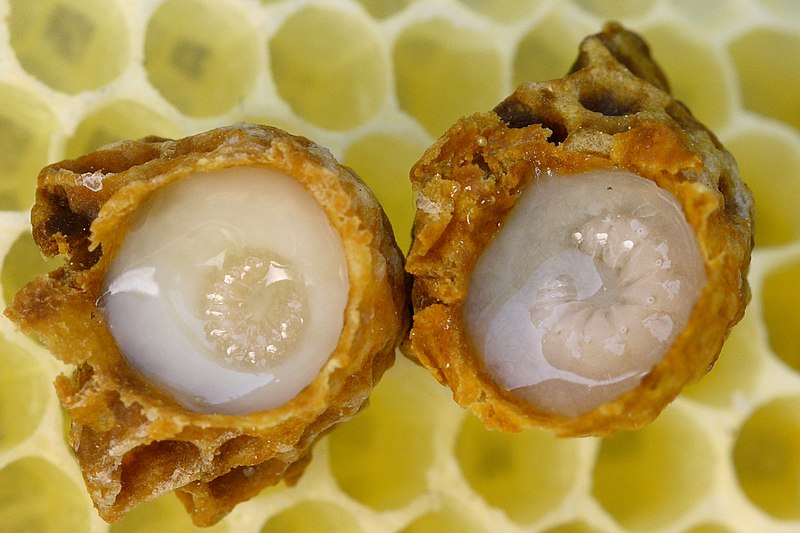
royal jelly
secretion from the glands in the hypopharynx of nurse bees

Cymbopogon citratus
species of plant

drone
male bee, wasp or hornet

queen bee
dominant reproductive female bee in a colony

Apis dorsata
species of insect
Aristaeus
Aristaeus (; ) was the mythological culture hero credited with the discovery of many rural useful arts and handicrafts, including beekeeping. He was the son of the huntress Cyrene and Apollo.

bee pollen
fermented pollen

Apis cerana
species of insect

World Bee Day
International observance (May 20)
apitoxin
Apitoxin or bee venom is the venom produced by the honey bee. It is a cytotoxic and hemotoxic bitter colorless liquid containing proteins, which may produce local inflammation. It may have similarities to sea nettle toxin.

Varroa destructor
species of arthropods

beekeeper
thumb|upright|A beekeeper holding a brood frame, in Lower Saxony, Germany
thumb|right|A commercial beekeeper working in an apiary
A beekeeper is a person who keeps honey bees, a profession known as beekeeping. The term beekeeper refers to a person who keeps honey bees in beehives, boxes, or other receptacles. The beekeeper does not control the creatures. The beekeeper owns the hives or boxes and associated equipment. The bees are free to forage or leave (swarm) as they desire. Bees usually return to the beekeeper's hive as it presents a clean, dark, sheltered home.

apiary
thumb|220px|An apiary in Warsaw, [[Poland.]]
An apiary (also known as a bee yard) is a location where beehives of honey bees are kept. Apiaries come in many sizes and can be rural or urban depending on the honey production operation.
Worker bee
female bee with blocked reproductive capacity
honey hunting
The extraction of honey from wild bees

melittology
thumb|A honeybee drinking water
nectar source
a flowering plant that produces nectar as part of its strategy

Honeyland
Honeyland () is a 2019 Macedonian documentary film that was directed by Tamara Kotevska and Ljubomir Stefanov. It portrays the life of Hatidže Muratova, a lonely beekeeper of wild bees who lives in the remote mountain village of Bekirlija and follows her lifestyle before and after neighbors move in nearby. The film was initially planned as a short film documenting the region surrounding the river Bregalnica but its area of focus changed when the directors met Hatidže. Honeyland received its world premiere at the 2019 Sundance Film Festival on 28 January and it has grossed $1,315,037.

pollinator
thumb|250px|A syrphid fly (Eristalinus taeniops) pollinating a [[common hawkweed]]
thumb|250px|A Andrena|mining bee (Andrena lonicerae) pollinating a [[honeysuckle (Lonicera gracilipes).]]

Haplodiploidy
thumb |upright=2.0 |In the Hymenoptera, the [[sex-determination system involves haploid males and diploid females. System for honey bee shown.]]
bee sting
Puncture wound caused by a bee's stinger
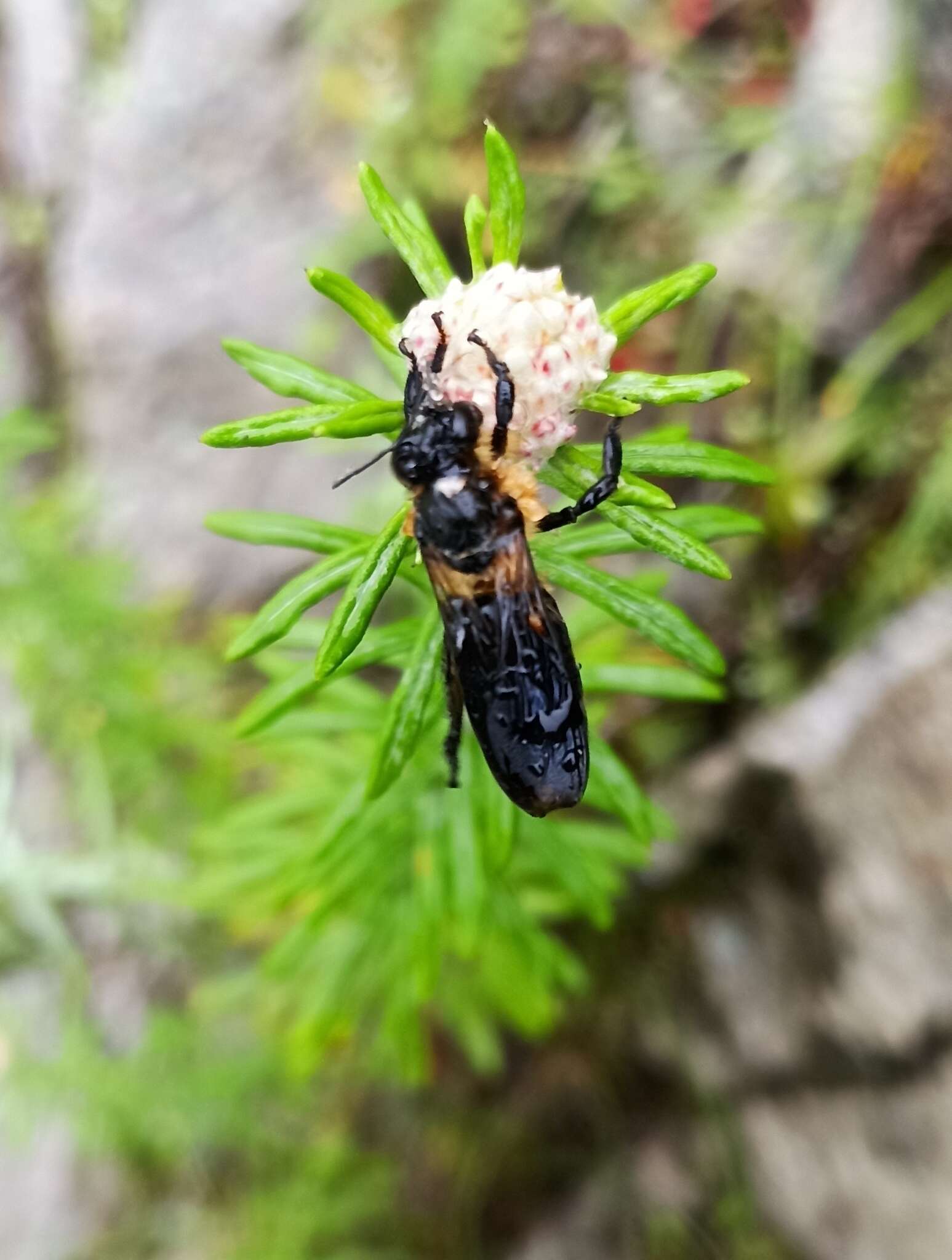
Apis dorsata laboriosa
species of insect

Small hive beetle
species of insect

Varroa
Varroa is a genus of parasitic mesostigmatan mites associated with honey bees, originally placed into its own family, Varroidae, but later revised as a subfamily. The genus was named for Marcus Terentius Varro, a Roman scholar and beekeeper. The condition of a honeybee colony being infested with Varroa mites is called varroosis (also, incorrectly, varroatosis).
hive frame
structural element in a beehive
fear of bees
phobia of bees

Nosema apis
species of microsporidian fungi
Diseases of the honey bee
Wikimedia list article

grayanotoxins
Grayanotoxins are a group of closely related neurotoxins named after Leucothoe grayana, a plant native to Japan and named for 19th-century American botanist Asa Gray. Grayanotoxin I (grayanotoxane-3,5,6,10,14,16-hexol 14-acetate) is also known as andromedotoxin, acetylandromedol, rhodotoxin and asebotoxin. Grayanotoxins are produced by Rhododendron species and other plants in the family Ericaceae. Honey made from the nectar and so containing pollen of these plants also contains grayanotoxins and is commonly referred to as mad honey.
Laying worker bee
beekeeping term
honeycomb base
artificial honeycomb structure for bees
juvenile hormone
class of chemical compounds

Apis mellifera cecropia
subspecies of honey bee
Rehov
tel in northern Israel
Nasonov pheromone
orientation scent released by worker bees
Bees and toxic chemicals
vitellogenins

waxworms
thumb|right|250px|Adult specimen of the lesser wax moth (Achroia grisella)
thumb|right|250px|Adult specimen of the Galleria mellonella|greater wax moth (Galleria mellonella)
thumb|right|250px|G. mellonella larva
Museum of Ancient Beekeeping
open-air museum in Lithuania

Melipona subnitida
species of insect
Okiek people
ethnic group
Apis mellifera meda
subspecies of the western honey bee
Comb honey
food consisting of sweet honey still in its wax comb
brood chamber
chamber for the young of a beehive
Apis cerana nuluensis
species of insect
Entomologia Carniolica
1763 taxonomic work by Giovanni Antonio Scopoli
Medoviy Spas
Slavic folk Christianity
Meliponiculture
link=https://pt.wikipedia.org/wiki/Ficheiro:Meliponario_individual.png|thumb|Meliponary with individual posts in the Pau Brasil village, in the Tupiniquim Indigenous Land, Aracruz, [[Espírito Santo]]Meliponiculture is the rational farming of stingless bees, or meliponines (Meliponini tribe), which is different from apiculture (the breeding of bees of the Apis mellifera species; western honey bee or European honey bee; Apini tribe). In meliponiculture, the hives can be organized in meliponary, places with suitable conditions of temperature, solar orientation, humidity, and food supply (flowers
Melliferous flower
Plant harvested by bees to produce honey
thelytoky
thumb|upright=1.5|Aphid giving birth by [[parthenogenesis, the live young growing from unfertilized eggs]]
Urban beekeeping
practice of keeping bee colonies in urban areas
Telling the bees
traditional European custom
For a Swarm of Bees
Anglo-Saxon metrical charm