Category
page 1Commercial fish

shark
Sharks are a group of elasmobranch cartilaginous fishes characterized by a ribless endoskeleton, dermal denticles, five to seven gill slits on each side, and pectoral fins that are not fused to the head. Modern sharks are classified within the division Selachii and are the sister group to the Batomorphi (rays and skates). Some sources extend the term "shark" as an informal category including extinct members of Chondrichthyes (cartilaginous fish) with a shark-like morphology, such as hybodonts. Shark-like chondrichthyans such as Cladoselache and Doliodus first appeared in the Devonian Period (4

Cyprinus carpio
species of fish

Anguilliformes
Eels are ray-finned fish belonging to the order Anguilliformes (), which consists of eight suborders, 20 families, 164 genera, and about 1000 species. Eels undergo considerable development from the early larval stage to the eventual adult stage and are usually predators.

Siluriformes
Catfish are a diverse group of ray-finned fish of the order Siluriformes (historically Nematognathi). Catfish are named for their prominent barbels, which resemble a cat's whiskers, though not all catfish have prominent barbels. All Siluriformes lack scales, instead possessing either smooth skin or armour-plated bodies. This order of fish are defined by features of the skull (such as maxillae modified into the barbels' bases) and swimbladder. Catfish range in size and behavior from the three largest species alive, the Mekong giant catfish from Southeast Asia, the wels catfish of Eurasia, and t

Atlantic salmon
species of fish

trout
thumb|Brown trout
.jpg)
sturgeon
”Sturgeon” is the common name for the 27 species of fish belonging to the family Acipenseridae. The earliest sturgeon fossils date to the Late Cretaceous, and are descended from other, earlier acipenseriform fish, which date back to the Early Jurassic period, some 174 to 201 million years ago. They are one of two living families of the Acipenseriformes alongside paddlefish (Polyodontidae). The family is grouped into five genera: Acipenser, Huso, Scaphirhynchus, Sinosturio, and Pseudoscaphirhynchus. Two species (H. naccarii and S. dabryanus) may be extinct in the wild, and one (P. fedtschenkoi)

Gadus morhua
benthopelagic fish of the family Gadidae

Tetraodontidae
thumb|right|Deflated Valentin's sharpnose puffer|Valentinni's sharpnose puffer
Tetraodontidae is a family of marine and freshwater fish in the order Tetraodontiformes. The family includes many familiar species variously called pufferfishes, puffers, balloonfishes, blowfishes, blowers, blowies, bubblefishes, globefishes, swellfishes, toadfishes, toadies, botetes, toadle, honey toads, sugar toads, and sea squabs. They are morphologically similar to the closely related porcupinefish, which have large external spines (unlike the thinner, hidden spines of the Tetraodontidae, which are only visible

rainbow trout
fresh-water species of fish
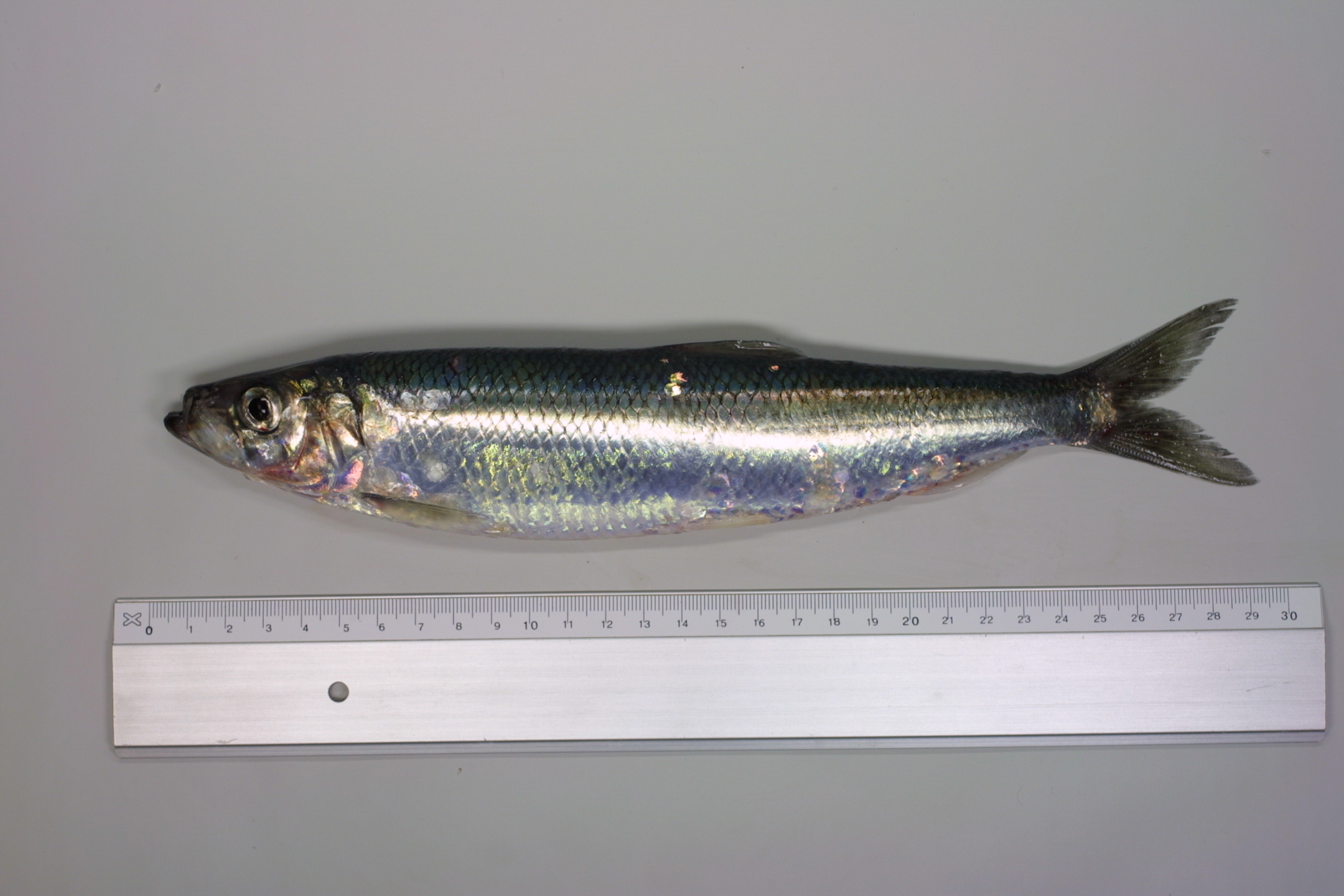
Clupea harengus
species of herring in the family Clupeidae

salmon
Salmon (; : salmon) are any of several commercially important species of euryhaline ray-finned fish from the genera Salmo and Oncorhynchus of the family Salmonidae, native to tributaries of the North Atlantic (Salmo) and North Pacific (Oncorhynchus) basins. Salmon is a colloquial or common name used for fish in this group, but is not a scientific name. Other closely related fish in the same family include trout, char, grayling, whitefish, lenok and taimen, all coldwater fish of the subarctic and cooler temperate regions with some sporadic endorheic populations in Central Asia.

Grass Carp
species of fish

haddock
The haddock (Melanogrammus aeglefinus) is a saltwater ray-finned fish from the family Gadidae, the true cods. It is the only species in the monotypic genus Melanogrammus. It is found in the North Atlantic Ocean and associated seas, where it is an important species for fisheries, especially in northern Europe, where it is marketed fresh, frozen and smoked; smoked varieties include the Finnan haddie and the Arbroath smokie. Other smoked versions include long boneless, the filleted side of larger haddock smoked in oak chips with the skin left on the fillet.

Pleuronectiformes
Flatfish are a group of ray-finned fish belonging to the suborder Pleuronectoidei and historically the order Pleuronectiformes (though this is now disputed). Their collective common name is due to their habit of lying on one side of their laterally-compressed body (flattened side-to-side) upon the seafloor; in this position, both eyes lie on the side of the head facing upwards, while the other side of the head and body (the "blind side") lies on the substrate. This loss of symmetry, a unique adaptation in vertebrates, stems from one eye "migrating" towards the other during the juvenile's metam

Crucian carp
species of fish

skipjack tuna
species of fish

zander
The zander (Sander lucioperca), sander or pikeperch, is a species of ray-finned fish from the family Percidae (which also includes perch, ruffe and darter). It is found in freshwater and brackish habitats in western Eurasia. As a popular game fish, it has been introduced to a variety of localities outside its native range. It is the type species of the genus Sander.

yellowfin tuna
species of fish

turbot
thumb|Capture (blue) and aquaculture (green) production of turbot (Scophthalmus maximus) in thousand tonnes from 1950 to 2022, as reported by the Food and Agriculture Organization|FAO
The turbot ( ), Scophthalmus maximus, is a relatively large species of flatfish in the family Scophthalmidae. It is a demersal fish native to marine or brackish waters of the Northeast Atlantic, Baltic Sea and the Mediterranean Sea. It is an important food fish. Turbot in the Black Sea were often included in this species, but are now generally regarded as separate: the Black Sea turbot or kalkan (S. maeoticus). T

Beluga
species of fish
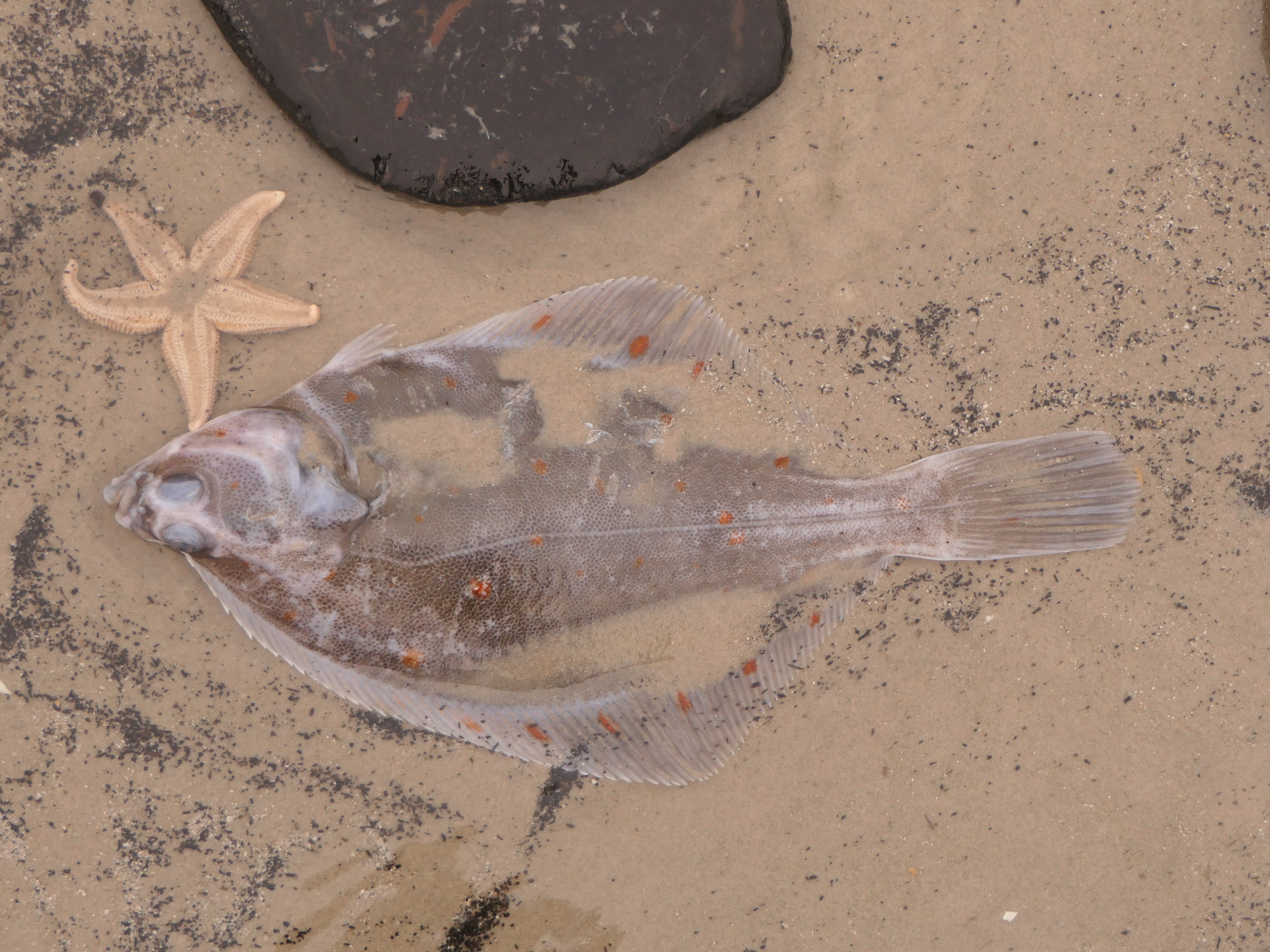
Pleuronectes platessa
flatfish

whiting
Merlangius merlangus, commonly known as whiting or merling, is an important food fish in the eastern North Atlantic Ocean and the northern Mediterranean, western Baltic, and Black Sea. In Anglophonic countries outside the whiting's natural range, the name "whiting" has been applied to various other species of fish.

Zeus faber
species of fish

Atlantic bluefin tuna
species of fish

mahi-mahi
The mahi-mahi ( ), common dolphinfish, dolphin or dorado (Coryphaena hippurus) is a surface-dwelling ray-finned fish found in off-shore temperate, tropical, and subtropical waters worldwide. It is also widely called dorado (not to be confused with Salminus brasiliensis, a freshwater fish) and dolphin (not to be confused with the aquatic mammal dolphin). It is one of two members of the family Coryphaenidae, the other being the pompano dolphinfish. These fish are most commonly found in the waters around the Gulf of Mexico, Costa Rica, Hawaii, and the Indian Ocean. In Italy it is called corifena,

Sparus aurata
species of fish

albacore
The albacore (Thunnus alalunga), known also as the albicore or longfin tuna, is a species of tuna of the order Scombriformes. It lives in temperate and tropical waters across the globe in the epipelagic and mesopelagic zones. There are six distinct stocks known globally in the Atlantic, Pacific, and Indian oceans, as well as in the Mediterranean Sea. The albacore has an elongate, fusiform body with a conical snout, large eyes, and remarkably long pectoral fins. Its body is a deep blue dorsally and shades of silvery white ventrally. Individuals can reach up to in length.

Anguillidae
The Anguillidae are a family of ray-finned fish that contains the freshwater eels. All the extant species and six subspecies in this family are in the genus Anguilla, and are elongated fish of snake-like bodies, with long dorsal, caudal and anal fins forming a continuous fringe. They are catadromous, spending their adult lives in freshwater, but migrating to the ocean to spawn.

Clupea
Clupea is a genus of planktivorous bony fish belonging to the family Clupeidae, commonly known as herrings. They are found in the shallow, temperate waters of the North Pacific and the North Atlantic oceans, including the Baltic Sea. Two main species of Clupea are currently recognized: the Atlantic herring (Clupea harengus) and the Pacific herring (Clupea pallasii), which have each been divided into subspecies. Herrings are forage fish moving in vast schools, coming in spring to the shores of Europe and America, where they form important commercial fisheries.

European sprat
species of sprat

Thunnini
A tuna (: tunas or tuna) is a saltwater fish that belongs to the tribe Thunnini, a subgrouping of the Scombridae (mackerel) family. The Thunnini comprise 15 species across five genera, the sizes of which vary greatly, ranging from the bullet tuna (max length: , weight: ) up to the Atlantic bluefin tuna (max length: , weight: ), which averages and is believed to live up to 50 years.

silver carp
species of fish

capelin
The capelin or caplin (Mallotus villosus) is a small forage fish of the smelt family found in the North Atlantic, North Pacific and Arctic oceans. In summer, it grazes on dense swarms of plankton at the edge of the ice shelf. Larger capelin also eat a great deal of krill and other crustaceans. Among others, whales, seals, Atlantic cod, Atlantic mackerel, squid and seabirds prey on capelin, in particular during the spawning season while the capelin migrate south. Capelin spawn on sand and gravel bottoms or sandy beaches at the age of two to six years. When spawning on beaches, capelin have an e

common sole
species of fish

pink salmon
species of Pacific salmon

Arctic char
species of fish

bighead carp
species of fish

Gadus
Gadus is a genus of demersal fish in the family Gadidae, commonly known as cod, although there are additional cod species in other genera. The best known member of the genus is the Atlantic cod.
sardine
Sardine and pilchard are common names for various species of small, oily forage fish in the herring suborder Clupeoidei. The term "sardine" was first used in English during the early 15th century; a somewhat dubious etymology says it comes from the Italian island of Sardinia, around which sardines were once supposedly abundant.

Russian sturgeon
species of sturgeons

Bigeye tuna
species of fish

Theragra chalcogramma
species of fish

Lutjanidae
Lutjanidae, the snappers and fusiliers, are a family of percomorph fishes, mainly marine but with some members inhabiting estuaries and, in some cases, fresh water (e.g., Lutjanus goldiei). The family includes about 113 species. Most species are used for food and many are of high economic importance. Many species around the world are known in local languages as red snapper, including species from different genera (including Lutjanus and Pristipomoides)
.jpg)
tilapia
Tilapia ( ) is the common name for nearly a hundred species of cichlid fish from the coelotilapine, coptodonine, heterotilapine, oreochromine, pelmatolapiine, and tilapiine tribes (formerly all were "Tilapiini"), with the economically most important species placed in the Coptodonini and Oreochromini. Tilapia are mainly freshwater fish native to Africa and the Middle East, inhabiting shallow streams, ponds, rivers, and lakes, and less commonly found living in brackish water. Historically, they have been of major importance in artisanal fishing in Africa, and they are of increasing importance in

Chinook salmon
species of Pacific salmon
.jpg)
grouper
Groupers are a diverse group of marine ray-finned fish in the family Epinephelidae, in the order Perciformes.

pollock
species of fish, Pollachius virens

Indian mackerel
species of fish

Boops boops
species of fish

iridescent shark
species of shark catfish of family Pangasiidae

coho salmon
species of Pacific salmon

cobia
The cobia (Rachycentron canadum) (, ) is a species of marine carangiform ray-finned fish, the only extant representative of the genus Rachycentron and the family Rachycentridae. Its other common names include black kingfish, black salmon, ling, lemonfish, crabeater, prodigal son, codfish, and black bonito.

Tenualosa ilisha
The ilish (Tenualosa ilisha) (), also known as the ilishi, hilsa, pulasa, hilsa herring or hilsa shad, is a species of fish related to the herring, in the family Clupeidae. It is a very popular and sought-after food in the Bengal region and area, and is the national fish of Bangladesh and state fish of the Indian state of West Bengal.

Pollachius
Pollock or pollack (pronounced ) is the common name used for either of the two species of North Atlantic marine fish in the genus Pollachius. Pollachius pollachius is referred to as "pollock" in North America, Ireland and the United Kingdom, while Pollachius virens is usually known as saithe or coley in Great Britain and Ireland (derived from the older name coalfish). Other names for P. pollachius include the Atlantic pollock, European pollock, ', and lythe or lithe'; while P. virens is also known as Boston blue (distinct from bluefish) and silver bill.
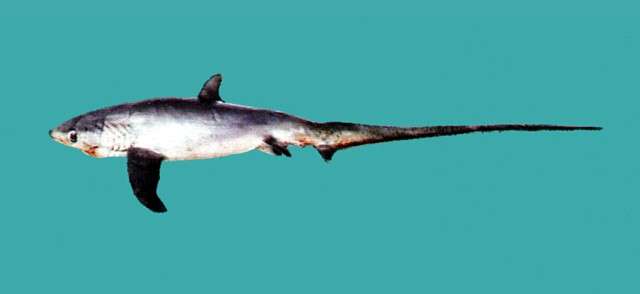
Alopias
genus of sharks
.jpg)
Alosa
Alosa is a genus of fish, the river herrings, in the family Alosidae. Along with other genera in the subfamily Alosinae, they are generally known as shads. They are distinct from other herrings by having a deeper body and spawning in rivers. Several species can be found on both sides of the Atlantic Ocean and the Mediterranean Sea. Also, several taxa occur in the brackish-water Caspian Sea and the Black Sea basin. Many are found in fresh water during spawning and some are only found in landlocked fresh water.

Pacific saury
species of fish

Blue whiting
species of fish

Patagonian toothfish
species of fish