Category
page 1Computer graphics

image
thumb|The act of making a 2D image with a mobile phone camera. The display of the phone shows the [[photograph that will be made and stored.|right]]

graphics
Graphics () are visual images or designs on some surface, such as a wall, canvas, screen, paper, or stone, to inform, illustrate, or entertain. In contemporary usage, it includes a pictorial representation of data, as in design and manufacture, in typesetting and the graphic arts, and in educational and recreational software. Images that are generated by a computer are called computer graphics.
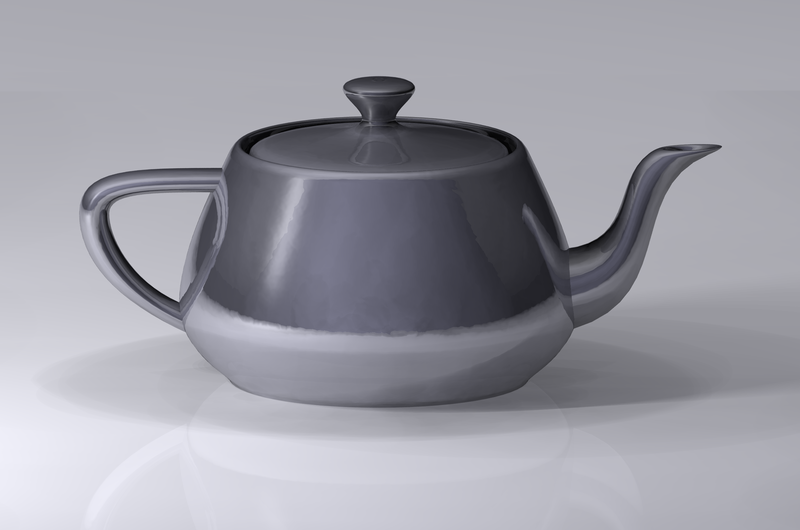
computer graphics
sub-field of computer science

3D computer graphics
graphics that use a three-dimensional representation of geometric data
computer animation
art of creating moving images using computers

uncanny valley
hypothesis that human replicas which appear almost like real human beings elicit revulsion

ray tracing
rendering algorithm that works by sending out many virtual rays of light
.jpg)
thumbnail
thumb|Thumbnail images being used to show a sample of image files within a folder, on a computer operating system.
A thumbnail is a reduced-size version of a picture or video, used to help in recognizing and organizing them, serving the same role for images as a normal text index does for words. In the age of digital images, visual search engines and image-organizing programs normally use thumbnails, as do most modern operating systems or desktop environments, such as Microsoft Windows, macOS, KDE (Linux) and GNOME (Linux). On web pages, they also avoid the need to download larger files unnece
texture mapping
method of defining surface detail on a computer-generated graphic or 3D model
multi-exposure HDR capture
imaging technique to increase representable range of luminosity, HDR stands for “high-dynamic range”
sprite
two-dimensional image or animation in computer graphics
2D computer graphics
graphics that use a two-dimensional representation of geometric data
Processing
Processing is a free graphics library and integrated development environment (IDE) built for the electronic arts, new media art, and visual design communities with the purpose of teaching non-programmers the fundamentals of computer programming in a visual context.
image resolution
measure of how fine an image is
visualization
set of techniques for creating images, diagrams, or animations to communicate a message
computer graphics
pictures and graphics, possibly animated, that are generated using computers, for transforming and compositing various sources of images or data with precise definitions of style, layout, effects, sequencing and synchronization
physics engine
software for approximate simulation of physical systems

framebuffer
thumb|Sun TGX Framebuffer
thumb|320x320px|Sets 1, 2 and 3 represent the operation of single, double and triple frame-buffering, respectively, with Screen tearing#Vertical synchronization|vertical synchronization (vsync) enabled. In each graph, time flows from left to right. For details, see the page on [[multiple buffering.]]
A framebuffer (frame buffer, or sometimes framestore) is a portion of random-access memory (RAM) containing a bitmap that drives a video display. It is a memory buffer containing data representing all the pixels in a complete video frame. Modern video cards contain frameb

morphing
thumb|upright|Morphing animation between two faces
Perlin noise
type of gradient noise in computer graphics
generative art
form of art that is created through the use of autonomous systems, often involving algorithms, random processes, or computational techniques to generate artworks
transformation matrix
central object in linear algebra; mapping vectors to vectors
key frame
drawing that defines the starting and ending points of a smooth animated transition
color management
controlled conversion between the color representations of various devices

rasterisation
thumb|right|200px|Raster graphic image

scrolling
thumb|Parallax scrolling
In computer displays, filmmaking, television production, video games and other kinetic displays, scrolling is sliding text, images or video across a monitor or display, vertically or horizontally. "Scrolling," as such, does not change the layout of the text or pictures but moves (pans or tilts) the user's view across what is apparently a larger image that is not wholly seen. A common television and movie special effect is to scroll credits, while leaving the background stationary. Scrolling may take place completely without user intervention (as in film credits) or, on
color gradient
specifies a range of position-dependent colors

Sketchpad
Sketchpad (a.k.a. Robot Draftsman) is a computer program written by Ivan Sutherland in 1963 in the course of his PhD thesis, for which he received the Turing Award in 1988, and the Kyoto Prize in 2012. It pioneered human–computer interaction (HCI), and is considered the ancestor of modern computer-aided design (CAD) programs and as a major breakthrough in the development of computer graphics in general. For example, Sketchpad inspired the graphical user interface (GUI) and object-oriented programming. Using the program, Sutherland showed that computer graphics could be used for both artistic a

videotex
thumb|Videotex example screen showing its graphics capabilities, 1978. As in teletext, predefined, fixed-width graphics characters in multiple colors could be used to create an image.
thumb|Minitel was perhaps the most successful videotex service worldwide, using this terminal, .
light-on-dark color scheme
color scheme that uses light-colored text and icons on a dark background
Tupper's self-referential formula
formula that visually represents itself when graphed
collision detection
term in computer science
turtle graphics
type of vector graphics

T-pose
right|thumb|300x300px|Example of a T-posing model in MakeHuman software.
information visualization
study of visual representations of information
kinematic chain
assembly of rigid bodies connected by joints to provide constrained motion that is the mathematical model for a mechanical system
tone mapping
image processing technique
geometric primitive
basic shapes represented in vector graphics

physically based rendering
type of rendering
digital on-screen graphic
watermark-like station logo

Bad Apple!!
video game song composed by ZUN; third track from the soundtrack of the 1998 video game Lotus Land Story
generative design
form finding process that can mimic nature’s evolutionary approach to design
raster scan
rectangular pattern of image capture and reconstruction
non-photorealistic rendering
computer-graphics-rendering technique that does not aim toward photorealism
generatrix
In geometry, a generatrix () or describent is a point, curve or surface that, when moved along a given path, generates a new shape. The path directing the motion of the generatrix motion is called a directrix or dirigent.
rendering equation
integral equation for radiance in computer graphics
clipping
computer graphics term
real-time computer graphics
term
split screen
computer display technique
Graphical Kernel System
first ISO standard for low-level computer graphics, introduced in 1977, ratified in 1985; provides drawing features for 2D vector graphics suitable for charting etc.; commonly used in computer workstations in the 1980s and early 1990s
subpixel rendering
use of components of pixels to display images at greater resolution than available pixels
colour banding
inaccuracy in computer graphics
viewport
thumb | right
A viewport is a polygon viewing region in computer graphics.
frame grabber
electronic device that captures (i.e., "grabs") individual, digital still frames from an analog video signal or a digital video stream

scan line
single horizontal line within a raster (particularly CRT) image
Packed pixel
Framebuffer data organization
StyleGAN
thumb|An image generated using StyleGAN that looks like a portrait of a young woman. This image was generated by an artificial neural network based on an analysis of a large number of photographs.

PenTile matrix family
electronic device display
E-on Vue
3D landscape generation software from e-on software
texture filtering
method used to determine the texture color for a texture mapped pixel, using the colors of nearby texels