Category
page 1Eponymous political ideologies
.jpg)
Marxism
alt=Black-and-white head shot of Marx|upright=1.05|thumb|Karl Marx, after whom Marxism is named

Confucianism
thumb|upright=1.15|Temple of Confucius of [[Jiangyin, Wuxi, Jiangsu. It is a wenmiao (), a temple where Confucius is worshipped as Wendi, "God of Culture" ().]]
thumb|upright=1.15|Gates of the wenmiao of Datong, [[Shanxi]]
Confucianism, also known as Ruism or Ru classicism, is a system of thought and behavior originating in ancient China, and is variously described as a tradition, philosophy, religion, theory of government, or way of life. Founded by Confucius in the Hundred Schools of Thought era (c. 500 BCE), Confucianism integrates philosophy, ethics, and social governance, with a core focu

Stalinism
thumb|Official portrait of Joseph Stalin from 1945
.jpg)
Leninism
thumb|Vladimir Lenin, after whom Leninism is named

Maoism
thumb|Chinese propaganda portraying Mao Zedong, 1968

Marxism–Leninism
thumb|300px|Soviet poster with the slogan "Raise the banner of Marx, [[Engels, Lenin and Stalin!", 1936. In the 1950s Stalin's official significance to Soviet Marxism-Leninism was reduced with de-Stalinization.]]
.jpg)
Trotskyism
thumb|Leon Trotsky, after whom Trotskyism is named

McCarthyism
McCarthyism is a political practice defined by the political repression and persecution of left-wing individuals and a campaign spreading fear of communist and Soviet influence on American institutions and of Soviet espionage in the United States during the late 1940s through the 1950s, heavily associated with the Second Red Scare, also known as the McCarthy era. After the mid-1950s, U.S. senator Joseph McCarthy, who had spearheaded the campaign, gradually lost his public popularity and credibility after several of his accusations were found to be false. The U.S. Supreme Court under Chief Just

Luddite movement
thumb|The Leader of the Luddites, 1812. Hand-coloured etching
The Luddites were members of a 19th-century movement of English textile workers who opposed the use of certain types of automated machinery due to concerns relating to worker pay and output quality. They often destroyed the machines in organised raids. Members of the group referred to themselves as Luddites, self-described followers of "Ned Ludd", a legendary weaver whose name was used as a pseudonym in threatening letters to mill owners and government officials.
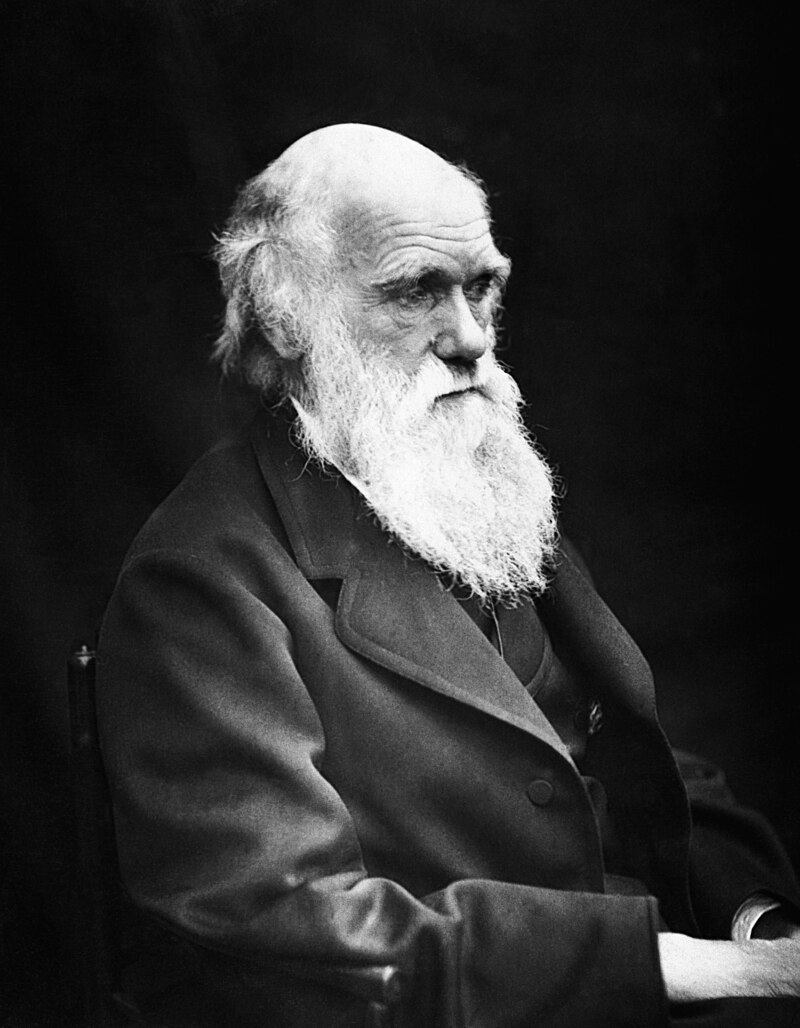
social Darwinism
biological concepts of natural selection & survival fitness re-imagined socio-politically

Jacobitism
Jacobitism was a political ideology advocating the restoration of the senior line of the House of Stuart to the British throne. When James II of England chose exile after the November 1688 Glorious Revolution, the Parliament of England ruled he had "abandoned" the English throne, which was given to his Protestant daughter Mary II of England, and his nephew, her husband William III. In April 1689, on the same basis, the Scottish Convention awarded Mary and William the throne of Scotland.

Kemalism
thumb|261x261px|The Six Arrows flag inspired by the Turkish arrows in [[Topkapı Palace]]
%20Aristotele%20by%20Francesco%20Hayez%20in%20gallerie%20Accademia%20Venice.jpg)
aristotelianism
upright=1.0|thumb|Aristotle by Francesco Hayez, 1811
%2009.jpg)
Putinism
thumb|300px|Vladimir Putin at the party congress of [[United Russia in 2011]]

Titoism
thumb|260px|Josip Broz Tito meeting with [[Bolesław Bierut and Michał Żymierski from the Polish People's Republic in 1946.]]
Machiavellianism
political philosophy named after and posed by Niccolò Machiavelli

Peronism
thumb|Argentine president Juan Perón and first lady [[Eva Perón have been the central figures in the Justicialist Party.]]
thumb|(Clockwise from the top left) Symbols associated with Peronism: Peronist Party emblem, the federal star, the "Perón vuelve" (Perón returns) sign, and the "V" hand sign.
.svg)
Georgism
thumb|right|Georgist campaign button from the 1890s. The cat on the badge refers to the slogan "Do you see the cat?" from a story by Congressman James G. Maguire. He compared understanding the Single Tax to being able to make out a cat in a picture of a landscape.
.jpg)
gaullism
thumb|Charles de Gaulle, after whom Gaullism is named

Thatcherism
Thatcherism is a form of British conservative ideology named after Conservative Party leader Margaret Thatcher that relates to not just her political platform and particular policies, but also her personal character and style of management while in office. Proponents of Thatcherism are referred to as Thatcherites. The term has been used to describe the principles of the British government under Thatcher from the 1979 general election to her resignation in 1990. In international terms, Thatcherites have been described as a part of the general socio-economic movement known as neoliberalism, with

Trumpism
Trumpism is the political ideology behind Donald Trump, the 45th and 47th president of the United States, and his political base. It is often used in close conjunction with the Make America Great Again (MAGA) political movement. It comprises ideologies such as right-wing populism, right-wing antiglobalism, national conservatism, Christian nationalism, and neo-nationalism, and features significant illiberal, authoritarian, and autocratic beliefs. Trumpists and Trumpians are terms that refer to individuals exhibiting its characteristics. There is significant academic debate over the prevalence o

Gandhism
thumb|300px|Khan Abdul Ghaffar Khan (left) of the [[Khudai Khidmatgars and Mohandas 'Mahatma' Gandhi (right) of the Indian National Congress]]
Gandhism, also referred to as Gandhianism, is a body of ideas that describes the inspiration, vision, and the life work of Mohandas K. Gandhi. It is particularly associated with his contributions to the idea of nonviolent resistance, sometimes also called civil resistance.

Neo-Marxism
Neo-Marxism is a collection of Marxist schools of thought originating from 20th-century approaches to amend or extend Marxism and Marxist theory, typically by incorporating elements from other intellectual traditions such as critical theory, psychoanalysis, or existentialism. Neo-Marxism comes under the broader framework of the New Left. In a sociological sense, neo-Marxism adds Max Weber's broader understanding of social inequality, such as status and power, to Marxist philosophy.
.webp)
Carlism
thumb|Carlist flag from the Third Carlist War (c. 1875), with the Carlist motto [[Dios, patria y rey ("God, Fatherland and King")]]
Carlism (; ; ; ) is a traditionalist and legitimist political movement in Spain aimed at establishing an alternative branch of the Bourbon dynasty, one descended from Don Carlos, Count of Molina (1788–1855), on the Spanish throne.

austromarxism
thumb|right|Austromarxist theorist Otto Bauer, photographed in 1919
thumb|right|Former Staatkanzler Karl Renner, photographed in 1920

Blanquism
thumb|Louis Auguste Blanqui

Hoxhaism
thumb|Translated works of Enver Hoxha, for whom the ideology is named.

Strasserism
Strasserism ( or ) refers to a dissident, far-right ideology based on Nazism, named after brothers Gregor and Otto Strasser, who were associated with the early Nazi movement. It shares Nazism's core rhetoric of revolutionary nationalism, racism, anti-capitalism, antisemitism, and anti-communism, as well as its populist tactics. Fundamentally, it fits into a broader "Third Positionist" pattern of strategically appropriating socialist-sounding rhetoric to advance an ultranationalist agenda, a tactic it shares with foundational historical fascist movements, including those of Hitler and Mussolini

Bonapartism
thumb|"The Four Napoleons", 1858 propaganda image depicting Napoleon|Napoleon I, [[Napoleon II, Napoleon III, and Louis-Napoléon, Prince Imperial]]
Reagan Doctrine
American strategy until the end of the Cold War
Francoism
REDIRECT Francoist Spain#Francoism

Nasserism
Nasserism () is an Arab nationalist and Arab socialist political ideology based on the thinking of Gamal Abdel Nasser, one of the two principal leaders of the Egyptian Revolution of 1952, and Egypt's second president. Spanning the domestic and international spheres, it combines elements of Arab socialism, republicanism, secularism, nationalism, anti-imperialism, developing world solidarity, Pan-Arabism, and international non-alignment. According to Mohamed Hassanein Heikal, Nasserism symbolised "the direction of liberation, socialist transformation, the people's control of their own resources,
Xi Jinping Thought on Socialism with Chinese Characteristics for a New Era
a political theory attributed to Xi Jinping, the General Secretary of the Chinese Communist Party

Bolivarianism
thumb|Portrait of Hugo Chávez, Simón Bolívar, and Nicolás Maduro
Bolivarianism is a mix of panhispanic, left-leaning and nationalist-patriotic ideals named after Simón Bolívar, the 19th-century Venezuelan general and liberator from the Spanish monarchy then in abeyance, who led the struggle for independence throughout much of South America.

Chavism
Chavismo (), also known in English as Chavism or Chavezism, is a left-wing populist political ideology based on the ideas, programs, and government style associated with Hugo Chávez and later Nicolás Maduro. It combines elements of socialist patriotism, Bolivarianism, and Latin American integration. People who supported Hugo Chávez and Chavismo are known as Chavistas.
Luxemburgism
REDIRECT Rosa Luxemburg#Thought
post-Marxism
Post-Marxism is a perspective in critical social theory which radically reinterprets Marxism, countering its alleged association with economism, historical determinism, anti-humanism, and class reductionism, whilst remaining committed to the construction of socialism. Most notably, post-Marxists are anti-essentialist, rejecting the primacy of class struggle, and instead focus on building radical democracy. Post-Marxism can be considered a synthesis of post-structuralist frameworks and neo-Marxist analysis, in response to the decline of the New Left after the protests of 1968. In a broader sens
Deng Xiaoping Theory
ideology of Deng Xiaoping

Guevarism
thumb|Che Guevara, after whom Guevarism is named.
Western Marxism
body of various Marxist theoreticians based in Western and Central Europe

Castroism
thumb|Fidel Castro, after whom '''' is named

Josephinism
thumb|Joseph II, Holy Roman Emperor|Joseph II by [[Anton von Maron, 1775]]
Josephinism is a name given collectively to the domestic policies of Joseph II, Holy Roman Emperor (1765–1790). During the ten years in which Joseph was the sole ruler of the Habsburg monarchy (1780–1790), he attempted to legislate a series of drastic reforms to remodel Austria in the form of what liberals saw as an ideal Enlightened state. This provoked severe resistance from powerful forces within and outside his empire, but ensured that he would be remembered as an "enlightened ruler" by historians from then to the p
.svg)
Orléanism
thumb|right|Coat of arms of the House of Orléans at the start of the [[July Monarchy]]

Kahanism
thumb|Flag of Kach, used by Kahanists
Kahanism (; ) is a religious Zionist ideology based on the views of Rabbi Meir Kahane, founder of the Jewish Defense League and the Kach (; ) political party in Israel. Kahane believed that most Arabs living in Israel are the enemies of Jews and Israel itself, and that a Jewish, Halakhic state, in which non-Jews would have no voting rights, should be created.

Caesarism
thumb|right|220px|A statue of Julius Caesar, in the city of Rimini, Italy
Jacksonian Democracy
19th-century American political philosophy

Saint-Simonianism
thumb|Claude-Henri de Rouvroy, comte de Saint-Simon|Claude Henri de Rouvroy, comte de Saint-Simon. Portrait by [[Godefroy Engelmann|upright=1.2]]
Centrist Marxism
Marxist position between reformism and revolution
anti-Stalinist left
opposition to Stalinism from those on the left-wing

Prometheism
Prometheism or Prometheanism () was a political project initiated by Józef Piłsudski, a principal statesman of the Second Polish Republic from 1918 to 1935. Its aim was to weaken the Russian Empire and then the Soviet Union, by supporting nationalist independence movements among the major non-Russian peoples that lived within the borders of Russia and the Soviet Union.

Marxism–Leninism–Maoism
thumb|right|Poster produced by the Revolutionary Communist Party, USA showing Marx, Lenin, and Mao

Erdoğanism
thumb|A wall rug of Erdoğan, whose ideals and political agenda have come to be referred to as 'Erdoğanism', at a rally of the Justice and Development Party
Ho Chi Minh Thought
political philosophy that builds upon Marxism–Leninism and the ideology of Ho Chi Minh
Orthodox Marxism
body of Marxist thought that emerged following the death of Karl Marx which became the official philosophy of the socialist movement

Zapatismo
thumbnail|The Zapatista army

Kirchnerism
Kirchnerism ( ) is an Argentine centre-left to left-wing political movement based on ideals formed by the supporters of spouses Néstor Kirchner and Cristina Fernández de Kirchner, who consecutively served as Presidents of Argentina. Although considered a branch of Peronism, it is opposed by some factions of Peronists and generally considered to fall into the category of left-wing populism. It is considered a representative of the socialism of the 21st century, although similarly to Peronism and in contrast to other left-wing ideologies, it is highly nationalist and populist rather than class-b
structural Marxism
Marxism philosophical movement associated with Althusser
.jpg)
Wilsonianism
thumb|Woodrow Wilson, after whom Wilsonianism is named
Jeffersonian democracy
American political persuasion of the 1790s until the 1820s

Metaxism
thumb|upright|Ioannis Metaxas, prime minister and dictator of Greece (1936–1941)