File:Luddite.jpg · Wikimedia Commons · See Wikimedia Commons
Luddite movement
Sign in to saveAlso known as Luddites, Luddite, Luddism
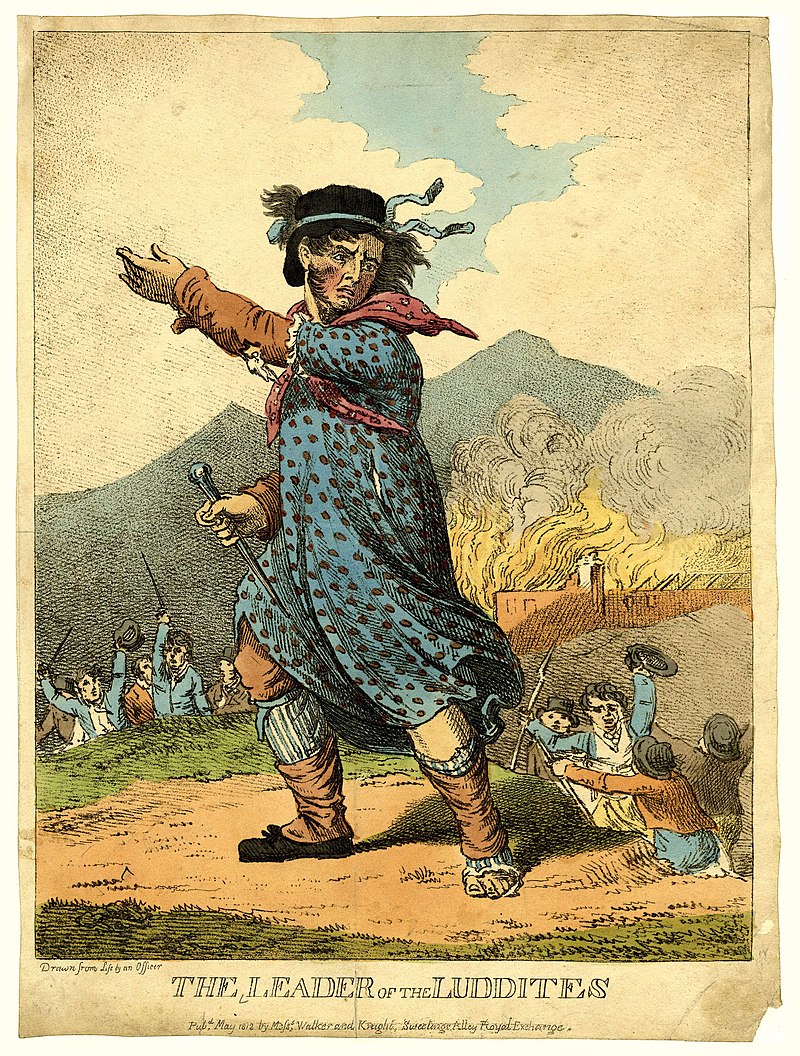
thumb|The Leader of the Luddites, 1812. Hand-coloured etching The Luddites were members of a 19th-century movement of English textile workers who opposed the use of certain types of automated machinery due to concerns relating to worker pay and output quality. They often destroyed the machines in organised raids. Members of the group referred to themselves as Luddites, self-described followers of "Ned Ludd", a legendary weaver whose name was used as a pseudonym in threatening letters to mill owners and government officials.
The Luddites were English textile workers in the 19th century who organized raids to destroy automated machinery because they worried it would reduce their wages and the quality of cloth production. The movement matters because it represents an early example of workers resisting technological change that threatened their livelihoods, and the term "Luddite" is still used today to describe people who oppose new technology.
AI-generated from the Wikipedia summary — may contain errors.
Wikidata facts
- Instance of
- labor movement
- Part of
- labor movement
- Named after
- Ned Ludd
- Image
- Luddite.jpg
Show 9 more facts
- in opposition to
- capitalism
- operating area
- Yorkshire
- Commons category
- Luddism
- inception
- 1811-03-11
- dissolved, abolished or demolished date
- 1817-00-00
- different from
- Ludim
- influenced by
- England in the Middle Ages
- location of formation
- Arnold
- has cause
- Industrial Revolution
via Wikidata · CC0
~15 min read
Encyclopedic overview
15 sectionsContents
- Etymology
- History
- Background
- Historical precedents
- Peak activity: 1811–1817
- Government response
- Legacy
- Modern usage
- See also
- Explanatory notes
- References
- Sources
- Further reading
- Primary sources
- External links
thumb|The Leader of the Luddites, 1812. Hand-coloured etching The Luddites were members of a 19th-century movement of English textile workers who opposed the use of certain types of automated machinery due to concerns relating to worker pay and output quality. They often destroyed the machines in organised raids. Members of the group referred to themselves as Luddites, self-described followers of "Ned Ludd", a legendary weaver whose name was used as a pseudonym in threatening letters to mill owners and government officials.
The Luddite movement began in Nottingham, England, and spread to the North West and Yorkshire between 1811 and 1816. Mill and factory owners took to shooting protesters and eventually the movement was suppressed by legal and military force, which included execution and penal transportation of accused and convicted Luddites.
Excerpted from Wikipedia’s “Luddite movement” article, available under the CC BY-SA 4.0 licence.