Category
page 1Extant Eocene first appearances

Ursidae
Bears are carnivoran mammals of the family Ursidae (). They are classified as caniforms, or doglike carnivorans. Although only eight species of bears are extant, they are widespread, appearing in a wide variety of habitats throughout most of the Northern Hemisphere and partially in the Southern Hemisphere. Bears are found on the continents of North America, South America, and Eurasia. Common characteristics of modern bears include large bodies with stocky legs, long snouts, small rounded ears, shaggy hair, plantigrade paws with five nonretractile claws, and short tails.

monkey
Monkey is a common name that may refer to most mammals of the infraorder Simiiformes, also known as simians. Traditionally, all animals in the group now known as simians are counted as monkeys except the apes. Thus monkeys, in that sense, constitute an incomplete paraphyletic grouping; alternatively, if apes (Hominoidea) are included, monkeys and simians are synonyms.

squirrel
rhinoceros
A rhinoceros ( ; ; ; : rhinoceros or rhinoceroses), commonly abbreviated to rhino, is a member of any of the five extant species (or numerous extinct species) of odd-toed ungulates (perissodactyls) in the family Rhinocerotidae. It is the only living family in the superfamily Rhinocerotoidea (whose members are also sometimes called rhinoceroses). Two of the extant species are native to Africa, and three to South and Southeast Asia.

Cocos nucifera
The coconut (Cocos nucifera) is a member of the palm family (Arecaceae) and the only living species of the genus Cocos. The term "coconut" (or the archaic "cocoanut") can denote the whole coconut palm tree or the large hard fruit. Originally native to Central Indo-Pacific, they are ubiquitous in coastal tropical regions.

passerines
A passerine () is any bird of the order Passeriformes (; from Latin 'sparrow' and '-shaped'), which includes more than half of all bird species. Sometimes known as perching birds, passerines generally have an anisodactyl arrangement of their toes (three pointing forward and one back), which facilitates perching.

Cactus
A cactus (: cacti, cactuses, or less commonly, cactus) is a member of the plant family Cactaceae (), a family of the order Caryophyllales comprising about 127 genera with some 1,750 known species. The word cactus derives, through Latin, from the Ancient Greek word (káktos), a name originally used by Theophrastus for a spiny plant whose identity is now not certain. Cacti occur in a wide range of shapes and sizes. They are native to the Americas, ranging from Patagonia in the south to parts of western Canada in the north, with the exception of Rhipsalis baccifera, which is also found in Africa a
.jpg)
Canidae
Canidae (; from Latin, canis, "dog") is a biological family of caniform carnivorans, constituting a clade. A member of this family is a canid (, rarely ), colloquially referred to as dogs. The family includes three subfamilies: the Caninae, and the extinct Borophaginae and Hesperocyoninae. The Caninae are the canines, and include domestic dogs, wolves, coyotes, raccoon dogs, foxes, jackals and other species.
%20Female%20(31407673590).png)
Coccinellidae
Coccinellidae () is a widespread family of small beetles. They are commonly known as ladybugs in North America and ladybirds in the United Kingdom; "lady" refers to mother Mary. Entomologists use the names ladybird beetles or lady beetles to avoid confusion with true bugs. The more than 6,000 described species have a global distribution and are found in a variety of habitats. They are oval beetles with a domed back and flat underside. Many of the species have conspicuous aposematic (warning) colours and patterns, such as red with black spots, that warn potential predators that they taste bad.

Bombus
A bumblebee (or bumble bee, bumble-bee, or humble-bee) is any of over 250 species in the genus Bombus, part of Apidae, one of the bee families. This genus is the only extant group in the tribe Bombini, though a few extinct related genera (e.g., Calyptapis) are known from fossils. They are found primarily in the Northern Hemisphere, although they are also found in South America, where a few lowland tropical species have been identified. European bumblebees have also been introduced to New Zealand and Tasmania. Female bumblebees can sting repeatedly, but generally ignore humans and other animals

Soricidae
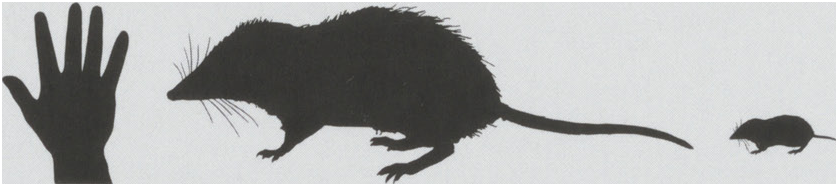
Shrews (family Soricidae) are small mole-like mammals classified in the order Eulipotyphla. True shrews are not to be confused with treeshrews, otter shrews, elephant shrews, West Indies shrews, or marsupial shrews, which belong to different families or orders.
Erinaceidae
Erinaceidae (from Latin erinaceus, "hedgehog") is a family in the order Eulipotyphla, consisting of the hedgehogs and moonrats. Until recently, it was assigned to the order Erinaceomorpha, which has been subsumed with the paraphyletic Soricomorpha into Eulipotyphla. Eulipotyphla has been shown to be monophyletic; Soricomorpha is paraphyletic because both Soricidae and Talpidae share a more recent common ancestor with Erinaceidae than with solenodons.

Cuculidae
Cuckoos are birds in the Cuculidae ( ) family, the sole taxon in the order Cuculiformes ( ). The cuckoo family includes the common or European cuckoo, roadrunners, koels, malkohas, couas, coucals, and anis. The coucals and anis are sometimes separated as distinct families, the Centropodidae and Crotophagidae, respectively. The cuckoo order Cuculiformes is one of three that make up the Otidimorphae, the other two being the turacos and the bustards. The family Cuculidae contains 150 species, which are divided into 33 genera.

Talpidae
The family Talpidae () includes the true moles (as well as the shrew moles and desmans) who are small insectivorous mammals of the order Eulipotyphla. Talpids are all digging animals to various degrees: moles are completely subterranean animals; shrew moles and shrew-like moles somewhat less so; and desmans, while basically aquatic, excavate dry sleeping chambers; whilst the quite unique star-nosed mole is equally adept in the water and underground. Talpids are found across the Northern Hemisphere of Eurasia and North America (although none are found in Ireland nor in the Americas south of nor

Apodidae
family of birds

Dermoptera
Colugos (), flying lemurs, or cobegos (), are arboreal gliding primatomorphs that are native to Southeast Asia. Their closest evolutionary relatives are primates. There are just two living species of colugos: the Sunda flying lemur (Galeopterus variegatus) and the Philippine flying lemur (Cynocephalus volans). These two species make up the entire family Cynocephalidae () and order Dermoptera, from Ancient Greek δέρμα (dérma), meaning "skin", and πτερόν (pterón), meaning "wing".

Piciformes
Nine families of largely arboreal birds make up the order Piciformes (), the best-known of them being the Picidae, which includes the woodpeckers and close relatives. The Piciformes contain about 71 living genera with a little over 450 species, of which the Picidae make up about half.
gecko
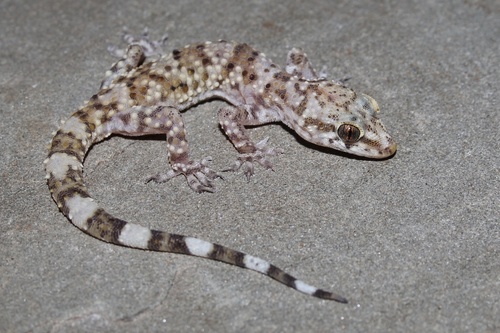
Gekkonidae (the common geckos) is the largest family of geckos, containing over 950 described species in 62 genera. The Gekkonidae contain many of the most widespread gecko species, including house geckos (Hemidactylus), the tokay gecko (Gekko), day geckos (Phelsuma), the mourning gecko (Lepidodactylus), and dtellas (Gehyra). Gekkonid geckos occur globally and are particularly diverse in tropical areas. Many species of these geckos exhibit an adhering ability to surfaces through Van der Waals forces utilizing intermolecular forces between molecules of their setae (foot hair) and molecules of t

Rubiaceae
Rubiaceae () is a family of flowering plants, commonly known as the coffee, madder, or bedstraw family. It consists of terrestrial trees, shrubs, lianas, or herbs that are recognizable by simple, opposite leaves with interpetiolar stipules and sympetalous actinomorphic flowers. The family contains about 14,200 species in about 615 genera, which makes it the fourth-largest angiosperm family by number of species. Rubiaceae has a cosmopolitan distribution; however, the largest species diversity is concentrated in the tropics and subtropics. Economically important genera include Coffea, the source

Cyprinidae
Cyprinidae is a family of cyprinoid freshwater fishes commonly referred to as the carp family, which includes the carps, barbs, and barbels, among others. These cyprinids also share sister taxa with the danionins and minnows under the suborder Cyprinoidei. Cyprinidae is the largest and most diverse fish family, and the largest family of vertebrates overall, with roughly 1,780 species split into 166 valid genera.

Coraciiformes
The Coraciiformes are a group of usually colourful birds including the kingfishers, the bee-eaters, the rollers, the motmots, and the todies. They generally have syndactyly, with three forward-pointing toes (and toes 3 & 4 fused at their base), though in many kingfishers one of these is missing.

Rallidae
family of birds

Alcidae
Auks or alcids are birds of the family Alcidae in the order Charadriiformes. The alcid family includes the murres, guillemots, auklets, puffins, and murrelets. The family contains 25 extant or recently extinct species that are classified into 11 genera. Auks are found throughout the Northern Hemisphere.

Rubus
Rubus is a large and diverse genus of flowering plants in the rose family, Rosaceae, subfamily Rosoideae, most commonly known as brambles. Fruits of various species are known as raspberries, blackberries, dewberries, and bristleberries. It is a diverse genus, with the estimated number of Rubus species varying from 250 to over 1000, found across all continents except Antarctica.

Gliridae
A dormouse is a rodent of the family Gliridae (this family is also variously called Myoxidae or Muscardinidae by different taxonomists). Dormice are nocturnal animals found in Africa, Asia, and Europe. They are named for their long, dormant hibernation period of six months or longer. There are nine genera and 28 living species of dormice, with half of living species belonging to the African genus Graphiurus.

Hoatzin
The hoatzin ( ) or hoactzin ( ) (Opisthocomus hoazin) is a species of tropical bird found in swamps, riparian forests, and mangroves of the Amazon and Orinoco Basins in South America. It is the only extant species in the genus Opisthocomus which is the only extant genus in the Opisthocomidae family under the order of Opisthocomiformes. Despite being the subject of intense debate by specialists, the taxonomic position of this family is still far from clear.

Tsetse fly
genus of insects

Scandentia
The treeshrews (also called tree shrews or banxrings) are small mammals native to the tropical forests of South and Southeast Asia. They make up the entire order Scandentia (; from Latin ), which split into two families: the Tupaiidae (19 species, "ordinary" treeshrews), and the Ptilocercidae (one species, the pen-tailed treeshrew).

Rotifera
The rotifers (, from Latin 'wheel' and 'bearing'), sometimes called wheel animals or wheel animalcules, make up a phylum (Rotifera ) of microscopic and near-microscopic pseudocoelomate animals.

Procellariiformes
Procellariiformes is an order of seabirds that comprises four families; the albatrosses, the petrels and shearwaters, and two families of storm petrels. Formerly called Tubinares and still called tubenoses in English, Procellariiformes are often referred to collectively as the petrels, a term that has been applied to all members of the order, or more commonly all the families except the albatrosses. They are almost exclusively pelagic (feeding in the open ocean), and have a cosmopolitan distribution across the world's oceans, with the highest diversity being the seas around New Zealand.

New World vulture
family of birds

Tytonidae
The bird family Tytonidae, which includes the barn owls Tyto and the bay owls Phodilus, is one of the two families of owls, the other being the true owls or typical owls, Strigidae. Tytonidae are medium to large owls with large heads and characteristic heart-shaped faces. They have long, strong legs with powerful talons. Tytonidae also differ from the Strigidae in structural details relating in particular to the sternum and feet.
%20(16475688389).jpg)
Coraciidae
Coraciidae () is a family of Old World birds, which are known as rollers because of the aerial acrobatics some of these birds perform during courtship or territorial flights. The family contains 13 species and is divided into two genera. Rollers resemble crows in size and build, and share the colourful appearance of kingfishers and bee-eaters, blues and pinkish or cinnamon browns predominating. The two inner front toes are connected, but not the outer one.

Strepsirrhini
Strepsirrhini or Strepsirhini (; ) is a suborder of primates that includes the lemuriform primates, which consist of the lemurs of Madagascar, galagos ("bushbabies") and pottos from Africa, and the lorises from India and Southeast Asia. Collectively they are referred to as strepsirrhines.
songbirds
A songbird is a bird belonging to the suborder Passeri of the perching birds. Another name that is sometimes seen as the scientific or vernacular name is Oscines, from Latin oscen, 'songbird'.

Tayassuidae
Peccaries (also javelinas or skunk pigs) are pig-like ungulates of the family Tayassuidae (New World pigs). They are found throughout Central and South America, Trinidad in the Caribbean, and in the southwestern area of North America. Peccaries usually measure between in length, and a full-grown adult usually weighs about . They represent the closest relatives of the family Suidae, which contains pigs and relatives. Together Tayassuidae and Suidae are grouped in the suborder Suina within the order Artiodactyla (even-toed ungulates).

Pristidae
Sawfish, also known as carpenter sharks, are a family of very large rays characterized by a long, narrow, flattened rostrum, or nose extension, lined with sharp transverse teeth, arranged in a way that resembles a saw. They are among the largest fish, with some species reaching lengths of about . They are found worldwide in tropical and subtropical regions in coastal marine and brackish estuarine waters, as well as freshwater rivers and lakes. All species are critically endangered.

Araliaceae
The Araliaceae are a family of flowering plants composed of about 43 genera and around 1500 species consisting of primarily woody plants and some herbaceous plants commonly called the ivy or ginseng family. The morphology of Araliaceae varies widely, but it is predominantly distinguishable based on its woody habit, tropical distribution, and the presence of simple umbels.
Gavia
Loons (North American English) or divers (British / Irish English) are a group of aquatic birds found in much of North America and northern Eurasia. All living species of loons are members of the genus Gavia, family Gaviidae, and order Gaviiformes.

electric ray
order of fishes

Taxaceae
Taxaceae (), commonly called the yew family, is a coniferous family which includes six extant and two extinct genera, and about 30 species of plants, or in older interpretations three genera and 7 to 12 species.

Bucerotiformes
Bucerotiformes is an order of birds that contains the hornbills, ground hornbills, hoopoes and wood hoopoes. These birds were previously classified as members of Coraciiformes. The clade is distributed in Africa, Asia, Europe and Melanesia.
%20Slovakia.jpg)
Vespertilionidae
thumb|Parti-coloured batVespertilio murinus, Slovakia
Vespertilionidae is a family of microbats, of the order Chiroptera, flying, insect-eating mammals variously described as the common, vesper, or simple nosed bats. The vespertilionid family is the most diverse and widely distributed of bat families, specialised in many forms to occupy a range of habitats and ecological circumstances, and it is frequently observed or the subject of research. The facial features of the species are often simple, as they mainly rely on vocally emitted echolocation. The tails of the species are enclosed by the lo

Catarrhini
The parvorder Catarrhini (known commonly as catarrhine monkeys, Old World anthropoids, or Old World monkeys) consists of the Cercopithecoidea (Old World monkeys) and Hominoidea (apes). In 1812, Geoffroy grouped those two groups together and established the name Catarrhini, "Old World monkeys", ("''singes de l'Ancien Monde" in French). Its sister in the infraorder Simiiformes (simians) is the parvorder Platyrrhini (New World monkeys). There has been some resistance to directly designate apes (and thus humans) as monkeys despite the scientific evidence, so "Old World monkey" may be taken to mean

Geometridae
family of moths

Triturus
Triturus is a genus of newts comprising the crested and the marbled newts, which are found from Great Britain through most of continental Europe to westernmost Siberia, Anatolia, and the Caspian Sea region. Their English names refer to their appearance: marbled newts have a green–black colour pattern, while the males of crested newts, which are dark brown with a yellow or orange underside, develop a conspicuous jagged seam on their back and tail during their breeding phase.

Sphyraena
A barracuda is a large, predatory, ray-finned, saltwater fish of the genus Sphyraena, the only genus in the family Sphyraenidae, which was named by Constantine Samuel Rafinesque in 1815. It is found in tropical and subtropical oceans worldwide ranging from the eastern border of the Atlantic Ocean to the Red Sea, on its western border the Caribbean Sea, and in tropical areas of the Pacific Ocean. Barracudas reside near the top of the water and near coral reefs and sea grasses. Barracudas are often targeted by sport-fishing enthusiasts.

Muroidea
The Muroidea are a large superfamily of rodents, including mice, rats, voles, hamsters, lemmings, gerbils, and many other relatives. Although the Muroidea originated in Eurasia, they occupy a vast variety of habitats on every continent except Antarctica. Some authorities have placed all members of this group into a single family, Muridae, due to difficulties in determining how the subfamilies are related to one another. Many of the families within the Muroidea superfamily have more variations between the families than between the different clades. A possible explanation for the variations in r

tenrecs
thumb |A taxidermy|taxidermy mount of a tenrec in defensive posture, [[Horniman Museum and Gardens, London]]

Salticidae
family of spiders

Geomyidae
Pocket gophers, commonly referred to simply as gophers, are burrowing rodents of the family Geomyidae. The roughly 41 species are all endemic to North and Central America. They are commonly known for their extensive tunneling activities and their ability to damage farms and gardens.

triggerfish
Triggerfish are about 40 species of often brightly colored, marine, ray-finned fishes belonging to the family Balistidae. Often marked by lines and spots, they inhabit tropical and subtropical oceans throughout the world, with the greatest species richness in the Indo-Pacific. Most are found in relatively shallow, coastal habitats, especially at coral reefs, but a few, such as the oceanic triggerfish (Canthidermis maculata), are pelagic. While several species from this family are popular in the marine aquarium trade, they are often notoriously ill-tempered.

Actinidia
Actinidia is a genus of woody and, with a few exceptions, dioecious plants native to temperate eastern Asia, occurring throughout most of China, Taiwan, Korea, and Japan, and extending north to southern areas of Russian Far East and south into Indochina. The genus includes shrubs growing to tall, and vigorous, strong-growing vines, growing up to in tree canopies. They mostly tolerate temperatures down to around , and some are much hardier.
alt=Immature kiwifruit hanging beneath dense Actinidia foliage on a natural vine.|thumb|266x266px|Kiwifruit developing on Actinidia vines
The leaves are alt
Channidae
family of fishes

Gavialidae
Gavialidae is a family of large semiaquatic crocodilians with elongated, narrow snouts. Gavialidae consists of two living species, the gharial (Gavialis gangeticus) and the false gharial (Tomistoma schlegelii), both occurring in Asia. Many extinct members are known from a broader range, including the recently extinct Hanyusuchus. Gavialids are generally regarded as lacking the jaw strength to capture the large mammalian prey favoured by crocodiles and alligators of similar size so their thin snout is best used to catch fish, however the false gharial has been found to have a generalist diet wi

Tortricidae
The Tortricidae are a family of moths, commonly known as tortrix moths or leafroller moths, in the order Lepidoptera. This large family has over 11,000 species described, and is the sole member of the superfamily Tortricoidea, although the genus Heliocosma is sometimes placed within this superfamily. Many of these are economically important pests. Olethreutidae is a junior synonym. The typical resting posture is with the wings folded back, producing a rather rounded profile.

Atherinidae
family of fishes

Epinephelus
Epinephelus is a genus of marine, ray-finned fish, groupers from the subfamily Epinephelinae, part of the family Serranidae, which also includes the anthias and sea basses. They are predatory fish, largely associated with reefs, and are found in tropical and subtropical seas throughout the world. They are important target species for fisheries.

Dynastinae
Dynastinae or rhinoceros beetles are a subfamily of the scarab beetle family (Scarabaeidae), named for their rhinoceros-like horns. Other common names – some for particular groups of rhinoceros beetles – include Hercules beetles, unicorn beetles or horn beetles. Over 1,500 species and 225 genera of rhinoceros beetles are known.

Rajiformes
Rajiformes is one of the four orders in the clade Batomorphi, often referred to as the superorder Batoidea, flattened cartilaginous fishes related to sharks. Rajiforms are distinguished by the presence of greatly enlarged pectoral fins, which reach as far forward as the sides of the head, with a generally flattened body. The undulatory pectoral fin motion diagnostic to this taxon is known as rajiform locomotion. The eyes and spiracles are located on the upper surface of the head and the gill slits are on the underside of the body. Most species give birth to live young, although some lay eggs e