Category
page 1Fabaceae genera

Acacia
thumb|Bipinnate leaves of Acacia dealbata
thumb|Phyllodes of Acacia penninervis
thumb|Flowers of Acacia retinodes
%20II.jpg)
Lupinus
Lupinus, commonly known as lupin, lupine, or regionally bluebonnet, is a genus of plants in the legume family Fabaceae. The genus includes over 199 species, with centres of diversity in North and South America. Smaller centres occur in North Africa and the Mediterranean. They are widely cultivated both as a food source and as ornamental plants, but are invasive to some areas. For instance, lupine has become an ecological problem in Iceland since the beginning of the 21st century.

Vicia
Vicia is a genus of over 240 species of flowering plants that are part of the legume family (Fabaceae), and which are commonly known as vetches. Vicia species are native to Eurasia, Africa, and the Americas.

Astragalus
genus of plants
Mimosa
Mimosa is a genus of about 600 species of herbs and shrubs, in the mimosoid clade of the legume family Fabaceae. Species are native to the Americas, from North Dakota to northern Argentina, and to eastern Africa (Tanzania, Mozambique, and Madagascar) as well as the Indian subcontinent and Indochina. The generic name is derived from the Greek word (mimos), 'actor' or 'mime', and the feminine suffix -osa, 'resembling', suggesting its 'sensitive leaves' which seem to 'mimic conscious life'.

Phaseolus
Phaseolus (bean, wild bean) is a genus of herbaceous to woody annual and perennial vines in the family Fabaceae containing about 70 plant species, all native to the Americas, primarily Mesoamerica.

Pisum
REDIRECT Lathyrus

Lathyrus
Lathyrus is a genus of flowering plants in the legume family Fabaceae, and contains approximately 160 species. Commonly known as peavines or vetchlings, they are native to temperate areas, with a breakdown of 52 species in Europe, 30 species in North America, 78 in Asia, 24 in tropical East Africa, and 24 in temperate South America. There are annual and perennial species which may be climbing or bushy. This genus has numerous sections, including Orobus, which was once a separate genus. The genus has numerous synonyms, including Pisum, the ancient Latin name for the pea.

Wisteria
Wisteria is a genus of flowering plants in the legume family, Fabaceae (Leguminosae). The genus includes four species of woody twining vines that are native to China, Japan, Korea, Vietnam, southern Canada, the Eastern United States, and north of Iran. They were later introduced to France, Germany and various other countries in Europe. Some species are popular ornamental plants. The genus name is also used as the English name, and may then be spelt 'wistaria'.

Medicago
thumb|Anatomical diagram of Medicago flowers.
Medicago is a genus of flowering plants, commonly known as medick or burclover, in the legume family (Fabaceae). It contains at least 87 species and is distributed mainly around the Mediterranean Basin, and extending across temperate Eurasia and sub-Saharan Africa. The best-known member of the genus is alfalfa (M. sativa), an important forage crop, and the genus name is based on the Latin name for that plant, , from Median (grass). Most members of the genus are low, creeping herbs, resembling clover, but with burs (hence the common name). However,

Melilotus
thumb|Melilotus albus
Melilotus, known as melilot or sweet clover is a genus of legumes in the family Fabaceae, native to Europe, Asia, and Africa. The genus is closely related to Trifolium (clovers). Several species are common grassland plants and weeds of cultivated ground, and some species are now found worldwide as naturalised plants.

Sophora
Sophora is a genus of about 45 species of small trees and shrubs in the pea family Fabaceae. The species have a pantropical distribution. The generic name is derived from , an Arabic name for a pea-flowered tree.

Genista
Genista is a genus of flowering plants in the legume family Fabaceae, native to open habitats such as moorland and pasture in Europe and western Asia. They include species commonly called broom, though the term may also refer to other genera, including Cytisus and Chamaecytisus. Brooms in other genera are sometimes considered synonymous with Genista: Echinospartum, Retama, Spartium, Stauracanthus, and Ulex.

Lotus
genus of flowering plants in the bean family Fabaceae

Senna
genus of plants
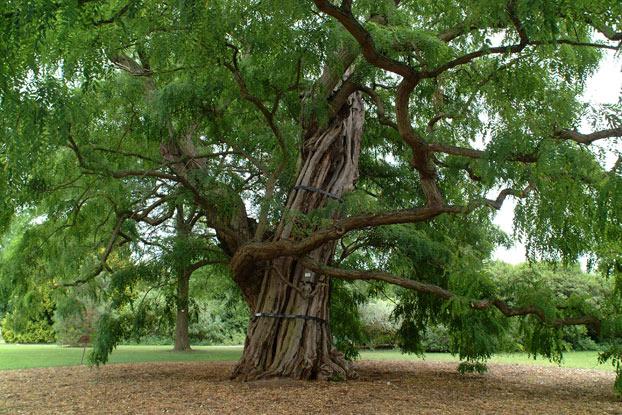
Robinia
Robinia is a genus of flowering plants in the family Fabaceae, tribe Robinieae, native to North America. Commonly known as locusts, they are deciduous trees and shrubs growing tall. The leaves are pinnate with 7–21 oval leaflets. The flowers are white or pink, in usually pendulous racemes. Many species have thorny shoots, and several have sticky hairs on the shoots.

Albizia
Albizia is a genus of more than 160 species of mostly fast-growing subtropical and tropical trees and shrubs in the subfamily Mimosoideae of the family Fabaceae. The genus is pantropical, occurring in Asia, Africa, Madagascar, America and Australia, but mostly in the Old World tropics. In some locations, some species are considered weeds.

Glycyrrhiza
thumb|Glycyrrhiza echinata Fruits and Seeds - [[MHNT]]
thumb|180px|right|Plant as used in Chinese herbology (crude medicine)

Bauhinia
Bauhinia () is a large genus of flowering plants in the subfamily Cercidoideae and tribe Bauhinieae, in the large flowering plant family Fabaceae, with a pantropical distribution. The genus was named after the Bauhin brothers Gaspard and Johann, Swiss-French botanists.

Glycine
genus of plants

Laburnum
Laburnum, sometimes called golden chain or golden rain, is a genus of two species of small trees in the subfamily Faboideae of the pea family Fabaceae. The species are Laburnum anagyroides—common laburnum and Laburnum alpinum—alpine laburnum. They are native to the mountains of southern Europe from France to the Balkans.
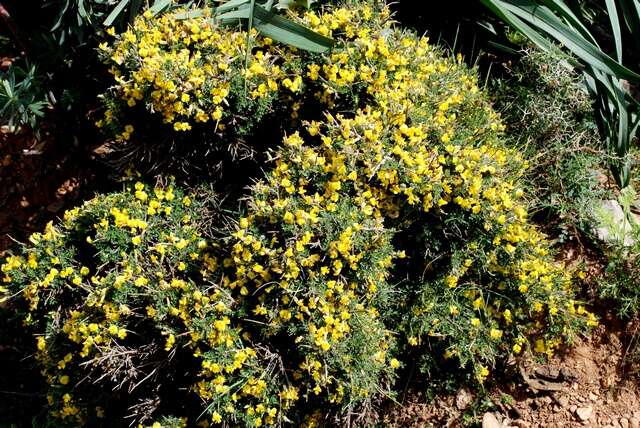
Cytisus
Cytisus is a genus of flowering plants in the family Fabaceae, native to open sites (typically scrub and heathland) in Europe, western Asia and North Africa. It belongs to the subfamily Faboideae, and is one of several genera in the tribe Genisteae which are commonly called brooms. They are shrubs producing masses of brightly coloured, pea-like flowers, often highly fragrant. Members of the segregate genera Calicotome, Chamaecytisus, and Lembotropis are sometimes included in Cytisus.

Onobrychis
__NOTOC__

Trigonella
Trigonella is a genus from the family Fabaceae. The best known member is the herb fenugreek. Members of the genus occur naturally in the Canary Islands, southern Europe, nontropical Africa, western and central Asia, the Indian subcontinent, and Australia.

Gleditsia
Gleditsia (honey locust) is a genus of trees in the family Fabaceae, subfamily Caesalpinioideae, native to the Americas and Asia. The Latin name commemorates Johann Gottlieb Gleditsch, director of the Berlin Botanical Garden, who died in 1786.

Anthyllis
Anthyllis is a genus of flowering plants in the family Fabaceae. This genus contains both herbaceous and shrubby species and is distributed in Europe, the Middle East and North Africa. The most widespread and familiar species is A. vulneraria (kidney vetch), a familiar grassland flower which has also been introduced to New Zealand.

Indigofera
Indigofera is a large genus of over 750 species of flowering plants belonging to the pea family Fabaceae. They are widely distributed throughout the tropical and subtropical regions of the world.

Arachis
Arachis is a genus of about 70 species of annual and perennial flowering plants in the family (Fabaceae), native to South America, and was recently assigned to the informal monophyletic Pterocarpus clade of the Dalbergieae. At least one species, the peanut (Arachis hypogaea), is a major food crop species of global importance; some of the other species are cultivated for food to a small extent in South America. Other species such as A. pintoi are cultivated worldwide as forage and soil conditioner plants, with the leaves providing high-protein feed for grazing livestock and a nitrogen source in
%20(6728299493).jpg)
Vigna
Vigna is a genus of plants in the legume family, Fabaceae, with a pantropical distribution. It includes some well-known cultivated species, including many types of beans. Some members of the genus were previously classified in Phaseolus. According to Hortus Third, Vigna differs from Phaseolus in biochemistry and pollen structure, and in details of the style and stipules.

Cicer
Cicer is a genus of the legume family, Fabaceae, and the only genus found in tribe Cicereae. It is included within the IRLC, and its native distribution is across the Middle East and Asia. Its best-known and only domesticated member is Cicer arietinum, the chickpea.

Ononis
Ononis is a genus of 80–90 species of perennial herbs and subshrubs in the legume family Fabaceae. The members of this genus are called restharrows; an old spelling "wrestharrows" is also recorded from 1965. as some species grow as weeds on arable lands where their tough roots would catch and stop the harrow. The genus is native to Europe, northern and eastern Africa, and western and central Asia.
%20in%20the%20south%20of%20Buryatia%2C%20Russia.jpg)
Caragana
thumb|Flowering caragana (camel's tail) in the south of Buryatia, Russia

Erythrina
thumb|Erythrina flabelliformis - MHNT

Alhagi
thumb|left|A big plant of Alhagi in Ab Pakhsh
thumb|left|Alhagi flowers in Ab Pakhsh
thumb|left|Alhagi
thumb|left|Alhagi flowers
alt=Wild Alhagi in Behbahan, Iran|thumb|Wild Alhagi in Behbahan, Iran

Ulex
Ulex (commonly known as gorse, furze, or whin) is a genus of flowering plants in the family Fabaceae. The genus comprises about 20 species of thorny evergreen shrubs in the subfamily Faboideae of the pea family Fabaceae. The species are native to parts of western Europe and northwest Africa, with the majority of species in Iberia.

Cercis
Cercis is a genus of about 10 species in the subfamily Cercidoideae of the pea family Fabaceae. It contains small deciduous trees or large shrubs commonly known as redbuds in the USA. They are characterised by simple, rounded to heart-shaped leaves and pinkish-red flowers borne in the early spring on bare leafless shoots, on both branches and trunk ("cauliflory"). The genus contains ten species, native to warm temperate regions of North America, southern Europe, western and central Asia, and China.

Abrus
Abrus is a genus of flowering plants in the pea family, Fabaceae, and the only genus in the tribe Abreae. It contains 13–18 species, but is best known for a single species: jequirity (A. precatorius). The highly toxic seeds of that species are used to make jewellery.

Cassia
genus of plants

Ceratonia
Ceratonia , also known as carobs, is a small genus of flowering trees in the pea family, Fabaceae, endemic to the Mediterranean region and the Middle East. Its best known member is the carob tree (Ceratonia siliqua), which is cultivated for its edible pods and has been widely introduced to regions with similar climates. The genus was long considered monotypic, but a second species, Ceratonia oreothauma, was identified in 1979 from Oman and Somalia. The genus is in subfamily Caesalpinioideae and tribe Umtizieae.

Sesbania
thumb|Sesbania cannabina
Caesalpinia
Caesalpinia is a genus of flowering plants in the family Fabaceae. It includes 10 species which range from southeastern Mexico through Central America to Colombia, Ecuador, and Peru, and to Cuba, Hispaniola, and the Bahamas.

Dalbergia
thumb|Spines of Dalbergia armata|D. armata
thumb|Trunk of Dalbergia lanceolaria|D. lanceolaria
thumb|Flowers of D. lanceolaria
thumb|Pods of D. lanceolaria
thumb|Chess pieces in D. latifolia rosewood
thumb|Flowers of Dalbergia miscolobium|D. miscolobium
thumb|Wood from a Dalbergia sp. - MHNT

Pterocarpus
thumb|Wood of P. officinalis
Pterocarpus is a pantropical tree genus in the Fabaceae family. It belongs to the subfamily Faboideae, and was recently assigned to the informal monophyletic Pterocarpus clade within the Dalbergieae. Most species of Pterocarpus yield valuable timber traded as padauk (or padouk), usually pronounced or ; other common names are mukwa or narra.

Hedysarum
Hedysarum (sweetvetch) is a genus of the botanical family Fabaceae, consisting of about 200 species of annual or perennial herbs found in Asia, Europe, North Africa, and North America.

Prosopis
thumb|Prosopis articulata (MHNT)
Prosopis is a genus of flowering plants in the family Fabaceae. The current circumscription of the genus contains three species found in northern Africa, the Middle East, Central and South Asia. Previously it also contained around 40 species of spiny trees and shrubs found in subtropical and tropical regions of the Americas and Africa, now mostly placed in genera Strombocarpa and Neltuma. They often thrive in arid soil and are resistant to drought, on occasion developing extremely deep root systems. Their wood is usually hard, dense and durable. Their fruits ar

Coronilla
The genus Coronilla contains 8 species of flowering plants native to Europe and North Africa. It contained about 20 species until Securigera was split off.

Colutea
Colutea is a genus of about 28 species of deciduous flowering shrubs in the legume family, Fabaceae, growing from tall and native to the Old World. They are sometimes called bladder sennas, although they are not particularly closely related to the true sennas.

Crotalaria
Crotalaria is a genus of flowering plants in the family Fabaceae (subfamily Faboideae) commonly known as rattlepods. The genus includes over 700 species of herbaceous plants and shrubs. Africa is the continent with the majority of Crotalaria species (approximately 400 species), which are mainly found in damp grassland, especially in floodplains, depressions and along edges of swamps and rivers, but also in deciduous bush land, roadsides and fields. Some species of Crotalaria are grown as ornamentals. The common name rattlepod or rattlebox is derived from the fact that the seeds become loose in

Galega
Galega, '''goat's rue''', is a genus of flowering plants in the legume family, Fabaceae, native to central and southern Europe, western Asia and tropical east Africa. They are tall, bushy, herbaceous perennials with erect racemes of pea-like flowers in shades of white, pink, blue or mauve. Their preferred habitats are sunny damp meadows or slopes.

Amorpha
Amorpha is a genus of plants in the pea family, Fabaceae. All the species are native to North America, from southern Canada, most of the United States (US), and northern Mexico. They are commonly known as false indigo. The name Amorpha means "deformed" or "without form" in Greek and was given because flowers of this genus only have one petal, unlike the usual "pea-shaped" flowers of the Faboideae subfamily. Amorpha is missing the wing and keel petals.

Oxytropis
Oxytropis is a genus of plants in the legume family. It includes over 600 species native to subarctic to temperate regions of North America and Eurasia. It is one of three genera of plants known as locoweeds, and are notorious for being toxic to grazing animals. The other locoweed genus is the closely related Astragalus. Most oxtropis species are native to Eurasia and North America, but several species are native to the Arctic. These are hairy perennial plants which produce raceme inflorescences of pink, purple, white, or yellow flowers which are generally pea-like but have distinctive sharply

Calliandra
Calliandra is a genus of flowering plants in the pea family, Fabaceae, in the mimosoid clade of the subfamily Caesalpinioideae. It contains about 140 species that are native to tropical and subtropical regions of the Americas.

Pueraria
Pueraria is a genus of 15–20 species of legumes native to south, east, and southeast Asia and to New Guinea and northern Australia. The best known member is kudzu, also called Japanese arrowroot. The genus is named after 19th century Swiss botanist Marc Nicolas Puerari.

Desmodium
Desmodium is a genus of plants in the legume family Fabaceae, sometimes called tick-trefoil, tick clover, hitch hikers or beggar lice. There are dozens of species and the delimitation of the genus has shifted much over time. Species are distributed widely – from Quebec to northern Argentina in the Americas, across northern and southern tropical Africa, in the southern Arabian Peninsula, in Myanmar and Thailand, New Guinea, and northern and eastern Australia.
Vachellia
Vachellia is a genus of flowering plants in the legume family, Fabaceae, commonly known as thorn trees or acacias. It belongs to the subfamily Mimosoideae. Its species were considered members of genus Acacia until 2009. Vachellia can be distinguished from other acacias by its capitate inflorescences and spinescent stipules. Before discovery of the New World, Europeans in the Mediterranean region were familiar with several species of Vachellia, which they knew as sources of medicine, and had names for them that they inherited from the Greeks and Romans.

Clitoria
Clitoria is a genus of mainly tropical and subtropical, insect-pollinated flowering pea vines.
%20Ornithopus%20compressus%20-%20Fruits.jpg)
Ornithopus
Ornithopus, the '''bird's-foot', is a genus of flowering plants in the legume family, Fabaceae. It includes six species and one natural hybrid native to Europe, Macaronesia, the eastern Mediterranean, northwest Africa, and Iran, and from southern Brazil to northeastern Argentina in South America.
thumb|Appearance of the fruits which gave the name to the genus
Ornithopus × bardiei
Ornithopus compressus — yellow serradella
Ornithopus micranthus
Ornithopus perpusillus'' — little white bird's foot
Ornithopus pinnatus — orange bird's foot
Ornithopus sativus — serradella, common bird's foot
Ornith

Senegalia
Senegalia (from Senegal and Acacia senegal (L.) Willd.) is a genus of flowering plants in the family Fabaceae. It belongs to the Mimosoid clade. Until 2005, its species were considered members of Acacia.
The genus was considered polyphyletic and required further division, with the genera Parasenegalia and Pseudosenegalia accepted soon after.

Mucuna
Mucuna is a genus of vines and shrubs of the legume family Fabaceae: tribe Phaseoleae. It has a pan-tropical distribution and contains 112 accepted species . The genus was created in 1763 by French botanist Michel Adanson.

Lespedeza
Lespedeza is a genus of some 45 species (including nothospecies) of flowering plants in the pea family (Fabaceae), commonly known as bush clovers or (particularly East Asian species) Japanese clovers (hagi). The genus is native to warm temperate to subtropical regions of eastern North America, eastern and southern Asia and Australasia.