Mucuna · Kew POWO · Kew Plants of the World Online
Mucuna
Sign in to saveMucuna is a genus of vines and shrubs of the legume family Fabaceae: tribe Phaseoleae. It has a pan-tropical distribution and contains 112 accepted species . The genus was created in 1763 by French botanist Michel Adanson.
Species
GENUS
- KingdomPlantae
- PhylumTracheophyta
- ClassMagnoliopsida
- OrderFabales
- FamilyFabaceae
General: but is retained under Mucuna here pending full revision; molecular Use: Mucuna pruriens (L.) DC. (velvet, Bengal or Mauritius bean
via GBIF · Kew POWO
Museum specimens
- Specimen records
- 1,019
- With media
- 553
- Family
- Fabaceae
- Collections
- INECOL, UNICACH, BRIT, CAS, IBUNAM, MEL
- Recorded in
- Mexico, Philippines, Ecuador, United States, Papua New Guinea, Brazil, Bolivia (Plurinational State Of), Indonesia
Research
584 papers- Mucuna pruriens, a Possible Treatment for Depressive Disorders.Neurology international · 2024
- Neuroprotection by Mucuna pruriens in Neurodegenerative Diseases.Neurochemical research · 2022
- Mucuna pruriens Treatment for Parkinson Disease: A Systematic Review of Clinical Trials.Parkinson's disease · 2025
- Mucuna pruriens in Parkinson's and in some other diseases: recent advancement and future prospective.3 Biotech · 2020
- Mucuna pruriens to treat Parkinson's disease in low-income countries: Recommendations and practical guidelines from the farmer to clinical trials. Paving the way for future use in clinical practice.Parkinsonism & related disorders · 2024
via PubMed
Wikidata facts
- Instance of
- taxon
- Parent taxon
- Erythrininae
- Image
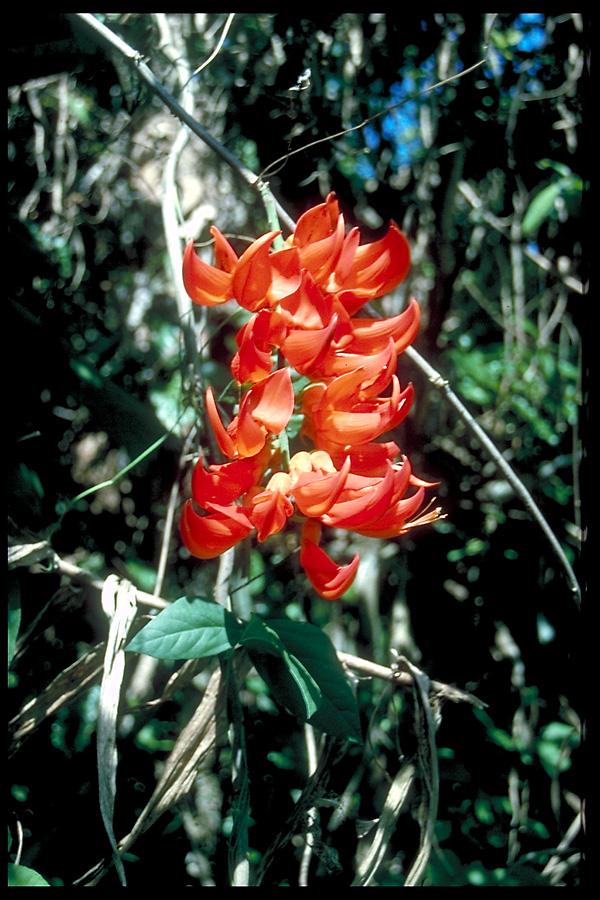
- Flowers of Mucuna gigantea.jpg
Show 7 more facts
- Commons category
- Mucuna
- taxon name
- Mucuna
- taxon rank
- genus
- topic's main category
- Category:Mucuna
- taxon common name
- 黧豆属
- described by source
- Encyclopædia Britannica 11th edition
Sources (3)
via Wikidata · CC0
~8 min read
Encyclopedic overview
11 sectionsContents
- Description
- Ecology
- Uses
- Species
- Formerly placed here
- Gallery
- Flowers
- Seed pods
- References
- Further reading
- External links
Mucuna is a genus of vines and shrubs of the legume family Fabaceae: tribe Phaseoleae. It has a pan-tropical distribution and contains 112 accepted species . The genus was created in 1763 by French botanist Michel Adanson.
==Description== Plants in this genus are mostly woody or herbaceous vines, with the exception of M. stans, a shrub. The leaves are stipulate and trifoliate with large leaflets. Inflorescences are produced from the or from older stems, and all except those of M. stans and M. stanleyi are pendant; they may be arranged as pseudo-racemes or pseudo-panicles. The flowers have the characteristic pea flower form; they are large and showy and exhibit a wide range of colours across the different species. The fruit are dehiscent pods that may be ovoid or oblong and contain a number of seeds; they have divisions (septa) between each seed, the pod may be winged and/or ribbed, and they are often coated in stiff irritating hairs.
Excerpted from Wikipedia’s “Mucuna” article, available under the CC BY-SA 4.0 licence.