Category
page 1Food additives
%20(Billianwala%20Salt%20Member%2C%20Salt%20Range%20Formation%2C%20Ediacaran%20to%20Lower%20Cambrian%3B%20Khewra%20Salt%20Mine%2C%20Salt%20Range%2C%20Pakistan)%2014.jpg)
table salt
thumb|Rock salt (halite)

magnesium
Magnesium is a chemical element; it has symbol Mg and atomic number 12. It is a shiny gray metal having a low density, low melting point, and high chemical reactivity. Like the other alkaline earth metals (group 2 of the periodic table), it occurs naturally only in combination with other elements and almost always has an oxidation state of +2. It reacts readily with air to form a thin passivation coating of magnesium oxide that inhibits further corrosion of the metal. The free metal burns with a brilliant-white light. The metal is obtained mainly by electrolysis of magnesium salts obtained fro

flour
Flour is a powder used to make many different foods, including baked goods, as well as thickening dishes. It is made by grinding grains, beans, nuts, seeds, roots, or vegetables using a mill.

Curcuma longa
Turmeric (), or Curcuma longa (), is a flowering plant in the ginger family Zingiberaceae. It is a perennial, rhizomatous, herbaceous plant native to the Indian subcontinent and Southeast Asia that requires temperatures between and high annual rainfall to thrive. Plants are gathered each year for their rhizomes, some for propagation in the following season and some for consumption or dyeing.

yeast
A yeast is any species of fungus that grows primarily in a unicellular form and reproduces via budding or fission. Yeasts are eukaryotic microorganisms that originated hundreds of millions of years ago, with at least 1,500 species currently recognized. They constitute about 1% of all described fungal species.

Cichorium intybus
thumb|Botanical illustration (1885)

glycerol
Glycerol () is a sugar alcohol with chemical formula . It has three carbon atoms and as many hydroxyl groups. It is a colorless, odorless, sweet-tasting, viscous liquid at Standard Ambient Temperature and Pressure (SATP). Because of its three hydroxyl groups, glycerol is miscible with water and is hygroscopic in nature.

monosodium L-glutamate
chemical compound, flavor enhancer

ammonium chloride
chemical compound

alum
thumb|upright=1.5|Crystal of potassium alum,

borax
Borax (also referred to as sodium borate, tincal () and tincar ()) is a salt (ionic compound) normally encountered as a hydrated borate of sodium, with the chemical formula . Borax mineral is a crystalline borate mineral that occurs in only a few places worldwide in quantities that enable it to be mined economically.

food additive
substances added to food

L-Cysteine
thumb|Cysteine ball and stick model spinning
Cysteine (; symbol Cys or C) is a semiessential proteinogenic amino acid with the formula . The thiol side chain in cysteine enables the formation of disulfide bonds, and often participates in enzymatic reactions as a nucleophile. Cysteine is chiral, but both D and L-cysteine are found in nature. LCysteine is a protein monomer in all biota, and D-cysteine acts as a signaling molecule in mammalian nervous systems. Cysteine is named after its discovery in urine, which comes from the urinary bladder or cyst, from Greek κύστις kýstis, "bladder".
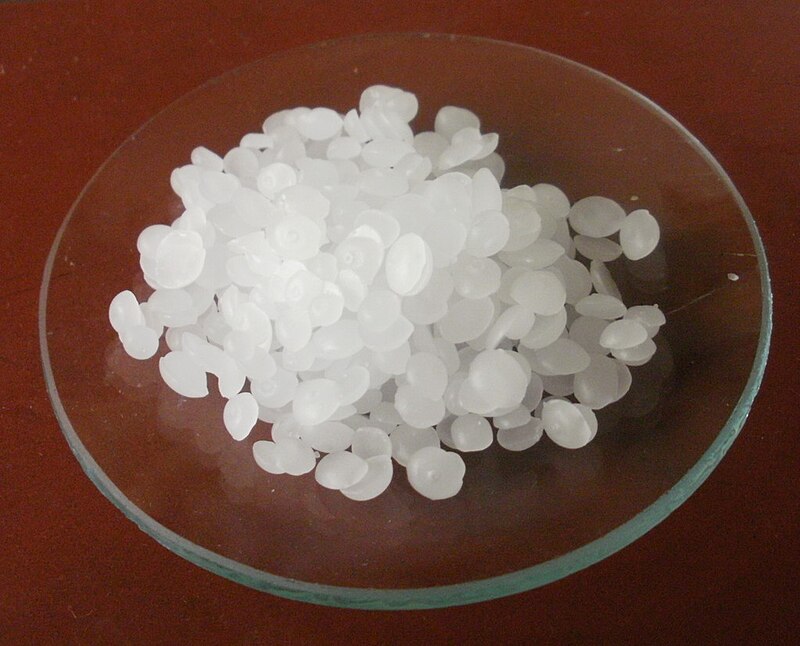
paraffin wax
waxy mixture of higher alkanes

pectin
thumb|Commercially produced powder of pectin, extracted from citrus fruits
Pectin ( : 'congealed' and 'curdled') is a heteropolysaccharide, a structural polymer contained in the cell walls and middle lamellae of terrestrial plants. The principal chemical component of pectin is galacturonic acid (a sugar acid derived from galactose) which was isolated and described by Henri Braconnot in 1825. Commercially produced pectin is a white-to-light-brown powder, produced from citrus fruits for use as an edible gelling agent, especially in jams and jellies, dessert fillings, medications, and sweets; as
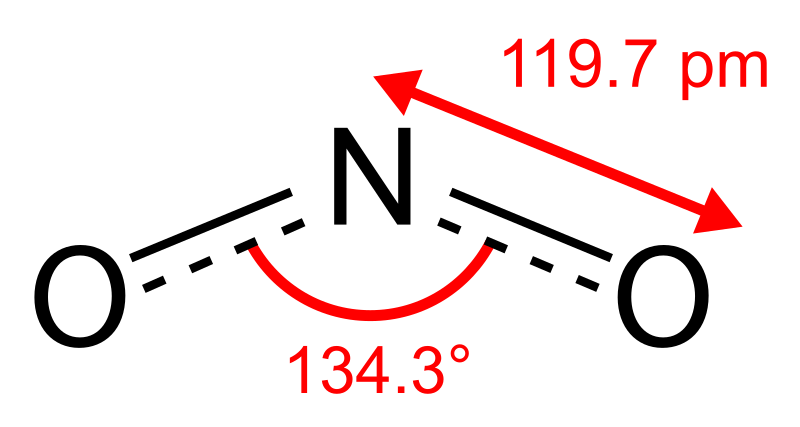
nitrogen dioxide
chemical compound

amylase
An amylase () is an enzyme that catalyses the hydrolysis of starch (Latin '''') into sugars. Amylase is present in the saliva of humans and some other mammals, where it begins the chemical process of digestion. Foods that contain large amounts of starch but little sugar, such as rice and potatoes, may acquire a slightly sweet taste as they are chewed because amylase degrades some of their starch into sugar. The pancreas and salivary gland make amylase (alpha amylase) to hydrolyse dietary starch into disaccharides and trisaccharides which are converted by other enzymes to glucose to supply the

ammonium sulfate
chemical compound

Clitoria ternatea
species of plant originally from Indonesian island of Ternate

potassium iodide
chemical compound
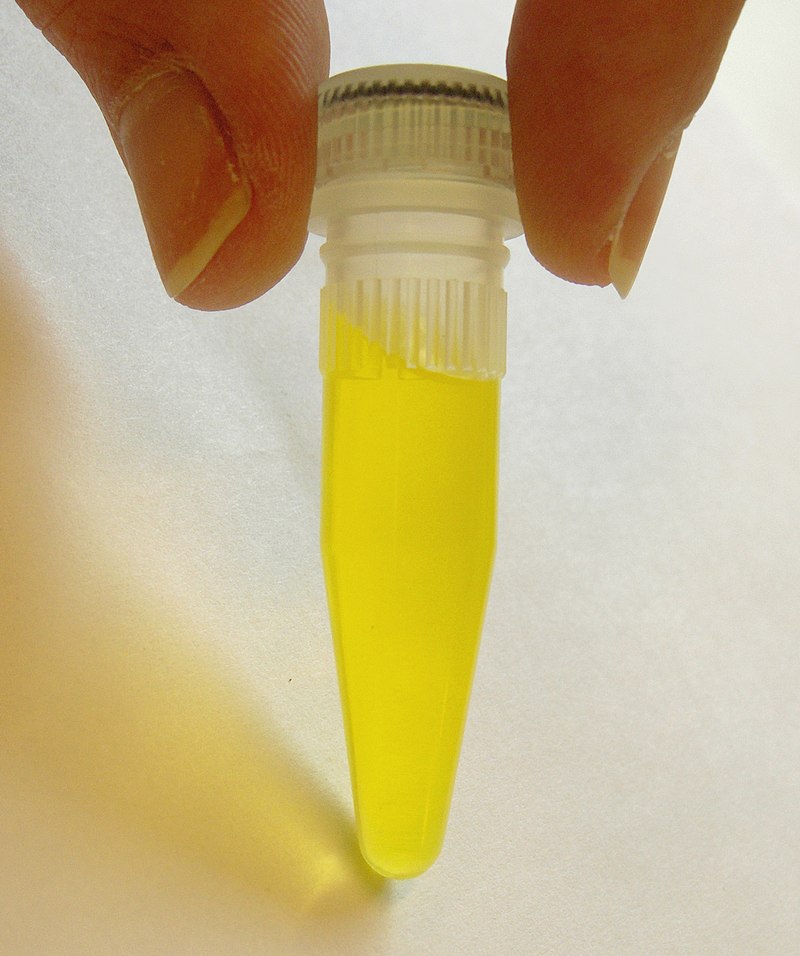
E number
code for substances that are used as food or animal feed additives

inulin
Inulins are a group of naturally occurring polysaccharides produced by many types of plants, industrially most often extracted from chicory. Inulin is used by some plants as a means of storing energy and is typically found in roots or rhizomes. Most plants that synthesize and store inulin do not store other forms of carbohydrate such as starch.

shellac
right|thumb|upright=1.4|Some of the many different colors of shellac
thumb|right|Shellac in alcohol

lactase

fumaric acid
chemical compound

calcium sulfate
laboratory and industrial chemical

sodium nitrite
chemical compound

sodium acetate
chemical compound

magnesium chloride
chemical compound

β-thujaplicin
Hinokitiol (β-thujaplicin) is a natural monoterpenoid found in the wood of trees in the family Cupressaceae. It is a tropolone derivative and one of the thujaplicins. Hinokitiol is used in oral and skin care products, and is a food additive used in Japan.

dextrin
Dextrins are a group of low-molecular-weight carbohydrates produced by the hydrolysis of starch and glycogen. Dextrins are mixtures of polymers of D-glucose units linked by α-(1→4) or α-(1→6) glycosidic bonds.

sucralose
thumb|Sucralose: (C12H19Cl3O8) Black Carbon, White Hydrogen, Green Chlorine, Red Oxygen
Sucralose is an artificial sweetener and sugar substitute. In the European Union, it is also known under the E number E955. It is produced by chlorination of sucrose, selectively replacing three of the hydroxy groups—in the C1 and C6 positions of the fructose portion and the C4 position of the glucose portion—to give a 1,6-dichloro-1,6-dideoxyfructose–4-chloro-4-deoxygalactose disaccharide. Sucralose is about 600 times sweeter than sucrose (table sugar), 3 times as sweet as both aspartame a
(RS)-propylene glycol
pair of enantiomers

crimson
Crimson is a rich, deep red color, inclining to purple.

erythritol
Erythritol (, ) is an organic compound, the naturally occurring achiral meso four-carbon sugar alcohol (or polyol). It is the reduced form of either D- or L-erythrose and one of the two reduced forms of erythrulose. It is used as a food additive and sugar substitute. It is synthesized from corn using enzymes and fermentation. Its formula is , or HO(CH2)(CHOH)2(CH2)OH.
acesulfame potassium
Organic synthetic salt used as a low-calorie sweetener
food coloring
substance that imparts color when it is added to food or drink
phytic acid
chemical compound
sodium bisulfate
chemical compound
D-gluconic acid
product of glucose oxidation
Sodium hydrogen sulfite
chemical compound

diglyceride
A diglyceride, or diacylglycerol (DAG), is a glyceride consisting of two fatty acid chains covalently bonded to a glycerol molecule through ester linkages. Two possible forms exist, 1,2-diacylglycerols and 1,3-diacylglycerols. Diglycerides are natural components of food fats, though minor in comparison to triglycerides. DAGs can act as surfactants and are commonly used as emulsifiers in processed foods. DAG-enriched oil (particularly 1,3-DAG) has been investigated extensively as a fat substitute due to its ability to suppress the accumulation of body fat; with total annual sales of approximate

phytosterol
thumb|right|β-sitosterol, a prototypical phytosterol
Phytosterols are phytosteroids, similar to cholesterol, that serve as structural components of biological membranes of plants. They encompass plant sterols and stanols. More than 250 sterols and related compounds have been identified. Free phytosterols extracted from oils are insoluble in water, relatively insoluble in oil, and soluble in alcohols.
xanthan gum
food additive and thickener
potassium bromate
chemical compound

tragacanth
thumb|right|250px|Astragalus gummifer
thumb|A dish of Tragacanth
Tragacanth is a natural gum obtained from the dried sap of several species of Middle Eastern legumes of the genus Astragalus, including A. adscendens, A. gummifer, A. brachycalyx, and A. tragacantha. Some of these species are known collectively under the common names "goat's thorn" and "locoweed". The gum is sometimes called Shiraz gum, shiraz, gum elect or gum dragon. The name derives from the Greek words tragos (meaning "goat") and akantha ("thorn"). Iran is the biggest producer of this gum.
acidity regulator
food additive which controls acidity or alkalinity
carnauba wax
natural plant wax

polyvinylpyrrolidone
Polyvinylpyrrolidone (PVP), also commonly called povidone, is a water-soluble polymer compound made from the monomer N-vinylpyrrolidone. PVP is available in a range of molecular weights and related viscosities, and can be selected according to the desired application properties.
potassium benzoate
chemical compound
papain
Papain, also known as papaya proteinase I, is a cysteine protease () enzyme present in papaya (Carica papaya) and mountain papaya (Vasconcellea cundinamarcensis). It is the namesake member of the papain-like protease family.
trisodium phosphate
inorganic chemical compound
betaine
Trimethylglycine is an amino acid derivative with the formula . A colorless, water-soluble solid, it occurs in plants. Trimethylglycine is a zwitterion: the molecule contains both a quaternary ammonium group and a carboxylate group. Trimethylglycine was the first betaine discovered; originally it was simply called betaine because it was discovered in sugar beets (Beta vulgaris subsp. vulgaris). Several other betaines are now known.
sodium metabisulfite
chemical compound
monocalcium phosphate
chemical compound CaH₄O₈P₂
organic peroxide
any organic compound of the form R-O-O-R′, where R and R′ are organic residues

Thaumatin family
Thaumatin (also known as talin) is a low-calorie sweetener and taste modifier. The protein is often used primarily for its flavor-modifying properties and not exclusively as a sweetener.
sodium tripolyphosphate
inorganic compound
sweetener
A sweetener is a substance added to food or drink to impart the flavor of sweetness, either because it contains a type of sugar, or because it contains a sweet-tasting sugar substitute. Various natural non-sugar sweeteners (NSS) and artificial sweeteners are used to produce food and drink.

beta-glucan
class=skin-invert-image|thumb|Callose is an example of a (1→3)-β-D-glucan composed of [[glucose units]]
Beta-glucans, β-glucans comprise a group of β-D-glucose polysaccharides (glucans) naturally occurring in the cell walls of plants (including cereals), bacteria, algae and fungi, with significantly differing physicochemical properties dependent on source. Typically, β-glucans form a linear backbone with 1–3 β-glycosidic bonds but differ with respect to molecular mass, solubility, viscosity, branching structure, and gelation properties, with several physiological roles in these organisms and c