Category
page 1Food science

taste
thumb|right|Taste bud

fermentation
thumb|Phylogenetic tree of bacteria and archaea, highlighting those that carry out fermentation. Their end products are also highlighted. Figure modified from Hackmann (2024).
Fermentation is a type of anaerobic metabolism that harnesses the redox potential of the reactants to make adenosine triphosphate (ATP) and organic end products. Organic molecules, such as glucose or other sugars, are catabolized and their electrons are transferred to other organic molecules (cofactors, coenzymes, etc.). Anaerobic glycolysis is a related term used to describe the occurrence of fermentation in organisms (

food additive
substances added to food

cooking oil
oil consumed by humans, from vegetable or animal origin

pectin
thumb|Commercially produced powder of pectin, extracted from citrus fruits
Pectin ( : 'congealed' and 'curdled') is a heteropolysaccharide, a structural polymer contained in the cell walls and middle lamellae of terrestrial plants. The principal chemical component of pectin is galacturonic acid (a sugar acid derived from galactose) which was isolated and described by Henri Braconnot in 1825. Commercially produced pectin is a white-to-light-brown powder, produced from citrus fruits for use as an edible gelling agent, especially in jams and jellies, dessert fillings, medications, and sweets; as

food safety
scientific discipline describing handling, preparation, and storage of food in ways that prevent foodborne illness

baking
thumb|upright=1.35|Freshly baked bread
thumb|upright=1.35|Anders Zorn – Bread baking (1889)

food science
applied science devoted to the study of food

flavoring
thumb|A flavoring
A flavoring (or flavouring), also known as flavor (or flavour) or flavorant, is a food additive that is used to improve the taste or smell of food. It changes the perceptual impression of food as determined primarily by the chemoreceptors of the gustatory and olfactory systems. Along with additives, other components, like sugars, determine the taste of food.

food engineering
field of applied physical sciences which combines science, microbiology, and engineering education for food and related industries

molecular gastronomy
approach to culinary arts based on scientific understanding and techniques

food processing
transformation of raw ingredients into food, or of food into other forms

putrefaction
Putrefaction is the fifth stage of death, following pallor mortis, livor mortis, algor mortis, and rigor mortis. This process references the breaking down of a body of an animal post-mortem. In broad terms, it can be viewed as the decomposition of proteins, and the eventual breakdown of the cohesiveness between tissues, and the liquefaction of most organs. This is caused by the decomposition of organic matter by bacterial or fungal digestion, which causes the release of gases that infiltrate the body's tissues, and leads to the deterioration of the tissues and organs.
The approximate time it
nutritional science
science that interprets the nutrients and other substances in food in relation to maintenance, growth, reproduction, health and disease of an organism
rolled oats
lightly processed whole-grain food made from oat

ingredient
thumb|Ingredients for short rib soup
food technology
academic discipline regarding the healthy preparation of foods
fermented food
food produced by a method converting substrates to fermentation end products

annatto
right|thumb|250px|Open fruit of the achiote tree (Bixa orellana), showing the seeds from which annatto is extracted
unsaturated fat
fat or fatty acid in which there is at least one double bond within the fatty acid chain
ultra-processed food
type of processed food characterized by cheap ingredients and design for consumer appeal
Codex Alimentarius
collection of internationally recognized standards, codes of practice, guidelines, and other recommendations relating to foods, food production, and food safety

extract
thumb|Vanilla extract
An extract (essence) is a substance made by extracting a part of a raw material, often by using a solvent such as ethanol, oil or water. Extracts may be sold as tinctures or absolutes or dried and powdered.
water activity
one of the main factor limiting microbial activity
miraculin
Miraculin is a taste modifier, a glycoprotein extracted from the fruit of Synsepalum dulcificum. The berry, also known as the miracle fruit, was documented by explorer Chevalier des Marchais, who searched for many different fruits during a 1725 excursion to its native West Africa.
human nutrition
provision of essential nutrients to humans
food packaging
enclosure and protection of nutritional substances for distribution and sale

liquefaction
thumb|right|The effects of soil liquefaction, seen after [[2011 Canterbury earthquake ]]
In materials science, liquefaction is a process that generates a liquid from a solid or a gas or that generates a non-liquid phase which behaves in accordance with fluid dynamics.
It occurs both naturally and artificially. As an example of the latter, a "major commercial application of liquefaction is the liquefaction of air to allow separation of the constituents, such as oxygen, nitrogen, and the noble gases." Another is the conversion of solid coal into a liquid form usable as a substitute for liquid f
browning
food process
novel food
food that does not have a significant history of consumption

nutraceutical
Nutraceutical is a term that evolved scientifically and also through marketing which is used to imply a pharmaceutical effect from plant extracts, compounds, food products which have efficacy and therapeutic influence on clinical outcomes and patient care largely through supplements.
packaging gas
gas used to pack sensitive materials such as food into a modified atmosphere environment

staling
thumb|Stale bread
Staling, or "going stale", is a chemical and physical process in bread and similar foods that reduces their palatability. Stale bread is dry and hard, making it less suitable for different culinary uses than fresh bread. Countermeasures and destaling techniques may reduce staling.
mother of vinegar
bacterial culture used to ferment alcoholic liquids to vinegar

mouthfeel
thumb|A child bites into a watermelon, experiencing mouthfeel sensations such as juiciness
Mouthfeel refers to the physical sensations in the mouth caused by food or drink, making it distinct from taste. It is a fundamental sensory attribute which, along with taste and smell, determines the overall flavor of a food item. Mouthfeel is also sometimes referred to as texture.
retort pouch
food and drink pouch
melanoidin
Melanoidins are brown, high molecular weight heterogeneous polymers that are formed when sugars and amino acids combine (through the Maillard reaction) at high temperatures and low water activity. They were discovered by Schmiedeberg in 1897.
Melanoidins are commonly present in foods that have undergone some form of non-enzymatic browning, such as barley malts (Vienna and Munich), bread crust, bakery products, and coffee. They are also present in the wastewater of sugar refineries, necessitating treatment in order to avoid contamination around the outflow of these refineries.
food quality
complex measure that rates specific instances of food
inverted sugar syrup
edible mixture of glucose and fructose, obtained from sucrose hydrolysis
monounsaturated fatty acid
any fatty acid having only one double or triple bond within the carbon chain

Bifidobacterium animalis
species of bacterium
NOVA classification system
food classification system based on the nature, extent, and purpose of industrial food processing
Instant rice
precooked rice
Foodvalley
area in the Netherlands
food studies
critical examination of food and its contexts within science, art, history, society, and other fields
clarifying agent
agent used to remove suspended solids from liquids
Mono- and diacetyl tartaric acid esters of mono- and diglycerides of fatty acids
DATEM (diacetyl tartaric acid ester of mono- and diglycerides, also E472e) is an emulsifier primarily used in baking to strengthen the gluten network in dough. It is added to crusty breads, such as rye, to impart a springy, chewy texture. It is also used in the production of biscuits, coffee whiteners, salsa con queso, ice cream, and salad dressings.
sociology of food
study of food as it relates to society
paprika oleoresin
extract of paprika used as a food additive
geography of food
Branch of human geography
Refined grains
cereal containing endosperm, but not bran nor germ
foodpairing
trademarked food analysis process
retrogradation
reaction that takes place when the amylose and amylopectin chains realign themselves
dextrose equivalent
relative sweetness of sugars
Atwater system
system for the calculation of the available energy of foods
Eyes
Round holes in Swiss-type cheese
food preference
how organisms select their food
Thermal death time
food grading
inspection, assessment and sorting of various foods regarding quality, freshness, legal conformity and market value
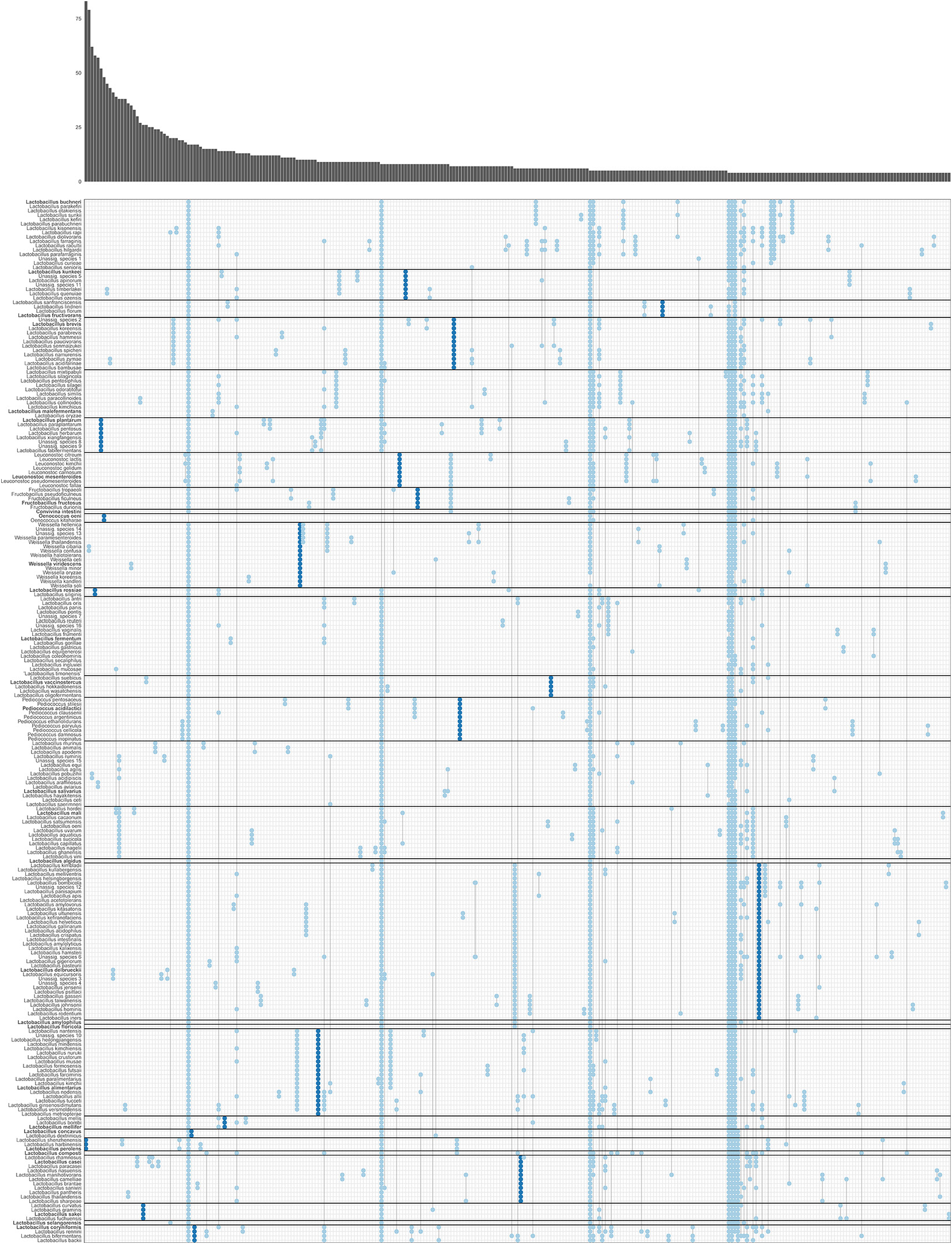
Limosilactobacillus
Limosilactobacillus is a thermophilic and heterofermentative genus of lactic acid bacteria created in 2020 by splitting from Lactobacillus. The name is derived from the Latin "slimy", referring to the property of most strains in the genus to produce exopolysaccharides from sucrose. The genus currently includes 31 species or subspecies, most of these were isolated from the intestinal tract of humans or animals. Limosilactobacillus reuteri has been used as a model organism to evaluate the host-adaptation of lactobacilli to the human and animal intestine and for the recruitment of intestinal lact