Category
page 1Genomics

biochemistry
Biochemistry, or biological chemistry (distinct from chemical biology), is the study of chemical processes within and relating to living organisms. A sub-discipline of both chemistry and biology, biochemistry may be divided into three fields: structural biology, enzymology, and metabolism. Over the last decades of the 20th century, biochemistry has become successful at explaining living processes through these three disciplines. Almost all areas of the life sciences are being uncovered and developed through biochemical methodology and research. Biochemistry focuses on understanding the chemica

genome
thumb|An image of the 46 chromosomes making up the diploid genome of a human male (the mitochondrial chromosomes are not shown).
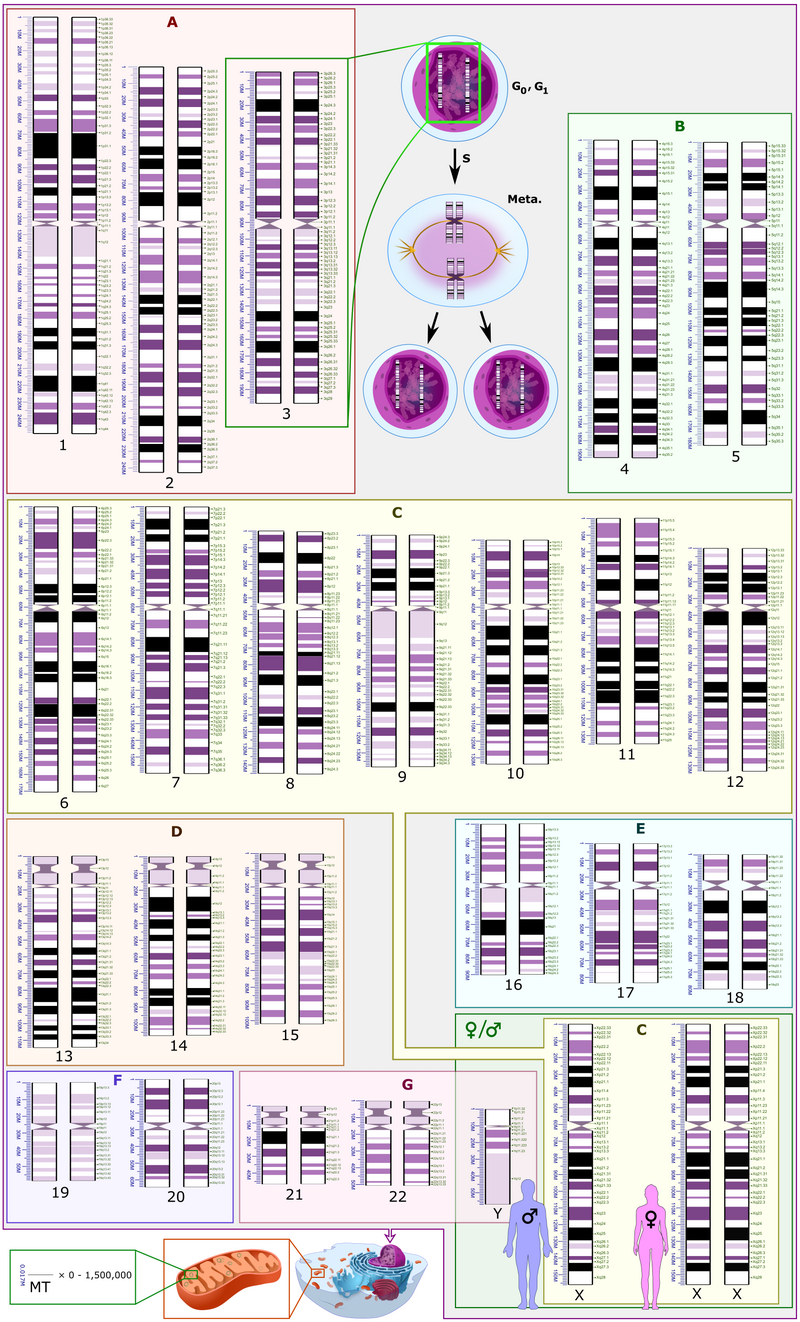
human genome
complete set of nucleic acid sequence for humans

genomics
Genomics is an interdisciplinary field of molecular biology focusing on the structure, function, evolution, mapping, and editing of genomes. A genome is an organism's complete set of DNA, including all of its genes as well as its hierarchical, three-dimensional structural configuration. In contrast to genetics, which refers to the study of individual genes and their roles in inheritance, genomics aims at the collective characterization and quantification of all of an organism's genes, their interrelations and influence on the organism. Genes may direct the production of proteins with the assis

proteomics
300px|thumb|right|Robotic preparation of MALDI [[mass spectrometry samples on a sample carrier]]

metagenomics
thumb|upright=1.5|In metagenomics, the genetic materials (DNA, C) are extracted directly from samples taken from the environment (e.g. soil, sea water, human gut, A) after filtering (B), and are sequenced (E) after multiplication by cloning (D) in an approach called [[shotgun sequencing. These short sequences can then be put together again using assembly methods (F) to deduce the individual genomes or parts of genomes that constitute the original environmental sample. This information can then be used to study the species diversity and functional potential of the microbial community of the env

omics
thumb|upright=1.8|Diagram illustrating genomics
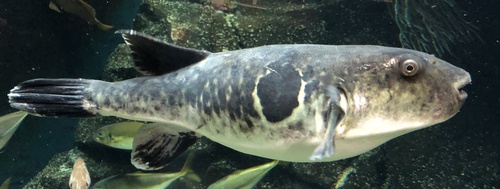
Takifugu rubripes
species of fish
whole genome sequencing
sequencing all the DNA of an individual at once

pharmacogenomics
Pharmacogenomics, often abbreviated "PGx", is the study of the role of the genome in drug response. Its name (pharmaco- + genomics) reflects its combining of pharmacology and genomics. Pharmacogenomics analyzes how the genetic makeup of a patient affects their response to drugs. It deals with the influence of acquired and inherited genetic variation on drug response, by correlating DNA mutations (including point mutations, copy number variations, and structural variations) with pharmacokinetic (drug absorption, distribution, metabolism, and elimination), pharmacodynamic (effects mediated throu

Medicago truncatula
species of legume

biochip
thumb|Hundreds of gel drops are visible on the biochip.
copy-number variation
phenomenon in which sections of a genome are repeated and the number of repeats in the genome varies between individuals
comparative genomics
branch of science
Structural genomics
area of genetic research
genome size
amount of DNA contained in a genome
alloenzyme
Alloenzymes (or also called allozymes) are variant forms of an enzyme which differ structurally but not functionally from other allozymes coded for by different alleles at the same locus. These are opposed to isozymes, which are enzymes that perform the same function, but which are coded by genes located at different loci.
1000 Genomes Project
international research effort

contig
thumb|Overlapping reads from paired-end sequencing form contigs; contigs and gaps of known length form Scaffolding (bioinformatics)|scaffolds.A contig (from contiguous) is a set of overlapping DNA segments that together represent a consensus region of DNA.
In bottom-up sequencing projects, a contig refers to overlapping sequence data (reads); in top-down sequencing projects, contig refers to the overlapping clones that form a physical map of the genome that is used to guide sequencing and assembly. Contigs can thus refer both to overlapping DNA sequences and to overlapping physical segments (f

chemogenomics
thumb|300px|Chemogenomics Stäubli|Staubli robot retrieves assay plates from incubators
expressed sequence tag
short sub-sequence of a cDNA sequence
DNA Data Bank of Japan
DNA sequence database
functional genomics
field of molecular biology
computational genomics
nutritional genomics
science of the Effects of Nutrition on Genes

Pan-genome
thumb|368x368px|Pangenome analysis of Streptococcus agalactiae genomes made with Anvi'o software whose development is led by [[A. Murat Eren. Genomes obtained from Tettelin et al. (2005). Each circle corresponds to one genome and each radius represents a gene family. At the bottom and at right are localized the core genome families. Some families in the core may have more than one homologous gene per genome. In the middle, at the left of the figure the shell genome is observed. At the top left are shown families from the dispensable genome and singletons. ]]
toxicogenomics
Toxicogenomics is a subdiscipline of pharmacology that deals with the collection, interpretation, and storage of information about gene and protein activity within a particular cell or tissue of an organism in response to exposure to toxic substances. Toxicogenomics combines toxicology with genomics or other high-throughput molecular profiling technologies such as transcriptomics, proteomics and metabolomics. Toxicogenomics endeavors to elucidate the molecular mechanisms evolved in the expression of toxicity, and to derive molecular expression patterns (i.e., molecular biomarkers) that predict
epigenomics
Epigenomics is the study of the complete set of epigenetic modifications on the genetic material of a cell, known as the epigenome. The field is analogous to genomics and proteomics, which are the study of the genome and proteome of a cell. Epigenetic modifications are reversible modifications on a cell's DNA or histones that affect gene expression without altering the DNA sequence. Epigenomic maintenance is a continuous process and plays an important role in stability of eukaryotic genomes by taking part in crucial biological mechanisms like DNA repair. Plant flavones are said to be inhibitin
National Institute of Genetics
biological research repository
paleogenomics
Paleogenomics is a field of science based on the reconstruction and analysis of genomic information in extinct species. Improved methods for the extraction of ancient DNA (aDNA) from museum artifacts, ice cores, archeological or paleontological sites, and next-generation sequencing technologies have spurred this field. It is now possible to detect genetic drift, ancient population migration and interrelationships, the evolutionary history of extinct plant, animal and Homo species, and identification of phenotypic features across geographic regions. Scientists can also use paleogenomics to comp
reference genome
digital nucleic acid sequence database, assembled by scientists as a representative example of a species' set of genes
personal genomics
branch of genomics concerned with the genome of an individual
population genomics
large-scale comparison of DNA sequences
phylogenomics
Phylogenomics is the intersection of the fields of evolution and genomics. The term has been used in multiple ways to refer to analysis that involves genome data and evolutionary reconstructions. It is a group of techniques within the larger fields of phylogenetics and genomics. Phylogenomics draws information by comparing entire genomes, or at least large portions of genomes. Phylogenetics compares and analyzes the sequences of single genes, or a small number of genes, as well as many other types of data. Four major areas fall under phylogenomics:
Prediction of gene function
Establishment a
Single molecule real time sequencing
method for sequencing DNA
radiogenomics
The term radiogenomics is used in two contexts: either to refer to the study of genetic variation associated with response to radiation (radiation genomics) or to refer to the correlation between cancer imaging features and gene expression (imaging genomics).
metabolic network modelling
form of biological modelling
N50 statistic
used in genome assembly
genome evolution
process by which a genome changes in structure or size over time
Nullomers
Nullomers are short sequences of DNA that do not occur in the genome of a species (for example, humans), even though they are theoretically possible. Nullomers must be under selective pressure - for example, they may be toxic to the cell. Some nullomers have been shown to be useful to treat leukemia, breast, and prostate cancer. They are not useful in healthy cells because normal cells adapt and become immune to them. Nullomers are also being developed for use as DNA tags to prevent cross contamination when analyzing crime scene material.