Category
page 1Holocaust locations in Germany
%20-msu-2021-4274-.jpg)
Berlin
Berlin is the capital of Germany, as well as its largest city by both area and population. With 3.7 million inhabitants, it has the highest population within its city limits of any city in the European Union. The city is also one of the states of Germany, being the third-smallest state in the country by area. Berlin is surrounded by the state of Brandenburg, bordering Brandenburg's capital Potsdam to the southwest. The urban area of Berlin has a population of over 4.6 million, making it the most populous in Germany. The Berlin-Brandenburg capital region has around 6.2 million inhabitants and i

Hamburg
Hamburg, officially the Free and Hanseatic City of Hamburg, is the second-largest city in Germany after Berlin and seventh-largest city in the European Union, with a population of over 1.9 million. The Hamburg Metropolitan Region has a population of over 5.1 million and is the tenth-largest metropolitan region by GDP in the European Union. At the southern tip of the Jutland Peninsula, Hamburg stands on the branching River Elbe at the head of a estuary to the North Sea, at the confluence of the Alster and Bille. Hamburg is one of Germany's three city-states alongside Berlin and Bremen, and

Frankfurt
Frankfurt am Main, usually shortened to Frankfurt, is the most populous city in the German state of Hesse. Its 778,589 inhabitants as of 2025 make it the fifth-most populous city in Germany. Located in the foreland of the Taunus on its namesake Main, the city forms a continuous conurbation with Offenbach am Main; its urban area has a population of over 2.7 million. Frankfurt is the heart of the larger Rhine-Main metropolitan region, which has a population of more than 5.8 million and is Germany's second-largest metropolitan region after the Rhine-Ruhr region. Home to the European Central Bank,
.jpg)
Cologne
Cologne ( ; ; ) is the fourth-most populous city of Germany and the largest city of the German state of North Rhine-Westphalia with nearly 1.1 million inhabitants in the city proper and over 3.1 million people in the Cologne Bonn urban region. Cologne is also part of the Rhine-Ruhr metropolitan region, the second biggest metropolitan region by GDP in the European Union. Centered on the left bank of the Rhine, Cologne is located on the River Rhine (Lower Rhine), about southeast of the North Rhine-Westphalia state capital Düsseldorf and northwest of Bonn, the former capital of West Germany.

Dresden
Dresden (; ; Upper Saxon: Dräsdn; , ) is the capital city of the German state of Saxony and its second most populous city after Leipzig. It is the 12th most populous city of Germany, the fourth largest by area (after Berlin, Hamburg, and Cologne), and the third-most populous city in the area of former East Germany, after Berlin and Leipzig. Dresden's urban area comprises the towns of Freital, Pirna, Radebeul, Meissen, Coswig, Radeberg, and Heidenau and has around 790,000 inhabitants. The Dresden metropolitan area has over 1.3 million inhabitants.

Hanover

Wiesbaden
Wiesbaden (; ) is the capital of the German state of Hesse, and the second-largest Hessian city after Frankfurt am Main. With around 283,000 inhabitants, it is Germany's 24th-largest city. Wiesbaden forms a conurbation with a population of around 500,000 with the neighbouring city of Mainz. This conurbation is in turn embedded in the Rhine-Main Metropolitan Region—Germany's second-largest metropolitan region after Rhine-Ruhr—which also includes the nearby cities of Frankfurt am Main, Darmstadt, Offenbach am Main, and Hanau, and has a combined population exceeding 5.8 million.

Heidelberg
Heidelberg (; ; ) is the fifth-largest city in the German state of Baden-Württemberg, and with a population of about 163,000, of which roughly a quarter consists of students, it is Germany's 51st-largest city. Located about south of Frankfurt, Heidelberg is part of the densely populated Rhine-Neckar Metropolitan Region which has its centre in Mannheim.

Erfurt
Erfurt () is the capital and largest city of the Central German state of Thuringia, with a population of around 216,000. It lies in the wide valley of the River Gera, in the southern part of the Thuringian Basin, north of the Thuringian Forest, and in the middle of a line of the six largest Thuringian cities (Thüringer Städtekette), stretching from Eisenach in the west, via Gotha, Erfurt, Weimar and Jena, to Gera in the east. Together with Kassel and Göttingen, it is one of the cities with more than 100,000 inhabitants lying closest to the geographic centre of Germany. Erfurt is south-west of

Karlsruhe
Karlsruhe ( ; ; ; South Franconian: Kallsruh) is the third-largest city of the German state of Baden-Württemberg, after its capital Stuttgart and Mannheim, and the 22nd-largest city in the nation, with 308,436 inhabitants. It is also a former capital of Baden, a historic region named after Hohenbaden Castle in the city of Baden-Baden. Located on the right bank of the Rhine (Upper Rhine) near the French border, between the Mannheim-Ludwigshafen conurbation to the north and Strasbourg to the south, Karlsruhe is Germany's legal center, being home to the Federal Constitutional Court, the Federal C

Mannheim
Mannheim (; Palatine German: or ), officially the University City of Mannheim (), is the second-largest city in Baden-Württemberg after Stuttgart, the state capital, and Germany's 21st-largest city, with a population of over 315,000. It is located at the border with Rhineland-Palatinate. The city is the cultural and economic centre of the Rhine-Neckar, Germany's seventh-largest metropolitan region, with nearly 2.4 million inhabitants.

Ulm
Ulm () is the sixth-largest city of the southwestern German state of Baden-Württemberg, and with around 129,000 inhabitants, it is Germany's 60th-largest city.

Freiburg im Breisgau
large city in Baden-Württemberg, Germany

Weimar
Weimar is a city in the German state of Thuringia, in Central Germany between Erfurt to the west and Jena to the east, southwest of Leipzig, north of Nuremberg and west of Dresden. Together with the neighbouring cities of Erfurt and Jena, it forms the central metropolitan area of Thuringia, with approximately 500,000 inhabitants. The city itself has a population of 65,000. Weimar is well known because of its cultural heritage and importance in German history.

Göttingen
Göttingen (, ; ; ) is a university city in Lower Saxony, central Germany, the capital of the eponymous district. The River Leine runs through it. According to the 2022 German census, the population of Göttingen was 124,548.

Darmstadt
thumb|Landmark of Darmstadt: ("Wedding Tower"), built in 1908 in Art Nouveau|Jugendstil architecture at Mathildenhöhe
Darmstadt ( , , , ) is a city in the state of Hesse in Germany, located in the southern part of the Rhine-Main-Area (Frankfurt Metropolitan Region). Darmstadt has around 160,000 inhabitants, making it the fourth largest city in the state of Hesse after Frankfurt am Main, Wiesbaden, and Kassel.

Würzburg
Würzburg (; Main-Franconian: , historical engl. exonyme Wurtzbourg) is, after Nuremberg
the second-largest city in Franconia located in the north of Bavaria. Würzburg is the administrative seat of the Regierungsbezirk Lower Franconia. It spans the banks of the Main river.
.jpg)
Rostock
thumb|Rostock
Rostock (; ), officially the Hanseatic and University City of Rostock (), is the largest city in the German state of Mecklenburg-Western Pomerania and lies in the Mecklenburgian part of the state, close to the border with Pomerania. With around 210,000 inhabitants, it is the third-largest city on the German Baltic coast after Kiel and Lübeck, the eighth-largest city in the area of former East Germany, as well as the 39th-largest city of Germany. Rostock was the largest coastal and most important port city in East Germany.

Bielefeld
thumb|upright|Logo of the City of Bielefeld

Jena
Jena (; ) is a city in Germany and the second largest city in Thuringia. Together with the nearby cities of Erfurt and Weimar, it forms the central metropolitan area of Thuringia with approximately 500,000 inhabitants, while the city itself has a population of about 110,000. Jena is a centre of education and research. The University of Jena (formally the Friedrich Schiller University) was founded in 1558 and had 18,000 students in 2017 and the Ernst-Abbe-Hochschule Jena serves another 5,000 students. Furthermore, there are many institutes of the leading German research societies.

Bochum
Bochum (, ; ; ; ) is a city in North Rhine-Westphalia. With a population of 372,348 (April 2023), it is the sixth-largest city (after Cologne, Düsseldorf, Dortmund, Essen and Duisburg) in North Rhine-Westphalia, the most populous German federal state, and the 16th-largest city in Germany. On the Ruhr Heights () hill chain, between the rivers Ruhr to the south and Emscher to the north (tributaries of the Rhine), it is the second largest city of Westphalia after Dortmund, and the fourth largest city of the Ruhr after Dortmund, Essen and Duisburg. It lies at the centre of the Ruhr, Germany's larg

Gelsenkirchen
thumb|Municipal forest of Buer (Buerscher Stadtwald)
thumb|A former mining settlement

Osnabrück
Osnabrück (; ; archaic English: Osnaburg) is a city in Lower Saxony in western Germany. It is situated on the river Hase in a valley penned between the Wiehen Hills and the northern tip of the Teutoburg Forest. With a population of 168,145 Osnabrück is the fourth largest city in Lower Saxony.

Krefeld
Krefeld ( , ; ), also spelled Crefeld until 1925 (though the spelling was still being used in British papers throughout the Second World War), is a city in North Rhine-Westphalia, in western Germany. It is located northwest of Düsseldorf, its center lying just a few kilometers to the west of the river Rhine; the borough of Uerdingen is situated directly on the Rhine. Because of its economic past, Krefeld is often referred to as the "Velvet and Silk City". It is accessed by the autobahns A57 (Cologne–Nijmegen) and A44 (Aachen–Düsseldorf–Dortmund–Kassel).

Heilbronn
Heilbronn () is a city in northern Baden-Württemberg, Germany, surrounded by the Heilbronn District and it is over 1,200 years old.

Worms
town in Rhineland-Palatinate, Germany

Pforzheim
Pforzheim () is a city in the Karlsruhe region of the German state of Baden-Württemberg. The city has over 135,000 inhabitants.

Gera
Gera () is a city in the German state of Thuringia. With around 93,000 inhabitants, it is the third-largest city in Thuringia after Erfurt and Jena as well as the easternmost city of the Thüringer Städtekette, an almost straight string of cities consisting of the six largest Thuringian cities from Eisenach in the west, via Gotha, Erfurt, Weimar and Jena to Gera in the east. Gera is the largest city in the Vogtland, and one of its historical capitals along with Plauen, Greiz and Weida. The city lies in the East Thuringian Hill Country, in the wide valley of the White Elster, between Greiz (upst

Fürth
Fürth (; East Franconian: ) is a city in the Middle Franconia administrative region of Bavaria, Germany. It is the second-largest city in the larger Franconia region and is now contiguous with the larger city of Nuremberg, the centres of the two cities being only apart.

Bayreuth
Bayreuth ( or ; Upper Franconian: Bareid, ) is a town in northern Bavaria, Germany, on the Red Main river in a valley between the Franconian Jura and the Fichtel Mountains. The town's roots date back to 1194. In the 21st century, it is the capital of Upper Franconia and has a population of 72,148 (2015). It hosts the annual Bayreuth Festival, at which performances of operas by the 19th-century German composer Richard Wagner are presented.
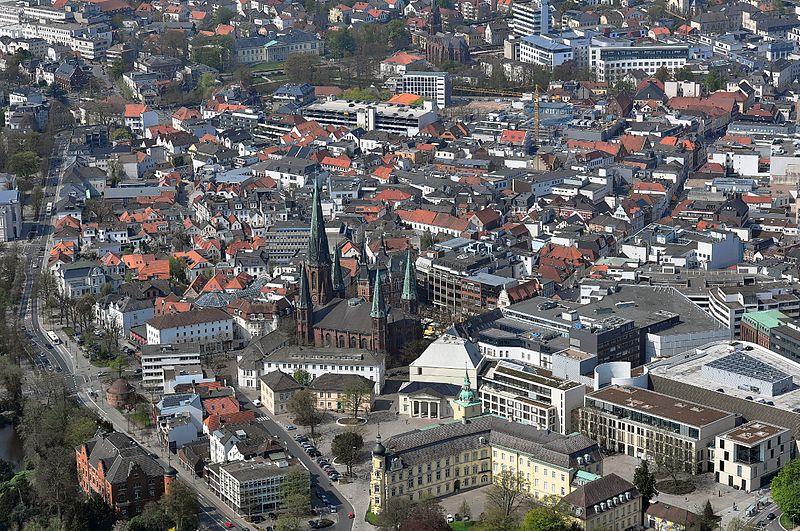
Oldenburg
independent city in Lower Saxony, Germany

Eisenach
Eisenach () is a town in Thuringia, Germany with 42,000 inhabitants, west of Erfurt, southeast of Kassel and northeast of Frankfurt. It is the main urban centre of western Thuringia, and bordering northeastern Hessian regions, is near the former Inner German border. A major attraction is Wartburg castle, which has been a UNESCO World Heritage Site since 1999.

Ludwigsburg
Ludwigsburg () is a city in Baden-Württemberg, Germany, about north of Stuttgart city centre, near the river Neckar. It is the largest and primary city of the Ludwigsburg district with about 94,000 inhabitants. It is situated within the Stuttgart Region, and the district is part of the administrative region (Regierungsbezirk) of Stuttgart.

Greifswald
Greifswald (; ), officially the University and Hanseatic City of Greifswald () is the fourth-largest city in the German state of Mecklenburg-Western Pomerania after Rostock, Schwerin and Neubrandenburg. In 2021 it surpassed Stralsund for the first time, and became the largest city in the Pomeranian part of the state. It sits on the River Ryck, at its mouth into the Danish Wiek, a sub-bay of the Bay of Greifswald, which is itself a sub-bay of the Bay of Pomerania of the Baltic Sea.

Görlitz
Görlitz (; ; ; ; ; East Lusatian: , , ) is a town in Saxony, Germany. It is on the river Lusatian Neisse and is the largest town in Upper Lusatia, the second-largest town in the region of Lusatia after Cottbus, and the largest town in the German part of the region of Silesia. Görlitz is the easternmost town in Germany and lies opposite the Polish town of Zgorzelec, which was the eastern part of Görlitz until 1945. The town has approximately 56,000 inhabitants, which make Görlitz the sixth-largest town in Saxony. It is the seat of the district of Görlitz. Together with Zgorzelec it forms the Eu

Aalen
Aalen (; Swabian: Oole ()) is a town located in the eastern part of the German state of Baden-Württemberg, about east of Stuttgart and north of Ulm. It is the seat of the Ostalbkreis district and is its largest town. It is also the largest town in the Ostwürttemberg region. Since 1956, Aalen has had the status of Große Kreisstadt (major district town). It is noted for its many half-timbered houses constructed from the 16th century through the 18th century.

Ansbach
Former building Gewerbevereins Ansbach|thumb|280px
thumb|280px|Ansbach in the 17th century

Rosenheim
Rosenheim () is a city in Bavaria, Germany. It is an independent city located in the centre of the district of Rosenheim in Upper Bavaria, and is also the seat of its administration. It is located on the west bank of the Inn at the confluence of the rivers Inn and Mangfall, in the Bavarian Alpine Foreland. It is the third-largest city in Upper Bavaria with over 64,000 inhabitants. Rosenheim is the economic centre and the busiest place in the region.

Memmingen
Memmingen (; Swabian: Memmenge) is a town in Swabia, Bavaria, Germany. It is the economic, educational and administrative centre of the . To the west, the town is flanked by the Iller river, which marks the Baden-Württemberg border. To the north, east and south the town is surrounded by the district of Unterallgäu (Lower Allgäu).

Altenburg
Altenburg () is a city in Thuringia, Germany, located south of Leipzig, west of Dresden and east of Erfurt. It is the capital of the Altenburger Land district and part of a polycentric old-industrial textile and metal production region between Gera, Zwickau and Chemnitz with more than 1 million inhabitants, while the city itself has a population of 33,000. Today, the city and its rural county is part of the Central German Metropolitan Region.

Witten
Witten () is a city with almost 100,000 inhabitants in the Ennepe-Ruhr-Kreis (district) in North Rhine-Westphalia, in western Germany.

Nordhausen
town and administritative center of Nordhausen District in Thuringia in central Germany
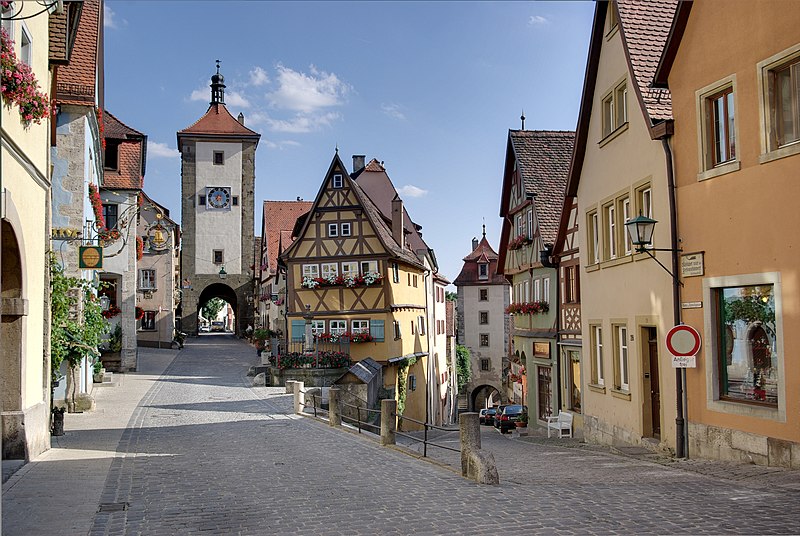
Rothenburg ob der Tauber
town in Germany

Offenburg
Offenburg (; "open borough" - coat of arms showing open gates; Low Alemmanic: Offäburg) is a city in the state of Baden-Württemberg, in south-western Germany. With nearly 60,000 inhabitants (2019), it is the largest city and the administrative capital of the Ortenaukreis.

Minden
thumb|Minden logo since 2016
Minden () is a middle-sized town in the very north-east of North Rhine-Westphalia, Germany, the largest town in population between Bielefeld and Hanover. It is the capital of the district () of Minden-Lübbecke, situated in the cultural region of Ostwestfalen-Lippe (OWL) and the administrative region of Detmold. The town extends along both sides of the River Weser, and is crossed by the Mittelland Canal, which is led over the river on the Minden Aqueduct.

Halberstadt
Halberstadt (; Eastphalian: Halverstidde) is a town in the state of Saxony-Anhalt in central Germany, the capital of Harz district. Located north of the Harz mountain range, it is known for its old town center, which was largely destroyed by Allied bombings in the late stages of World War II after local Nazi leaders refused to surrender. The town was rebuilt in the following decades.

Straubing
Straubing (; Central Bavarian: Strauwing) is an independent city in Lower Bavaria, southern Germany. It is seat of the district of Straubing-Bogen. Annually in August the Gäubodenvolksfest, the second largest fair in Bavaria, is held.

Bruchsal
Bruchsal (; orig. Bruohselle, Bruaselle, historically known in English as Bruxhall) is a city in the Karlsruhe district of the German state of Baden-Württemberg, at the western edge of the Kraichgau region, approximately 20 km northeast of Karlsruhe. It is located on Bertha Benz Memorial Route.

Stade
Stade (; ), officially the Hanseatic City of Stade (, ) is a city in Lower Saxony in northern Germany. First mentioned in records in 934, it is the seat of the district () which bears its name. It is located roughly to the west of Hamburg and belongs to that city's wider metropolitan region. Within the area of the city are the urban districts of Bützfleth, Hagen, Haddorf and Wiepenkathen, each of which have a council () of their own with some autonomous decision-making rights.
.JPG)
Xanten
Xanten (, Low Rhenish: Santen) is a town in the state of North Rhine-Westphalia, Germany. It is located in the district of Wesel.

Bad Homburg vor der Höhe
seat of Hochtaunuskreis and city in Hesse, Germany

Mühlhausen/Thuringia
Mühlhausen (; officially Mühlhausen/Thüringen) is a town in the northwest of Thuringia, Germany, north of Niederdorla, the country's geographical centre, north-west of Erfurt, east of Kassel and south-east of Göttingen.

Bingen am Rhein
German town on the Rhine, home of the Mäuseturm

University of Bonn
public research university located in Bonn, Germany

Bad Kreuznach
city in Rhineland-Palatinate, Germany

Ingelheim am Rhein
seat of Landkreis Mainz-Bingen and city in Rhineland-Palatinate, Germany

Andernach
Andernach () is a town in the district of Mayen-Koblenz, in Rhineland-Palatinate, Germany, of about 30,000 inhabitants. It is situated towards the end of the Neuwied basin on the left bank of the Rhine between the former tiny fishing village of Fornich in the north and the mouth of the small river Nette in the southeast, just north of Koblenz, with its five external town districts: Kell, Miesenheim, Eich, Namedy, and Bad Tönisstein.

Breisach
thumb|Breisach as seen from the French Rhine shore.
.jpg)
Kleve
Kleve (; traditional ; ; ; ; ; Low Rhenish: Kleff) is a town in the Lower Rhine region of northwestern Germany near the Dutch border and the River Rhine. From the 11th century onwards, Cleves was capital of a county and later a duchy. Today, Cleves is the capital of the district of Kleve in the German state of North Rhine-Westphalia. The city is home to one of the campuses of the Rhine-Waal University of Applied Sciences.

Salzwedel
Salzwedel (, officially known as Hansestadt Salzwedel; ) is a town in Saxony-Anhalt, Germany. It is the capital of the district (Kreis) of Altmarkkreis Salzwedel, and has a population of approximately 21,500. Salzwedel is located on the German Timber-Frame Road.