Category
page 1Immunology

allergy
An allergy is an exaggerated immune response where the body mistakenly identifies an ordinarily harmless allergen as a threat. Allergic reactions give rise to allergic diseases such as hay fever, allergic conjunctivitis, allergic asthma, atopic dermatitis, food allergies, and anaphylaxis. Symptoms of allergic diseases may include red eyes, an itchy rash, sneezing, coughing, a runny nose, shortness of breath, or swelling.
inflammation
Inflammation (from ) is part of the biological defence response of body tissues. Inflammatory immunovascular responses can be triggered by a broad range of stimuli, including physical trauma, "dead, damaged, malfunctioning or stressed tissues", pathogens, irritants, toxins, overuse, autoimmunity, allergens, and foreign bodies (e.g. silica and asbestos). The five cardinal signs are heat, pain, redness, swelling, and loss of function (Latin calor, dolor, rubor, tumor, and functio laesa).

white blood cell
type of cells of the immunological system

immunology
Immunology is a branch of biology and medicine that covers the study of immune systems in all organisms.

antibody
thumb|upright=1.2|Each antibody binds to a specific antigen in a highly specific interaction analogous to a lock and key.

breast milk
milk produced by the mammary glands in the breast of a human female

immunity
state of being insusceptible or resistant to a noxious agent or process

T-lymphocytes
type of lymphocyte

apoptotic process
Apoptosis (from ) is a form of programmed cell death that occurs in multicellular organisms and in some eukaryotic, single-celled microorganisms such as yeast. Biochemical events lead to characteristic cell changes (morphology) and death. These changes include blebbing, cell shrinkage, nuclear fragmentation, chromatin condensation, DNA fragmentation, and mRNA decay. The average adult human loses 50 to 70 billion cells each day to apoptosis. For the average human child between 8 and 14 years old, each day the approximate loss is 20 to 30 billion cells.

herd immunity
protection from infectious disease that occurs when a sufficient fraction of a population has become immune (through vaccination or previous infections)

B-cell
type of white blood cell

allergen
An allergen is an otherwise harmless substance that triggers an allergic reaction in sensitive individuals by stimulating an immune response.

cytokine
thumb|264x264px|Cytokines (small pink particles) being secreted in a medical animation

lysozyme family
Lysozyme (, 'muramidase, N-acetylmuramide glycanhydrolase; systematic name peptidoglycan N-acetylmuramoylhydrolase') is an antimicrobial enzyme produced by animals that forms part of the innate immune system. It is a glycoside hydrolase that catalyzes the following process:

autophagy
thumb|right|A Diagram of the process of autophagy, which produces the structures autophagosomes (AP), and [[autolysosomes (AL)B Electron micrograph of autophagic structures AP and AL in the fat body of a fruit fly larvaC Fluorescently labeled autophagosomes AP in liver cells of starved mice]]
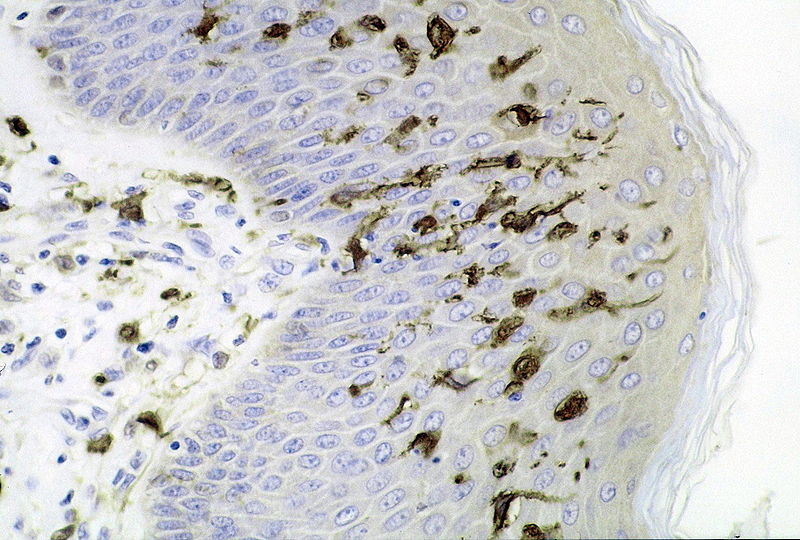
dendritic cell
specialized cells of the hematopoietic system with branch-like extensions
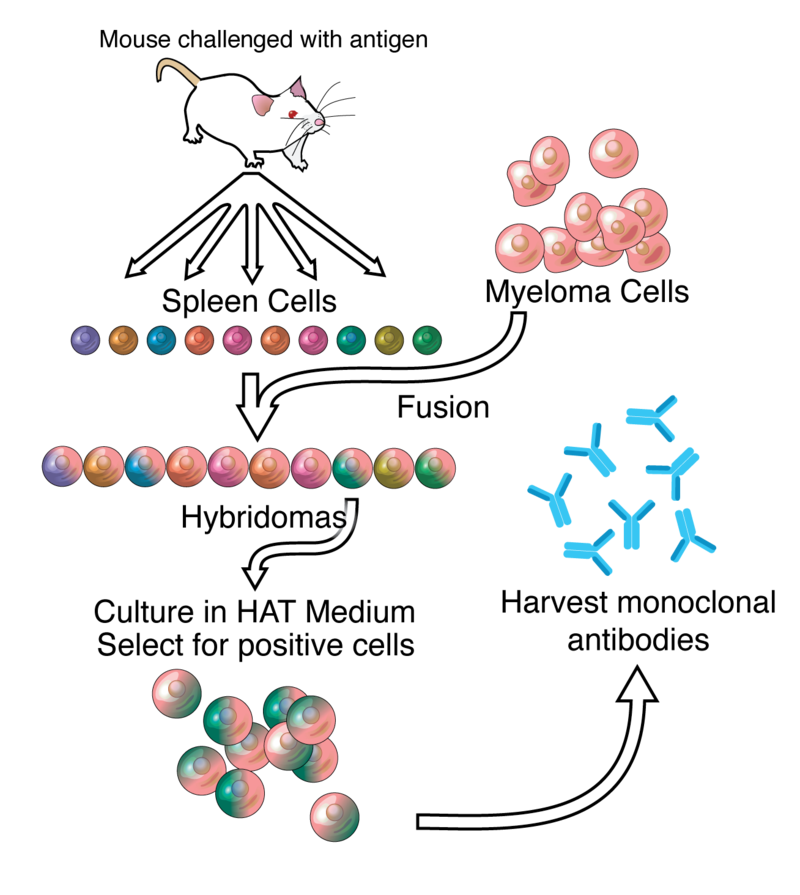
monoclonal antibody
monospecific antibody that is made by identical immune cells that are all clones of a unique parent cell
opportunistic infection
infection caused by pathogens that take advantage of an opportunity not normally available
plasma cell
white blood cell that secretes large volumes of antibodies

lectin
thumb|A typical legume lectin monomer (lentil lectin), complexed with a sugar ([[glucose). The four sugar-binding loops are shown in different colours. The variable loop that confers monosaccharide specificity is shown in orange.]]

immunosuppression
Immunosuppression is a reduction of the activation or efficacy of the immune system. Some portions of the immune system itself have immunosuppressive effects on other parts of the immune system, and immunosuppression may occur as an adverse reaction to treatment of other conditions.
autoimmunity
In immunology, autoimmunity is the system of immune responses of an organism against its own healthy cells, tissues and other normal body constituents. Any disease resulting from this type of immune response is termed an "autoimmune disease". Prominent examples include celiac disease, diabetes mellitus type 1, Henoch–Schönlein purpura, systemic lupus erythematosus, Sjögren syndrome, eosinophilic granulomatosis with polyangiitis, Hashimoto's thyroiditis, Graves' disease, idiopathic thrombocytopenic purpura, Addison's disease, rheumatoid arthritis, ankylosing spondylitis, polymyositis, dermatomy

antitoxin
thumb|A vintage 1895 vial of diphtheria antitoxin.|252x252px
trastuzumab
Trastuzumab, sold under the brand name Herceptin among others, is a monoclonal antibody used to treat breast cancer and stomach cancer. It is specifically used for cancer that is HER2 receptor positive. It may be used by itself or together with other chemotherapy medication. Trastuzumab is given by slow injection into a vein and injection just under the skin.
cytotoxicity
Cytotoxicity refers to the capacity of a substance or agent to cause damage or death to living cells, reflecting a critical parameter in pharmacology, toxicology, and biomedicine. It is distinct from cytostatic effects, which inhibit cell growth and proliferation without causing cell death. Cytotoxic agents can induce a range of cellular responses, including inhibition of cell growth, induction of apoptotic or necrotic cell death, and disruption of metabolic or structural cellular integrity. Assessing cytotoxicity is fundamental for evaluating the safety and efficacy of pharmaceutical compound

toxoid
thumb|Ruby Hirose researching serums and antitoxins
thumb|A poster released by the Central Council for Health Education, spreading awareness about Diphtheria.
thumb|A tetanus vaccine is being administered at the Naval medical Center San Diego
A toxoid is an inactivated toxin (usually an exotoxin) whose toxicity has been suppressed while retaining its immunogenicity. This is usually achieved by chemical (formalin) or heat treatment. Toxins are secreted by bacteria, whereas toxoids are altered form of toxins; toxoids are not secreted by bacteria. Thus, when used during vaccination, an immune res

leukotriene
thumb|right|Leukotriene A4|LTA4 Note the four double bonds, three of them conjugated. This is a common property of A4, B4, C4, D4, and E4.
right|thumb|Leukotriene B4|LTB4
thumb|right|Leukotriene C4|LTC4 is a cysteinyl leukotriene, as are D4 and E4.
thumb|right|Leukotriene D4|LTD4
thumb|right|Leukotriene E4|LTE4
cytotoxic T cell
cell
immune tolerance
failure of a normally responsive individual to make an immune response to a known antigen

haptens
Haptens (derived from the Greek haptein, meaning “to fasten”) are small molecules that elicit an immune response only when attached to a large carrier such as a protein; the carrier may be one that also does not elicit an immune response by itself. The mechanisms of absence of immune response may vary and involve complex immunological interactions, but can include absent or insufficient co-stimulatory signals from antigen-presenting cells.
thumb|445x445px|Attaching of haptens to a carrier molecule lead to a complete antigen.
humoral immunity
aspect of immunity that is mediated by macromolecules found in extracellular fluids
tuberculin
Tuberculin, known in its modern form as purified protein derivative (PPD), is a combination of proteins that are used in the diagnosis of tuberculosis by injection into the skin.
Common side effects include redness, itchiness (pruritus), and pain at the site of injection. Allergic reactions may occasionally occur. Use is safe in pregnancy.

inoculation
Inoculation is the act of implanting a pathogen or other microbe or virus into a person or other organism. It is a method of artificially inducing immunity against various infectious diseases. The term "inoculation" is also used more generally to refer to intentionally depositing microbes into any growth medium, as into a Petri dish used to culture the microbe, or into food ingredients for making cultured foods such as yoghurt and fermented beverages such as beer and wine. This article is primarily about the use of inoculation for producing immunity against infection. Inoculation has been used
immune response
immune system process that functions in the calibrated response of an organism to a potential internal or invasive threat
Interleukin 2
mammalian protein found in Homo sapiens
drug resistance
reduction in effectiveness of a drug such as an antimicrobial, anthelmintic or an antineoplastic in curing a disease or condition
clone
group of identical cells that share a common ancestry
V(D)J recombination
process in which immune receptor V, D, and J, or V and J gene segments, are recombined within a single locus
cell-mediated immunity
immune response that does not involve antibodies
cytokine storm
potentially fatal immune reaction

CD4 molecule
thumb|Image of CD4 co-receptor binding to MHC (Major Histocompatibility Complex) non-polymorphic region.

immunogenicity
Immunogenicity is the ability of a foreign substance, such as an antigen, to provoke an immune response in the body of a human or other animal. It may be wanted or unwanted:
antimicrobial peptide
class of peptides that have antimicrobial activity
hybridoma technology
method for producing lots of identical antibodies
mitogen
A mitogen is a small bioactive protein or peptide that induces a cell to begin cell division, or enhances the rate of division (mitosis). Mitogenesis is the induction (triggering) of mitosis, typically via a mitogen.
passive immunity
transfer of active humoral immunity
cytokine release syndrome
bodily reaction
clonal selection
model of the immune system response to infection
memory B cell
cell type
immunity passport
document attesting that its bearer is immune to a contagious disease

CD8
CD8 (cluster of differentiation 8) is a transmembrane glycoprotein that serves as a co-receptor for the T-cell receptor (TCR). Along with the TCR, the CD8 co-receptor plays a role in T cell signaling and aiding with cytotoxic T cell-antigen interactions.
allotransplantation
Allotransplant (allo- meaning "other" in Greek) is the transplantation of cells, tissues, or organs to a recipient from a genetically non-identical donor of the same species. The transplant is called an allograft, allogeneic transplant, or homograft. Most human tissue and organ transplants are allografts.
immune complex
Molecule formed from the binding of multiple antigens to antibodies
memory T cell
cell type
polyclonal antibodies
type of immunoglobulin

ZMapp
300px|thumb|right|Schematic representation of how monoclonal antibodies are generally made from hybridomas. To make ZMapp, the genes encoding for the antibodies were extracted from the hybridomas, genetically engineered to replace mouse components with human components, and [[transfected into tobacco plants.]]
body odor
odor produced by a living animal
membrane attack complex
protein complex produced by components of the complement cascade inserted into a target cell membrane and forming a pore
isotype switching
switching of activated B cells from IgM biosynthesis to biosynthesis of other isotypes of immunoglobulin
breakthrough infection
infection following vaccine administration