Category
page 1Indonesian cuisine

biryani
Biryani is a mixed rice dish originating in South Asia, traditionally made with rice, meat (chicken, goat, beef) or seafood (prawns or fish), vegetables, and spices. It was present in Mughal-era India, though the precise date and place of origin are debated. It is thought to derive from a Persian rice dish, either pilau or birinj biryan. The dish makes use of slow-cooking as in Persian pilau, combined with Persian-style yoghurt-marinated meat and a spicy Indian style of cooking; it was likely developed in the Mughal court kitchens. It is also possible that biryani was brought to South India be

curry
thumb|upright=1.2|Lamb Madras curry, Anglo-Indian, c. 1850
Curry is a dish with a spicy sauce, initially in Indian cuisine, then modified by interchange with the Portuguese, followed by the British, and eventually thoroughly internationalised. Many curries are found in the cuisines of countries in Southeast Asia and East Asia.

cardamom
thumb|True cardamom plant (Elettaria cardamomum)
thumb|Cardamom seeds

Borassus flabellifer
species of plant
%20in%20New%20Guinea.jpg)
sago
thumb|right|Sago palms (Metroxylon sagu) in New Guinea
thumb|Peeling and pounding a segment of sago palm stem to produce an edible starch. Sepik River, Papua New Guinea
Sago () is a starch extracted from the pith, or spongy core tissue, of various tropical palm stems, especially those of Metroxylon sagu. It is a major staple food for the lowland peoples of New Guinea and the Maluku Islands, where it is called saksak, rabia and sagu. The largest supply of sago comes from Melanesia region, particularly Eastern Indonesia. Large quantities of sago are sent to Europe and North America for cooking p
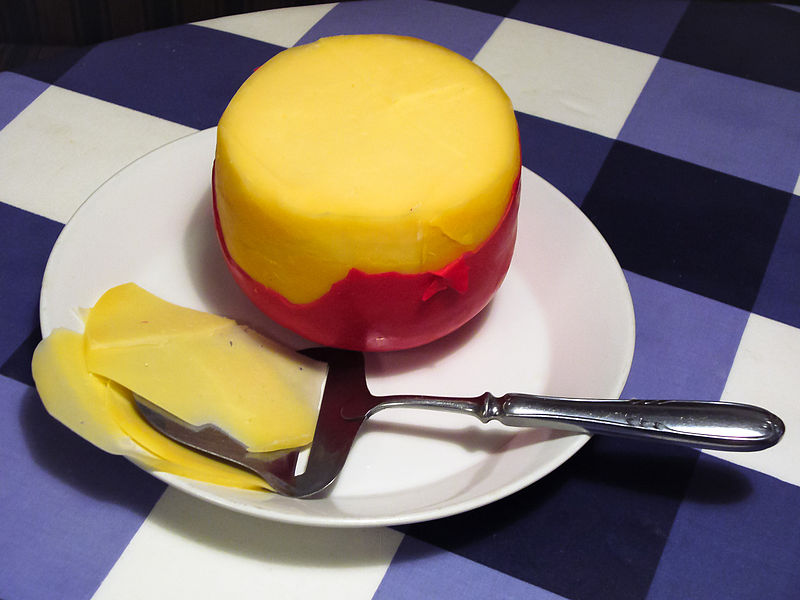
Edam
Dutch cheese
%20caseras.JPG)
empanada
An empanada is a type of baked or fried turnover consisting of pastry and filling, common in Spain, Portugal, other Southern European countries, North African countries, West African countries (where they are known as meatpies in Nigeria), South Asian countries, Latin American countries, and the Philippines. The name comes from the Spanish (to bread, i.e., to coat with bread), and translates as 'breaded', that is, wrapped or coated in bread. They are made by folding dough over a filling, which may consist of meat, cheese, tomato, corn, or other ingredients, and then cooking the resulting turno

cooked rice
rice that has been cooked either by steaming or boiling

Piper cubeba
species of plant

rice flour
form of flour made from finely milled rice
Indonesian cuisine
culinary traditions of Indonesia
shrimp paste
fermented condiment
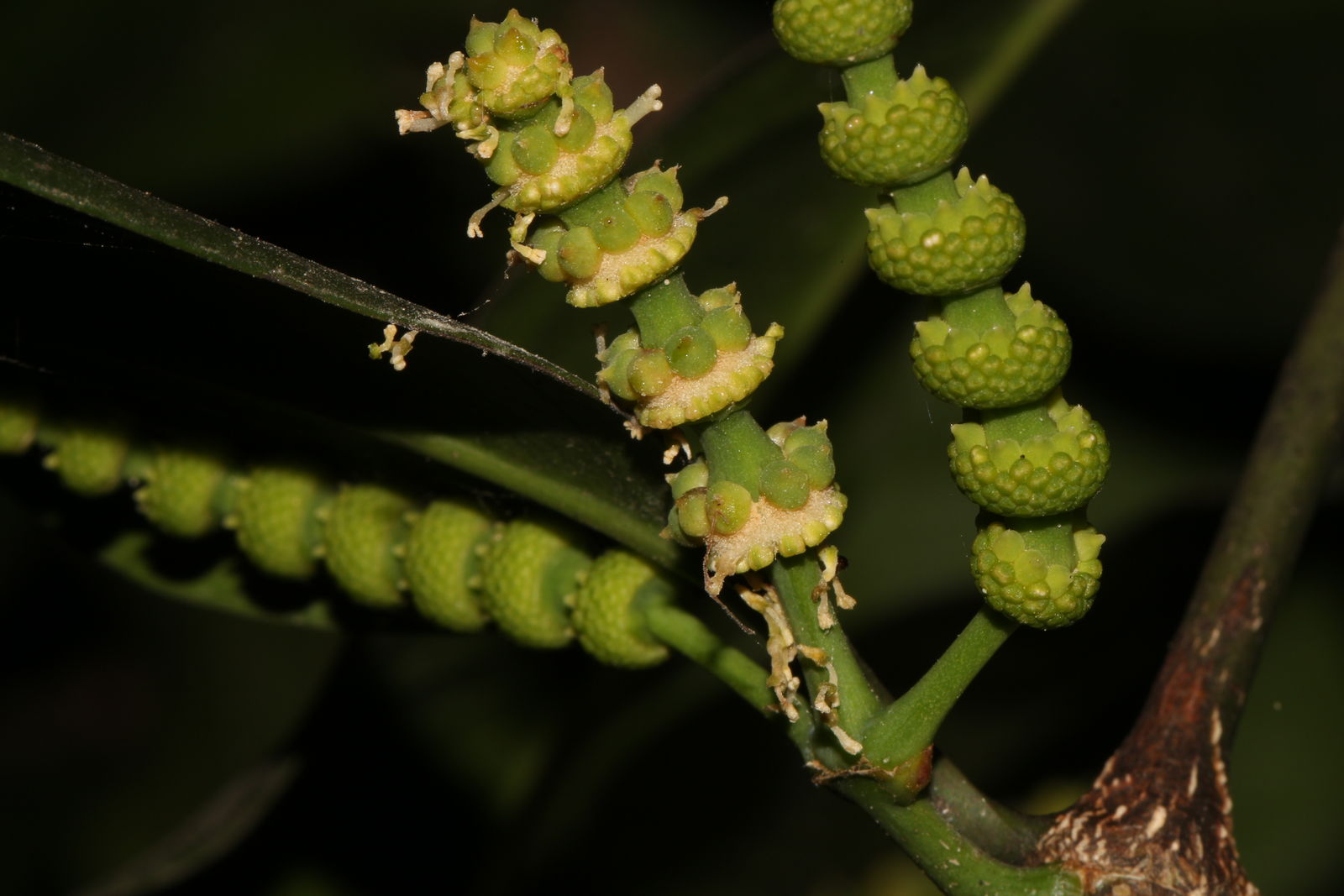
Gnetum gnemon
species of plant

thali
thumb|North Indian cuisine|North Indian style vegetarian thali served in a restaurant
fish ball
balls made from fish paste which are then boiled or deep-fried
coconut jam
jam made from a base of coconut milk, eggs and sugar
mung bean sprout
sprout of the mung bean
rousong
dried meat product from China

lemang
Lemang is a Malay and Minangkabau traditional food made from glutinous rice, coconut milk, and salt, cooked in a hollowed bamboo tube coated with banana leaves in order to prevent the rice from sticking to the bamboo. Lemang is believed to have origins linked to the ancient Proto-Malay and Deutero-Malay peoples who settled across Maritime Southeast Asia centuries ago. Similar dishes made from sticky rice in bamboo are common throughout Mainland Southeast Asia.

galangal
thumb|right|200px|Kaempferia galanga
thumb|right|200px|Lesser galangal (Alpinia officinarum)
thumb|right|300px|Galangal rhizome ready to be prepared for cooking
skhug
Zhug (from Yemenite Arabic or IPA: [zħuːq] through ), also known as sahawiq (Yemeni Arabic: , IPA: [saħaːwiq]), is a hot sauce originating in Yemeni cuisine. In other countries of the Arabian Peninsula it is also called mabooj (), and bisbaas.

hagelslag
thumb|Dark chocolate hagelslag sprinkles on buttered white bread
'''' (, ; , from muisjes'') are small, oblong, sweet-tasting chocolate sprinkles or granules, a few millimetres long, which are sprinkled on slices of buttered bread or rusks.
bak kut teh
Fujian Chinese dish
Asida
Asida (, or Maghrebi ġsydë, ), a common dish in the Arab world, is a lump of dough made by stirring wheat flour into boiling water, sometimes with added butter or honey. Similar in texture to fufu, it is eaten mainly in Middle East and African countries. It is considered one of the best-known desserts and traditional dishes in many Arab countries.

shumai
Shumai () is a type of traditional Chinese dumpling meat made of ground pork. In Cantonese cuisine, it is usually served as a dim sum snack, and is served with an additional serving of soy sauce. In addition to accompanying the Chinese diaspora, variations of shumai can be found in Japan, Southeast Asia, and South America. Variations include the Hawaiian pork hash and the Indonesian siomay. In Australia, it developed into dim sim.
coconut rice
coconut-flavoured rice

rissole
A rissole (from Latin , meaning reddish, via French , meaning "to redden") is "a ball or flattened cake of chopped meat, fish or vegetables mixed with herbs or spices, then coated in breadcrumbs and fried."
banana cake
cake
kerak telor
Indonesian spicy omelette dish
pork ribs
pieces of meat from the ribcage of a pig

Pandanus conoideus
species of plant
asam pedas
Malay and Minangkabau food
Malay cuisine
Sumatran cuisine
sea cucumber as food
flesh from sea cucumbers

Bakkwa
Bakkwa () is a Chinese salty-sweet dried meat product similar to jerky.
mie goreng
Indonesian and Malaysian dish
ikan bakar
Indonesian and Malay grilled dish,

Kopi tiam
thumb|A typical open-air kopitiam in Singapore

Andaliman
species of plant
Tharid
Tharid () also known as thareed, trid, tashrib, tashreeb or taghrib is a bread soup that originates from Mecca, Saudi Arabia, an Arab cuisine also found in many other Arab countries. Like other bread soups, it is a simple meal of broth and bread, in this instance crumbled flatbread moistened with broth or stew. Historically, the flatbread used was probably stale and unleavened. As an Arab national dish it is considered strongly evocative of Arab identity during the lifetime of the Islamic prophet Muhammad. According to a widespread cultural tradition, this unremarkable and humble dish was the
Peranakan cuisine
cuisine of the Peranakan people

Pempek
Pempek, mpek-mpek, or, colloquially, empek-empek, is a savory Indonesian fishcake, made of fish and tapioca, from Palembang, South Sumatra, Indonesia. Pempek is served with a rich sweet and sour sauce called kuah cuka or kuah cuko (), or just "cuko". Sometimes local people also eat the dish with yellow noodles and diced cucumber to balance out the vinegar's sourness, or adding chili powder to give the vinegar spiciness.

manis
Perkedel are vegetable fritters from Indonesian cuisine. They are most commonly made from mashed potatoes; however, there are other popular variations, such as perkedel jagung (peeled maize perkedel), perkedel tahu (tofu perkedel), and perkedel ikan (minced fish perkedel). The dish is called begedil in Javanese as well as in Malaysia and Singapore, suggesting that this fried dish was introduced by Javanese immigrants to Malaysia and Singapore.
Roti john
Malay traditional sandwich, popular in Indonesia, Malaysia and Singapore
bumbu
Indonesian blend of spices or spicy paste
Balinese cuisine
cuisine tradition from the Island of Bali

pineapple tart
asian small pastries filled with pineapple jam

balado
Indonesian type of hot and spicy spice mixture originating from West Sumatra in Sumatra island
Javanese cuisine
cuisine of the Javanese people, Indonesia
babi panggang
Indonesian grilled pork dishes

Tempoyak
Tempoyak (Jawi: ), asam durian or pekasam is a Malay condiment made from fermented durian. It is usually consumed by the ethnic Malays in Maritime Southeast Asia, notably in Indonesia and Malaysia. Tempoyak is made by crushing durian flesh and mixing it with some salt and kept in room temperature from three to seven days for fermentation. Tempoyaks are usually made during the durian season, when the abundance of durian and excess production are made into fermented tempoyak.
Fried fish
Indonesian dish
macaroni casserole
dish of cooked macaroni and a mixture of egg and milk with additional ingredients like meats, vegetables or fish
klappertaart
Klappertaart is a Dutch-influenced Indonesian cake originating from Manado, North Sulawesi.
Klappertaart is "coconut cake" or "coconut tart" and it is made from flour, sugar, milk, butter, and the flesh and juice of coconuts.
Kue putu
Indonesian traditional cake
Pindang
Pindang refers to a cooking method in the Indonesian and Malay language of boiling ingredients in brine or acidic solutions. Usually employed to cook fish or egg, the technique is native to Sumatra especially in Palembang, but has spread to Java and Kalimantan. The term also could refer to a specific sour and spicy fish soup which employs seasonings like tamarind. Pindang has food preservation properties, which extends the shelf life of fish products.
Sate padang
Indonesian dish
Pekasam
Pekasam (Jawi: ), Pakasam or Bekasam is a Malay term for fermented food, more precisely fermented fish product. In Malay and Banjar cookery, pekasam usually refers to freshwater fish fermented with salt, palm sugar, toasted rice grains and pieces of asam gelugur.
Duck rice
Duck dish
Ampo snack
Indonesian snack made of soil