Category
page 1Lecanorales genera

Cladonia
Cladonia is a genus of lichenized fungi in the family Cladoniaceae. They are the primary food source for reindeer/caribou. Cladonia species are of economic importance to reindeer-herders, such as the Sami in Scandinavia or the Nenets in Russia. Antibiotic compounds are extracted from some species to create antibiotic cream. The light green species Cladonia stellaris is used in flower decorations.

Usnea
Usnea is a genus of fruticose lichens in the large family Parmeliaceae. The genus, which currently contains roughly 130 species, was established by Michel Adanson in 1763. Species in the genus grow like leafless mini-shrubs or tassels anchored on bark or twigs. Members of the genus are commonly called '''old man's beard, beard lichen, or beard moss'. Usnea lichens are characterized by their shrubby growth form, elastic branches with a central cord, and distinctive soralia that produce vegetative propagules. They vary in colour from pale green to yellow-green, grey-green, reddish, or variegated
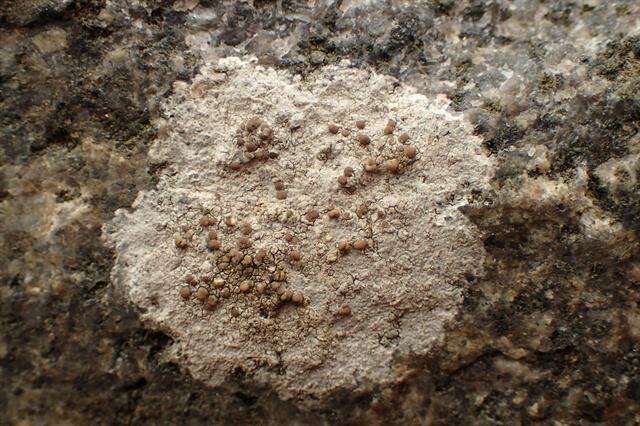
Lecanora
Lecanora is a genus of lichen commonly called rim lichens. Lichens in the genus Squamarina are also called rim lichens. Members of the genus have roughly circular fruiting discs (apothecia) with rims that have photosynthetic tissue similar to that of the nonfruiting part of the lichen body (thallus). Other lichens with apothecia having margins made of thallus-like tissue are called lecanorine.

Cetraria
Cetraria is a genus of fruticose lichens that associate with green algae as photobionts. Most species are found at high latitudes, occurring on sand or heath, and are characterised by their "strap-like" form with spiny edges. The lobes can range from narrow and linear to broader and flattened, often forming loose or densely packed cushions. Their distinctive spiny margins serve both a defensive role and aid in vegetative reproduction through fragmentation. The genus was created by Erik Acharius in 1803 and belongs to the large family Parmeliaceae. While originally a species-rich genus, taxonom

Parmelia
genus of fungi

Ramalina
Ramalina is a genus of greenish fruticose lichens that grow in the form of flattened, strap-like branches. Members of the genus are commonly called strap lichens or cartilage lichens. Apothecia are lecanorine.

Evernia
Evernia is a genus of bushy lichens in the family Parmeliaceae.
Oakmoss Evernia prunastri is used as a fixative agent in Eau de Cologne within the perfume industry. It is green on top and white on bottom, and divides evenly into "forks"; it becomes very soft when wet. It is not to be confused with Ramalina, which is straplike, stiff and bristly, green on top and bottom, and divides unevenly. Evernia is an abundant genus, found growing on trees.
%20and%20capillaris%20(right)%20-%20Flickr%20-%20pellaea.jpg)
Bryoria
Bryoria is a genus of lichenized fungi in the family Parmeliaceae. Many members of this genus are known as horsehair lichens. The genus has a widespread distribution, especially in boreal and cool temperate areas. These lichens typically grow as slender, hair-like strands that hang from conifer trees or form small bushes, ranging in colour from dark brown to pale grey. They play important ecological roles, particularly as winter food for caribou in northern forests, where some species can accumulate in large quantities in the forest canopy. The genus contains about 35 species found worldwide,
.jpg)
Hypogymnia
Hypogymnia is a genus of foliose lichens in the family Parmeliaceae. They are commonly known as tube lichens, bone lichens, or pillow lichens. Most species lack rhizines (root-like attachment organs on the lower surface) that are otherwise common in members of the Parmeliaceae, and have swollen lobes that are usually hollow. Other common characteristics are relatively small spores and the presence of physodic acid and related lichen products. The lichens usually grow on the bark and wood of coniferous trees.

Vulpicida
Vulpicida is a genus of lichenized fungi in the family Parmeliaceae. Circumscribed in 1993 to contain species formerly placed in Cetraria, the genus is widespread in Arctic to northern temperate regions, and contains six species. The genus is characterized by the presence of the secondary metabolites pulvinic acid and vulpinic acid, compounds that when combined with usnic acid, give the species their characteristic yellow and green colors.

Cetrelia
Cetrelia is a genus of leafy lichens in the large family Parmeliaceae. They are commonly known as sea-storm lichens, alluding to the wavy appearance of their lobes. The name of the genus, circumscribed in 1968 by the husband and wife lichenologists William and Chicita Culberson, alludes to the former placement of these species in the genera Cetraria and Parmelia.

Stereocaulon
Stereocaulon is a genus of lichens. Members of Stereocaulon are commonly called rock foam lichens. partners of Stereocaulon include green algae from the genera Asterochloris, Chloroidium, and Vulcanochloris. Stereocaulon is difficult to ID to species, but there is a high diversity of species within the genus.
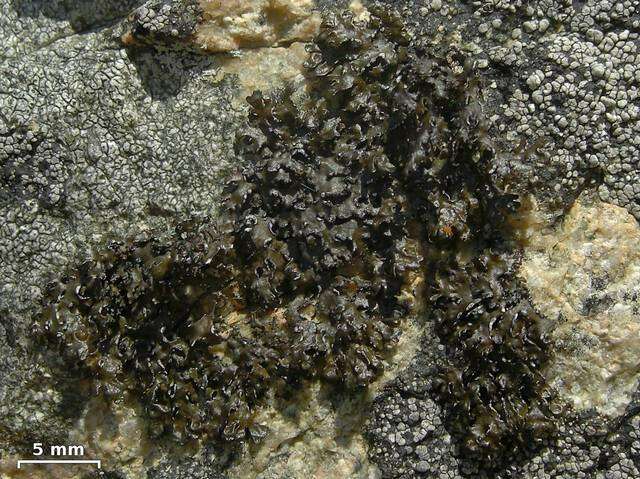
Melanelia
Melanelia is a genus of lichen-forming fungi in the family Parmeliaceae. These lichens typically grow on rocks and form relatively large, leaf-like structures with brown to blackish upper surfaces and pale undersides. The genus originally included many more species, but most have since been moved to related genera like Melanohalea and Melanelixia, leaving only five accepted species today.
.jpg)
Lepraria
Lepraria is a genus of leprose (powdery) crustose lichens that grows on its substrate like patches of granular, caked up, mealy dust grains. Members of the genus are commonly called dust lichens. The main vegetative body (thallus) is made of patches of soredia (little balls of algae wrapped in fungus). Sexual structures have not been observed in Lepraria, but genomic evidence indicates that the genus retains mating type and meiosis-associated genes, raising the possibility of cryptic sexual or parasexual recombination. Some species can form marginal lobes and appear squamulose. Because of the

Rhizoplaca
Rhizoplaca is a genus of lichenized fungi in the family Lecanoraceae. Members of the genus are commonly called rimmed navel lichens because of their umbilicate growth form and lecanorine (rimmed with thallus-like tissue)apothecia, also rock-posy lichen and rockbright.

Melanohalea
Melanohalea is a genus of foliose lichens in the family Parmeliaceae. It contains 30 mostly Northern Hemisphere species that grow on bark or on wood. The genus is characterised by the presence of pseudocyphellae (tiny pores that allow for gas exchange), usually on warts or on the tips of isidia, a non-pored and a medulla containing depsidones or lacking secondary metabolites. Melanohalea was circumscribed in 2004 as a segregate of the morphologically similar genus Melanelia, which was created in 1978 for certain brown Parmelia species. The methods used to estimate the evolutionary history of M

Alectoria
genus of fungi
.jpg)
Flavoparmelia
Flavoparmelia is a genus of foliose lichens in the family Parmeliaceae. Because of their appearance, they are commonly known as greenshield lichens. The widely distributed genus contains about 40 species.
Psora
Psora is a genus of lichen-forming fungi in the family Psoraceae. Members of the genus are commonly called fishscale lichens. Lichens in the genus Psora generally have a squamulose thallus and anthraquinones in the hymenium. partners of Psora lichens include members of the green algal genera Asterochloris, Chloroidium, Myrmecia, and Trebouxia.

Haematomma
Haematomma is a genus of crustose lichens established by Abramo Bartolommeo Massalongo in 1852. It is the sole genus in the Haematommataceae, a family circumscribed by Josef Hafellner in 1984. Commonly called bloodstain lichens, the species assigned to this genus are widely distributed in tropical and temperate areas.

Lecidella
Lecidella is a genus of crustose lichens in the family Lecanoraceae.

Punctelia
Punctelia is a genus of foliose lichens belonging to the large family Parmeliaceae. The genus, which contains about 50 species, was segregated from genus Parmelia in 1982. Characteristics that define Punctelia include the presence of hook-like to thread-like conidia (asexual spores), simple rhizines (root-like structures that attach the lichen thallus to its substrate), and point-like pseudocyphellae (tiny pores on the thallus surface that facilitate gas exchange). It is this last feature that is alluded to in the vernacular names speckled shield lichens or speckleback lichens.
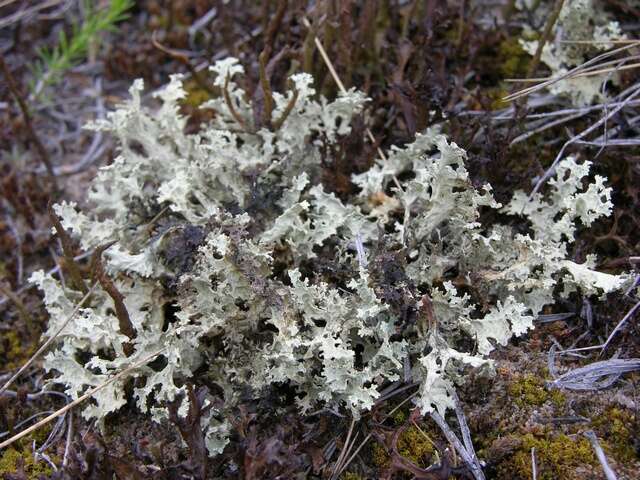
Flavocetraria
Flavocetraria is a genus of lichenized ascomycete fungi in the family Parmeliaceae. The genus contains two species found in arctic-alpine and boreal regions, Flavocetraria cucullata and F. nivalis (syn. Cetraria nivalis).
.jpg)
Bacidia
Bacidia is a genus of lichen-forming fungi in the family Ramalinaceae. These lichens are characterised by their crustose growth form, distinctive club-shaped reproductive structures called apothecia that contain long, needle-like spores, and their symbiotic partnership with green algae. Bacidia species typically grow on various substrates including tree bark, rock surfaces, and occasionally soil, and are distinguished from related genera by their specific spore characteristics and internal structures.

Biatora
Biatora is a genus of lichens in the family Ramalinaceae. Originally circumscribed in 1817, the genus consists of crustose and squamulose lichens with green algal photobionts, biatorine apothecia, colorless, simple to 3-septate ascospores, and bacilliform pycnospores.
.JPG)
Melanelixia
Melanelixia is a genus of foliose lichens in the family Parmeliaceae. It contains 15 Northern Hemisphere species that grow on bark or on wood. The genus is characterized by a pored or fenestrate epicortex (a thin homogeneous polysaccharide layer on the surface of the cortex), and the production of lecanoric acid as the primary chemical constituent of the medulla. Melanelixia was circumscribed in 2004 as a segregate of the related genus Melanelia.
.jpg)
Squamarina
Squamarina is a genus of lichens in the family Stereocaulaceae. They form patches of radiating or overlapping scales (), with a well-developed upper and no lower cortex. They grow on calcareous soil and rocks. Squamarina lentigera can be used to make a yellow dye.
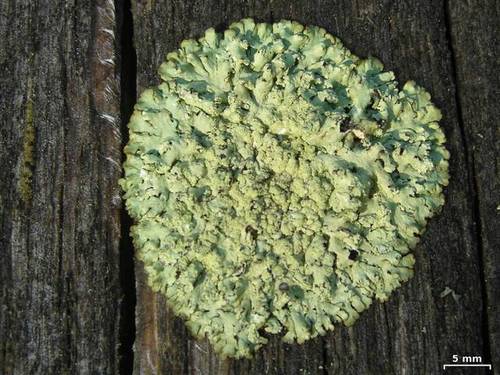
Parmeliopsis
Parmeliopsis is a genus of lichens in the family Parmeliaceae. The genus contains two species. Members of this genus are commonly called bran lichens.
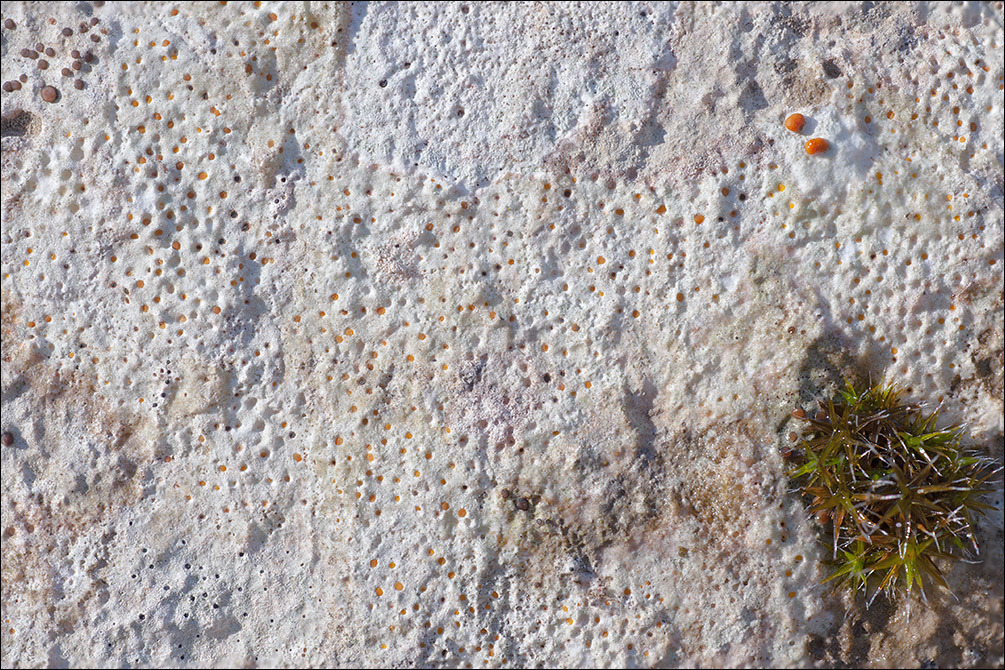
Protoblastenia
Protoblastenia is a genus of lichens in the family Psoraceae. It was originally circumscribed by Alexander Zahlbruckner in 1908 as a section of genus Blastenia. J. Steiner promoted it to generic status in 1911.
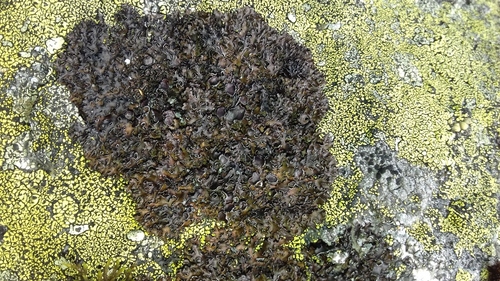
Cetrariella
Cetrariella is a genus of foliose lichens in the family Parmeliaceae. It contains three species.
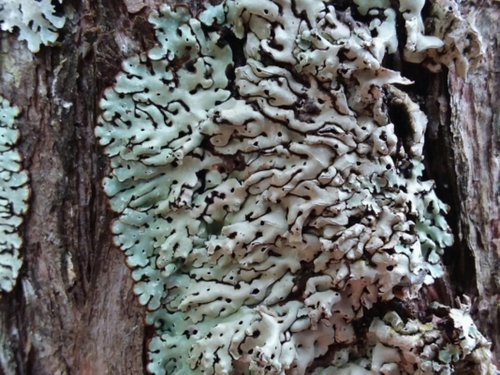
Menegazzia
Menegazzia is a genus of lichenized fungi containing roughly 70 accepted species. The group is sometimes referred to as the tree flutes, honeycombed lichens, or hole-punch lichens. The most obvious morphological feature of the genus is the distinctive perforations spread across the upper side of the thallus. This makes the group easy to recognise, even for those not particularly familiar with lichen identification.
.jpg)
Toninia
Toninia is a genus of lichen-forming fungi in the family Ramalinaceae. The genus contains about 70 recognised species that are distributed worldwide, with many found in arctic and alpine environments as well as arid regions. These lichens are characterised by their often reduced or scale-like thalli and distinctive black apothecia (fruiting bodies) that typically become convex with age and contain needle-shaped ascospores. Toninia species primarily grow on soil, rocks, and other mineral substrates, and are distinguished from related genera by their spore-producing structures and chemical react

Parmotrema
Parmotrema is a genus of lichen belonging to the family Parmeliaceae. It is a large genus, containing an estimated 300 species, with a centre of diversity in subtropical regions of South America and the Pacific Islands.

Protoparmelia
Protoparmelia is a genus of lichenized fungi in the family Parmeliaceae. The genus has a widespread distribution, and contains 11 species. Protoparmelia was circumscribed by French lichenologist Maurice Choisy in 1929.

Allantoparmelia
Allantoparmelia is a genus of lichenised fungi in the large family Parmeliaceae. It is a genus of only three currently accepted species. All three Allantoparmelia lichens have a foliose growth form. They appear to be a very slow growing group of lichens, with a mean annual thallus diameter increase of only 0.23–0.35 mm per year.

Platismatia
Platismatia is genus of medium to large foliose lichens in the family Parmeliaceae. The genus is widespread and contains 11 species. They resemble many other genera of foliose lichens in the Parmeliaceae, particularly Parmotrema, Cetrelia, and Asahinea. Most species are found in forests on the trunks and branches of conifer trees, although some species grow on rocks.
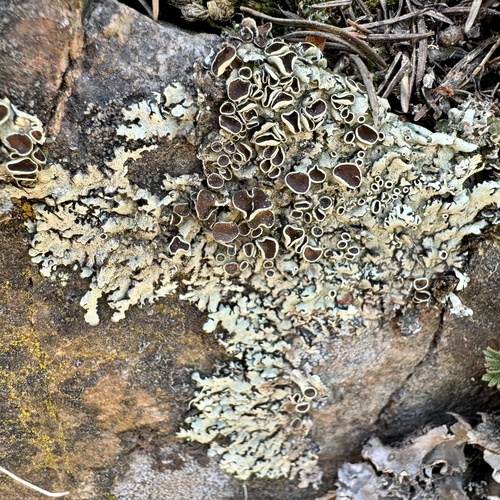
Xanthoparmelia
Xanthoparmelia (commonly known as green rock shields or rock-shield lichens) is a genus of foliose lichens in the family Parmeliaceae. This genus of lichen is commonly found in the United States, South America, southern Africa, Europe, Australia, and New Zealand.
Sphaerophorus
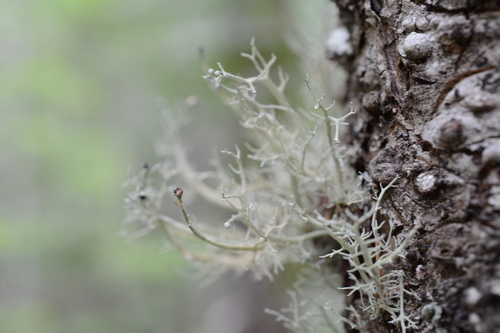
Sphaerophorus is a genus of lichenized fungi in the order Lecanorales.

Fellhanera
Fellhanera is a genus of mostly leaf-dwelling lichens in the family Ectolechiaceae. Established by the lichenologist Antonín Vězda in 1986 and named in honour of the Austrian lichenologist Josef Hafellner, the genus comprises 69 accepted species as of 2026. These small lichens form powdery, crust-like growths that adhere tightly to their substrate without developing a true protective skin (a ), and they produce distinctive chemical compounds including roccellic acid and zeorin that help distinguish them from similar-looking genera.

Fellhaneropsis
Fellhaneropsis is a genus of lichen-forming fungi in the family Ectolechiaceae. The genus comprises 11 accepted species as of 2025. These inconspicuous lichens form extremely thin, smooth to powdery films that spread over bark, leaves, or other plant surfaces, and unlike their close relatives in Fellhanera, they produce no detectable lichen products.
Bacidina
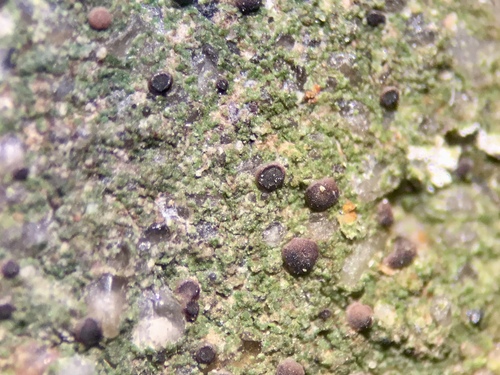
Bacidina is a genus of crustose lichens in the family Ramalinaceae.
Carbonea
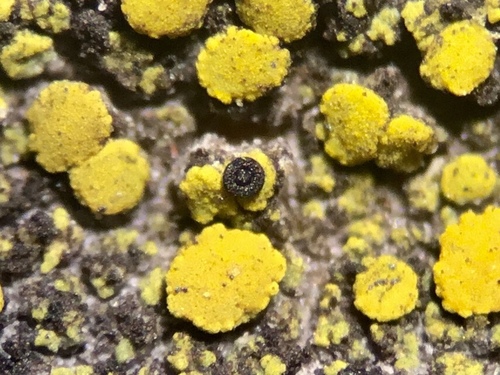
Carbonea is a genus of fungi in the family Lecanoraceae. Most of the species grow on lichens. The genus is widespread, and contains 20 species. Carbonea was originally circumscribed as a subgenus of Lecidea in 1967 before it was promoted to generic status in 1983.

Allocetraria
Allocetraria is a genus of lichenized fungi in the family Parmeliaceae. It consists of 12 species, with a center of distribution in China.
Calvitimela
Calvitimela is a fungal genus in the family Tephromelataceae, comprising 11 species of lichen. These lichens grow tightly attached to rocks, appearing as thin, crust-like layers on their surface. They are primarily found in alpine and arctic regions around the world. Calvitimela species are characterised by their (segmented) thallus and black, shiny, convex apothecia (fruiting bodies). The genus currently includes eleven recognised species, though recent genetic studies have revealed unexpected diversity within this group. Calvitimela lichens are known for their varied secondary metabolites, w

Pseudevernia
Pseudevernia is a genus of foliose lichens in the family Parmeliaceae. The type species of the genus, Pseudevernia furfuracea (commonly known as tree moss), has substantial commercial value in the perfume industry.

Imshaugia
Imshaugia is a genus of seven species of foliose lichens in the family Parmeliaceae. They are commonly known as starburst lichens.

Anzia
Anzia is a genus of foliose lichens known as black-foam lichens in the large family Parmeliaceae. It was formerly included in the monogeneric family Anziaceae, but this has since been subsumed into the Parmeliaceae.

Parmelina
Parmelina is a genus of lichen belonging to the family Parmeliaceae. The genus was circumscribed in 1974 by American lichenologist Mason Hale with Parmelina tiliacea assigned as the type species.

Pseudephebe
Pseudephebe is a genus of fruticose lichens in the family Parmeliaceae. It contains three species that grow on rocks.

Bunodophoron
Bunodophoron is a genus of lichen-forming fungi in the family Sphaerophoraceae. The genus has a broad distribution in the Southern Hemisphere, with several species also present in oceanic regions of the Northern Hemisphere. Established in 1861 by the Italian botanist Abramo Bartolommeo Massalongo, the genus comprises about 20 accepted species that form shrubby, often tufted growths with flattened, strap-like branches. These lichens are characterised by their distinctive black, powdery spore masses that develop at the tips of fertile branches and their production of various lichen products incl
Arctoparmelia
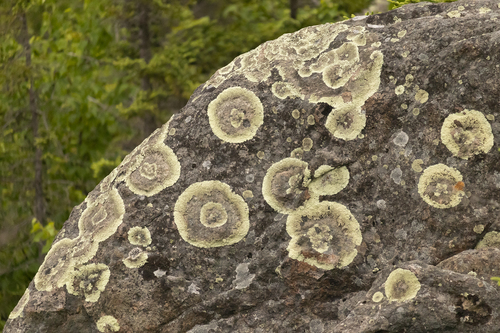
Arctoparmelia is a genus of foliose lichens in the family Parmeliaceae. Established in 1986, the genus comprises five species of rock-dwelling lichens found primarily in arctic and boreal regions of the Northern Hemisphere. These lichens are characterized by their distinctive velvety or ivory-white to pale brown lower surfaces, concentric growth patterns, and unique chemistry, including the presence of alectoronic acid and negative reactions to iodine-based tests. Arctoparmelia species, commonly known as ring lichens, vary in size from small thalli to specimens up to in diameter, and typically

Lecania
Lecania is a genus of lichen-forming fungi in the family Ramalinaceae. Lecania is widely distributed, especially in temperate regions, and contains about 65 species. These lichens form thin, crusty growths on various surfaces and produce small disc-shaped fruiting bodies that are typically brown to black in colour. Most species reproduce both sexually through spores and asexually through tiny reproductive structures, allowing them to spread effectively in their environments.

Hypotrachyna
Hypotrachyna is a genus of lichenized fungi within the family Parmeliaceae. According to the Dictionary of the Fungi (10th edition, 2008), the widespread genus contains about 198 species. Hypotrachyna was circumscribed by American lichenologist Mason Ellsworth Hale Jr in 1974.
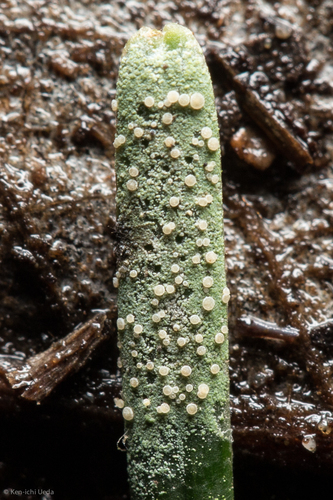
Catillaria
Catillaria is a genus of crustose lichens in the family Catillariaceae. The genus was circumscribed by Italian lichenologist Abramo Bartolommeo Massalongo in 1852. It is the type genus of Catillariaceae, which was circumscribed by Austrian lichenologist Josef Hafellner in 1984.

Sulcaria
Sulcaria is a genus of three species of fruticose lichens in the family Parmeliaceae. Sulcaria was circumscribed by lichenologist Jan Bystrek in 1971. These lichens form hair-like or rope-like structures that hang from or grow upright on tree bark, with branches that develop distinctive lengthwise grooves as they age. They reproduce through disc-shaped fruiting bodies that contain large, dark brown spores with two unequal cells.

Adelolecia
Adelolecia is a genus of crustose lichens in the family Lecanoraceae. These rock-dwelling lichens form thin crusts made up of small angular patches, typically reaching about 12 cm across with distinctive black, round fruiting bodies that sit directly on the surface. The genus includes four species found in mountainous and arctic regions, where they grow on various types of rock and are distinguished by chemical compounds (lichen products) that produce colourful diagnostic reactions when tested with laboratory solutions.

Tuckermanopsis
Tuckermannopsis is a genus of lichen-forming fungi in the family Parmeliaceae. The genus contains about twelve species of foliose (leafy) to somewhat fruticose (bushy) lichens with brownish or greenish thalli. Species in Tuckermannopsis are found primarily in temperate and boreal regions of the Northern Hemisphere, with centres of diversity in western North America and East Asia. Members of the genus are distinguished by their growth form, with reproductive structures largely restricted to the margins of the , and the absence of usnic acid in their upper .
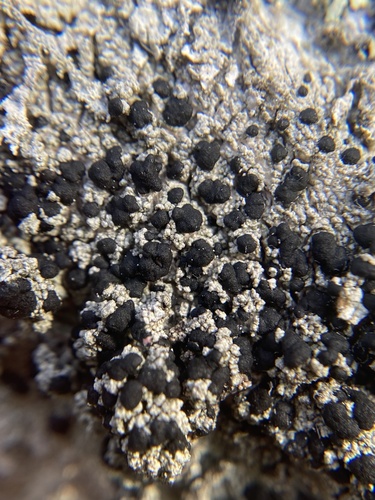
Mycoblastus
Mycoblastus is a genus of crustose lichens in the family Tephromelataceae. Members of the genus are commonly called blood lichens.
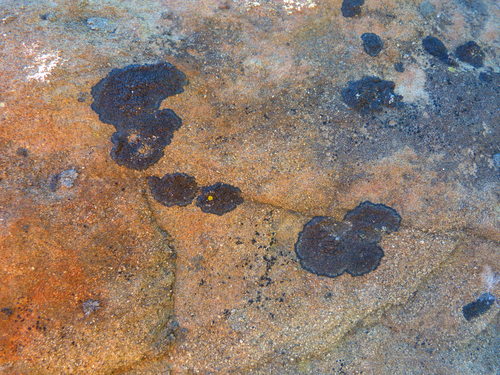
Miriquidica
Miriquidica is a genus of lichen in the family Lecanoraceae. The genus was circumscribed in 1987 by the lichenologists Hannes Hertel and Gerhard Rambold, with Miriquidica complanata assigned as the type species. According to Dictionary of the Fungi (10th edition, 2008), the widespread genus contains 23 species, found predominantly in arctic-alpine regions.

Nephromopsis
Nephromopsis is a genus of lichenized fungi within the Parmeliaceae family.