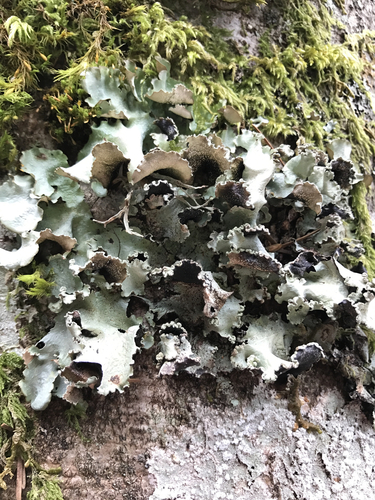
(c) Pam Borso, some rights reserved (CC BY-NC), uploaded by Pam Borso · cc-by-nc
Cetrelia
Sign in to saveCetrelia is a genus of leafy lichens in the large family Parmeliaceae. They are commonly known as sea-storm lichens, alluding to the wavy appearance of their lobes. The name of the genus, circumscribed in 1968 by the husband and wife lichenologists William and Chicita Culberson, alludes to the former placement of these species in the genera Cetraria and Parmelia.
Species
Speckled Rag Lichen
GENUS
- KingdomFungi
- PhylumAscomycota
- ClassLecanoromycetes
- OrderLecanorales
- FamilyParmeliaceae
via GBIF
Museum specimens
- Specimen records
- 458
- With media
- 77
- Family
- Parmeliaceae
- Collections
- US, F, MARY
- Recorded in
- United States, Bulgaria, Malaysia, India, Mexico, Taiwan, New Zealand, China
Wikidata facts
- Instance of
- taxon
- Parent taxon
- Parmeliaceae
- Image
- Cetrelia olivetorum-4.jpg
Show 7 more facts
- Commons category
- Cetrelia
- taxon name
- Cetrelia
- taxon rank
- genus
- topic's main category
- Category:Cetrelia
- taxonomic type
- Cetrelia cetrarioides
- taxon common name
- giant shield lichen
- taxon author citation
- W.L. Culb. & C.F. Culb.
via Wikidata · CC0
~20 min read
Encyclopedic overview
10 sectionsContents
- Systematics
- Taxonomic history
- Phylogeny
- Description
- Species
- Habitat and distribution
- Conservation
- Uses
- References
- Cited literature
Cetrelia is a genus of leafy lichens in the large family Parmeliaceae. They are commonly known as sea-storm lichens, alluding to the wavy appearance of their lobes. The name of the genus, circumscribed in 1968 by the husband and wife lichenologists William and Chicita Culberson, alludes to the former placement of these species in the genera Cetraria and Parmelia.
The main characteristics of the genus are the broad, rounded lobes of the greyish-green lichen body, and the presence of tiny pores in the outer surface (the cortex) that enable gas exchange. The lower surface of the lichen is brown to black with few root-like rhizines to act as holdfasts, resulting in a fairly loose attachment to the surface the lichen is on. Sexual reproductive structures are usually not present, so the physical characteristics used to distinguish between Cetrelia species include the presence or absence of asexual reproductive structures such as isidia, soredia, and lobules. Cetrelia lichens are chemically diverse and produce several secondary chemicals: atranorin is the main compound produced in the cortex, while substances known as depsides or depsidones are compounds in the medulla (the tissue layer under the cortex) that can be used to help distinguish between species.
Excerpted from Wikipedia’s “Cetrelia” article, available under the CC BY-SA 4.0 licence.