Category
page 4Lichen genera
Jamesiella
Jamesiella is a genus of lichen-forming fungi in the family Gomphillaceae. Members of Jamesiella form thin, delicate crusts on tree bark, rocks, and mosses in humid tropical and temperate forests, distributed across North and South America and Europe. The genus is distinguished from its close relative Gyalideopsis by a unique type of asexual reproductive structure called , which are specialized stalks containing both fungal filaments and algal cells that detach and disperse as complete units capable of establishing new lichens.

Sagiolechia
Sagiolechia is a genus of lichen-forming fungi in the family Sagiolechiaceae. These lichens form either extremely thin crusts within their substrate or live parasitically on other lichens without forming their own thallus. The genus is characterised by distinctive black, glossy fruiting bodies that begin embedded within the host material and later erupt to the surface, often developing elaborate folded or star-like forms. Sagiolechia contains six species found in diverse locations including Alaska, Greenland, Norway, and Madeira, with most species being quite rare and relatively recently disco

Nephromopsis
Nephromopsis is a genus of lichenized fungi within the Parmeliaceae family.

Polysporina
Polysporina is a genus of fungi in the family Acarosporaceae. The genus was circumscribed by the Czech lichenologist Antonín Vězda in 1978. Some of the species form lichens, while others are species of lichenicolous (lichen-dwelling) fungi.
Bryocaulon
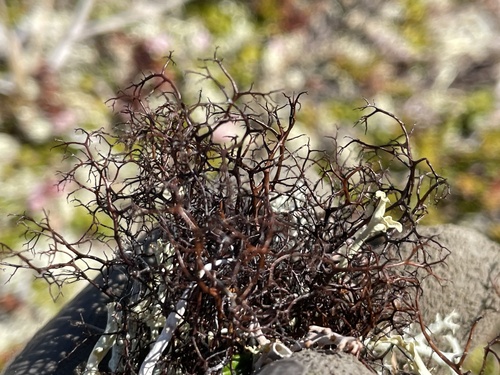
Bryocaulon is a small genus of lichen-forming fungi in the family Parmeliaceae. The genus has a widespread distribution in north temperate regions, and contains four species. These lichens form shrub-like tufts with cylindrical branches that are covered in tiny white pores for gas exchange. They are found mainly in cold regions of the Northern Hemisphere, particularly in arctic and mountainous areas where they grow on acidic bark and rocks.

Tuckermanopsis
Tuckermannopsis is a genus of lichen-forming fungi in the family Parmeliaceae. The genus contains about twelve species of foliose (leafy) to somewhat fruticose (bushy) lichens with brownish or greenish thalli. Species in Tuckermannopsis are found primarily in temperate and boreal regions of the Northern Hemisphere, with centres of diversity in western North America and East Asia. Members of the genus are distinguished by their growth form, with reproductive structures largely restricted to the margins of the , and the absence of usnic acid in their upper .

Melaspilea
Melaspilea is a genus of fungi in the family Melaspileaceae. The genus includes both lichen-forming species that grow on tree bark and lichenicolous species that parasitise other lichens. Originally, Melaspilea encompassed a broad and diverse group of species, but a 2015 molecular study narrowed its circumscription, showing that many species historically placed in the genus actually belonged to unrelated lineages. In its current sense, Melaspilea belongs to the family Melaspileaceae and order Eremithallales within Dothideomycetes and is characterised by dark fruiting bodies with single-septum
Dictyonema
Dictyonema is a genus of mainly tropical basidiolichens in the family Hygrophoraceae. Unlike most lichens, which contain fungi related to yeasts and molds, Dictyonema species contain fungi more closely related to mushrooms. The genus includes about 40 recognized species found mainly in tropical regions, ranging from lowland forests to high mountain elevations up to 4,300 meters in the Andes. These lichens come in various forms, from crusty patches to leaf-like structures to thread-like mats, and most grow on soil, rocks, moss, or rotting logs. One species from the Amazon rainforest has traditi

Pleopsidium
Pleopsidium is a genus of lichen-forming fungi in the family Acarosporaceae (order Acarosporales). The widespread genus was circumscribed by lichenologist Gustav Wilhelm Körber in 1855. After a 2025 revision of the genus, it comprises eight species.

Phaeographina
Phaeographina is a genus of lichen-forming fungi in the family Graphidaceae. The genus was circumscribed by Swiss lichenologist Johannes Müller Argoviensis in 1882.

Fuscidea
Fuscidea is a genus of crustose lichens in the family Fuscideaceae. It has about 40 species. The genus was established in 1972 by Volkmar Wirth and Antonín Vězda, with its name derived from the Latin for 'brown', referring to the typical colouration of these lichens. Species of Fuscidea grow almost exclusively on acidic, silica-rich rocks, favouring steep faces in humid, high-rainfall regions such as Atlantic coastlines and mountain ranges. They form cracked or patchy crusts that spread over a characteristically dark underlying margin, often creating mosaic-like patterns where neighbouring col

Thelocarpon
Thelocarpon is a genus of lichen-forming fungi in the family Thelocarpaceae. The genus was established in 1853 by the Finnish lichenologist William Nylander, who distinguished it from related genera by its warted thallus structure, many-spored asci, and the distinctive violet-blue staining reaction of its fruiting body gel when treated with iodine. These tiny lichens form small, wart-like bumps on soil, wood, and plant debris, often covered with a distinctive bright yellow powdery coating. The genus includes about 30 species found worldwide, many of which produce unusually large numbers of asc

Cliostomum
Cliostomum is a genus of lichen-forming fungi in the family Ramalinaceae. It has about 20 species. The genus was established in 1825 by Elias Magnus Fries, who characterized it by its rounded fruiting bodies that are integrated into the lichen's crust with distinctive folded or corrugated openings. These lichens form tight crusts on various surfaces, ranging in colour from whitish to pale grey or yellowish, and reproduce primarily through conspicuous flask-shaped structures that release spores rather than through sexual fruiting bodies.

Lobothallia
Lobothallia is a genus of lichen-forming fungi in the family Megasporaceae. Dark brown to black apothecia may be sunken into the surface of the thallus, as indicated in the common name puffed sunken-disk lichen. Originally described as a subgenus of Aspicilia in 1984, Lobothallia was elevated to full genus status in 1991 based on distinctive features including peripheral and small, thin-walled ascospores. The genus was established to clarify a group of rock-dwelling lichens that had previously been classified across several different genera.

Adelolecia
Adelolecia is a genus of crustose lichens in the family Lecanoraceae. These rock-dwelling lichens form thin crusts made up of small angular patches, typically reaching about 12 cm across with distinctive black, round fruiting bodies that sit directly on the surface. The genus includes four species found in mountainous and arctic regions, where they grow on various types of rock and are distinguished by chemical compounds (lichen products) that produce colourful diagnostic reactions when tested with laboratory solutions.

Dirina
Dirina is a genus of lichen-forming fungi in the family Roccellaceae. All Dirina species are crustose lichens with a whitish to greyish brown thallus, and live either on rock or on bark–some species can live on both. The partner is a member of the green algal genus Trentepohlia. Most species occur in the Northern Hemisphere, and are generally restricted to coastal habitats, where they may be locally quite common. Erythrin and lecanoric acid are lichen products that usually occur in Dirina species, along with several other unidentified substances.
Immersaria
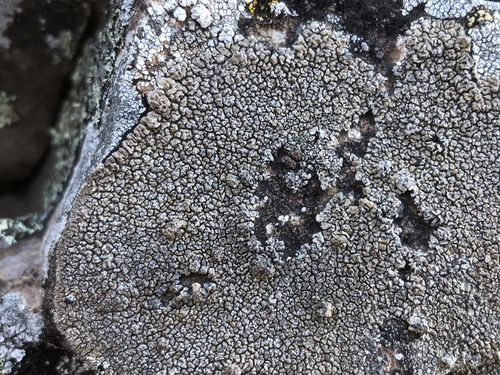
Immersaria is a genus of lichen-forming fungi in the family Lecideaceae. Species in the genus form brown to orange-brown crusts on rock, often with a waxy or glossy surface. They are characterised by dark, sunken fruiting bodies that lack the prominent rim seen in some related genera. The genus occurs in Europe, Asia, and the Southern Hemisphere, typically in alpine or montane habitats.

Tephromela
Tephromela is a genus of lichens in the family Tephromelataceae. There are about 50 species in this widespread genus. The genus was established in 1929 by the French lichenologist Maurice Choisy, who separated these species from the broader genus Lecanora based on their distinctive straight asexual spores and dark violet spore-bearing layers. These rock and bark-dwelling lichens are characterized by their white to pale grey crusty growth and black -shaped reproductive structures with purple-tinted interiors.
Placynthium
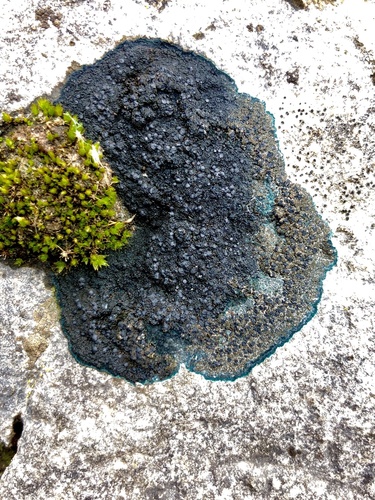
Placynthium is a genus of lichen-forming fungi in the family Placynthiaceae. Members of this genus are commonly called blackthread lichens.

Canoparmelia
Canoparmelia is a genus of lichen-forming fungi in the family Parmeliaceae. The widespread genus contains about 35 species. Canoparmelia, a segregate of the parmelioid lichen genus Pseudoparmelia, was circumscribed by John Elix and Mason Hale in 1986.

Koerberiella
Koerberiella is a genus of lichenized fungi within the Lecideaceae family.
Eremothecella
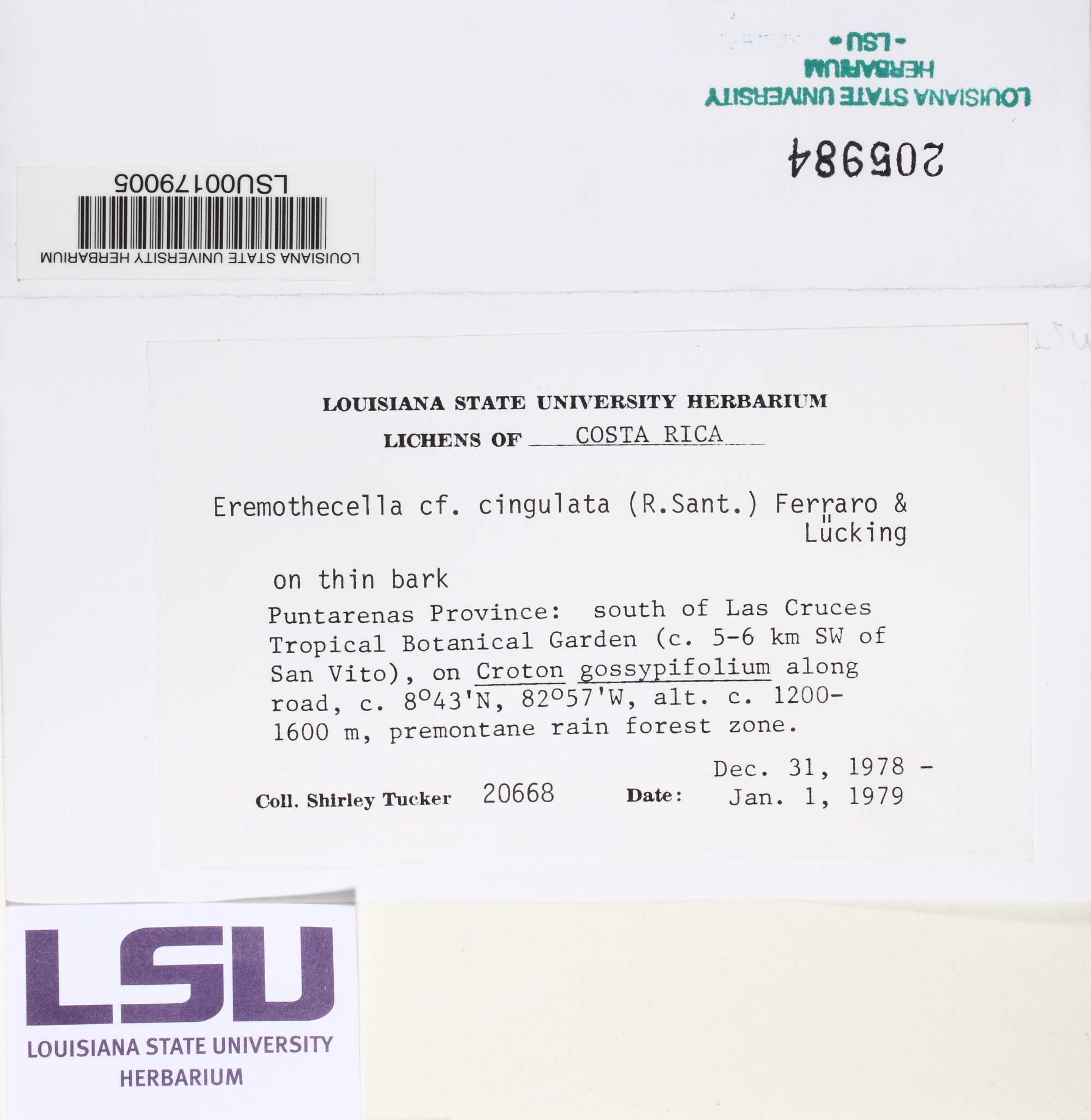
Eremothecella is a genus of lichenized fungi in the family Arthoniaceae. The genus is widespread in tropical areas.

Cryptodiscus
Cryptodiscus is a genus of fungi in the family Stictidaceae. These tiny fungi primarily decompose weathered wood, producing minute, cup-shaped fruiting bodies that remain mostly embedded within their substrate and open through small pores. Most species are wood-decaying saprotrophs found on bark-free branches and logs; one species forms thin, lichen-like crusts on soil and dead moss. The genus is distributed worldwide in boreal and temperate regions.

Teloschistes
Teloschistes is a genus of lichen-forming fungi in the family Teloschistaceae, of which it is the namesake. Species of Teloschistes are among the most visually striking lichens, typically forming small, bushy, much-branched growths in vivid shades of yellow to orange, colours produced by anthraquinone pigments, particularly parietin. The genus has a worldwide distribution, with species occurring on twigs, bark, and rock surfaces in open, well-lit habitats ranging from coastal scrub and semi-arid shrublands to alpine zones.
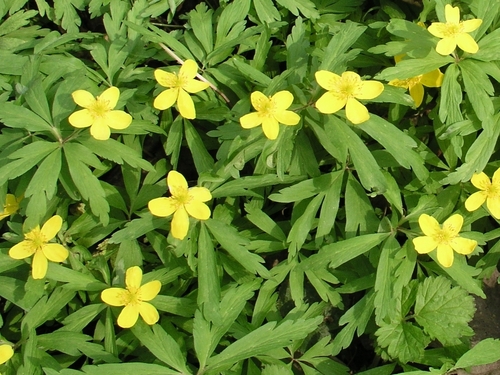
Anema
genus of lichen

Peltula
Peltula is a genus of small dark brown to olive or dark grey squamulose lichens. These lichens typically grow on rocks in arid and semi-arid environments worldwide. They consist of a fungus living in symbiosis with a photosynthetic partner, specifically a cyanobacterium of the genus Chroococcidiopsis. Peltula is the only genus in the family Peltulaceae, which belongs to the Lichinomycetes, a class of fungi that form lichens. The genus includes about 50 recognised species, which have a variety of growth forms ranging from flat and crust-like to more complex, leaf-like structures. Peltula lichen

Ropalospora
Ropalospora is a genus of lichen-forming fungi, and the sole member of the monogeneric family Ropalosporaceae. The genus was circumscribed by Italian lichenologist Abramo Bartolommeo Massalongo in 1860. The family was proposed by Josef Hafellner in 1984.

Xylopsora
Xylopsora is a genus of lichen-forming fungi, belonging to the family Umbilicariaceae. The genus was established in 2013 when genetic studies showed that several scale-forming () lichens previously grouped together were not actually closely related. Species of Xylopsora typically grow on wood, especially old or fire-scarred timber, in forests of the Northern Hemisphere. The genus includes four recognized species, some of which were only recently discovered growing high in tree canopies or detected through environmental DNA techniques.

Coccotrema
Coccotrema is a genus of lichen-forming fungi. It is the type genus of the family Coccotremataceae, in the order Pertusariales. The genus contains 16 species.
Relicina
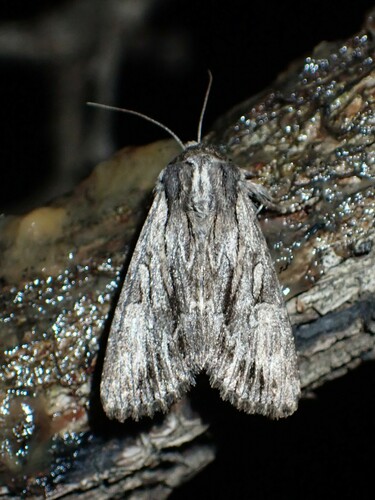
Relicina is a genus of foliose lichens belonging to the large family Parmeliaceae. Established as a genus in 1974 after initially being treated as a series within Parmelia, Relicina now encompasses about 40 species worldwide. These lichens typically grow as yellow-green, leaf-like patches with flat fringed by short black hairs, attaching to their substrate by a swollen base. The genus is characterized chemically by the presence of usnic acid and various other lichen products, and is distinguished from related groups by details of ascospore structure and surface features.

Graphina
Graphina is a genus of script lichens in the family Graphidaceae. It has about 25 species. The genus was circumscribed in 1880 by Swiss lichenologist Johannes Müller Argoviensis. Müller Argoviensis did not indicate a type species for the genus in his original publication; David Hawksworth proposed to designate Graphina anguina as a lectotype in 1981.

Ptychographa xylographoides
Ptychographa is a fungal genus in the family Xylographaceae. It is a monospecific genus, containing the single species Ptychographa xylographoides. This inconspicuous lichen grows as a barely visible coating of dark grains on rotting logs and branches in undisturbed old forests. The species is most readily identified by its narrow, elongated black fruiting structures that run parallel to the wood grain.

Placidium
Placidium is a genus of crustose to squamulose to almost foliose lichens. The genus is in the family Verrucariaceae. Most members grow on soil (are terricolous), but some grow on rock (saxicolous). The fruiting bodies are perithecia, flask-like structures immersed in the lichen body (thallus) with only the top opening visible, dotting the thallus. Lichen spot tests are all negative. Members of the genus lack rhizines, but otherwise resemble members of the genus Clavascidium.
Sporopodium
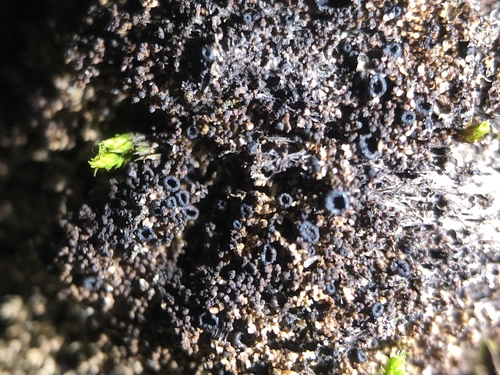
Sporopodium is a genus of lichen-forming fungi in the family Ectolechiaceae. Most Sporopodium species grow on living leaves (they are foliicolous) in tropical forests worldwide, though some also occur on twigs or bark. The genus is known for producing , small hood-like outgrowths that produce conidia (asexual spores) and help the lichen disperse to new surfaces. Species in the genus produce a wide variety of chemical compounds, including yellow and orange pigments that can help identify individual species. The genus was established in 1851 with the description of a first species from tropical
Amazonomyces
Amazonomyces is a lichenized genus of fungi in the family Arthoniaceae.
The genus contains 3 species:
Amazonomyces farkasiae (Lücking) Lücking, Sérus. & G. Thor, 1998
Amazonomyces palmae Bat. & Cavalc., 1963
Amazonomyces sprucei (R. Sant.) Lücking, Sérus. & G. Thor, 1998

Lecanographa
Lecanographa is a genus of about 20 species of lichens in the family Lecanographaceae. These lichens typically form thin, extensive crusts that can be chalk-white, grey, or pale green, with dark brown to black reproductive structures that are often covered in a dense frosting () of white, bluish, or greyish crystals. Established as a genus in 1994 by José M. Egea and Pilar Torrente, the lichens are characterized by their partnership with orange-tinged filamentous algae and their production of slender, spindle-shaped spores with multiple cross-walls that are wrapped in a gelatinous outer layer.

Tomasellia
Tomasellia is a genus of lichen-forming fungi in the family Naetrocymbaceae. It comprises seven species of corticolous (bark-dwelling), crustose lichens.
Bagliettoa
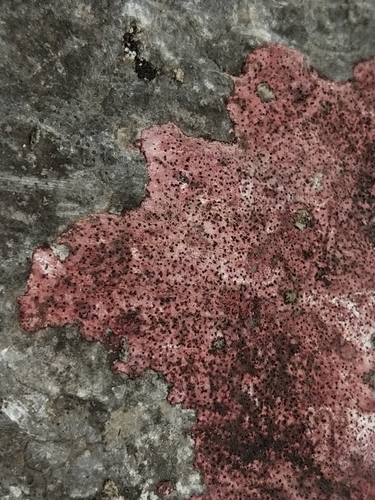
Bagliettoa is a genus of lichen-forming fungi in the family Verrucariaceae. Bagliettoa species are endolithic, growing between the grains of solid rock. These lichens are almost invisible to the naked eye, living mostly hidden within limestone and other calcium-rich rocks with only a thin polished rim visible on the surface. They reproduce through tiny flask-shaped fruiting bodies that bore neat pits into the rock as they develop.
Petractis
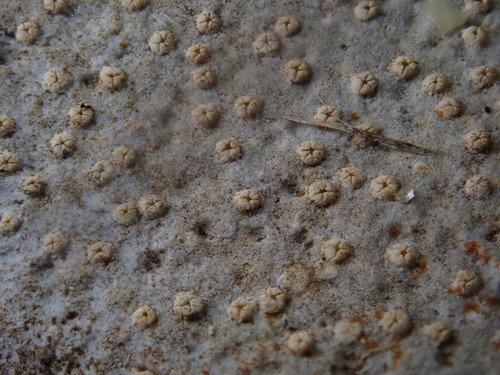
Petractis is a small genus of lichen-forming fungi of uncertain familial and ordinal placement in the Lecanoromycetes. These inconspicuous lichens grow as thin crusts embedded within rock surfaces, partnering with cyanobacteria to form barely visible films that are primarily detected by their small, star-shaped fruiting bodies. The genus contains two species that typically inhabit calcareous rocks, where their fruiting structures create distinctive pits in the stone surface after they decay.

Carbacanthographis
Carbacanthographis is a genus of corticolous (bark-dwelling) lichens in the family Graphidaceae. The genus was circumscribed by the German lichenologists Bettina Staiger and Klaus Kalb in 2002. An updated worldwide key to the genus was published in 2022 that added 17 new species. This revision allowed for further identification of undescribed species from other collections, and subsequently, 14 species were added in 2023 from the Amazonian lowland forests of Brazil and the Guianas.
Gypsoplacaceae
Gypsoplacaceae is a family of lichenized fungi in the order Lecanorales. This is a monotypic family, containing the single genus Gypsoplaca, which has a widespread distribution. The family and genus were described as new in 1990 by Norwegian lichenologist Einar Timdal. Gypsoplaca originally contained only the type species, Gypsoplaca macrophylla, but four species were added to the genus in 2018.

Acanthothecis
Acanthothecis is a genus of lichen-forming fungi in the family Graphidaceae. The genus was circumscribed by Frederick Edward Clements in 1909. These lichens form pale grey-brown to olive-green crusts on tree bark and are characterized by elongated, pencil-like slits containing spores, with distinctive tiny spines on internal filaments that help distinguish them from similar genera. The genus includes about 50 species found primarily in tropical and subtropical forests worldwide, where they grow on living tree bark and serve as indicators of relatively undisturbed woodland environments.

Megalaria
Megalaria is a genus of lichen-forming fungi in the family Ramalinaceae. It contains 46 species of crustose lichens, the majority of which grow on bark. The genus was established in 1984 and has since grown to include species from diverse regions ranging from subantarctic islands to tropical forests. Most Megalaria species are recognised by their large, black fruiting bodies that sit directly on the lichen's surface, along with their thick-walled ascospores that are divided by a single internal partition. The genus primarily colonises tree bark in moist, shaded habitats, though some species al
Tuckneraria
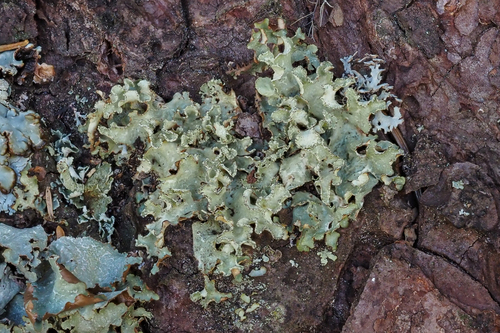
Tuckneraria is a genus of lichen-forming fungi in the family Parmeliaceae.

Stenocybe
Stenocybe is a genus of fungi in the family Mycocaliciaceae. It has 14 species.
Distopyrenis
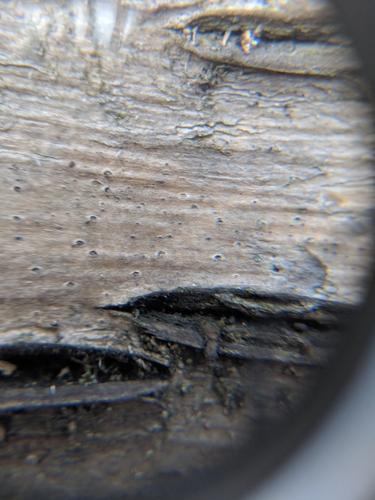
Distopyrenis is a genus of fungi in the family Pyrenulaceae.

Echinoplaca
Echinoplaca is a genus of lichen-forming fungi in the family Gomphillaceae.

Stictis
Stictis is a genus of fungi in the family Stictidaceae. Most species are saprotrophic decomposers that inhabit dead wood, where they form small, flask-shaped fruiting bodies that remain largely embedded within their substrate and open through tiny pores. The genus is characterised by its distinctive white, frost-like rim that surrounds the fruiting bodies and thread-like ascospores divided by multiple cross-walls. Modern molecular phylogenetics studies suggest that the current broad concept of Stictis will likely be split into several separate genera as the group undergoes taxonomic revision.
Lichina
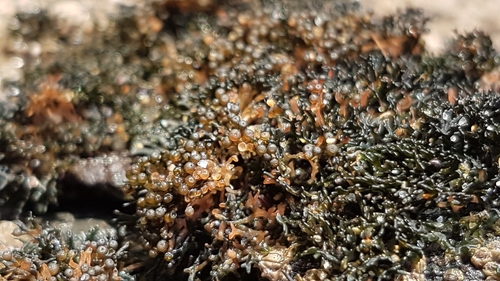
Lichina is a genus of lichen-forming fungi in the family Lichinaceae. The genus contains four marine species. These cyanolichens include species such as L. pygmaea or L. confinis, in which the associated cyanobiont has been assigned to the genus Rivularia. Furthermore, evidence of a high specificity of each mycobiont towards particular cyanobiont lineages in both species has been detected.

Ephebe
genus of fungi

Fuscoderma
Fuscoderma is a genus of lichenized fungi in the family Pannariaceae. It was originally circumscribed as a subgenus of the genus Leioderma by David Galloway and Per Magnus Jørgensen in 1987. The same authors promoted it to generic status a couple of years later in 1989. The New Guinean species F. papuanum was added to the genus in 2002.

Calenia
Calenia is a genus of lichen-forming fungi within the family Gomphillaceae.
Myelochroa
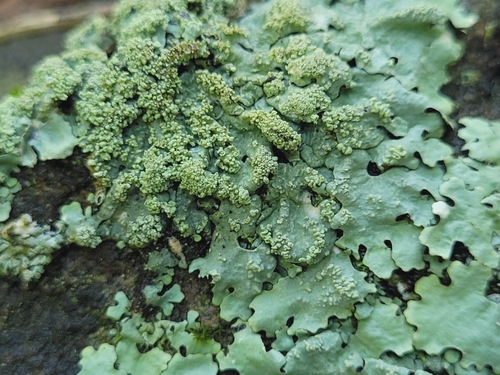
Myelochroa is a genus of foliose lichens in the family Parmeliaceae. They are commonly known as axil-bristle lichens. It was created in 1987 to contain species formerly placed in genus Parmelina that had a yellow-orange medulla due to the presence of secalonic acids. Characteristics of the genus include tightly attached thalli with narrow lobes, cilia on the axils, and a rhizinate black lower surface. Chemical characteristics are the production of zeorin and related triterpenoids in the medulla. Myelochroa contains about 30 species, most of which grow on bark. The genus has centres of distribu

Schadonia
Schadonia is a genus of lichen-forming fungi. Established by German lichenologist Gustav Wilhelm Körber in 1859, this genus of crustose lichens is characterised by its black, sessile apothecia (fruiting bodies), ascospores, and growth on mosses, plant debris, and rocks in montane habitats. While traditionally placed in the family Ramalinaceae, recent studies have suggested its classification may be uncertain within the order Lecanorales, with some researchers proposing its placement in the Ectolechiaceae or the resurrection of the family Schadoniaceae. The genus currently comprises three recog
Dactylina
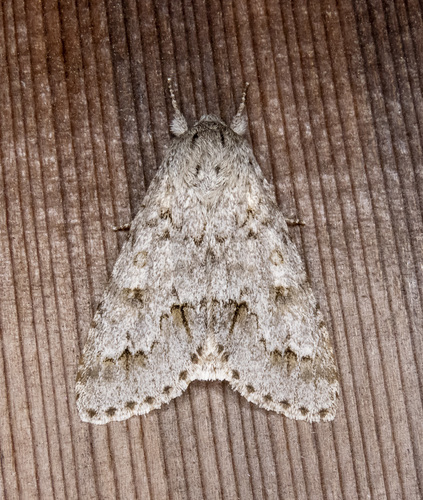
Dactylina is a genus of lichen-forming fungi in the family Parmeliaceae. The genus was circumscribed by Finnish botanist William Nylander in 1860, with Dactylina arctica assigned as the type species.
Catolechia
Catolechia is a genus of lichen-forming fungi in the family Rhizocarpaceae. It is a monotypic genus, containing the single species Catolechia wahlenbergii. The genus was circumscribed by the German botanist Julius von Flotow in 1850. He did not assign a type species for the genus; Catolechia pulchella was designated as the type by Gustav Wilhelm Körber in 1855. This species is synonymous with Catolechia wahlenbergii.
Bryonora
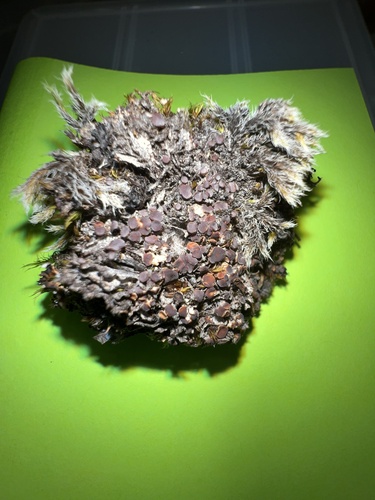
Bryonora is a genus of lichen-forming fungi in the family Lecanoraceae. These lichens typically grow on soil, mosses, plant debris, or rocks in arctic or alpine environments. The genus was circumscribed in 1983 by lichenologist Josef Poelt, with Bryonora castanea assigned as the type species.

Rinodinella
Rinodinella is a genus of lichen-forming fungi in the family Physciaceae.
Architrypethelium
Architrypethelium is a genus of lichen-forming fungi in the family Trypetheliaceae.
Cyphellostereum
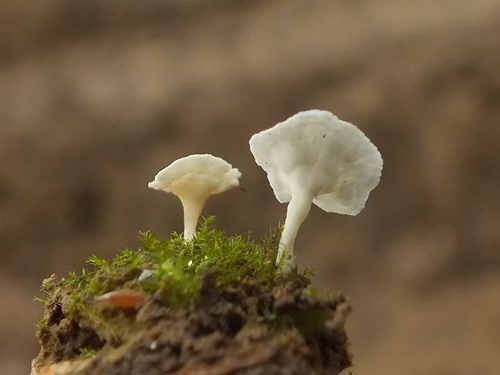
Cyphellostereum is a genus of basidiolichens. Species produce white, somewhat cup-shaped fruit bodies on a thin film of green on soil which is the thallus. All Cyphellostereum species have nonamyloid spores and tissues, lack clamp connections, and also lack hymenial cystidia.