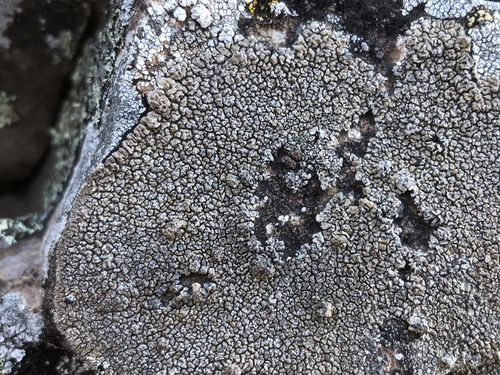
(c) Samuel Brinker, all rights reserved, uploaded by Samuel Brinker
Immersaria
Sign in to saveImmersaria is a genus of lichen-forming fungi in the family Lecideaceae. Species in the genus form brown to orange-brown crusts on rock, often with a waxy or glossy surface. They are characterised by dark, sunken fruiting bodies that lack the prominent rim seen in some related genera. The genus occurs in Europe, Asia, and the Southern Hemisphere, typically in alpine or montane habitats.
Species
GENUS
- KingdomFungi
- PhylumAscomycota
- ClassLecanoromycetes
- OrderLecideales
- FamilyLecideaceae
via GBIF
Museum specimens
- Specimen records
- 13
- With media
- 5
- Family
- Lecideaceae
- Collections
- ASU, DUKE, BRY, WIS, UPS, MSC
- Recorded in
- United States, Spain, Canada, Australia, Norway, Russia, Hungary, Kazakhstan
Wikidata facts
- Instance of
- taxon
- Parent taxon
- Lecideaceae
- Image
- Immersaria athroocarpa Jymm.jpg
Show 4 more facts
- taxon name
- Immersaria
- taxon rank
- genus
- taxon common name
- Immersaria lichens
- taxon author citation
- Rambold & Pietschm.
Sources (2)
via Wikidata · CC0
~4 min read
Encyclopedic overview
4 sectionsContents
- Taxonomy
- Description
- Species
- References
Immersaria is a genus of lichen-forming fungi in the family Lecideaceae. Species in the genus form brown to orange-brown crusts on rock, often with a waxy or glossy surface. They are characterised by dark, sunken fruiting bodies that lack the prominent rim seen in some related genera. The genus occurs in Europe, Asia, and the Southern Hemisphere, typically in alpine or montane habitats.
==Taxonomy== The genus was circumscribed in 1989 by the lichenologists Gerhard Rambold and M. Pietschmann, with Immersaria athroocarpa assigned as the type species. The boundaries of Immersaria were emended in 2022 following the use of molecular phylogenetics to assess the phylogenetic relationships of species in the genus. The study led to the division of Immersaria into two distinct clades: one comprising species with apothecia and the other containing species with apothecia. As a result, the lecanorine species previously grouped under Immersaria have now been reclassified into the newly proposed genus Lecaimmeria.
Excerpted from Wikipedia’s “Immersaria” article, available under the CC BY-SA 4.0 licence.