Category
page 1Neurotransmitters
epinephrine
Adrenaline, also known as epinephrine and alternatively spelled adrenalin, is a hormone and medication which is involved in regulating visceral functions (e.g., respiration). It appears as a white microcrystalline granule. Adrenaline is normally produced by the adrenal glands and by a small number of neurons in the medulla oblongata. It plays an essential role in the fight-or-flight response by increasing blood flow to muscles, heart output by acting on the SA node, pupil dilation response, and blood sugar level. It does this by binding to alpha and beta receptors. It is found in many animals,
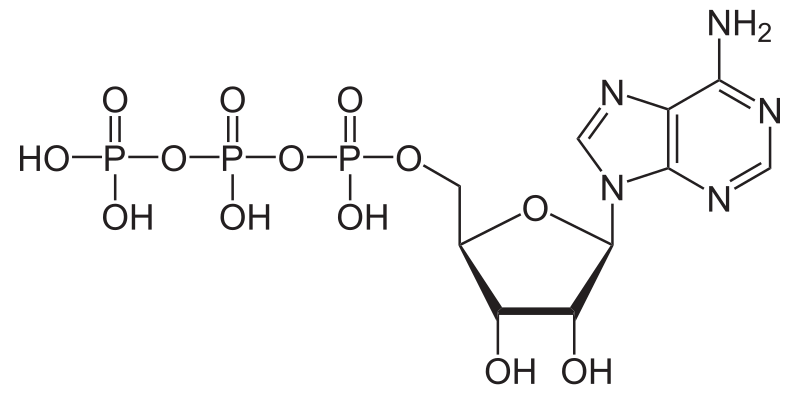
adenosine triphosphate
the energy-carrying molecule in living cells

oxytocin
Oxytocin is a peptide hormone and neuropeptide normally produced in the hypothalamus and released by the posterior pituitary. Present in animals since early stages of evolution, in humans it plays roles in behavior that include social bonding, love, reproduction, childbirth, and the period after childbirth. Oxytocin is released into the bloodstream as a hormone in response to sexual activity and during childbirth. It is also available in pharmaceutical form. In either form, oxytocin stimulates uterine contractions to speed up the process of childbirth.

serotonin
Serotonin (), also known as 5-hydroxytryptamine (5-HT), is a monoamine neurotransmitter with a wide range of functions in both the central nervous system (CNS) and also peripheral tissues. It is involved in mood, cognition, reward, learning, memory, and physiological processes such as vomiting and vasoconstriction. In the CNS, serotonin regulates mood, appetite, and sleep.

neurotransmitter
A neurotransmitter is a signaling molecule secreted by a neuron to affect another cell across a synapse. The cell receiving the signal, or target cell, may be another neuron, but could also be a gland or muscle cell.

histamine
Histamine or histamin is an organic nitrogenous compound involved in local immune responses communication, as well as regulating physiological functions in the gut and acting as a neurotransmitter for the brain, spinal cord, and uterus. Discovered in 1910, histamine has been considered a local hormone (autocoid) because it is produced without involvement of the classic endocrine glands; however, in recent years, histamine has been recognized as a central neurotransmitter. Histamine is involved in the inflammatory response and has a central role as a mediator of itching. As part of an immune re

norepinephrine
Norepinephrine (NE), also called noradrenaline (NA) or noradrenalin, is an organic chemical in the catecholamine family that functions in the brain and body as a hormone, neurotransmitter and neuromodulator. The name "norepinephrine" (from Ancient Greek ἐπῐ́ (epí), "upon", and νεφρός (nephrós), "kidney") is usually preferred in the United States, whereas "noradrenaline" (from Latin ad, "near", and ren, "kidney") is more commonly used in the United Kingdom and the rest of the world. "Norepinephrine" is also the international nonproprietary name given to the drug. Regardless of which name is use

nitric oxide
chemical compound

adenosine
Adenosine (symbol A) is an organic compound that occurs widely in nature in the form of diverse derivatives. The molecule consists of an adenine attached to a ribose via a β-N9-glycosidic bond. Adenosine is one of the four nucleoside building blocks of RNA (and its derivative deoxyadenosine is a building block of DNA), which are essential for all life on Earth. Its derivatives include the energy carriers adenosine mono-, di-, and triphosphate, also known as AMP/ADP/ATP. Cyclic adenosine monophosphate (cAMP) is pervasive in signal transduction. Adenosine is used as an intravenous medication for

adenosine diphosphate
chemical compound

4-hydroxybutyric acid
chemical compound

catecholamine
class=skin-invert-image|thumb|80px|Catechol
adenosine monophosphate
chemical compound
anandamide
Anandamide (ANA), also referred to as '''N-arachidonoylethanolamine (AEA'), is a fatty acid neurotransmitter belonging to the fatty acid derivative group known as N-acylethanolamines (NAE). Anandamide takes its name from the Sanskrit word ananda'' (आनन्द), meaning "joy, bliss, delight," plus amide. Anandamide, the first discovered endocannabinoid, engages with the body's endocannabinoid system by binding to the same cannabinoid receptors that THC found in cannabis acts on. Anandamide can be found within tissues in a wide range of animals. It has also been found in plants, such as the cacao tre
substance P
neuropeptide in human, associated with pain

octopamine
Octopamine (OA), also known as '''para-octopamine and norsynephrine''' among synonyms, is an organic chemical closely related to norepinephrine, and synthesized biologically by a homologous pathway. Octopamine is often considered the major "fight-or-flight" neurohormone of invertebrates. Its name is derived from the fact that it was first identified in the salivary glands of the octopus.
dynorphin
Dynorphins (Dyn) are a class of opioid peptides that arise from the precursor protein prodynorphin. When prodynorphin is cleaved during processing by proprotein convertase 2 (PC2), multiple active peptides are released: dynorphin A, dynorphin B, and α/β-neoendorphin. Depolarization of a neuron containing prodynorphin stimulates PC2 processing, which occurs within synaptic vesicles in the presynaptic terminal. Occasionally, prodynorphin is not fully processed, leading to the release of big dynorphin, a 32-amino acid molecule consisting of both dynorphin A and dynorphin B.
monoamine molecular messenger
any organic compound being a monoamine that acts as a neurotransmitter or neuromodulator
glyceryl 2-arachidonate
2-Arachidonoylglycerol (2-AG) is an endocannabinoid, an endogenous agonist of the CB1 receptor and the primary endogenous ligand for the CB2 receptor. It is an ester formed from the omega-6 fatty acid arachidonic acid and glycerol. It is present at relatively high levels in the central nervous system, with cannabinoid neuromodulatory effects. It has been found in bovine and human milk. The chemical was first described in 1994–1995, although it had been discovered some time before that. The activities of phospholipase C (PLC) and diacylglycerol lipase (DAGL) mediate its formation. 2-AG is synth

agmatine
Agmatine, also known as 4-aminobutyl-guanidine, was discovered in 1910 by Albrecht Kossel. It is a chemical substance which is naturally created from the amino acid arginine. Agmatine has been shown to exert modulatory action at multiple molecular targets, notably: neurotransmitter systems, ion channels, nitric oxide (NO) synthesis, and polyamine metabolism and this provides bases for further research into potential pharmacological applications.
quinolinic acid
chemical compound
glutamate receptor
cell-surface protein that binds glutamate and triggers changes which influence the behavior of cells

neurotransmitter reuptake
thumb|350px|A synapse during re-uptake. Note that some neurotransmitters are lost and not reabsorbed.
oxiglutatione
chemical compound
norfenefrine
Norfenefrine, also known as '''meta-octopamine or norphenylephrine and sold under the brand name Novadral' among others, is a sympathomimetic medication which is used in the treatment of hypotension (low blood pressure). Along with its structural isomer p''-octopamine and the tyramines, norfenefrine is a naturally occurring endogenous trace amine and plays a role as a minor neurotransmitter in the brain.
tachykinins
family of biologically active peptides sharing a common conserved C-terminal sequence
isospaglumic acid
chemical compound
gastrin releasing peptide
mammalian protein found in Homo sapiens
GABAergic system
In molecular biology and physiology, something is GABAergic or GABAnergic if it pertains to or affects the neurotransmitter gamma-aminobutyric acid (GABA). For example, a synapse is GABAergic if it uses GABA as its neurotransmitter, and a GABAergic neuron produces GABA. A substance is GABAergic if it produces its effects via interactions with the GABA system, such as by stimulating or blocking neurotransmission.
glutamate carboxypeptidase II
mammalian protein found in Homo sapiens
eledoisin
Eledoisin is an undecapeptide of mollusk origin, belonging to the tachykinin family of neuropeptides.
Trace amine
amine receptors in the mammalian brain
adrenorphin
Adrenorphin, also sometimes referred to as metorphamide, is an endogenous, C-terminally amidated, opioid octapeptide (Tyr-Gly-Gly-Phe-Met-Arg-Arg-Val-NH2, YGGFMRRV-NH2) that is produced from proteolytic cleavage of proenkephalin A and is widely distributed throughout the mammalian brain. It was named based on the fact that it was originally detected in human phaeochromocytoma tumour derived from the adrenal medulla, and was subsequently found in normal human and bovine adrenal medulla as well. Adrenorphin exhibits potent opioid activity, acting as a balanced μ- and κ-opioid receptor agonist wh
cholinergic crisis
over-stimulation at a neuromuscular junction due to an excess of acetylcholine
γ-amino-β-hydroxybutyric acid
pair of isomers
N-docosatetra-7,10,13,16-enoylethanolamine
Docosatetraenoylethanolamide (DEA) (Adrenoyl-ethanolamide) (Adrenoyl-EA) is an endogenous ethanolamide that has been shown to act on the cannabinoid (CB1) receptor. DEA is similar in structure to anandamide (AEA, a recognized endogenous ligand for the CB1 receptor), containing docosatetraenoic acid in place of arachidonic acid. While DEA has been shown to bind to the CB1 receptor with similar potency and efficacy as AEA, its role as a cannabinergic neurotransmitter is not well understood.
oleic monoethanolamide
Oleoylethanolamide (OEA) is an endogenous peroxisome proliferator-activated receptor alpha (PPAR-α) agonist. It is a naturally occurring ethanolamide lipid that regulates feeding and body weight in vertebrates ranging from mice to pythons.
6-hydroxymelatonin
6-Hydroxymelatonin (6-OHM) is a naturally occurring, endogenous, major active metabolite of melatonin. 6-Hydroxymelatonin is produced as a result of the enzymatic conversion of melatonin through hydroxylation. Similar to melatonin, 6-OHM is a full agonist of the MT1 and MT2 receptors. It is also an antioxidant and neuroprotective, and is even more potent in this regard relative to melatonin.

S-nitrosoglutathione
'''S-Nitrosoglutathione (GSNO') is an endogenous S''-nitrosothiol (SNO) that plays a critical role in nitric oxide (NO) signaling and is a source of bioavailable NO. NO coexists in cells with SNOs that serve as endogenous NO carriers and donors. SNOs spontaneously release NO at different rates and can be powerful terminators of free radical chain propagation reactions, by reacting directly with ROO• radicals, yielding nitro derivatives as end products. NO is generated intracellularly by the nitric oxide synthase (NOS) family of enzymes: nNOS, eNOS and iNOS while the in vivo source of many of t
Monoaminergic
Monoaminergic means "working on monoamine neurotransmitters", which include serotonin, dopamine, norepinephrine, epinephrine, and histamine.
Amidorphin
Amidorphin is an endogenous, C-terminally amidated, opioid peptide generated as a cleavage product of proenkephalin A in some mammalian species; in humans and most other species, the peptide is 1 residue longer and is not amidated. Amidorphin is widely distributed in the mammalian brain, with particularly high concentrations found in the striatum, and outside of the brain in adrenal medulla and posterior pituitary. The 26-residue peptide named amidorphin is found in several species including bovine (Bos taurus), sheep (Ovis aries), and pig (Sus scrofa). Humans and commonly studied lab animals
stearic monoethanolamide
Stearoylethanolamide (SEA) is an endocannabinoid neurotransmitter.