Category
page 1Non-timber forest products

honey
Honey is a sweet and viscous substance made by several species of bees, the best-known of which are honey bees. Honey is made and stored to nourish bee colonies. Bees produce honey by gathering and then refining the sugary secretions of plants (primarily floral nectar) or the secretions of other insects, like the honeydew of aphids. This refinement takes place both within individual bees, through regurgitation and enzymatic activity, and during storage in the hive, through water evaporation that concentrates the honey's sugars until it is thick and viscous.

Cocos nucifera
The coconut (Cocos nucifera) is a member of the palm family (Arecaceae) and the only living species of the genus Cocos. The term "coconut" (or the archaic "cocoanut") can denote the whole coconut palm tree or the large hard fruit. Originally native to Central Indo-Pacific, they are ubiquitous in coastal tropical regions.

Salix
Willows, also called sallows and osiers, of the genus Salix, comprise around 350 species (plus numerous hybrids) of typically deciduous trees and shrubs. They are primarily found on moist soils in cold and temperate regions.

black pepper
species of plant

clove
Cloves are the aromatic flower buds of a tree in the family Myrtaceae, Syzygium aromaticum (). They are native to the Maluku Islands, or Moluccas, in Indonesia, and are commonly used as a spice, flavoring, or fragrance in consumer products, such as toothpaste, soaps, or cosmetics. Cloves are available throughout the year owing to different harvest seasons across various countries.
.jpg)
mushroom
thumb|upright=1.35|Pholiota squarrosa growing at the base of a tree

cinnamon
thumb|Dried bark strips, bark powder and flowers of the small tree Cinnamomum verum

Tamarindus indica
Tamarind (Tamarindus indica) is a leguminous tree bearing edible fruit that is indigenous to tropical Africa and naturalized in Asia. The genus Tamarindus is monotypic, meaning that it contains only this species. It belongs to the family Fabaceae.
.jpg)
Artocarpus heterophyllus
The jackfruit, jakfruit or nangka (Artocarpus heterophyllus) is a species of tree in the fig, mulberry, and breadfruit family (Moraceae).
%20havaiana%20mini%2C%20em%20ambiente%20dom%C3%A9stico%2002.jpg)
fern
The ferns (Polypodiopsida or Polypodiophyta) are a group of vascular plants (land plants with vascular tissues such as xylem and phloem) that reproduce via spores and have neither seeds nor flowers. They differ from non-vascular plants (mosses, hornworts and liverworts) by having specialized transport bundles that conduct water and nutrients from and to the roots, as well as life cycles in which the branched sporophyte is the dominant phase.
.jpg)
peat
thumb|A lump of peat
thumb|Peat stacks in Südmoslesfehn (Oldenburg (district)|district of Oldenburg, Germany) in 2013
thumb|Peat gatherers at Westhay, [[Somerset Levels in 1905]]
thumb|Peat extraction in East Frisia, Germany in 1987
.JPG)
nutmeg
Nutmeg is the seed, or the ground spice derived from the seed, of several tree species of the genus Myristica; fragrant nutmeg or true nutmeg (M. fragrans) is a dark-leaved evergreen tree cultivated for two spices derived from its fruit: nutmeg, from its seed, and mace, from the seed covering. It is also a commercial source of nutmeg essential oil and nutmeg butter. The Banda Islands, in Maluku, Indonesia, are the main producer of nutmeg and mace, and the true nutmeg tree is native to the islands.
.jpg)
resin
thumb|right|Insect trapped in resin
thumb|upright|Cedar of Lebanon cone showing flecks of resin as used in the [[mummification of Egyptian Pharaohs ]]

fur
thumb|300px|Like many mammals, grizzly bears are covered in thick fur.
A fur is a soft, thick growth of hair that covers the skin of almost all mammals. It consists of a combination of oily guard hair on top and thick underfur beneath. The guard hair keeps moisture from reaching the skin; the underfur acts as an insulating blanket that keeps the animal warm.

camphor
Camphor () is a waxy, colorless solid with a strong aroma. It is classified as a terpenoid and a cyclic ketone. It is found in the wood of the camphor laurel (Cinnamomum camphora), a large evergreen tree found in East Asia; and in the kapur tree (Dryobalanops sp.), a tall timber tree from South East Asia. It also occurs in some other related trees in the laurel family, notably Ocotea usambarensis. Rosemary leaves (Rosmarinus officinalis) contain 0.05 to 0.5% camphor, while camphorweed (Heterotheca) contains some 5%. A major source of camphor in Asia is camphor basil (the parent of African blue

Illicium verum
species of plant

durian
thumb|upright=1.35|Durian fruit cut open to show the edible flesh

cork
material derived from the cork oak

cooking oil
oil consumed by humans, from vegetable or animal origin
.jpg)
vanilla
upright|thumb|right|Vanilla planifolia, flower
upright|thumb|right|Dried vanilla beans

game
wild animals under pursuit or taken in hunting

maple syrup
syrup usually made from the xylem sap of sugar maple, red maple, or black maple trees

berry
{|style="width: 300px; height: 300px; float:right; text-align: center;"
|
File:Berberis thunbergii berries.jpg|Japanese barberries
File:Norwegian blueberry.jpg|Bilberry
File:Ribes rubrum2005-07-17.JPG|Redcurrants
File:Lonicera coerulea a3.jpg|Honeysuckle
File:Stachelbeere (Ribes uva-crispa).jpg|Gooseberries
File:Rubus chamaemorus close-up.JPG|Cloudberry
File:Vaccinium corymbosum a2.jpg|Highbush blueberries
File:Black Butte blackberry.jpg|Blackberries
|}
A berry is a small, pulpy, and often edible fruit. Typically, berries are juicy, rounded, brightly colored, sweet, sour or tart, and do not h
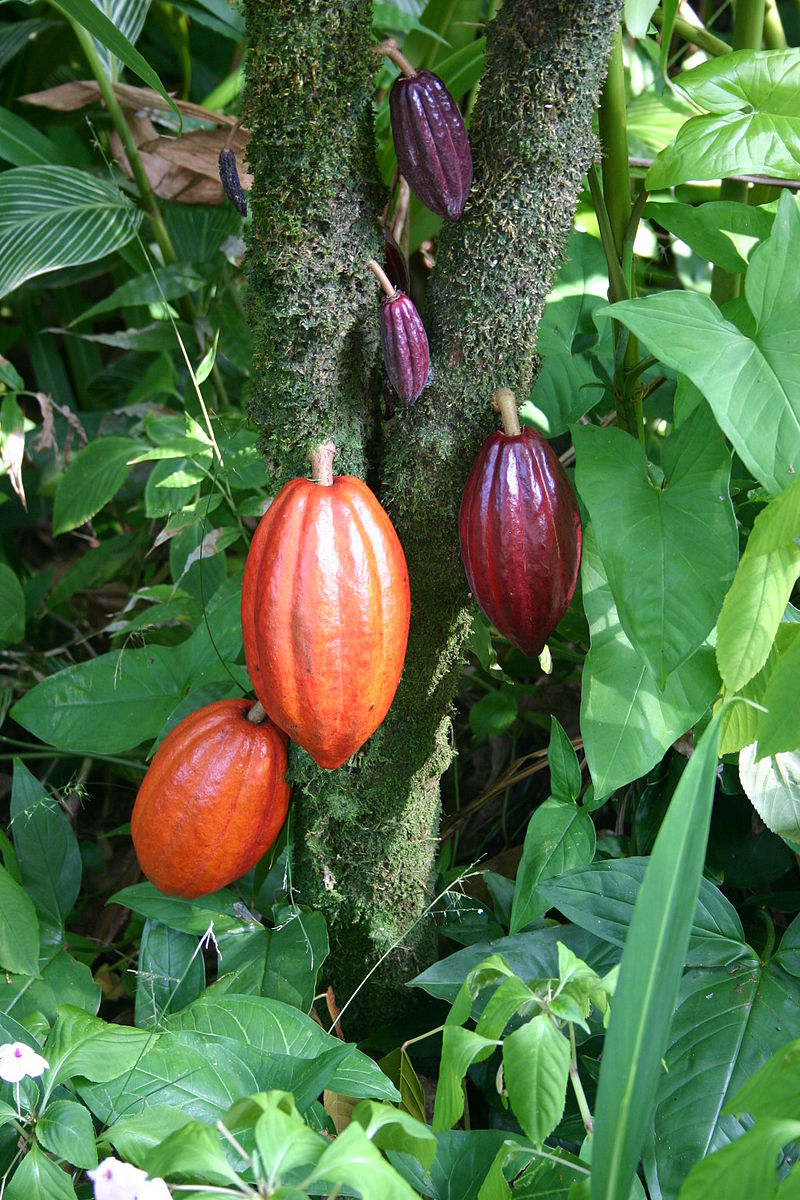
cocoa bean
fatty seed of Theobroma cacao which is the basis of chocolate

shellac
right|thumb|upright=1.4|Some of the many different colors of shellac
thumb|right|Shellac in alcohol

turpentine
Turpentine (which is also called spirit of turpentine, oil of turpentine, terebenthine, terebenthene, terebinthine and, colloquially, turps) is a fluid obtainable by the distillation of resin harvested from living trees, mainly pines. Principally used as a specialized solvent, it is also a source of material for organic syntheses.
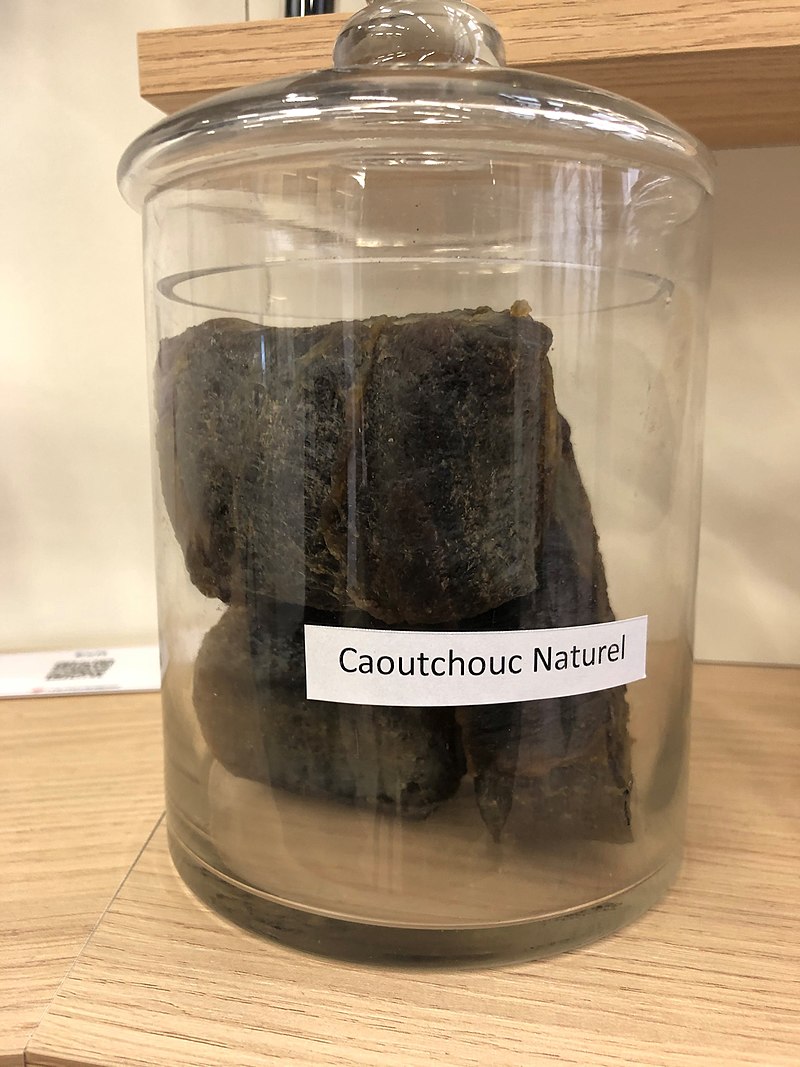
natural rubber
polymers of the organic compound isoprene, with minor impurities of other organic compounds; refined from latex harvested from rubber trees
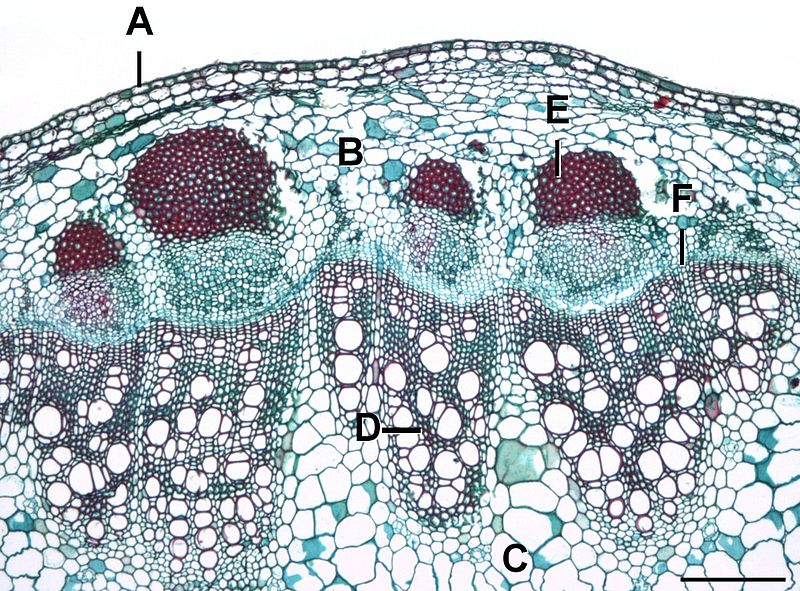
vascular cambium
part of a plant
%20MET%20DP704215.jpg)
lacquer
thumb|upright=1.2|Lacquerware|Lacquer dish with Chinese character for longevity, mid 16th century
thumb|Maki-e [[sake bottle with Tokugawa clan's mon (emblem), Japan, Edo period]]
thumb|Lacquer plate, Nam Định province, Vietnam, Nguyễn dynasty
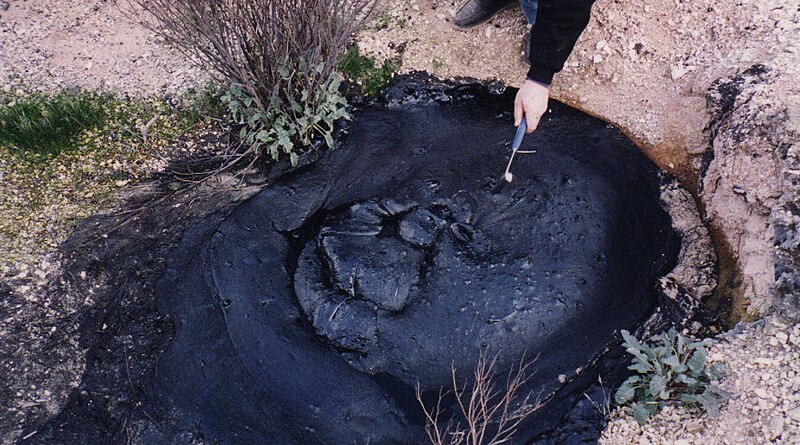
pitch
mixture of aromatic organic compounds, black, tar-like, super viscous liquid

Rubia
Rubia is the type genus of the Rubiaceae family of flowering plants, which also contains Coffea (coffee). It contains around 80 species of perennial scrambling or climbing herbs and subshrubs native to the Old World.

Metroxylon sagu
species of palm
%20(5661614812).jpg)
rattan
thumbnail|Calamus thwaitesii in southwestern [[India]]
thumb|Juvenile Calamus oblongus subsp. mollis in a forest [[understory in the Philippines]]

bay leaf
aromatic leaf of Laurus nobilis

Durio zibethinus
species of plants producing the Durian fruit

Sassafras
Sassafras is a genus of three extant and one extinct species of deciduous trees in the family Lauraceae, native to eastern North America and eastern Asia. The genus is distinguished by its aromatic properties, which have made the tree useful to humans.

agroforestry
thumb|upright=1.35|Maize grown under Faidherbia albida and [[Borassus akeassii near Banfora, Burkina Faso ]]
Agroforestry (also known as agro-sylviculture or forest farming) is a land use management system that integrates trees with crops or pasture. It combines agricultural and forestry technologies. As a polyculture system, an agroforestry system can produce timber and wood products, fruits, nuts, other edible plant products, edible mushrooms, medicinal plants, ornamental plants, animals and animal products, and other products from both domesticated and wild species.

Matsutake
, Tricholoma matsutake, is a species of mushroom, with a cap that can reach up to wide. It resembles at least one poisonous species.

Madhuca longifolia
species of plant

creosote
thumb|upright=1.8|Wood railroad ties before (right) and after (left) infusion with creosote, being transported by railcar at a facility of the [[Santa Fe Railroad, in Albuquerque, New Mexico, in March 1943. This U.S. wartime governmental photo reports that "The steaming black ties in the [left of photo]... have just come from the retort where they have been infused with creosote for eight hours." Ties are "made of pine and fir... seasoned for eight months" [as seen in the untreated railcar load at right].]]
birch bark
bark of several Eurasian and North American birch trees of the genus Betula

Serenoa repens
Serenoa repens, commonly known as saw palmetto, is a small palm, growing to a maximum height around .
carnauba wax
natural plant wax
root beer
carbonated beverage, originally made using the root of a sassafras plant
juniper berry
spice, herbal drug
benzoin resin
balsamic resin obtained from trees in the genus Styrax
honey hunting
The extraction of honey from wild bees
.jpg)
henna
thumb|An elderly Bengalis|Bengali man in [[Dhaka with a beard dyed in henna]]
tea tree oil
essential oil derived from leaves

Cycas circinalis
species of cycad

forage
thumb|300px|Sorghum grown as forage crop.
Forage is a plant material (mainly plant leaves and stems) eaten by grazing livestock. Historically, the term forage has meant only plants eaten by the animals directly as pasture, crop residue, or immature cereal crops, but it is also used more loosely to include similar plants cut for fodder and carried to the animals, especially as hay or silage.

Phytelephas
Phytelephas is a genus containing six known species of dioecious palms (family Arecaceae), occurring from southern Panama along the Andes to Ecuador, Bolivia, Colombia, northwestern Brazil, and Peru. They are commonly known as ivory palms, ivory-nut palms or tagua palms (); the scientific name Phytelephas means "plant ivory" or more literally, "plant elephant". This and the first two of the common names refer to the very hard white endosperm of their seeds (tagua nuts or jarina seeds), which resembles elephant ivory.

Diospyros melanoxylon
species of plant
birch tar
substance (liquid when heated) derived from the dry distillation of the bark of the birch tree
mushroom hunting
activity of gathering mushrooms in the wild
.jpg)
chicle
thumb|Chicle (white substance) oozing from the pod of a Manilkara zapota (sapodilla) tree in [[Panama]]
thumb|Chicle chunks
Chicle () is a latex traditionally used in making chewing gum and other products. It is collected from several species of Mesoamerican trees in the genus Manilkara, including M. zapota, M. chicle, M. staminodella, and M. bidentata.
eucalyptus oil
distilled oil from the leaf of Eucalyptus

Boscia senegalensis
species of plant
gathering
Wildcrafting (also known as foraging, especially in North America) is the practice of harvesting plants from their natural, or 'wild' habitat, primarily for food or medicinal purposes. It applies to uncultivated plants wherever they may be found, which can include both wilderness areas and urban foraging. Ethical considerations are often involved, such as protecting endangered species, potential for depletion of commonly held resources, and in the context of private property, preventing theft of valuable plants, for example, ginseng.
natural dye
dye extracted from plant or animal sources