File:GrizzlyBearJeanBeaufort.jpg · Wikimedia Commons · See Wikimedia Commons
Also known as animal fur
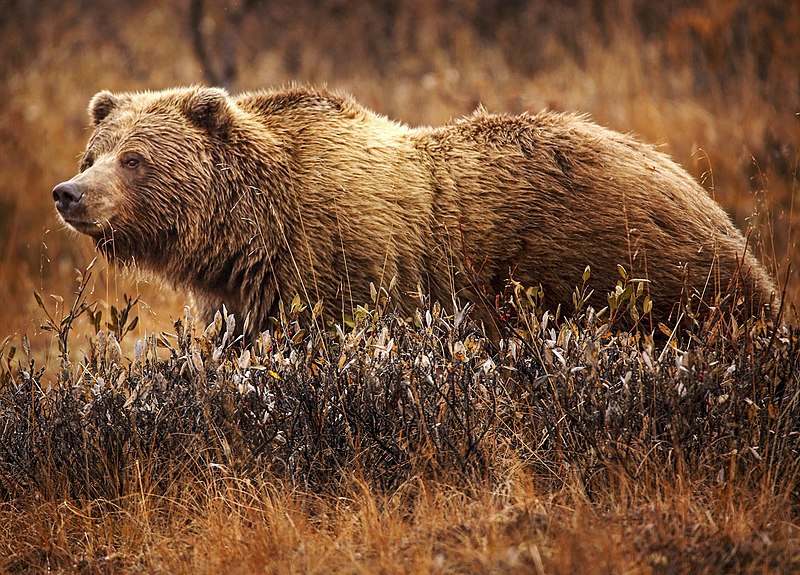
thumb|300px|Like many mammals, grizzly bears are covered in thick fur. A fur is a soft, thick growth of hair that covers the skin of almost all mammals. It consists of a combination of oily guard hair on top and thick underfur beneath. The guard hair keeps moisture from reaching the skin; the underfur acts as an insulating blanket that keeps the animal warm.
Fur is a soft, thick layer of hair that covers the skin of nearly all mammals, made up of outer guard hairs and a dense underfur underneath. It serves two essential functions: the guard hairs repel moisture while the underfur provides insulation to keep animals warm.
AI-generated from the Wikipedia summary — may contain errors.
Research
409,961 papers- Meddling with Metal Sensors: Fur-Family Proteins as Signaling Hubs.ReviewJournal of bacteriology · 2023Steingard CH, Helmann JDDOI: 10.1128/jb.00022-23
- Fur-like proteins: Beyond the ferric uptake regulator (Fur) paralog.ReviewArchives of biochemistry and biophysics · 2021Sevilla E, Bes MT, Peleato ML et al.DOI: 10.1016/j.abb.2021.108770
- Fur-mediated global regulatory circuits in pathogenic Neisseria species.ReviewJournal of bacteriology · 2012Yu C, Genco CADOI: 10.1128/JB.00262-12
- Structural Perspectives on Metal Dependent Roles of Ferric Uptake Regulator (Fur).ReviewBiomolecules · 2024Kang SM, Kang HS, Chung WH et al.DOI: 10.3390/biom14080981
- Redox Sensing by Fe(2+) in Bacterial Fur Family Metalloregulators.ReviewAntioxidants & redox signaling · 2018Pinochet-Barros A, Helmann JDDOI: 10.1089/ars.2017.7359
- Fur: Find unique genomic regions for diagnostic PCR.Bioinformatics (Oxford, England) · 2021Haubold B, Klötzl F, Hellberg L et al.DOI: 10.1093/bioinformatics/btab059
- Functional specialization within the Fur family of metalloregulators.ReviewBiometals : an international journal on the role of metal ions in biology, biochemistry, and medicine · 2007Lee JW, Helmann JDDOI: 10.1007/s10534-006-9070-7
- Transcriptional regulation by Ferric Uptake Regulator (Fur) in pathogenic bacteria.ReviewFrontiers in cellular and infection microbiology · 2013Troxell B, Hassan HMDOI: 10.3389/fcimb.2013.00059
via PubMed
Wikidata facts
- Instance of
- integumentary system
- Subclass of
- hide
- Part of
- horse
- Image
- Fur crossfox.jpg
- Said to be same as
- hide
Show 4 more facts
- Commons category
- Furs
- topic's main category
- Category:Fur
- OpenStreetMap tag
- clothes=fur
- on focus list of Wikimedia project
- Wikipedia:Vital articles/Level/4
Sources (1)
via Wikidata · CC0
~11 min read
Encyclopedic overview
11 sectionsContents
- Composition
- Down hair
- Awn hair
- Guard hair
- Mammals with reduced fur
- Natural selection
- Artificial selection
- Use in clothing
- See also
- References
- External links
thumb|300px|Like many mammals, grizzly bears are covered in thick fur. A fur is a soft, thick growth of hair that covers the skin of almost all mammals. It consists of a combination of oily guard hair on top and thick underfur beneath. The guard hair keeps moisture from reaching the skin; the underfur acts as an insulating blanket that keeps the animal warm.
The fur of mammals has many purposes: protection, sensory, waterproofing, and camouflaging, with the primary purpose being thermoregulation. The types of hair include definitive, which may be shed after reaching a certain length; vibrissae, which are sensory hairs and are most commonly whiskers; pelage, which consists of guard hairs, under-fur, and awn hair; spines, which are a type of stiff guard hair used for defense in, for example, porcupines; bristles, which are long hairs usually used in visual signals, such as the mane of a lion; velli, often called "down fur", which insulates newborn mammals; and wool, which is long, soft, and often curly.
Excerpted from Wikipedia’s “fur” article, available under the CC BY-SA 4.0 licence.
Gallery (13)
Available in 72 languages
- Español
- Français
- Deutsch
- 中文
- 日本語
- Русский
- Português
- Italiano
- العربية
- हिन्दी
- Albanian
- Aragonese
- Armenian
- Asturian
- Avaric
- Bahasa Indonesia
- Basque
- Belarusian
Show 53 more
- Bikol
- Bosnian
- Bulgarian
- Burmese
- Catalan
- Chechen
- Church Slavic
- Chuvash
- Croatian
- Czech
- Danish
- Esperanto
- Estonian
- Galician
- Greek
- Hebrew
- Icelandic
- Ido
- Irish
- Javanese
- Kazakh
- kbp
- Komi
- Latin
- Latvian
- Lithuanian
- Macedonian
- Malay
- Nederlands
- Norwegian
- Norwegian Nynorsk
- Occitan
- Polski
- Punjabi
- Quechua
- roa_rup
- Romanian
- Serbian
- Serbian (Latin)
- simple
- Sundanese
- Svenska
- Tamil
- Tiếng Việt
- Türkçe
- Ukrainian
- Urdu
- Western Frisian
- Wu Chinese
- zh_yue
- فارسی
- ไทย
- 한국어
via Wikidata sitelinks · CC0