Category
page 1Senescence
.jpg)
death
alt=A 17th century painting of various objects, the most prominent of which is a human skull.|thumb|The human skull is used universally as a symbol of death.thumb|alt=Three objects on a slab |A flower, a skull, and an hourglass symbolize life, death, and time in this 17th-century Vanitas painting by [[Philippe de Champaigne.]]

menopause
thumb|right|Тhe changes in ovarian hormones throughout the human lifespan. During childhood, hormone levels are low. During puberty, estrogen begins to fluctuate, followed by progesterone when you first begin ovulating. After 6-12 years the menstrual cycle normalizes into a rhythm during the menstrual years, barring any reproductive health issues or pregnancy and breastfeeding, which pauses the cycling. Perimenopause, similar to puberty, has high fluctuations of estrogen as progesterone slowly begins to decline. Eventually, a person stops ovulating, reaches menopause, and hormones return to ch

radical
atom, molecule, or ion that has an unpaired valence electron; typically highly reactive

DNA replication
cellular metabolic process in which a cell duplicates one or more molecules of DNA

mitochondrial DNA
DNA located in organelles called mitochondria

progeria
Progeria (also Hutchinson–Gilford syndrome or Hutchinson–Gilford progeroid syndrome; HGPS) is a type of progeroid syndrome. A single gene mutation is responsible for causing progeria. The affected gene, known as lamin A (LMNA), makes a protein necessary for holding the cell nucleus together. When this gene mutates, an abnormal form of lamin A protein called progerin is produced. Progeroid syndromes are a group of diseases that cause individuals to age faster than usual. People born with progeria typically live until their mid- to late-teens or early twenties. Severe cardiovascular complication

regeneration
biological process of renewal, restoration, and growth that makes genomes, cells, organisms, and ecosystems resilient to natural fluctuations

DNA repair
process of restoring DNA after damage

longevity
thumb|upright 1.3|Comparison of male and female life expectancy at birth for countries and territories as defined by [[World Health Organization|WHO for 2019. The green dotted line corresponds to equal female and male life expectancy. Open the original svg-image in a separate window and hover over a bubble to see more detailed information. The square of the bubbles is proportional to the country's population based on estimation of the UN.]]

macular degeneration
retinal degeneration characterized by gradual deterioration of light-sensing cells in the tissues at the back of the eye

telomerase
thumb|Telomerase catalytic subunit TERT of [[Tribolium castaneum (Red flour beetle), bound to putative RNA template and telomeric DNA (PDB 3KYL)]]
thumb|A conceptual diagram showing the protein component of telomerase (TERT) in grey and the RNA component (TR) in yellow
.jpg)
supercentenarian
thumb|Supercentenarian Maria Branyas Morera (1907–2024) celebrating her 117th birthday
A supercentenarian, sometimes hyphenated as super-centenarian, is a person who is 110 or older. This age is achieved by about one in 1,000 centenarians. Supercentenarians typically live a life free of significant age-related diseases until shortly before the maximum human lifespan is reached.
neurodegeneration
central nervous system disease

senescence
Senescence () or biological aging is the gradual deterioration of functional characteristics in living organisms. Whole organism senescence involves an increase in death rates or a decrease in fecundity with increasing age, at least in the later part of an organism's life cycle. However, the effects of senescence can be delayed. The 1934 discovery that calorie restriction can extend lifespans by 50% in rats, the existence of species having negligible senescence, and the existence of potentially immortal organisms such as members of the genus Hydra have motivated research into delaying senescen
oxidative stress
free radical toxicity

centenarian
thumb|right|Senator Strom Thurmond on his 100th birthday (December 5, 2002)
thumb|, German architect, pictured on his 100th birthday in 2005
A centenarian is a person who has reached the age of 100. Because life expectancies at birth worldwide are well below 100, the term is invariably associated with longevity. The United Nations estimated that there were 316,600 living centenarians worldwide in 2012, and 573,000 in 2020, almost quadruple the 2000 estimate of 151,000.
suspended animation
slowing or stopping of life processes without termination

cryptobiosis
thumb|upright=1.35|When dried, terrestrial tardigrades draw in their legs and go into a cryptobiotic 'tun' state. They revive quickly when re-wetted.
reactive oxygen species
highly reactive chemicals formed from oxygen
sarcopenia
Sarcopenia (ICD-10-CM code M62.84) is a type of muscle loss that occurs with aging and/or immobility. It is characterized by the degenerative loss of skeletal muscle mass, quality, and strength. The rate of muscle loss is dependent on exercise level, co-morbidities, nutrition and other factors. The muscle loss is related to changes in muscle synthesis signalling pathways. It is distinct from cachexia, in which muscle is degraded through cytokine-mediated degradation, although the two conditions may coexist. Sarcopenia is considered a component of frailty syndrome. Sarcopenia can lead to reduce
Hayflick limit
number of times a normal human cell population will divide until cell division stops; (in culture) phenomenon, when fibroblasts can reach a maximum of 50 cell divisions before becoming senescent
degenerative disease
disorder characterized by the progressive loss of function and/or structure of the affected tissues
survival analysis
branch of statistics for analyzing the expected duration of time until one or more significant events happen, such as death in biological organisms and failure in mechanical systems
calorie restriction
dietary regime
rejuvenation
Rejuvenation is a medical discipline focused on the practical reversal of the aging process.
biological immortality
state in which the rate of mortality from senescence is stable or decreasing

lipofuscin
thumb |Confocal microscopy|Confocal image of a spinal [[motor neuron showing stained lipofuscin granules in blue and yellow]]
thumb | Micrograph showing a cluster of lipofuscin particles (arrow) in a [[nerve cell of the brain; toluidine blue stain; scale bar = 10 microns (0.01 millimeters)]]
Lipofuscin is the name given to fine yellow-brown pigment granules composed of lipid-containing residues of lysosomal digestion. It is considered to be one of the aging or "wear-and-tear" pigments, found in the liver, kidney, heart muscle, retina, adrenals, nerve cells, and ganglion cells.
advanced glycation end-product
proteins or lipids that become glycated as a result of exposure to sugars
cellular senescence
phenomenon characterized by the cessation of cell division
epiretinal membrane
disease of the eye in response to changes in the vitreous humor or more rarely, diabetes
Globodera
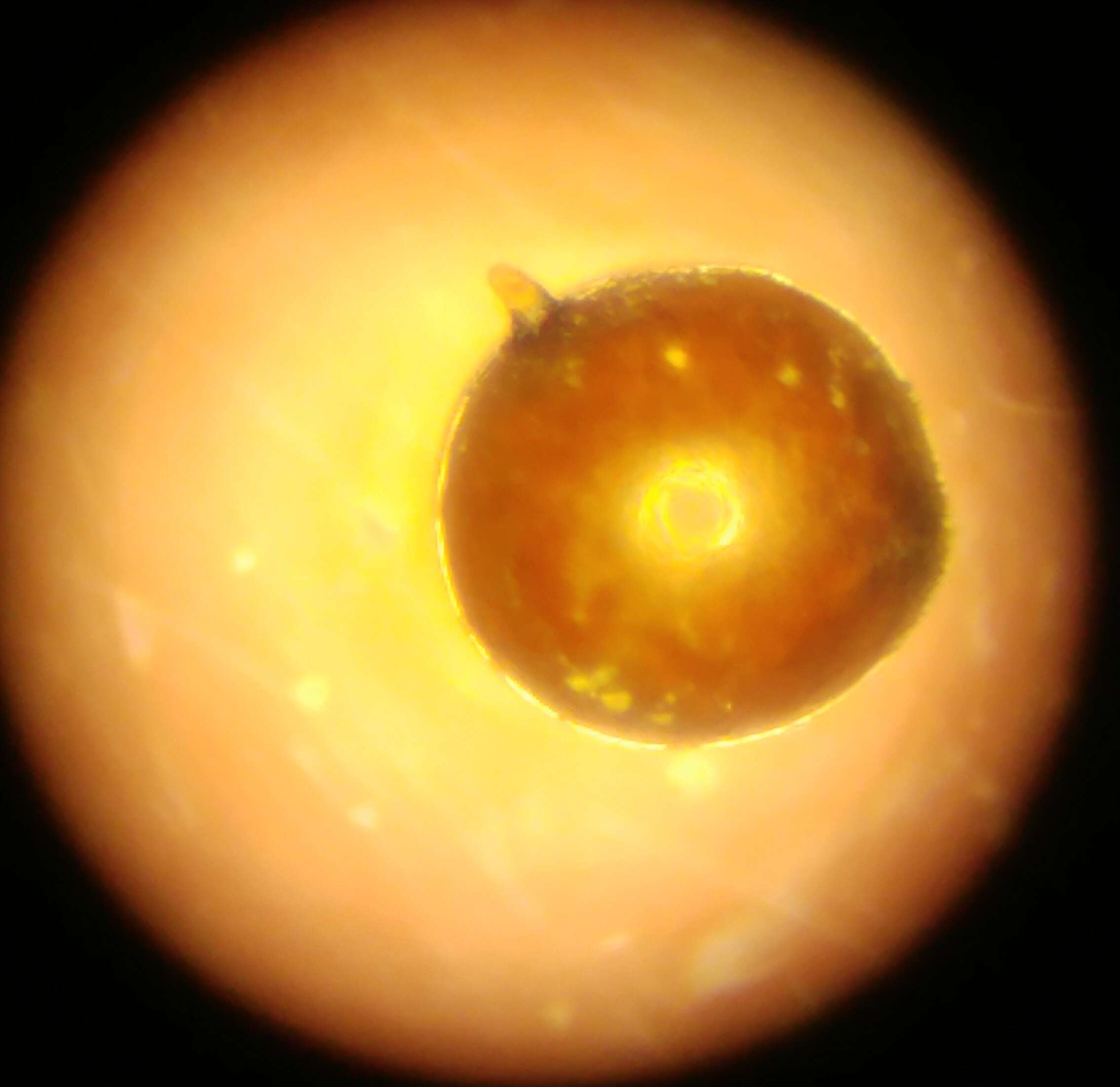
genus of worms

immunosenescence
thumb|alt=Immunosenescence|Immunosenescence
Immunosenescence is the gradual deterioration of the immune system, brought on by natural age advancement. It affects both innate and adaptive immunity, including changes in lymphocyte production, immune cell function, and inflammatory regulation. Immunosenescence involves both the host's capacity to respond to infections and the development of long-term immune memory. Age-associated immune deficiency is found in both long- and short-lived species as a function of their age relative to life expectancy rather than elapsed time.

Gompertz–Makeham law of mortality
mathematical equation related to human death rate

negligible senescence
characteristic of organisms displaying no decline in survival capacity relative to age

free-radical theory of aging
theory that claims that organisms age because cells accumulate free radical damage over time
senolytics
A senolytic (from the words senescence and -lytic, "decomposition or breakdown") is among a class of small molecules under basic research to determine if they can selectively induce death of senescent cells and improve health in humans. A goal of this research is to discover or develop agents to delay, prevent, alleviate, or reverse age-related diseases. Removal of senescent cells with senolytics has been proposed as a method of enhancing immunity during aging.
maximum life span
measure of the maximum amount of time individuals in a population have been observed to survive between birth and death
aging-associated disease
disease developed by aging
DNA damage
abnormal chemical structure in DNA
Strategies for Engineered Negligible Senescence
regenerative medicine proposal
biomarkers of aging
type of biomarkers
C-X-C motif chemokine receptor 2
mammalian protein found in Homo sapiens
aging brain
degradation of functioning of the brain
progeroid syndrome
range of genetic disorders which cause a person to appear to grow older faster
DNA damage theory of aging
hypothesis that aging is caused by accumulated DNA damage
Reproductive value
concept in demography and population genetics
RecQ helicase
class of enzymes
Paternal age effect
health effects of an older father at conception
Impact of alcohol on aging
general health article
memory and aging
aspect of senescence
evolution of ageing
study of the evolutionary development of ageing processes
accelerated aging
laboratory procedure that estimates a material's rate of deterioration over time
immortalised cell line
lineage of cells that evades senescence and continues dividing
PARP14
protein-coding gene in the species Homo sapiens
Disposable soma theory
theory of aging
Genetics of aging
overview of the genetics of aging