Category
page 1Solar System

Earth
Earth is the third planet from the Sun and the only astronomical object known to harbor life. This is made possible by Earth being an ocean world, the only one in the Solar System sustaining liquid surface water. Almost all of Earth's water is contained in its global ocean, covering 70.8% of Earth's crust. The remaining 29.2% of Earth's crust is land, most of which is located in the form of continental landmasses within Earth's land hemisphere. Most of Earth's land is at least somewhat humid and covered by vegetation, while large ice sheets at Earth's polar deserts retain more water than Earth

Sun
The Sun is the star located at the centre of the Solar System. It is a massive sphere of hot plasma, heated to incandescence by nuclear fusion reactions in its core, radiating the energy from its surface mainly as visible light and infrared radiation with 10% at ultraviolet energies. It is the main source of energy for life on Earth. The Sun has been an object of veneration in many cultures and a central subject of astronomical research since antiquity.

Moon
The Moon is the only natural satellite of Earth. It orbits around Earth at an average distance of , a distance roughly 30 times the width of Earth. It completes an orbit (lunar month) in relation to Earth and the Sun (synodically) every 29.5 days. The Moon and Earth are bound by gravitational attraction, which is stronger on the sides facing each other. The resulting tidal forces are the main driver of Earth's tides, and have pulled the Moon to always face Earth with the same near side. This tidal locking effectively synchronizes the Moon's rotation period (lunar day) to its orbital period (lu

astronomy
thumb |upright=1.5 |The Paranal Observatory of [[European Southern Observatory creating a laser guide star in the atmosphere to observe the Galactic Center]]

Solar System
the Sun, its planets and their moons

Mercury
first planet from the Solar System and smallest among all, tellurian and with extreme temperatures

planet
thumb|upright=1.5|The eight planets of the Solar System with size to scale (up to down, left to right): [[Saturn, Jupiter, Uranus, Neptune (outer planets), Earth, Venus, Mars, and Mercury (inner planets)]]
A planet is a large, rounded astronomical body that is generally required to be in orbit around a star, stellar remnant, or brown dwarf, and is not one itself. The Solar System has eight planets by the most restrictive definition of the term: the terrestrial planets Mercury, Venus, Earth, and Mars, and the giant planets Jupiter, Saturn, Uranus, and Neptune. The best available theory of plane
.svg)
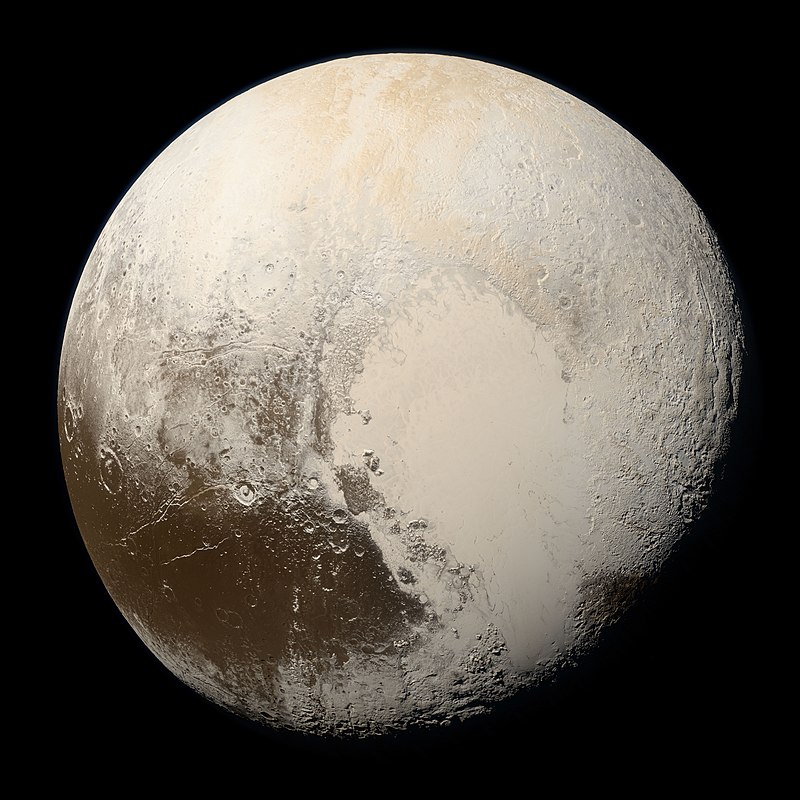
Pluto
.jpg)
comet
A comet is an icy, small Solar System body or interstellar object that warms and begins to release gases when passing close to the Sun, a process called outgassing. This produces an extended, gravitationally unbound atmosphere or coma surrounding the nucleus, and sometimes a tail of gas and dust gas blown out from the coma. These phenomena are due to the effects of solar radiation and the outstreaming solar wind plasma acting upon the nucleus of the comet. Comet nuclei range from a few hundred meters to tens of kilometers across and are composed of loose collections of ice, dust, and small roc

asteroid
An asteroid is a minor planet—an object larger than a meteoroid (thus 1 meter or larger) that is neither a planet nor an identified comet—that orbits within the inner Solar System or is co-orbital with Jupiter (Trojan asteroids). Asteroids are rocky, metallic, or icy bodies with no atmosphere, and are broadly classified into C-type (carbonaceous), M-type (metallic), or S-type (silicaceous). The size and shape of asteroids vary significantly, ranging from small rubble piles under a kilometer across to Ceres, a dwarf planet almost 1000 km in diameter. A body is classified as a comet, not an

natural satellite
celestial body that orbits a planet or other smaller body in turn directly orbiting a star

dwarf planet
planetary-mass object in hydrostatic equilibrium which is not a satellite of another one, but which has still not significantly cleared its neighborhood to dominate it gravitationally and maintain its cohesion

spaceflight
thumb|upright=1.5|Tracy Caldwell Dyson in the [[International Space Station's Cupola]]

Eris
dwarf planet in the Solar System

Kuiper Belt
area of the Solar System beyond the planetary orbits comprising small bodies

Europa
Galilean moon of Jupiter
.svg)
136472 Makemake
Makemake (minor-planet designation: 136472 Makemake) is a dwarf planet in the Kuiper belt, a disk of icy bodies beyond the orbit of Neptune. It is the fourth largest trans-Neptunian object and the largest member of the classical Kuiper belt, having a diameter 60% that of Pluto. It was discovered on March 31, 2005 by American astronomers Michael E. ("Mike") Brown, Chad Trujillo, and David Rabinowitz at Palomar Observatory. As one of the largest objects found by this team, the discovery of Makemake contributed to the reclassification of Pluto as a dwarf planet in 2006.

asteroid belt
the circumstellar disk (accumulation of matter) in an orbit around Sun between those of Mars and Jupiter

Io
innermost of the 4 Galilean moons of Jupiter

Deimos
moon of Mars
.svg)
Haumea
Haumea (minor-planet designation: 136108 Haumea) is a dwarf planet located beyond Neptune's orbit. It was discovered in 2004 by a team headed by Mike Brown of Caltech at the Palomar Observatory, and formally announced in 2005 by a team headed by José Luis Ortiz Moreno at the Sierra Nevada Observatory in Spain, who had discovered it that year in precovery images taken by the team in 2003. From that announcement, it received the provisional designation .

Callisto
second largest Galilean moon of Jupiter and third largest in the solar system

meteorite
thumb|The , Hoba meteorite in [[Namibia is the largest known intact meteorite.]]

meteoroid
thumb|upright=1.5|A meteoroid shown entering the atmosphere, causing a visible meteor and hitting the Earth's surface, becoming a [[meteorite]]

Oort cloud
theoretical cloud of planetesimals at the far edge of the solar system

Vesta
second largest asteroid of the main asteroid belt

terrestrial planet
planet that is composed primarily of silicate rocks or metals. Within the Solar System, the terrestrial planets are the inner planets closest to the Sun, i.e. Mercury, Venus, Earth, and Mars

space station
spacecraft designed to remain in space for an extended period with a crew

gas giant
giant planet which mainly consist of light elements such as hydrogen and helium

list of moons of Jupiter
Wikimedia list article

space exploration
discovery and exploration of outer space and celestial objects outside Earth

3 Juno
large asteroid in the asteroid belt, the third asteroid discovered, in 1804, by German astronomer Karl Harding

heliocentrism
thumb|upright=1.2|Andreas Cellarius's illustration of the Copernican system, from the Harmonia Macrocosmica

Sedna
dwarf planet in the outermost Solar system

moon of Saturn
natural satellites of the planet Saturn

moon of Uranus
natural satellites of the planet Uranus

moon of Mars
natural satellites orbiting Mars

moon of Neptune
natural satellites of the planet Neptune
trans-Neptunian object
any object in the Solar System that orbits the Sun at a greater average distance than Neptune
.svg)
Quaoar
Quaoar (minor-planet designation: 50000 Quaoar) is a ringed dwarf planet in the Kuiper belt, a band of icy planetesimals beyond Neptune. It has a slightly ellipsoidal shape with an average diameter of , about half the size of the dwarf planet Pluto. The object was discovered by American astronomers Chad Trujillo and Michael Brown at Palomar Observatory on 4 June 2002. Quaoar has a reddish surface made of crystalline water ice, tholins, and traces of frozen methane.

Galilean moons
four largest moons of Jupiter

Dysnomia
moon of the dwarf planet Eris

Planet Nine
hypothetical large planet in the far outer Solar System
centaur
small Solar System body orbiting between Jupiter and Neptune

scattered disc
collection of bodies in the extreme Solar System, outside of the Kuiper belt

moon of Pluto
natural satellite orbiting Pluto
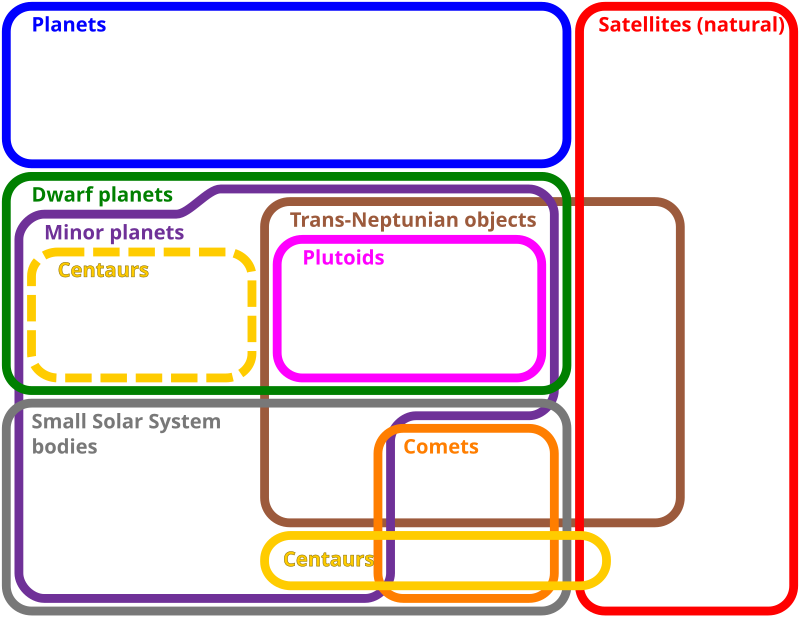
small Solar System body
object in the Solar System that is neither a planet, nor a dwarf planet, nor a satellite
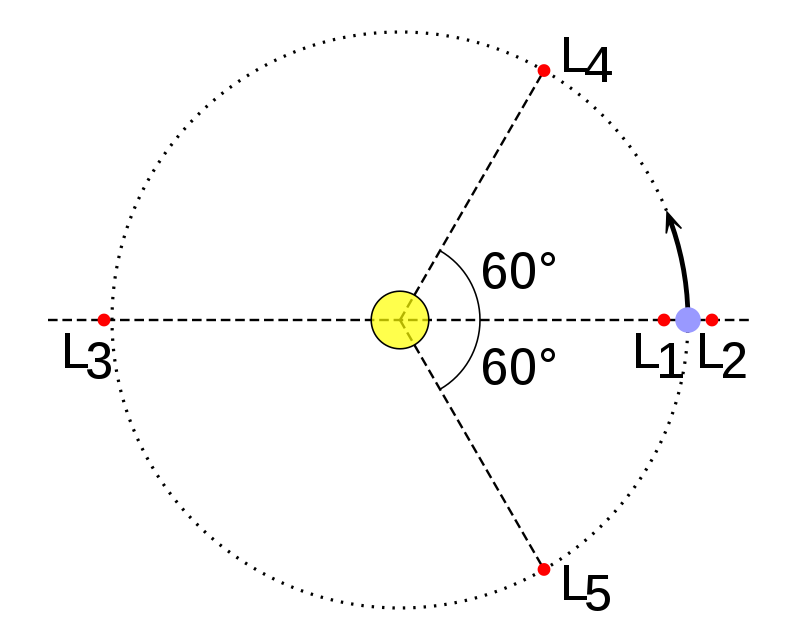
trojan
minor planet or natural satellite that shares an orbit with a planet or larger moon

Laniakea Supercluster
supercluster containing the Milky Way and approximately 100,000 other nearby galaxies

zodiacal light
glow in the night sky appearing to extend from the Sun's direction and along the zodiac
minor planet
astronomical object in direct orbit around the Sun that is neither a planet nor a comet
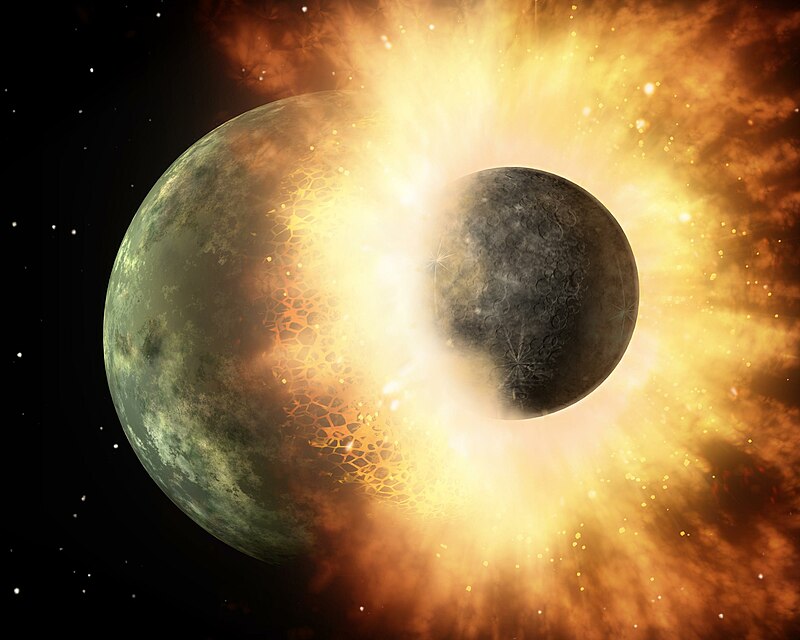
Theia
planet that is hypothesized to have impacted Earth and created the Moon

Roche limit
astronomical concept

list of minor planets
numerically sorted list of near-Earth asteroids, Mars-crossers, main-belt asteroids, Jupiter trojans, and distant minor planets in the Solar System

formation and evolution of the Solar System
overview of formation and evolution of the Solar System

ice giant
giant planet primarily composed of elements heavier than hydrogen and helium

Gonggong
dwarf planet in the Solar system
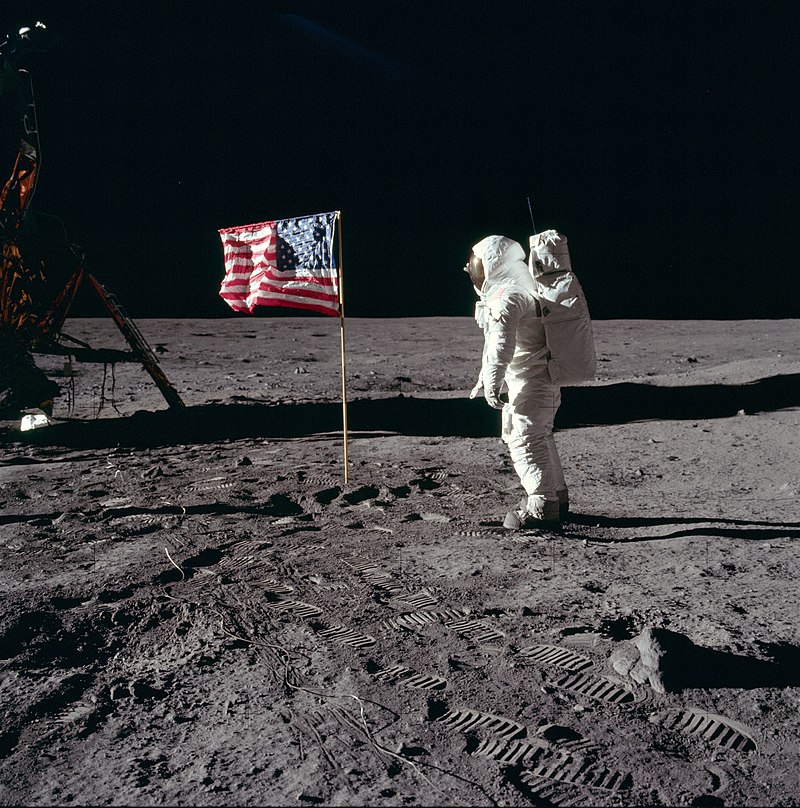
space colonization
concept of permanent colonies outside of the astronomical body of origin – especially human settlements outside Earth

Methone
moon of Saturn

Local Bubble
cavity in the interstellar medium which contains the Local Interstellar Cloud