Category
page 1Taxa named by Ludwig Reichenbach

Phalacrocoracidae
Phalacrocoracidae is a family of approximately 40 species of aquatic birds found worldwide and commonly known as cormorants and shags. Several different classifications of the family have been proposed, but in 2021 the International Ornithologists' Union (IOU) adopted a consensus taxonomy of seven genera.
%20on%20Santa%20Cruz%2C%20Gal%C3%A1pagos%20Islands.JPG)
Sulidae
The bird family Sulidae comprises the gannets and boobies. Collectively called sulids, they are medium-large coastal seabirds that plunge-dive for fish and similar prey. The 10 species in this family are often considered congeneric in older sources, placing all in the genus Sula. However, Sula (true boobies) and Morus (gannets) can be distinguished via morphological, behavioral, and DNA sequence characters. Abbott's booby (Papasula) is given its own genus, as it stands apart from both in these respects. It appears to be a distinct and ancient lineage, maybe closer to the gannets than to the tr

Chlorophyta
Chlorophyta or chlorophytes is a major division of green algae, and is sister taxon to the other major division Charophyta (a paraphyletic group of predominantly freshwater green algae, which form the monophyletic clade Streptophyta after including all land plants) as well as the proposed basal clade Prasinodermophyta, together with whom they form the major primary algae clade Viridiplantae (Plantae sensu stricto).

Aegithalidae
The bushtits or long-tailed tits are small passerine birds from the family Aegithalidae, containing 13 species in three genera, all but one of which (Psaltriparus) are found in Eurasia. Bushtits are active birds with long tails compared to their size, moving almost constantly while they forage for insects in shrubs and trees. During non-breeding season, birds live in flocks of up to 50 individuals. Several bushtit species display cooperative breeding behavior, also called helpers at the nest.

Viola riviniana
species of plant

Quelea
Quelea () is a genus of small passerine birds that belongs to the weaver family Ploceidae, confined to Africa. These are small-sized, sparrow- or finch-like gregarious birds, with bills adapted to eating seeds. Queleas may be nomadic over vast ranges; the red-billed quelea is said to be the most numerous wild bird species in the world.

Trachypithecus
Trachypithecus is a genus of Old World monkeys containing species known as lutungs, langurs, or leaf monkeys. Their range is much of Southeast Asia (northeast India, Vietnam, southern China, Borneo, Thailand, Java, and Bali).
.jpg)
Botaurinae
Bitterns are birds belonging to the subfamily Botaurinae of the heron family Ardeidae. Bitterns tend to be shorter-necked and more secretive than other members of the family. They were called hæferblæte and various iterations of raredumla in Old English; the word "bittern" came to English from Old French butor, itself from Gallo-Roman butitaurus, a compound of Latin būtiō (buzzard) and taurus (bull).

Tachybaptus
Tachybaptus is a genus of small birds of the grebe family. The genus name means "quick diving": it is from Ancient Greek takhys "quick" and bapto "I dip". It has representatives over much of the world, including the tropics.

Anthracoceros
Anthracoceros is a genus of birds in the family Bucerotidae.
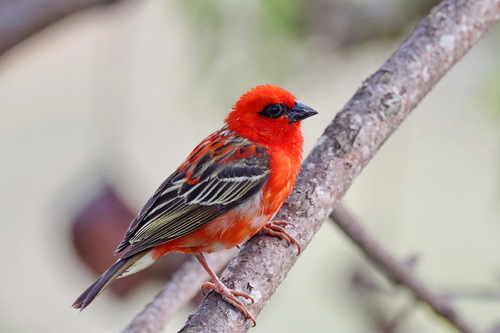
Foudia
Fodies are small passerine birds belonging to the genus Foudia in the weaver family Ploceidae.

Mollymawk
The mollymawks are a group of medium-sized albatrosses that form the genus Thalassarche. The name has sometimes been used for the genus Phoebetria as well, but these are usually called sooty albatrosses. They are restricted to the Southern Hemisphere, where they are the most common of the albatrosses. They were long considered to be in the same genus as the great albatrosses, Diomedea, but a study of their mitochondrial DNA showed that they are a monophyletic taxon related to the sooty albatrosses, and they were placed in their own genus.

North Pacific albatross
genus of birds

Amaurornis
Amaurornis is a genus of birds in the rail family Rallidae. The species in this genus are typically called bush-hens. A monotypic subtribe, Amaurornithina, was proposed for this genus.
Tadorninae
The Tadornini is a biological tribe that includes the shelducks and sheldgeese, which is placed in subfamily Anatinae of family Anatidae, which includes the ducks and most duck-like waterfowl such as the geese and swans. It has been treated as subfamily in the past.
Patagioenas
Patagioenas is a genus of New World pigeons whose distinctness from the genus Columba was long disputed but ultimately confirmed. It is basal to the Columba — Streptopelia radiation with their ancestors diverging from that lineage likely over 8 million years ago. While the biogeographic pattern of this group suggests that the ancestors of typical pigeons and turtle doves settled the Old World from the Americas, Patagioenas may also be the offspring of Old World pigeons that radiated into different genera later, given that the cuckoo-doves (Macropygia) of Southeast Asia also seem to be closely

Phoebetria
The sooty albatrosses are small albatrosses from the genus Phoebetria. There are two species, the sooty albatross, Phoebetria fusca, and the light-mantled albatross, Phoebetria palpebrata.
Eutoxeres
Eutoxeres is a genus of hummingbird in the family Trochilidae.

Cerylinae
subfamily of kingfishers

Melanopareia
The crescentchests are a genus, Melanopareia, of suboscine passerine birds from South America. The genus has long been placed with the tapaculos in the family Rhinocryptidae. Their placement there has been questioned and in 2007 the genus was placed in its own family, Melanopareiidae, by the South American Classification Committee. Subsequently, the family was accepted by the International Ornithological Congress Bird List and the Clements Checklist. The family Melanopareiidae was formally erected in 2009.

Ptyonoprogne
genus of birds

Penelopides
Penelopides is a genus of relatively small, primarily frugivorous hornbills restricted to forested areas of the Philippines. Their common name, tarictic hornbills, is an onomatopoetic reference to the main call of several of them. They have a ridged plate-like structure on the base of their mandible. All are sexually dimorphic: males of all species are whitish-buff and black, while females of all species except the Mindoro hornbill are primarily black.

Scaly-breasted Kingfisher
species of bird

Rhyticeros
Rhyticeros is a genus of medium to large hornbills (family Bucerotidae) found in forests from Southeast Asia to the Solomons. They are sometimes included in the genus Aceros. On the other hand, most species generally placed in Aceros are sometimes moved to Rhyticeros, leaving Aceros as a monotypic genus only containing the rufous-necked hornbill.

Stephan's Emerald Dove
species of bird

Dactylorhiza majalis
species of plant
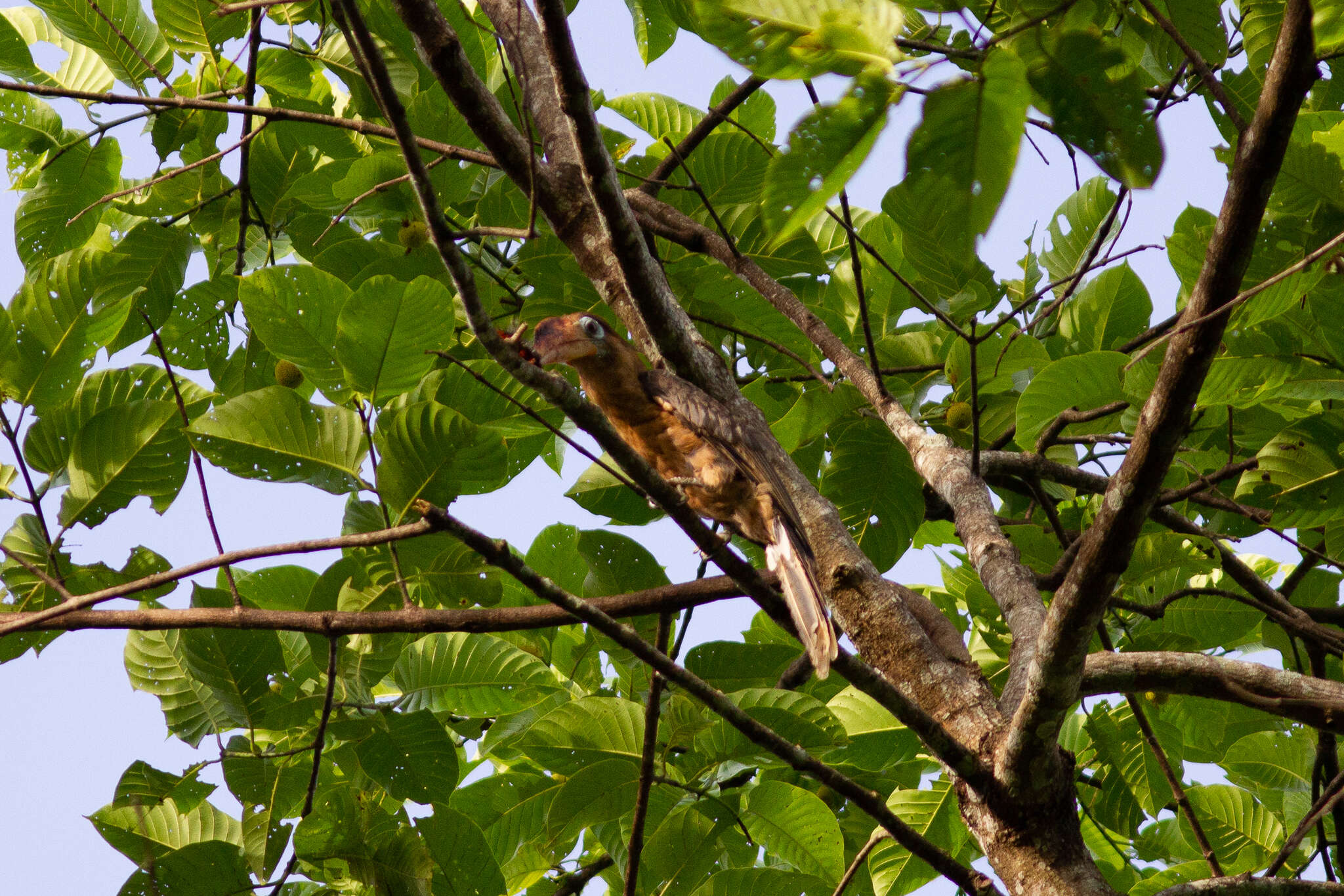
Anorrhinus
Anorrhinus is a genus of hornbills (family Bucerotidae) found in forests of Southeast Asia (just barely extending into adjacent parts of India and China). They are social and typically seen in groups, but only the dominant pair are believed to breed, while other group members act as helpers.

Taeniopygia
genus of birds

Cinnamon Woodpecker
species of bird

Tephroseris
Tephroseris is a genus of Eurasian and North American plants in the groundsel tribe within the daisy family.
Archilochus
genus of birds

Morchellaceae
The Morchellaceae are a family of ascomycete fungi in the order Pezizales. According to a standard reference work, the family has contained at least 49 species distributed among four genera. However, in 2012, five genera that produce ascoma that are sequestrate and hypogeous were added. The best-known members are the highly regarded and commercially picked true morels of the genus Morchella, the thimble morels of the genus Verpa, and a genus of cup-shaped fungi Disciotis. The remaining four genera produce the sequestrate fruit bodies.
.jpg)
Melozone
Melozone is a genus of mostly Neotropical birds in the family Passerellidae, found mainly in Mexico. Three species reach as far north as the southwestern United States, two species reach as far south as Costa Rica, and two are endemic to Mexico.

Cyclopsitta
Cyclopsitta is a genus of parrots in the family Psittaculidae. Its four species are native to the island of New Guinea. There are also fig parrots in the genus Nannopsittacus.

Anisognathus
Anisognathus is a genus of boldly colored tanagers found in the highland forests and woodlands of South America.

Northern Masked Weaver
species of bird
Erythrura hyperythra
species of bird

Thick-billed Spiderhunter
species of bird
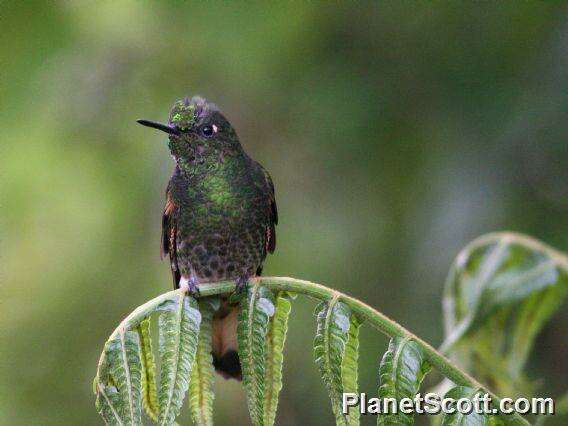
Boissonneaua
Boissonneaua is a small genus of hummingbirds in the family Trochilidae. They are found in humid Andean forests from western Venezuela to southern Peru. They have a straight black bill, contrasting outer rectrices, and a distinctive habit of quickly lifting both wings up shortly after landing, thereby revealing their rufous underwing coverts.
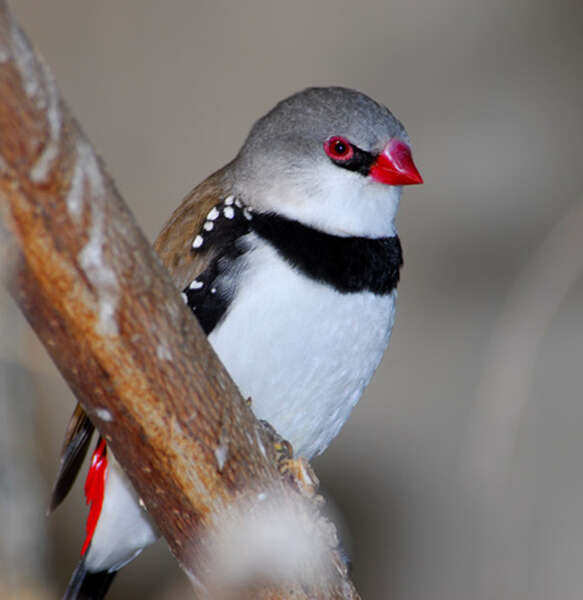
Stagonopleura
Stagonopleura is a genus of small seed-eating birds in the family Estrildidae that are native to Australia.

Asphodeline
Asphodeline is a genus of perennial plants in the family Asphodelaceae, first described as a genus in 1830. It is native to the eastern Mediterranean region and the Middle East from Italy and Algeria east to Iran.
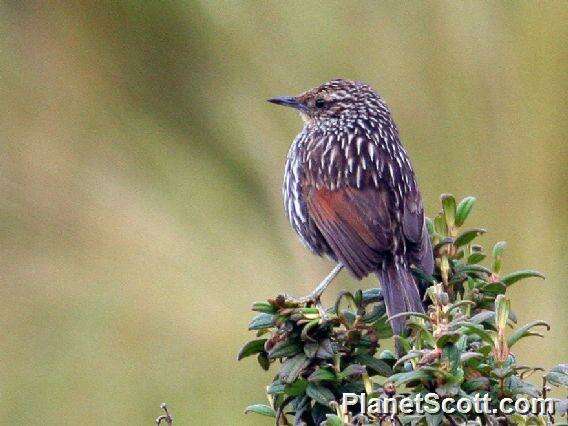
Canastero
Canasteros and thistletails are small passerine birds of South America belonging to the genus Asthenes. The name "canastero" comes from Spanish and means "basket-maker", referring to the large, domed nests these species make of sticks or grass. They inhabit shrublands and grasslands in temperate climates from the lowlands to the highlands. They feed on insects and other invertebrates gleaned from the ground or the low vegetation.

Tit-Tyrant
Anairetes is a genus containing the tit-tyrants, a group of small, mainly Andean birds, in the tyrant flycatcher family Tyrannidae. The group briefly included the genus Uromyias, which had been recognized based on syringeal and plumage characters, including a flatter crest and a longer tail, but was included within Anairetes due to genetic analysis. Recent analyses suggested splitting into Uromyias again.
Anairetes is believed to be most closely related to the genera Mecocerculus and Serpophaga; however, there is no definitive evidence supporting this claim.

Potentilla neumanniana
species of plant

Phacellodomus
Phacellodomus is the genus of thornbirds, birds in the family Furnariidae. They are found in woodlands, shrublands, and grasslands, often near water, in South America.
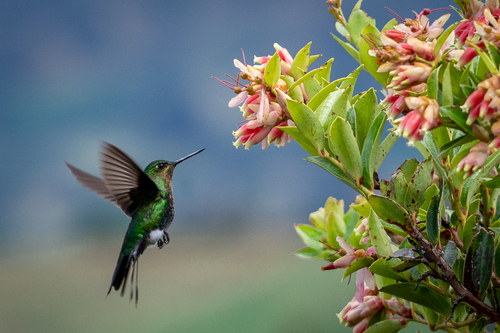
Eriocnemis
Eriocnemis is a genus of hummingbirds, which - together with the species in the genus Haplophaedia - are known as pufflegs. They occur in humid forest, woodland and shrub at elevations of 1000 to 4800 meters above sea level in the Andes of Argentina, Bolivia, Peru, Ecuador, Colombia, and Venezuela. The males have a colourful green, coppery or blue plumage, and the females are generally somewhat duller. The most striking feature of both sexes in the genus Eriocnemis are their dense snow-white leg-puffs which consist of feather tufts that resemble woolly panties. One species, the black-thighed p
Lissotis
Lissotis is a genus of bird in the bustard family, Otididae. Some authorities, such as the IUCN, consider it part of Eupodotis; the separation adopted here follows the Handbook of the Birds of the World.
==Species==
It contains the following species, both restricted to Africa:
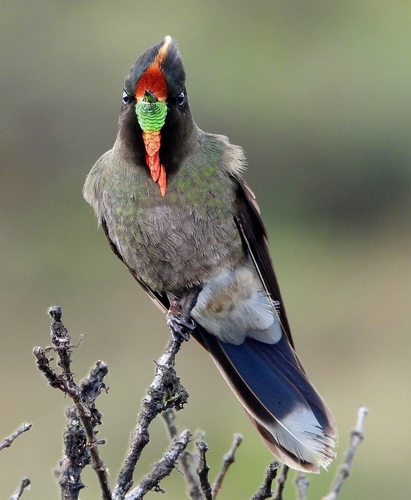
Chalcostigma
Chalcostigma is a genus of South American hummingbirds in the family Trochilidae.

Antigone
genus of birds
.jpg)
Myiotheretes
Myiotheretes is a genus of South American birds in the tyrant flycatcher family Tyrannidae. These superficially thrush-like birds are large tyrants (19–24 cm/7.5-9.5 in long) of the Andean highlands.
The red-rumped bush tyrant is considered closely related.
==Species==
The genus contains the following four species:
{| class="wikitable"
|-
! Image !! Common name !! Scientific name !! Distribution
|-
|120px ||Streak-throated bush tyrant || Myiotheretes striaticollis|| Andes of Colombia to northwestern Argentina.
|-
|120px || Rufous-bellied bush tyrant ||Myiotheretes fuscorufus||eastern An

Anhinga
The darters, anhingas, or snakebirds are mainly tropical waterbirds in the family Anhingidae, which contains a single genus, Anhinga. There are four living species, three of which are very common and widespread while the fourth is rarer and classified as near-threatened by the IUCN. The term snakebird is usually used without any additions to signify whichever of the completely allopatric species occurs in any one region. It refers to their long thin neck, which has a snake-like appearance when they swim with their bodies submerged, or when mated pairs twist it during their bonding displays. "D
%20(9)%20(14420386998).jpg)
Chalybura
The plumeleteers are a genus Chalybura of Neotropical hummingbirds in the family Trochilidae.
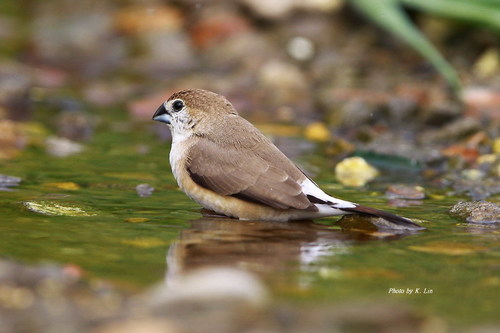
Euodice
Euodice is a genus of small seed-eating birds in the family Estrildidae. These species are from the dry zones of Africa and India and are commonly referred to as silverbills. They were formerly included in the genus Lonchura.
.jpg)
Cranioleuca
The typical spinetails, Cranioleuca, are a genus of Neotropical birds in the ovenbird family Furnariidae.

Doricha
Doricha is a genus of hummingbirds in the family Trochilidae.
Rhabdornis
genus of birds

Cacholote
The cacholotes are four species of relatively large, heavy-billed furnariids in the genus Pseudoseisura. They are found in shrubby habitats in the South American countries of Brazil, Bolivia, Argentina, Paraguay and Uruguay. They are essentially brown (ranging from deep rufous to pale gray-brown depending on species), and all are crested to some extent.

Brown Cacholote
species of bird
.jpg)
Myiophobus
Myiophobus is a genus of South American birds in the tyrant flycatcher family Tyrannidae.

Pheucticus
Pheucticus is a genus of grosbeaks containing six species.