Category
page 1Tropical diseases
malaria
Malaria is a mosquito-borne infectious disease which is transmitted by the bite of Anopheles mosquitoes. Human malaria causes symptoms that typically include fever, fatigue, vomiting, and headaches; in severe cases, it can cause jaundice, seizures, coma, or death. Symptoms usually begin 10 to 15 days after being bitten by an infected Anopheles mosquito. If not properly treated, people may have recurrences of the disease months later. Those who survive an infection develop partial immunity, being susceptible to reinfection although with milder symptoms. This partial resistance disappears over m
cholera
Cholera () is an infection of the small intestine by some strains of the bacterium Vibrio cholerae. Symptoms may range from none, to mild, to severe. The classic symptom is large amounts of watery diarrhea lasting a few days. Vomiting and muscle cramps may also occur. Diarrhea can be so severe that it leads within hours to severe dehydration and electrolyte imbalance. This can in turn result in sunken eyes, cold or cyanotic skin, decreased skin elasticity, wrinkling of the hands and feet, and, in severe cases, death. Symptoms start two hours to five days after exposure.

rabies
Rabies is a zoonotic viral disease that causes acute and severe encephalitis in humans and other mammals. It was historically referred to as hydrophobia ("fear of water") because its victims panic when offered liquids to drink. Early symptoms can include fever and abnormal sensations at the site of exposure, which are followed by nausea, vomiting, violent movements, uncontrolled excitement, fear of water, an inability to move parts of the body, confusion, and/or loss of consciousness. Once symptoms appear, the result is virtually always death. The time period between contracting the disease an

Ebola hemorrhagic fever
Ebola, also known as Ebola virus disease (EVD) and Ebola hemorrhagic fever (EHF), is a zoonotic viral hemorrhagic fever in humans and other primates, caused by four of the six known ebolaviruses. Symptoms typically start anywhere between two days and three weeks after infection. The first symptoms are usually fever, sore throat, muscle pain, and headaches. These are usually followed by vomiting, diarrhoea, rash, hepatic and renal dysfunction, at which point some people begin to bleed both internally and externally. The disease causes a mortality rate of anywhere between 25 and 90%, averaging o

leprosy
Leprosy, also known as '''Hansen's disease (HD'), is a long-term infection by the bacteria Mycobacterium leprae or Mycobacterium lepromatosis''. Infection can lead to damage of the nerves, respiratory tract, skin, and eyes. This nerve damage may result in the loss of nociception, which can lead to the loss of parts of a person's extremities from repeated injuries or infection through unnoticed wounds. An infected person may also experience muscle weakness and loss of eyesight. Leprosy symptoms may begin within one year or take 20 years or more.

dengue fever
tropical disease caused by the dengue virus, transmitted by mosquito

scabies
Scabies (, ; also sometimes known as the seven-year itch) is a contagious human skin infestation by the tiny (0.2–0.45 mm) mite Sarcoptes scabiei, variety hominis. The word is from . It is a particular public health problem in crowded settings such as care homes, schools, refugee camps, prisons, and hospitals. The most common symptoms are severe itchiness and a pimple-like rash. Occasionally, tiny burrows may appear on the skin from eggs that are about to hatch. In a first-ever infection, the infected person usually develops symptoms within two to six weeks. During a second infection, sym

Escherichia coli
enteric, rod shaped, gram-negative bacterium

African trypanosomiasis
parasitic disease

leishmaniasis
Leishmaniasis is a wide array of clinical manifestations caused by protozoal parasites of the Trypanosomatida genus Leishmania. It is generally spread through the bite of phlebotomine sandflies, Phlebotomus and Lutzomyia, and occurs most frequently in the tropics and sub-tropics of Africa, Asia, the Americas, and southern Europe. The disease can present in three main ways: cutaneous, mucocutaneous, or visceral. The cutaneous form presents with skin ulcers, while the mucocutaneous form presents with ulcers of the skin, mouth, and nose. The visceral form starts with skin ulcers and later present

schistosomiasis
Schistosomiasis, also known as snail fever, bilharzia, and Katayama fever is a neglected tropical disease, specifically a helminthiasis caused by parasitic flatworms called schistosomes. It affects humans and many other animals. It affects the urinary tract or the intestines. Symptoms include abdominal pain, diarrhea, bloody stool, or blood in the urine. Those who have been infected for a long time may experience liver damage, kidney failure, infertility, or bladder cancer. In children, schistosomiasis may cause poor growth and learning difficulties. Schistosomiasis belongs to the group of hel

leptospirosis

Chagas disease
human disease

chikungunya
Chikungunya is an infection caused by the chikungunya virus. The most common symptoms are fever and joint pain, typically occurring four to eight days after the bite of an infected mosquito. The pain has been described as "excruciating"; however some people may be infected without showing any symptoms. Other symptoms may include headache, muscle pain, joint swelling, and a rash. Symptoms usually improve within a week; however, occasionally the joint pain may last for months or years. The very young, old, and those with other health problems are at risk of more severe disease.
.jpg)
Salmonella
Salmonella is a genus of rod-shaped, (bacillus) Gram-negative bacteria of the family Enterobacteriaceae. The two known species of Salmonella are Salmonella enterica and Salmonella bongori. S. enterica is the type species and is further divided into six subspecies that include over 2,650 serotypes. Salmonella was named after Daniel Elmer Salmon (1850–1914), an American veterinary surgeon.

onchocerciasis
.jpg)
ascariasis
.jpg)
trachoma

cysticercosis
Cysticercosis is a tissue infection caused by the young form of the pork tapeworm. People may have few or no symptoms for years. In some cases, particularly in Asia, solid lumps of between one and two centimeters may develop under the skin. After months or years, these lumps can become painful and swollen and then resolve. A specific form called neurocysticercosis, which affects the brain, can cause neurological symptoms. In developing countries, this is one of the most common causes of seizures.

dracunculiasis
echinococcosis

snakebite

Buruli ulcer disease
tropical disease
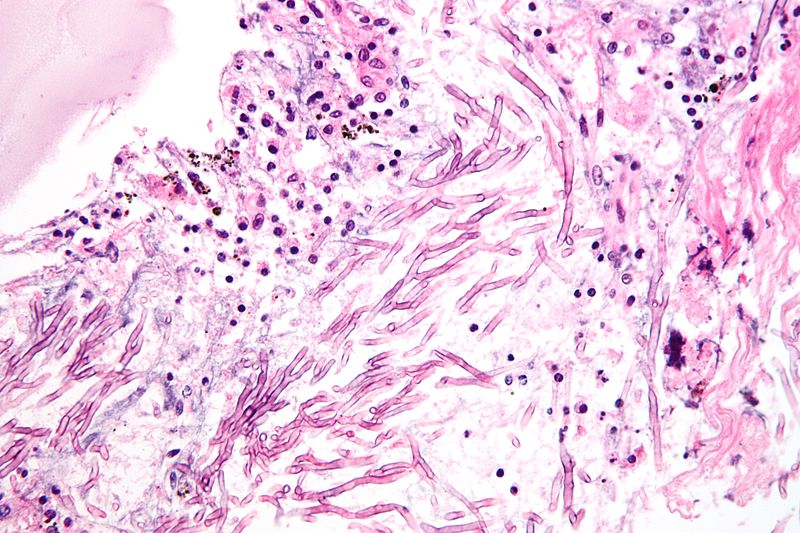
fungal infectious disease
disease caused by fungi to animals or humans

Orthoebolavirus zairense
species of virus

Rift Valley fever
human disease

giardiasis
Giardiasis is a parasitic disease caused by the protist enteropathogen Giardia duodenalis (also known as G. lamblia and G. intestinalis), especially common in children and travelers. Infected individuals experience steatorrhea, a type of diarrhea with fatty sticky stool; abdominal pain, weight loss, and weakness due to dehydration and malabsorption. Less common symptoms include skin rash, hives and joint swelling. Symptoms usually begin one to three weeks after exposure and, without treatment, may last two to six weeks or longer. Some infected individuals experience mild or no symptoms and rem

viral hemorrhagic fever
group of viral diseases having in common capillary permeability, leukopenia and thrombocytopenia

amebiasis
Amoebiasis, or amoebic dysentery, is an infection of the intestines caused by a parasitic amoeba Entamoeba histolytica. Amoebiasis can be present with no, mild, or severe symptoms. Symptoms may include lethargy, loss of weight, colonic ulcerations, abdominal pain, diarrhea, or bloody diarrhea. Complications can include inflammation and ulceration of the colon with tissue death or perforation, which may result in peritonitis. Anemia may develop if there is prolonged gastric bleeding.
Japanese encephalitis
infection of the brain caused by the Japanese encephalitis virus

yaws
Yaws is a tropical infection of the skin, bones, and joints caused by the spirochete bacterium Treponema pallidum pertenue. The disease begins with a round, hard swelling of the skin, in diameter. The center may break open and form an ulcer. This initial skin lesion typically heals after 3–6 months. After weeks to years, joints and bones may become painful, fatigue may develop, and new skin lesions may appear. The skin of the palms of the hands and the soles of the feet may become thick and break open. The bones (especially those of the nose) may become misshapen. After 5 years or more, large

filariasis
Filariasis is a filarial infection caused by parasitic nematodes (roundworms) spread by different vectors. They are included in the list of neglected tropical diseases.
trichuriasis

Shigella
Shigella is a genus of bacteria that is Gram negative, facultatively anaerobic, non–spore-forming, nonmotile, rod shaped, and is genetically nested within Escherichia coli. The genus is named after Japanese physician Kiyoshi Shiga, who discovered it in 1897.

West Nile fever
human disease
Lassa fever
viral disease
helminth
macroscopic, parasitic worm

Filoviridae
Filoviridae () is a family of single-stranded negative-sense RNA viruses in the order Mononegavirales. Two members of the family that are commonly known are Ebola virus and Marburg virus. Both viruses, and some of their lesser known relatives, cause severe disease in humans and nonhuman primates in the form of viral hemorrhagic fevers.
tropical disease
disease that is indigenous to tropical or subtropical areas of the world or that occurs principally in those areas

Ebolavirus
thumb|Phylogenetic tree comparing ebolaviruses and marburgviruses. Numbers indicate percent confidence of branches.
neglected tropical disease
diverse group of tropical infection diseases which are common in developing countries
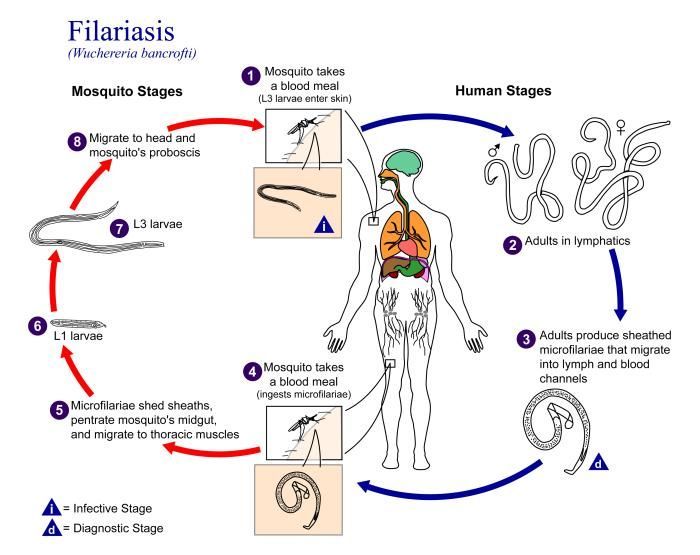
Wuchereria bancrofti
species of parasitic worm
Marburg virus disease
human disease

myiasis
Myiasis ( ), also known as flystrike or fly strike, is the parasitic infestation of the body of a live animal by fly larvae (maggots) that grow inside the host while feeding on its tissue. Although flies are most commonly attracted to open wounds and urine- or feces-soaked fur, some species (including the most common myiatic flies—the botfly, blowfly, and screwfly) can create an infestation even on unbroken skin. Non-myiatic flies (such as the common housefly) can be responsible for accidental myiasis.
World Malaria Day
international observance commemorated every year on 25 April that recognizes global efforts to control malaria

parasitic helminthiasis infectious disease
Helminthiasis, also known as worm infection, is any macroparasitic disease of humans and other animals in which a part of the body is infected with parasitic worms, known as helminths. There are numerous species of these parasites, which are broadly classified into tapeworms, flukes, and roundworms. They often live in the gastrointestinal tract of their hosts, but they may also burrow into other organs, where they induce physiological damage.

fasciolosis
relapsing fever borreliosis
primary bacterial infectious disease that results in infection, has material basis in Borrelia, which is transmitted by tick or transmitted by body louse

toxocariasis
Toxocariasis is an illness of humans caused by the dog roundworm (Toxocara canis) and, less frequently, the cat roundworm (Toxocara cati). These are the most common intestinal roundworms of dogs, coyotes, wolves and foxes and domestic cats, respectively. Humans are among the many "accidental" or paratenic hosts of these roundworms.
Marburg virus
virus in the species Marburg marburgvirus

taeniasis
Taeniasis is an infection within the intestines by adult tapeworms belonging to the genus Taenia. There are generally no or only mild symptoms. Symptoms may occasionally include weight loss or abdominal pain. Segments of tapeworm may be seen in the stool. Complications of pork tapeworm may include cysticercosis.

Mycobacterium bovis
species of bacterium

Bartonella
Bartonella is a genus of Gram-negative bacteria. It is the only genus in the family Bartonellaceae. Bartonella species cause Bartonellosis, which is a group of zoonotic infectious diseases that affects both humans and animals. Common forms include cat-scratch disease (Bartonella henselae) and trench fever (Bartonella quintana). As Facultative intracellular parasites, Bartonella species can infect healthy people, but are considered especially important as opportunistic pathogens. Bartonella species are transmitted by vectors such as fleas, sand flies, and mosquitoes.

strongyloidiasis
Strongyloidiasis is a human parasitic disease caused by the nematode called Strongyloides stercoralis, or sometimes the closely related S. fülleborni. These helminths belong to a group of nematodes called roundworms. These intestinal worms can cause a number of symptoms in people, principally skin symptoms, abdominal pain, diarrhea and weight loss, but also many other specific and vague symptoms in disseminated disease, and severe life-threatening conditions through hyperinfection. In some people, particularly those who require corticosteroids or other immunosuppressive medication, Strongyloid
cutaneous larva migrans
medical condition
pinta disease
Human disease
loiasis
human disease

Zaire ebolavirus
species within the genus Ebolavirus

tungiasis
Tungiasis is an inflammatory skin disease caused by infection with the female ectoparasitic Tunga penetrans, a flea also known as the chigoe, chigo, chigoe flea, chigo flea, jigger, nigua, sand flea, or burrowing flea (and not to be confused with the chigger, a different arthropod). The flea and the disease that it causes are found in the tropical parts of Africa, the Caribbean, Central and South America, and India. Tunga penetrans is the smallest known flea, measuring 1 mm across. It is also known in Latin America as the nigua and bicho de pie (Spanish) or bicho de pé (Portuguese), liter
Lassa mammarenavirus
species of virus