Category
page 1Umami enhancers

soy sauce
liquid seasoning

monosodium L-glutamate
chemical compound, flavor enhancer

Parmesan
Parmesan (, ) is an Italian hard, granular cheese produced from cow's milk and aged at least 12 months. It is a grana-type cheese, along with Grana Padano, the historic , and others.

DL-glutamic acid
amino acid and neurotransmitter

umami
Umami ( from , ), or savoriness, is one of the five basic tastes. It is characteristic of broths and cooked meats.

miso
is a traditional Japanese seasoning. It is a thick paste produced by fermenting soybeans with salt and kōji (the fungus Aspergillus oryzae), and sometimes rice, barley, seaweed, or other ingredients. It is used for sauces and spreads; pickling vegetables, fish, or meats; and mixing with dashi soup stock to serve as miso soup, a Japanese culinary staple food. Miso is high in protein and rich in minerals, and it played an important nutritional role in feudal Japan. Miso is widely used in both traditional and modern cooking in Japan, and as of 2018 had been gaining worldwide interest.
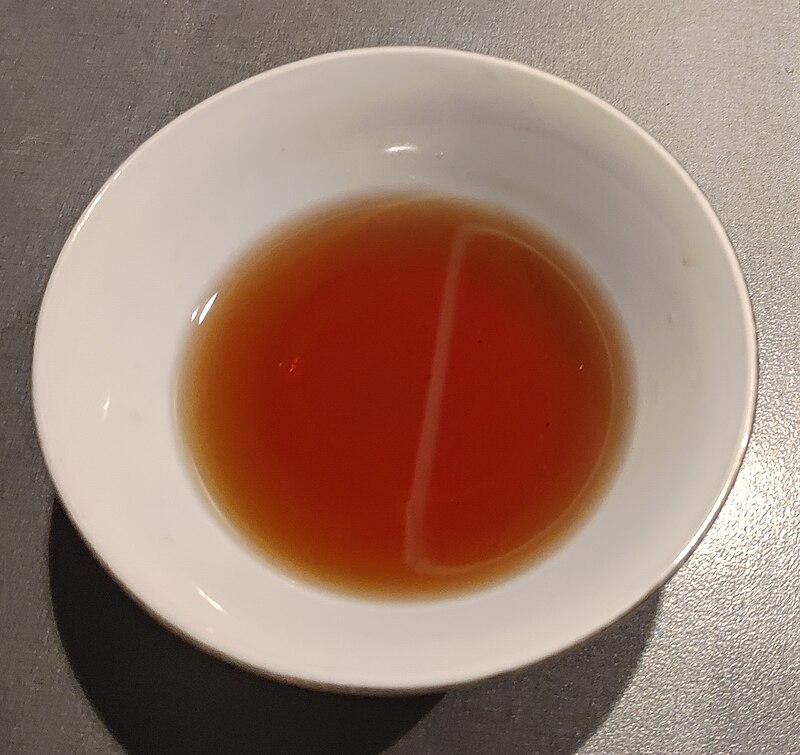
fish sauce
an amber-coloured liquid extracted from the fermentation of fish with sea salt

Worcestershire sauce
sauce

dashi
thumb|Some common brands of packaged instant dashi

garum
thumb|upright|Garum amphorae from [[Pompeii]]

Maggi
Maggi (, ) is an international brand of seasonings, instant soups, and noodles that originated in Switzerland in the late 19th century. In 1947, the Maggi brand was acquired by the Swiss giant Nestlé.
shrimp paste
fermented condiment
oyster sauce
condiment

Vegemite
Vegemite ( ) is a brand of a thick, dark brown Australian food spread made from leftover brewers' yeast extract with various vegetable and spice additives. It was developed by Cyril Callister in Melbourne, Victoria, for the Fred Walker Company in 1922 and was first sold in stores on 25 October 1923.

kombu
thumb|Dried kombu
thumb|Dried kombu sold in a Japanese supermarket

Marmite
Marmite ( ) is a British savoury spread based on yeast extract invented by the Marmite Food Company in 1902. It is made from by-products of beer brewing (lees) and is produced by the British company Unilever. Marmite is a vegan source of B vitamins, including supplementary vitamin B12. It is traditionally eaten spread thinly on buttered toast.
Kikunae Ikeda
Japanese chemist (1864–1936)
katsuobushi
thumb|Steam animates katsuobushi
thumb|A bag of katsuobushi flakes
is simmered, smoked and fermented skipjack tuna (Katsuwonus pelamis, sometimes referred to as bonito). It is also known as bonito flakes or broadly as .
.jpg)
doenjang
Doenjang () or soybean paste is a type of fermented bean paste made of soybean and brine used in Korean cuisine. It is also a byproduct of soup soy sauce production. It is sometimes used as a relish.
bouillon cube
dehydrated broth or stock formed into a small cube

Saccharina japonica
species of Phaeophyceae
yeast extract
food
disodium 5'-inosinate
chemical compound
nutritional yeast
type of deactivated yeast

douchi
Douchi (), also known as tochi, fermented black soybeans, Chinese fermented black beans (), or salted black beans, is a type of fermented and salted black soybean most popular in the cuisine of China, where they are most widely used for making black bean sauce dishes.
MSG symptom complex
A scientifically unsubstantiated syndrome that is said to occur when consuming foods containing high concentrations of monosodium glutamate.
XO sauce
spicy seafood sauce from Hong Kong
.jpg)
Bovril
Bovril is a thick and salty meat extract paste, similar to a yeast extract, developed in the 1870s by Scottish entrepreneur John Lawson Johnston. It is sold in a distinctive bulbous jar and as cubes and granules. Its brownish-black appearance is similar to Vegemite and Marmite. Bovril is owned and distributed by Unilever UK.

prahok
Prahok (; , ) is a salted and fermented fish paste (usually of mudfish) used in Cambodian cuisine as a seasoning or a condiment. It originated as a way of preserving fish during the time of the year when fresh fish was not available in abundant supply. Because of its saltiness and strong flavor, it was used as an addition to many meals in Cambodian cuisine, including soups and sauces.
disodium DL-glutamate
chemical compound
dried shrimp
dried shrimp used as seasoning

fermented bean paste
fermented foods made from ground soybeans

ngapi
Ngapi ( , ) is a pungent paste made of either fish or shrimp used in Burmese cuisine. Ngapi is typically made by fermenting fish or shrimp that is salted and ground then sundried. Like cheese, it can be distinguished based on main ingredient and regional origin. Ngapi can be distinguished by the type of fish used to make it. Ngapi can come from whole fish (such as ngapi kaung), from small fish (hmyin ngapi) or from prawns (seinza ngapi). Ngapi is a main ingredient of Lower Burmese cooking and is used as a condiment or additive in most dishes. Raw ngapi, with some exceptions, is not intended fo

Cenovis
Cenovis is a dark brown food paste from Switzerland consisting of yeast extract, onions, carrots and spices. Sold internationally under the brand Sonaris, it is similar to English Marmite, Brazilian Cenovit, and Australian Vegemite. Rich in vitamin B1, it may be used to flavour soups, sausages, and salads. The most popular way to consume Cenovis, however, is to spread it on a slice of buttered bread, as stated on the product's packaging. It can also be blended into butter and used as a spread or a filling for croissants and buns.
disodium ribonucleotides
flavor enhancer
hydrolyzed protein
solution derived from the hydrolysis of a protein into its component amino acids and peptides
Budu
Fish sauce originating from Kelantan
steak sauce
brown sauce for seasoning of steaks
Padaek
Padaek or padek (Lao: ປາແດກ) is a traditional Lao condiment made from pickled or fermented fish that has been cured. It often contains chunks of fish and is thicker, as well as more seasoned than fish sauce. Unlike other versions of fish sauce in Southeast Asia, padaek is made from freshwater fish, owing to the landlocked nature of the former kingdom of Lan Xang. Padaek is used in many Lao dishes, most notably tam maak hoong.

fermented fish
fish cured by fermentation to reduce spoilage
Oxo
food ingredient brand
Pissalat
Pissalat or pissala, is a condiment originating from the Nice region of France. The name comes from peis salat in Niçard and means 'salted fish'. It is made from anchovy puree flavoured with cloves, thyme, bay leaf and black pepper mixed with olive oil. Pissalat is used for flavouring hors d'oeuvres, fish, cold meats, and, especially, the local specialty, pissaladière.
Shottsuru
200px|thumb|"Akita shottsuru" made from hatahata (left). The other bottle is ishiru made from sardine.
Shottsuru (塩魚汁) is an aromatic regional Japanese fish sauce similar to the Thai nam pla. The authentic version is made from the fish known as hatahata (Arctoscopus japonicus or sailfin sandfish), and its production is associated with the Akita region.
soup soy sauce
type of Korean soy sauce
meat extract
highly concentrated meat stock
Aromat
Aromat is a food seasoning, developed in Switzerland by Walter Obrist for Knorr Thayngen, the Swiss branch of the German food company Knorr, in 1952. Aromat was originally called "", which means plant extract in German. Knorr dropped the name in 1953 and altered its form, from cubes to a powdered seasoning. Aromat was marketed internationally and is described by Knorr as an "all purpose savoury seasoning".
brown sauce
condiment served with food in the UK and Ireland
Gentleman's Relish
British anchovy paste
hydrolyzed vegetable protein
food ingredient made by protein hydrolysis of plant protein with a meat-bouillon-like taste