Category
page 1Year of birth unknown

Avicenna
Ibn Sina ( – 22 June 1037), commonly known in the West as Avicenna ( ), was a preeminent philosopher and physician of the Muslim world. He was a seminal figure of the Islamic Golden Age, serving in the courts of various Iranian rulers, and was influential to medieval European medical and Scholastic thought.

Plutarch
Plutarch (; , Ploútarchos, ; before AD 50 – after 120) was a Greek and later Roman Middle Platonist philosopher, historian, biographer, essayist, and priest at the Temple of Apollo in Delphi. He is known primarily for his Parallel Lives, a series of biographies of illustrious Greeks and Romans, and Moralia, a collection of essays and speeches. Upon becoming a Roman citizen, he was possibly named Lucius Mestrius Plutarchus ().
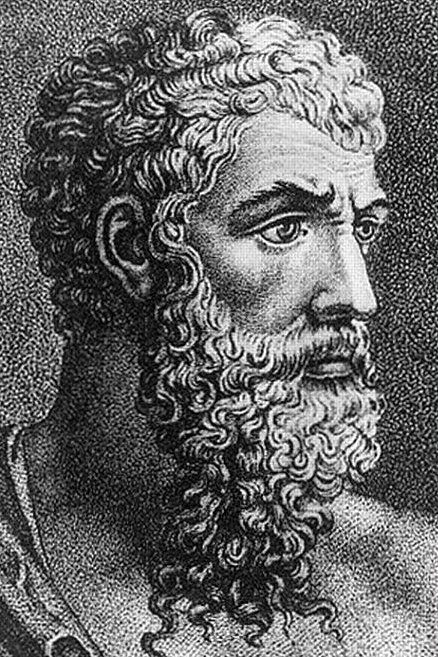
Aristophanes
Aristophanes (; ; ) was an Ancient Greek comic playwright from Athens. He wrote forty plays, of which eleven survive virtually complete. The majority of his surviving plays belong to the genre of comic drama known as Old Comedy and are considered its most valuable examples. Aristophanes's plays were performed at the religious festivals of Athens, mostly the City Dionysia and the Lenaia, and several of them won the first prize in their respective competitions.

Zoroaster
Zarathushtra Spitama, more commonly known as Zoroaster or Zarathustra, was an Iranian religious reformer who challenged the tenets of the contemporary Ancient Iranian religion, becoming the spiritual founder of Zoroastrianism. In the oldest Zoroastrian scriptures, the Gathas, which he is traditionally believed to have authored, he is described as a preacher and a poet-prophet. Some have claimed, with much scholarly controversy, to find his influence in Heraclitus, Plato, Pythagoras, and, perhaps less controversially, in the Abrahamic religions, including Judaism, Christianity, and Islam, parti

Hammurabi
Hammurabi (; ; Akkadian: ; ), also spelled Hammurapi, was the sixth Amorite king of the Old Babylonian Empire, reigning from to BC. He was preceded by his father, Sin-Muballit, who abdicated due to failing health. During his reign, he conquered the city-states of Larsa, Eshnunna, and Mari. He ousted Ishme-Dagan I, the king of Assyria, and forced his son Mut-Ashkur to pay tribute, bringing almost all of Mesopotamia under Babylonian rule.

Anaximander
Anaximander ( ; Anaximandros; ) was a pre-Socratic Greek philosopher who lived in Miletus, a city of Ionia (in modern-day Turkey). He belonged to the Milesian school and learned the teachings of his master Thales. He succeeded Thales and became the second master of that school, where he counted Anaximenes and, arguably, Pythagoras amongst his pupils.

Clement I
4th Pope of the Catholic Church

Nefertiti
Nefertiti (; ) was a queen of the 18th Dynasty of Ancient Egypt, the great royal wife of Pharaoh Akhenaten. Nefertiti and her husband were known for their radical overhaul of state religious policy, in which they promoted an exclusivist and possibly even monotheistic religion, Atenism, centered on the sun disc and its direct connection to the royal household. With her husband, she reigned at what was arguably the wealthiest period of ancient Egyptian history.

Matthew the Apostle
Christian evangelist and apostle (10-74)

Mary Magdalene
follower of Jesus (-100)

Leif Erikson
norse explorer (c. 970 – c. 1020)
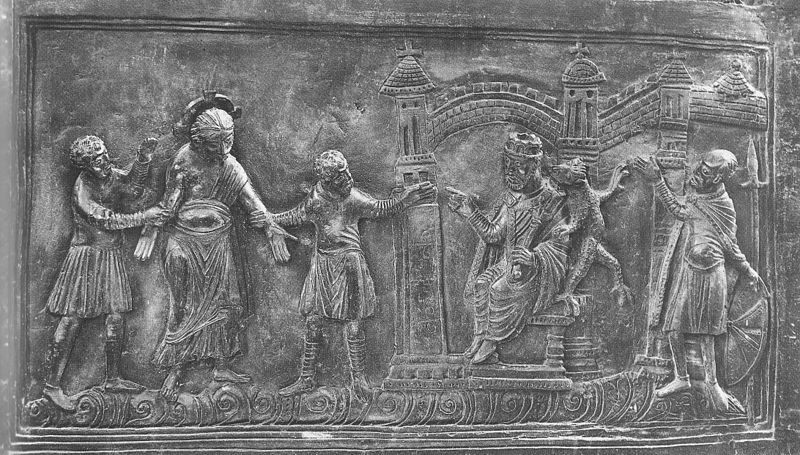
Pontius Pilatus
fifth Prefect of the Roman province of Judaea, from AD 26–36

Linus
2nd Pope of the Catholic Church

Ambrose
Ambrose of Milan (; 4 April 397), canonized as Saint Ambrose, was a theologian and statesman who served as Bishop of Milan from 374 to 397.

Judas Iscariot
notable as betrayer of Jesus, one of Jesus's original twelve disciples

Luke the Evangelist
one of the four evangelists

Mark the Evangelist
credited author of the Gospel of Mark and Christian saint; traditionally identified with John Mark (20-68)

Leo I
Pope from 440 to 461 (390–461)

St. James the Elder
one of the Twelve Apostles of Jesus
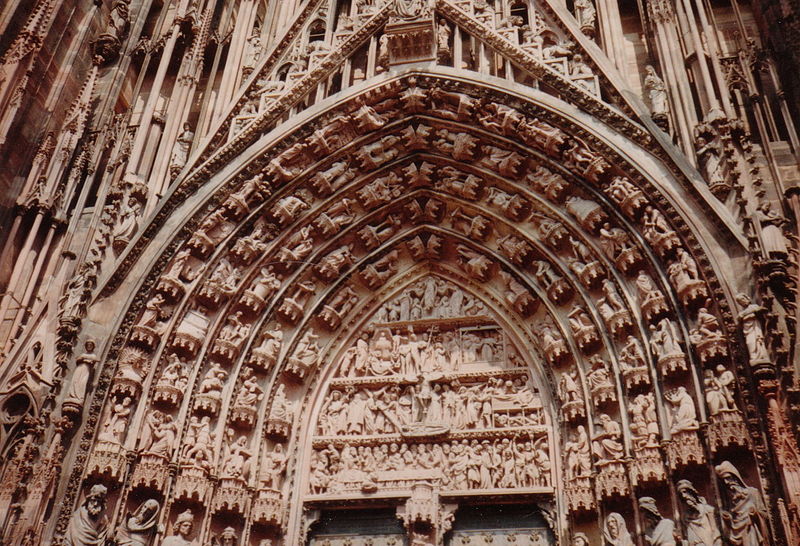
Albertus Magnus
German-Dominican friar and saint (c. 1200–1280)

Bartholomew the Apostle
Christian apostle and martyr
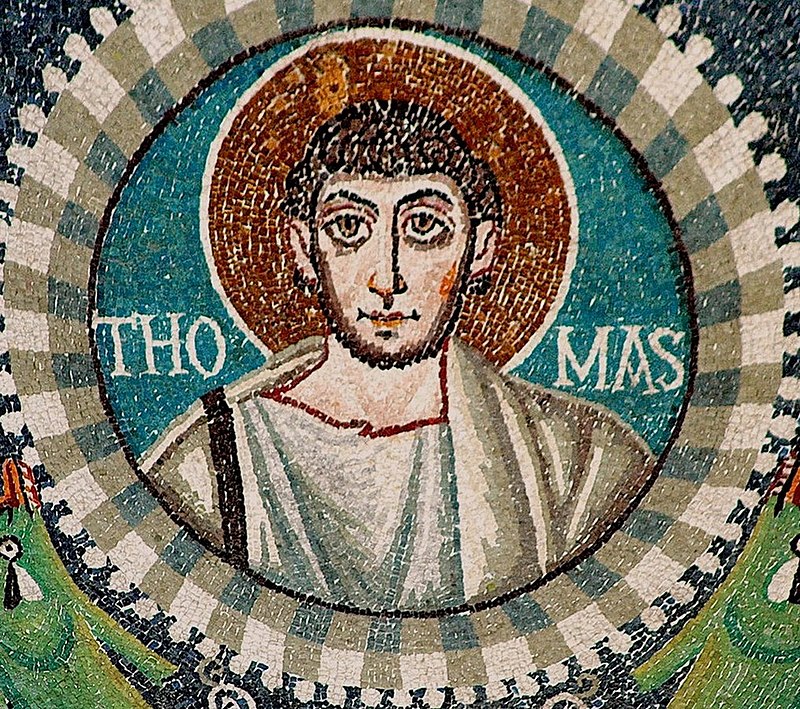
Thomas the Apostle
Apostle of Jesus Christ

Anacletus
3rd pope and bishop of Rome from c. 79 to c. 92 AD

Jude the Apostle
one of the Twelve Apostles of Jesus; traditionally identified with Jude the brother of Jesus

Sylvester I
33rd pope and saint (reigned 314-335)

William Wallace
Scottish knight and leading figure in the First War of Scottish Independence

Evaristus
5th Pope of the Catholic Church from c. 99 to c. 107

Alexander I
6th Pope of the Catholic Church from c. 107 to c. 115

Sixtus I
7th Pope of the Catholic Church

Gelasius I
Bishop of Rome from 492 to 496

Eleuterus
bishop of Rome from c. 174 to 189

Telesphorus
Bishop of Rome from c. 126 to c. 137

Honorius I
pope

Urban I
pope

Sixtus II
Bishop of Rome from 257 to 258

Hyginus
Pope and Bishop of Rome from c.138 to c.142

Pius I
pope

Julius I
Head of the Catholic Church from 337 to 352

Dionysius
Pope and bishop of Rome from 259 to 268

Gregory IV
Pope and bishop of Rome from 827 to 844

Victor I
Pope and Bishop of Rome from 189 to 199

John VIII
Head of the Catholic Church from 872 to 882

Anicetus
bishop of Rome from c. 157 to 168

Khufu
Khufu or Cheops was the second pharaoh of the Fourth Dynasty of Egypt, reigning during the 26th century BC in the early Old Kingdom period. Khufu succeeded his father Sneferu as king. He is generally accepted as having commissioned the Great Pyramid of Giza, one of the Seven Wonders of the Ancient World, but many other aspects of his reign are poorly documented. Khufu is also the main character noted in the Westcar Papyrus from the 13th dynasty.

Alaric I
King of the Visigoths

Callixtus I
Bishop of Rome from c. 218 to c. 223

Zephyrinus
Pope and Bishop of Rome from 199 to 217

Benedict V
pope

Pontian
pope

Simon the Zealot
apostle of Jesus

Soter
twelfth pope of the Catholic Church

Pelagius II
Pope and Bishop of Rome (r. 579-590)

Cornelius
pope Saint (251 to 253)

Felix IV
Pope and bishop of Rome from 526 to 530

John I
pope

Stephen I
Pope and Bishop of Rome from 254 to 257
Boniface II
pope and bishop of Rome from 530 to 532

Philip the Apostle
Christian saint and apostle

Mark
4th-century pope
Adrian III
pope