
File:Avicenna_Bust,_left_profile_(cropped).jpg · Wikimedia Commons · See Wikimedia Commons
Avicenna
Sign in to saveAlso known as Pūr-i Sīnā, Aboû Alî al-Hosain ibn Abdallâh ibn Sînâ, Abitianus, Ibn Sīnā, Alraaʼys Ibn sīnā
Ibn Sina ( – 22 June 1037), commonly known in the West as Avicenna ( ), was a preeminent philosopher and physician of the Muslim world. He was a seminal figure of the Islamic Golden Age, serving in the courts of various Iranian rulers, and was influential to medieval European medical and Scholastic thought.
OverviewAI-generated
Avicenna, born in 980 in Afshona and died on June 18, 1037, in Hamadan, was a male philosopher, poet, astronomer, and physician. He lived during the Islamic Golden Age and the Shi'a Century. His native language was Persian, and he also spoke Arabic. He practiced Islam and resided in Ray, Bukhara, Urgench, and Gorgan. He held the position of vizier.
His notable works include the *Canon of Medicine*, *The Book of Healing*, and *Al-isharat wa al-tanbihat*. He was influenced by Al-Biruni, Plotinus, Muhammad, and Galen. His students included Bahmanyār, Ibn Abi Sadiq, and Ali ibn Yusuf al-Ilaqi. He is present in *The Divine Comedy*. He is buried in the Avicenna Mausoleum.
Synthesized by Vinony from 32 facts across 5 sources: Wikidata, Open Library, MusicBrainz, Last.fm, Europeana Sparql. Generated from structured data (not the Wikipedia text) and checked against those facts — may still contain errors.
Person · Open Library
- Born
- 980
- Died
- 1037
- Works
- 600
Top works
- الشفاء
- ظفرنامه
- Risālah fī amr al-hindibāʾ
- كتاب القانون في الطب
- Avicenna's conception of miracles
via Open Library + Wikidata
Music · MusicBrainz
- Type
- Group
- Origin
- Estonia
- Active from
- 1985
- Active to
- 1990
Discography
via MusicBrainz · CC0
Listeners · Last.fm
- Listeners
- 33
- Total plays
- 64
Abū ʿAlī al-Ḥusayn ibn ʿAbd Allāh ibn Sīnā(Persian پورسينا Pur-e Sina [ˈpuːre ˈsiːnɑː] "son of Sina"; c. 980, Afshana near Bukhara– 1037, Hamadan, Iran), commonly known as Ibn Sīnā or by his Latinized name Avicenna, was a Persian polymath, who wrote almost 450 treatises on a wide range of subjects, of which around 240 have survived. In particular, 150 of his surviving treatises concentrate on philosophy and 40 of them concentrate on medicine. <a href="https://www.last.fm/music/Avicenna">Read more on Last.fm</a>
Key facts
- Philosopher.name
- Avicenna
- Philosopher.native_name
- ابن سینا
- Philosopher.native_name_lang
- ar
- Philosopher.image
- Avicenna Bust, left profile (cropped).jpg
- Philosopher.caption
- Modern portrait of Ibn Sina, National Library of Medicine (1952)
- Philosopher.monuments
- Avicenna Mausoleum
- Philosopher.birth_place
- Afshana, Transoxiana, Samanid Empire
- Philosopher.death_place
- Hamadan, Kakuyid Emirate
- Philosopher.region
- Middle Eastern philosophy Persian philosophy
- Philosopher.era
- Islamic Golden Age
- Philosopher.main_interests
- Philosophy and logic Kalām (Islamic theology)
- Philosopher.notable_works
- The Book of Healing The Canon of Medicine
- Philosopher.school_tradition
- Aristotelianism, Avicennism
via Wikipedia infobox
Wikidata facts
- Instance of
- human
- Given name
- Hussein
- Gender
- male
- Place of birth
- Afshona
- Place of death
- Hamadan
- Occupation
- polymath
- Position held
- vizier
- Languages spoken
- Persian
- Native language
- Persian
- Religion
- Islam
- Notable work
- Al-isharat wa al-tanbihat
- Field of work
- mechanics
- Image
- Pursina.jpg
- Residence
- Isfahan
Show 16 more facts
- Commons category
- Avicenna
- date of birth
- 0980-00-00
- date of death
- 1037-00-00
- Commons Creator page
- Avicenna
- topic's main category
- Category:Avicenna
- influenced by
- Farabi
- time period
- Shi'a Century
- on focus list of Wikimedia project
- Wikipedia:Vital articles/Level/4
- place of burial
- Avicenna Mausoleum
- present in work
- The Divine Comedy
- name
- أبو علي الحسين بن عبد الله بن الحسن بن علي بن سينا
- name in native language
- الحسين بن عبد الله بن سينا
- student
- Ali ibn Yusuf al-Ilaqi
- maintained by WikiProject
- WikiProject Mathematics
- birth name
- أبو علي الحسين بن عبد الله بن الحسن بن علي بن سينا
- P13311
- cannabis
Sources (9)
via Wikidata · CC0
Works in European collections
36 objects attributed to Avicenna, held across European museums, libraries & archives · via Europeana
“mr hšr”bw“ly”lḥsyn kn“”br' llh bn syny h'l šbḥ r'wy lw kpy m'lḥ ṭb'w whplgt hṭbtw....

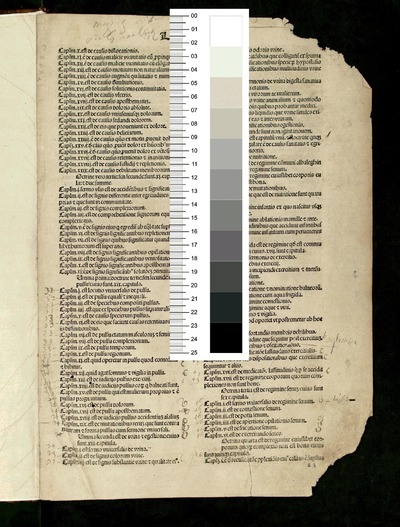
Artis chemicae principles Avicenna, atque Geber, hoc volumine continentur, quorum alter nunquam haceld in lucem prodiit, alter vero vetustis exemplaribus collatus...
[Tratados varios] [Manuscrito]

Abu Ali Alsheich Ibn Sina vulgo Avicenna Canon medicinae cum aliis opusculis
Index in Avicennae libros nvper Venetiis editos qui sane nouo quodam ordine commoditatis et vtilitatis pleno, adeo contextus est, vt nihil, melius desiderari queat [...] Iulio Palamede Adriensi medico auctore

Pars Avicennae

Avicenna

Pars Avicennae

Avicennae Canon

Avicenna
Ant. Mariae Betti Mutinensis, philosophi, ac medici doctissimi ... In IIII. fen primi Canonis Avic. Commentarius doctissimus [Texto impreso]
[Miscellaneous of Moorish Texts on Magic and Medicine] [Manuscript]
Al-ururūzaAl-[ fAl-al-Al-ibb] [Manuscript]

Liber Canonis De Medicinis cordialibus Cantica De Remouendis nocumentis in regimine sanitatis De Syrupo acetoso. Quorum priores tres, primo quidem Andreas Alpago ... emendationibus, ac Indice nominum Arabicorum ... ornauerat. Postae vero Benedictus Rini lucubrationibus decoraverat ... His accepit Vita Anicenne ex Abu Ubaid Abd-al-Wahid ibn Muhammad al Juzjani a Nicolas Massa sumpta et latine scripta.

Libri in re medica omnes, qui hactenus ad nos peruenere ... nouissime post aliorum omnium operam a Joanne Paulo Mongio et Joanne Costaeo recognita ... Adiecti etiam postremo loco sunt Indices quatuor Duoquidem veluti Arabicae linguae promptuarua, antiquum unum a Gerardo Carmonensi, ut videtur: alterum vero postea a (Andrea Alpago) Bellunensi editum etc.

Liber Canonis, De Medicinis cordialibus, et cantica. Cum castigationibus Andreae Alpago, una cum eiusdem nominum arabicorum interpretatione (etc.)

Liber secundus de canone canonis

Untitled

Untitled

Untitled
Untitled

Untitled

Untitled

Untitled

Untitled

Untitled
Untitled

Untitled

Untitled
Untitled

Untitled
Untitled
Untitled
Untitled
Untitled
Untitled
~51 min read
Encyclopedic overview
51 sectionsContents
- Name
- Historical context
- Biography
- Early life and education
- Career
- In Bukhara and Gurganj
- In Gorgan
- In Ray and Hamadan
- In Isfahan
- Philosophy
- Metaphysical doctrine
- Impossibility, contingency, necessity
- Differentia
- Reception
- Argument for God's existence
- Al-Biruni correspondence
- Theology
- Thought experiments
- Principal works
- ''The Canon of Medicine''
- ''Liber Primus Naturalium''
- ''The Book of Healing''
- Earth sciences
- Philosophy of science
- Logic
- Physics
- Psychology
- Other contributions
- Astronomy and astrology
- Chemistry
- Poetry
- Legacy
- Classical Islamic civilization
- Medieval and Renaissance Europe
- Modern reception
- In popular culture
- List of works
- Persian works
- See also
- Namesakes of Ibn Sina
- References
- Citations
- Notes
- Sources
- Further reading
- Encyclopedic articles
- Primary literature
- Secondary literature
- Medicine
- Philosophy
- External links
Ibn Sina ( – 22 June 1037), commonly known in the West as Avicenna ( ), was a preeminent philosopher and physician of the Muslim world. He was a seminal figure of the Islamic Golden Age, serving in the courts of various Iranian rulers, and was influential to medieval European medical and Scholastic thought.
Often described as the father of early modern medicine, Avicenna's most famous works are The Book of Healing, a philosophical and scientific encyclopedia, and The Canon of Medicine, a medical encyclopedia that became a standard medical text at many medieval European universities and remained in use as late as 1650.
Excerpted from Wikipedia’s “Avicenna” article, available under the CC BY-SA 4.0 licence.
Gallery (384)
Available in 162 languages
- Español
- Français
- Deutsch
- 中文
- 日本語
- Русский
- Português
- Italiano
- العربية
- हिन्दी
- abstract
- Afrikaans
- Albanian
- Albanian
- Amharic
- Aragonese
- Armenian
- Assamese
Show 143 more
- Asturian
- azb
- Azerbaijani
- Bahasa Indonesia
- Bangla
- Banjar
- Bashkir
- Basque
- bat_smg
- Bavarian
- be_x_old
- Belarusian
- Betawi
- Bhojpuri
- Bislama
- Bosnian
- Breton
- btm
- Bulgarian
- Buriat
- Burmese
- Catalan
- Cebuano
- Central Kurdish
- Chechen
- Chuvash
- Cornish
- Crimean Tatar
- Croatian
- Czech
- Danish
- Egyptian Arabic
- Erzya
- Esperanto
- Estonian
- Extremaduran
- Fiji Hindi
- Filipino
- Finnish
- Fula
- Galician
- Gan Chinese
- gcr
- Georgian
- Gilaki
- Gorontalo
- gpe
- Greek
- Guarani
- Haitian Creole
- Hausa
- Hebrew
- Hungarian
- Icelandic
- Iloko
- Ingush
- Interlingua
- Irish
- Jamaican Creole English
- Javanese
- Kabyle
- Kannada
- Kanuri
- Kara-Kalpak
- Kashmiri
- Kazakh
- kbp
- Kurdish
- Kyrgyz
- Latin
- Latvian
- Limburgish
- Lithuanian
- lld
- Lombard
- Low German
- Macedonian
- Madurese
- Malagasy
- Malay
- Malayalam
- Marathi
- Mazanderani
- Minangkabau
- Mingrelian
- Mirandese
- Mongolian
- Nederlands
- Newari
- Northern Frisian
- Norwegian
- Norwegian Nynorsk
- Occitan
- Pashto
- Piedmontese
- Polski
- Punjabi
- Romanian
- Rusyn
- Sanskrit
- Santali
- Serbian
- Serbian (Latin)
- simple
- Sindhi
- skr
- Slovak
- Slovenian
- Somali
- Sundanese
- Svenska
- Swahili
- syl
- Tajik
- Talysh
- Tamil
- Tatar
- Telugu
- Tiếng Việt
- Türkçe
- Turkmen
- Tuvinian
- Ukrainian
- Urdu
- Uyghur
- Uzbek
- Veps
- Waray
- Welsh
- Western Frisian
- Western Panjabi
- Wu Chinese
- Yakut
- Yiddish
- Yoruba
- Zaza
- zh_classical
- zh_min_nan
- zh_yue
- Zhuang
- فارسی
- ไทย
- 한국어
via Wikidata sitelinks · CC0