Also known as Affghanistan, Afghania, Affghanisthan, Affghaunistan, Afghanisthan, Afghaunistan, Afghaunistaun
亞洲國家
Afghanistan is a landlocked country in Central and South Asia bordered by Pakistan, Iran, Turkmenistan, Uzbekistan, Tajikistan, and China, with a predominantly mountainous landscape and a capital in Kabul. It matters as a strategically located crossroads between major regions and is home to an estimated 35-50 million people.
AI-generated from the Wikipedia summary — may contain errors.
via Open-Meteo
thumb|View of [[Herat from a hill in 2009]] thumb|[[Band-e Amir National Park in Bamyan province]]
Afghanistan has been in the news since the late 1970s for all the wrong reasons. While visiting has not been advisable for many years, it has much to offer the intrepid traveller. However, even the more adventurous tourists should consider looking elsewhere for thrill-seeking.
Border crossings may get closed on short notice. Regulations on entry and exit may change without notice.
thumb|Long distance coach in [[Mazar-i-Sharif in 2011]] thumb|Colourful Afghan truck
To visit different places and objects in the country you need to buy permits. These are both for your security (checked at police checkpoints, need to register them in local tourist bureaus) and to support the country. In Kabul these permits are issued by Afghan Tour (Abdullhaq crossroad, {{phone|+93 20 210 6837]) and cost 1000 Afs (2025) for each area you want. Getting these permits can take considerable time, and the officers demand you to have a "translator" (kind of guide which helps you with language and getting around). You may want to find a local travel agency or a guide to help you with this. They would also give you practical information, safety tips and take you on a tour. To find an agency or a guide, search the Internet or Facebook at home, or ask at your hotel when you come.
While Taliban repression has put an almost full stop to tourism in Afghanistan, the lack of visitors has nothing to do with the country's sights. This is a land full of mystical attractions, telling tales of ancient times and offering beautiful Islamic architecture, medieval city quarters and unexpectedly stunning nature.
Several sites are listed on UNESCO's World Heritage List. Most famous of course, were the ancient Buddhist sculptures of Bamiyan. The Taliban destroyed most of the 6th century statues in a cultural crime that outraged the world. What remains in the Bamiyan valley is the silencing and still worthwhile sight of the empty niches. The salvaged pieces of what were once the largest statues of their kind in the world continue to provide a fascinating insight in the history of this place. Band-e Amir National Park, with its six interlinked lakes, is perhaps the finest natural attraction. At an altitude of 2900 meters, the blue waters in this protected natural area almost seem unreal against the sandy mountain sides that surround them.
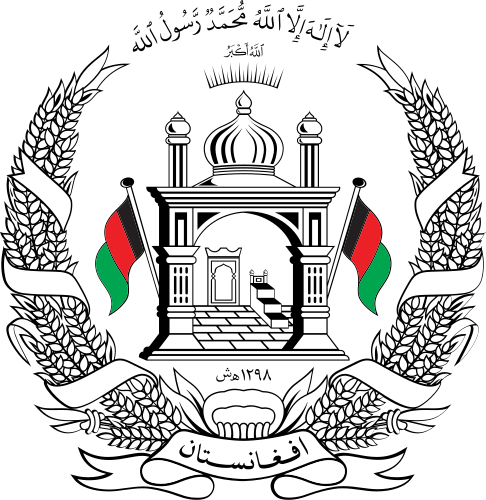
阿富汗(普什图语/达里语:افغانستان,Afġānistān),又譯為阿富汗斯坦,是位于亚洲中南部的内陆国家,坐落在亚洲的心脏地区。根据地理分区的不同定义,阿富汗被认为处在南亚、中亚、西亚、中东。阿富汗是擁有多样文化的国家,因地理上位于东方与西方的交界點,古时曾是重要的贸易中心和游牧民族的迁居途徑。其拥有重要的地缘战略位置,连接着亚欧大陆的各个主要国家,阿富汗与大部分毗邻的国家有着宗教上、语言上相当程度的关联。阿富汗的北部和土库曼斯坦、乌兹别克斯坦、塔吉克斯坦接壤,东部与中華人民共和國接壤,南部与巴基斯坦接壤,西部与伊朗接壤。 1919年8月19日,在第三次英國-阿富汗戰爭後,末代阿富汗埃米尔阿曼諾拉汗宣告阿富汗的獨立主權。1973年,巴拉克宰王朝統治的阿富汗王國遭不流血政變推翻,成立阿富汗共和國。之後再歷經軍事政變、蘇聯入侵和軍閥內戰,先後成立了阿富汗民主共和國、阿富汗伊斯蘭國和阿富汗伊斯蘭酋長國(也称塔利班政權)。2001年,阿富汗伊斯蘭酋長國因阿富汗戰爭倒台。2004年1月26日,美国扶持的阿富汗伊斯兰共和国成立。2021年8月美軍宣布撤出阿富汗後,塔利班迅速擊潰政府軍佔領絕大多數阿富汗領土,8月15日攻入喀布爾後總統加尼逃到国外;8月17日阿富汗第一副总统阿姆鲁拉·萨利赫宣布依据阿富汗宪法就任代理总统,與國防部長比斯米拉·汗·穆罕默迪、阿富汗駐塔吉克斯坦大使阿格巴尔組成潘傑希爾抵抗勢力;阿富汗伊斯蘭共和國的阿富汗常駐聯合國代表古拉姆·伊薩克扎伊(英語:Ghulam M. Isaczai)呼籲聯合國不要承認以武力奪權的政權。 2021年8月19日下午,塔利班取得勝利後,正式宣布重建「阿富汗伊斯蘭酋長國」,定8月19日為國慶日並確定新國旗,將組建政教合一的伊斯蘭酋长国政府,並向所有人保證將為公民和外交團體提供安全保障。
Abstract from DBpedia / Wikipedia · CC BY-SA
31 mapped locations
via REST Countries
via World Bank Open Data · CC BY 4.0
via Wikimedia Pageviews API
via Wikipedia infobox
via PubMed
via Wikidata · CC0
Excellent mosques are to be found all around, with particularly grand examples in Mazar-i-Sharif and Herat. The Minaret of Jam, just north of Herat, is UNESCO listed.
thumb|Some of the popular Afghan dishes, from left to right: 1. Lamb grilled kebab (seekh kebob); 2. Afghan palao and salad; 3. Tandoori chicken; and 4. Mantu (dumplings). Afghan cuisine includes a blend of Central, Eastern, South Asian, and Middle Eastern cuisines. Nearly all the dishes are non-spicy.
There are three main types of Afghan bread:
Naan — Literally "bread". Thin, long and oval shaped, its mainly a white/whole wheat blend. Topped with poppy seeds, sesame seeds, nigella seeds, or some combination of these. Upon request, customers may be able to get all white flour and a helping of oil, which makes it rich and delicious. Obi Non — Uzbek-style bread. Shaped like a disc and thicker than naan. Usually made with white flour. Lavash — Very thin bread. Similar to the lavash elsewhere. Usually used as plating for meats and stews.
Rice dishes are the "king" of all foods in Afghanistan. The Afghans have certainly taken much time and effort in creating their rice dishes, as they are considered the best part of any meal. Wealthier families will eat one rice dish per day. The Afghan royalty spent much time on rice preparation and invention as evidenced in the sheer number of rice dishes in their cookbooks. Weddings and family gatherings must feature several rice dishes and certainly reputations can be made in the realm of rice preparation.
Kabuli Pulao (or Kabuli Palaw, Qabili Palaw, Qabili Palau or simply Palau) — An Afghan rice dish consisting of steamed rice mixed with …
Since Afghanistan is an Islamic country, alcohol consumption is illegal.
Hotels and guesthouses are available in all major cities, and while some may not meet international standards they are usually friendly and reliable.
thumb|150px|A marked minefield – if you are at the red-end side, you are in serious trouble.
Afghanistan is a volatile and dangerous country. Non-essential travel is strongly discouraged. Banditry is somewhat of an ancient tradition in many parts of the country, including in the northern areas. Foreigners may be targets for kidnapping.
The Islamic State in Khorasan Province (IS-KP) is an anti-Taliban and Islamic extremist militant group that has an active presence in the country. It has strongly anti-Western and anti-Chinese views far exceeding those of the Taliban, and often targets hotels and other areas frequented by foreigners, though Taliban security operations have greatly reduced the frequency of these attacks in the mid-2020s.
Landmines and other UXO (Unexploded Ordnance) remain a problem across the country, so plan to stick to well-worn paths, avoid red and white painted rocks, and do not touch or move any suspicious-looking item. Hundreds of people are injured or killed every year in accidents due to landmines and UXO.
Insects and snakes are also something to be careful of, and the mountainous country has many vicious tiny creatures such as scorpions, spiders, centipedes, and bees.
In some areas, altitude sickness is a significant risk.
Earthquakes are common. Summers are hot and winters cold. Traveling around the country becomes difficult in winter as snow blocks roads; avalanches are a risk factor.
Since the Taliban takeover, it is illegal for women to sho…
Afghanistan has more than its share of health issues, and it is pretty much essential to consult a travel doctor ahead of your trip about vaccinations and health risks. Travellers' diarrhea will afflict most visitors at least occasionally, and other food-related illnesses are moderately common. Respiratory diseases such as tuberculosis are common, and malaria is a risk in many parts of the country. Meningitis, hepatitis, cholera and rabies are major health issues, especially in the countryside with lacking health infrastructure.
Afghanistan is one of the dustiest countries in the world, and you should be prepared to be covered in it and breathing it for most of your stay, even in the major cities. Consider bringing facemasks. Pollution from diesel engines can also make life unpleasant.
Flies are notoriously heinous here, likely due to poor sanitation. Winter brings some relief, but they come back full-strength when spring arrives.
Food should be approached with a discerning eye, as hygiene standards can often be lacking. Hot, freshly cooked food is generally safer. Bottled water is also advised, unless you have your own purification system.
Do not approach any animals, especially dogs and cats and preferably take a rabies shot before going to the country, it's one of the most rabies-affected countries in the world and finding medical attention and medications will be hard – even with the shot you need to get urgent medical treatment if you get a scratch from an infected a…
thumb|250px|Inside the Maulana Jalaludin Cultural Park in the northern city of [[Mazar-e-Sharif]]
Despite all that they have been through since 1979, Afghans in general are welcoming and hospitable to foreign visitors. Hospitality is a cornerstone of Afghan culture, and it is very likely that you'll be treated as a celebrity by the locals.
With the regime change in 2021, a large proportion of the population, especially women, are very afraid of what will be in the future. Those who worked for the government, for foreign organisations, for human rights or for the media, or held any high profile positions may be afraid for their lives. Tread extremely lightly.
Travel guide from Wikivoyage (CC BY-SA 4.0)
via Wikidata sitelinks · CC0
Discovered by embedding cosine similarity (sentence-transformers MiniLM, 384-dim).