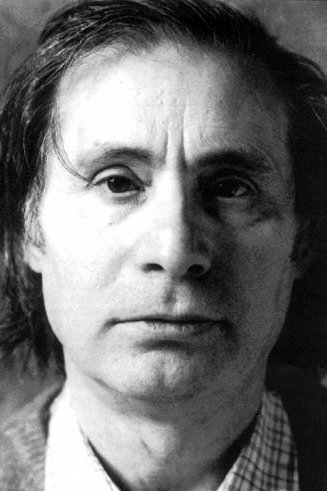
Profile via TMDB · Courtesy of TMDB
Alfred Schnittke
Sign in to saveAlso known as Alfred Garrievich Schnittke, Alfred Garievich Shnitke, Alfred Schnitke, A. Shnitke, A. Shnittke, Alfred Schmittke, Arthur Schnittke, Alfres Schnittke
Soviet-born Russian composer (1934–1998)
OverviewAI-generated
Alfred Schnittke (1934–1998) was a male composer, pianist, and music educator who held citizenship in the Soviet Union and Russia. He was educated at the Moscow Conservatory, where he also served as a university teacher. His musical output spanned 20th-century classical music, opera, symphony, and art music, with notable works including Symphony No. 0 and Symphony No. 9. He performed on the piano and spoke Russian and German.
Schnittke received several awards, including the Praemium Imperiale, the State Prize of the Russian Federation, the Austrian Decoration for Science and Art, and the title of Honored art worker of the Russian Soviet Federative Socialist Republic. He was a member of the Academy of Arts of the GDR, the Academy of Arts in Berlin, and the Bavarian Academy of Fine Arts. His recordings were released by ECM Records.
Born in Engels, he died in Hamburg from a stroke. He is buried at Novodevichy Cemetery. His work is associated with contemporary classical, classical, and avant-garde genres.
Synthesized by Vinony from 31 facts across 4 sources: Wikidata, MusicBrainz, Last.fm, TMDb. Generated from structured data (not the Wikipedia text) and checked against those facts — may still contain errors.
Film & TV
Engels, ASSR nemtsev Povolzhya, RSFSR, USSR [now Engelsskiy rayon, Saratovskaya oblast, Russia]
Alfred Garrievich Schnittke (24 November 1934 – 3 August 1998) was a Soviet composer. Among the most performed and recorded composers of late 20th-century classical music, he is described by musicologist Ivan Moody as a "composer who was concerned in his music to depict the moral and spiritual struggles of contemporary man in [...] depth and detail."
Known for
- I Am a German Composer from Russia — Self1990
via TMDB
Music · MusicBrainz
- Type
- Person
- Gender
- Male
- Country
- Soviet Union
- Active from
- 1934
- Active to
- 1998
Discography
- Concerto Grosso I / Concerto for Oboe and Harp / Concerto for Piano and Strings1987
- Concerto grosso no. 4 (Symphony no. 5) / Pianissimo1988
- In Memoriam / Viola Concerto1989
- Ritual / (K)ein Sommernachtstraum / Passacaglia / Seid nüchtern und wachet (Faust Cantata)1989
- Концерт для хора1989
- Cello Concerto / Stille musik / Cello Sonata1990
- Concerto for Choir / Two Small Pieces for Organ1990
- Concerto Grosso no. 1 / Concerto for Cello and Orchestra1990
- Concerto grosso no. 1 / Quasi una sonata / Moz-Art à la Haydn1990
- Concerto Grosso no. 1 / Quasi una sonata / Moz-Art à la Haydn / A Paganini1990
via MusicBrainz · CC0
Listeners · Last.fm
- Listeners
- 135,045
- Total plays
- 1,414,759
Tags
Alfred Garrievich Schnittke (Russian: Альфред Гарриевич Шнитке; born November 24, 1934 in Engels, USSR; died August 3, 1998 in Hamburg) was a soviet composer, pianist, theoretician of music and educator. His music is derived from various traditions: Russian (Dmitri Shostakovich, Igor Stravinsky), Germanic (Gustav Mahler, Alban Berg), and American (Charles Ives). On his mother’s side he was of Volga German and Roman Catholic extraction, on his father’s side he was German-Jewish. <a href="https:
Key facts
- Born
- Alfred Garrievich Schnittke , ( 1934-11-24 ) 24 November 1934, Engels , Russian SFSR , Soviet Union
- Died
- 3 August 1998 (1998-08-03) (aged 63), Hamburg , Germany
- Citizenship
- Soviet Union , Germany
- Works
- List of compositions
via Wikipedia infobox
Wikidata facts
- Instance of
- human
- Given name
- Alfred
- Gender
- male
- Citizenship
- Russia
- Place of birth
- Engels
- Place of death
- Hamburg
- Occupation
- musician
- Educated at
- Moscow Conservatory
- Employer
- Moscow Conservatory
- Languages spoken
- German
- Notable work
- Symphony No. 9
- Genre
- art music
- Instrument
- piano
- Record label
- ECM Records
- Official website
- www.schnittke.org
- Image
- С Альфредом Шнитке (cropped).jpg
Show 10 more facts
- place of burial
- Novodevichy Cemetery
- Commons category
- Alfred Schnittke
- date of birth
- 1934-11-24
- date of death
- 1998-08-03
- member of
- Bavarian Academy of Fine Arts
- name in native language
- Alfred Schnittke
- cause of death
- stroke
- manner of death
- natural causes
- related category
- Category:Compositions by Alfred Schnittke
- P12674
- Tapuiasaurus
via Wikidata · CC0
~11 min read
Encyclopedic overview
Alfred Garrievich Schnittke (24 November 1934 – 3 August 1998) was a Soviet and Russian composer. Among the most performed and recorded composers of late 20th-century classical music, he is described by musicologist Ivan Moody as a "composer who was concerned in his music to depict the moral and spiritual struggles of contemporary man in [...] depth and detail."
Schnittke's early music shows the strong influence of Dmitri Shostakovich. He developed a polystylistic technique in works such as the epic Symphony No. 1 (1969–1972) and his first concerto grosso (1977). In the 1980s, Schnittke's music began to become more widely known abroad with the publication of his second (1980) and third (1983) string quartets and the String Trio (1985); the ballet Peer Gynt (1985–1987); the third (1981), fourth (1984), and fifth (1988) symphonies; and the viola concerto (1985) and first cello concerto (1985–1986). As his health deteriorated, Schnittke's music started to abandon much of the extroversion of his polystylism and retreated into a more withdrawn, bleak style.
Excerpted from Wikipedia’s “Alfred Schnittke” article, available under the CC BY-SA 4.0 licence.