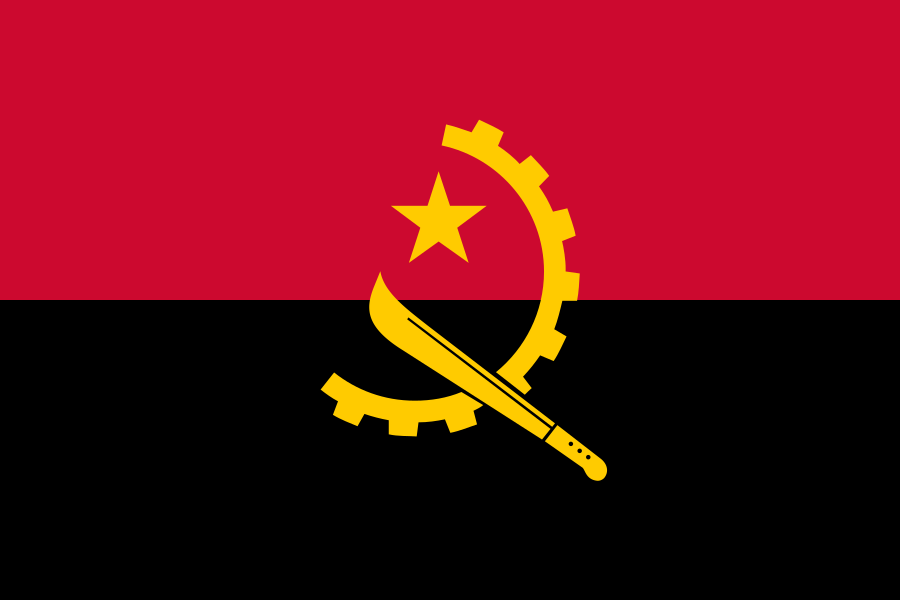
Angola is a large Southern African country on the Atlantic coast that is the second-largest Portuguese-speaking nation in the world by area and population. It is strategically located between Namibia, the Democratic Republic of the Congo, and Zambia, with its capital in the coastal city of Luanda.
AI-generated from the Wikipedia summary — may contain errors.
via Open-Meteo
The people of Angola are stoics. They have a deep understanding of patience, and avoid blaming the difficulties the country faces on the fact that there was war. In fact, Angolans behave as if there was no war although it is deeply rooted in every Angolan. Music is the heart and soul of Angolans, it can be heard anywhere and they use anything as an excuse to party. The country has a wide range of music, mainly Kuduro, Kizomba, Semba, and Tarrachinha, the latter being more sensual than all the others. In all, it is safe to say that Angolans are fun and loving people with a thirst for more of what life has to give.
Since the end of the brutal, horrific Angolan Civil War in 2002, the Angolan government is keen on improving the country's international image and opening up Angola to the world. Tourism is still in its nascent stages and it will take some time for things to get back to normal. The country's national park system was devastated during the war, with rampant poaching leaving Angola with relatively scant megafauna compared to its African peers.
The country's tourism industry has been steadily growing and attracts 500,000–600,000 people each year. Angola shares borders with Namibia, Zambia, and the two Congos.
thumb|375px|A map showing the visa requirements of Angola, with countries in green having visa-free access. The ones in light green - visa-free for up to 30 days per entry and 90 days per year
thumb|Ruacana Falls In Luanda: the Mussulo island for clean tropical beaches and water sports, the Benfica Market for Kwanza River.
Eco Tur Angola do various bespoke no tours Angola including Kissama with specialist game viewing vehicles.
In Benguela: Baia Azul for beautiful desert beaches. Art deco architecture in Benguela. Lobito City for the Restinga Peninsula and ice cold draught Cuca beer, the Benguela Rail road, and fantastic scenery.
In Kwanza Sul - Cubal Canyon, Conde Hot springs and Cachoeiras and Binga Waterfalls, with the Cambambe Dam on River Kwanza. Waku Kungo plains has fantastic scenery.
In Malange - Kalandula Waterfalls and Pungo n'Dongo Black Stones.
In Huila - Serra de Leba, Tunbda Vala Gorge, Mumuila tribespeople, fantastic scenery.
安哥拉共和國(葡萄牙語:República de Angola),通稱安哥拉(葡萄牙語:Angola),是位于非洲西南部的國家,西濱大西洋,北及東北鄰剛果民主共和國,南鄰納米比亞,東南鄰尚比亞,另有一塊外飛地卡賓達省,位於剛果共和國和剛果民主共和國之間。首都是罗安达。 安哥拉擁有豐富的礦產和石油儲量,其是世界上經濟增長最快的國家之一,尤其是內戰結束以來; 然而,經濟增長高度不平衡,國家的大部分財富集中在極少數人口中,並且高度集中在中國和美國。大多數安哥拉人的生活水平仍然很低; 預期壽命是世界上最低的,而嬰兒死亡率是最高的。 自2017年以來,若昂·洛倫索政府將打擊腐敗作為其旗艦,以至於上屆政府的許多人都被判刑入獄,或者正在等待審判。 雖然外國外交官承認這一努力是合法的,但一些懷疑論者認為這些行動是出於政治動機。 安哥拉是聯合國、歐佩克、非洲聯盟、葡萄牙語國家共同體和南部非洲發展共同體的成員。截至2021年,安哥拉人口估計為3287萬,安哥拉是多元文化和多民族體系的國家,安哥拉文化反映了幾個世紀以來葡萄牙的影響,即葡萄牙語和天主教會的優勢,以及各種土著習俗和傳統。
Abstract from DBpedia / Wikipedia · CC BY-SA
60 mapped locations
Discovered by embedding cosine similarity (sentence-transformers MiniLM, 384-dim).
via REST Countries
via World Bank Open Data · CC BY 4.0
via Wikimedia Pageviews API
via Wikipedia infobox
via PubMed
via Wikidata · CC0
In Namibe - Arco Lagoon, beaches and a desert, and Mucubais tribespeople.
In Huambo - City Tours, Alto Hama hot springs, and fantastic scenery.
In Cunene - Himba tribes people, Ruacana Falls, and fantastic scenery.
thumb|Muamba Generally, dining out is not very easy in Angola, since even in Luanda restaurant food is expensive and many of the less well equipped restaurants have poor hygiene. Nonetheless, Angolan cuisine is varied and tasty, with local dishes based mainly on fish, cassava products and spicy stews.
Angolan seafood is abundant and very good, and the Angolan coast is a special place to eat fresh lobster right off the fisherman's boat.
Tropical fruit in Angola is also a treat because artisan production has maintained organic methods so that rich fruit flavours, unusual to the Western palate accustomed to industrially produced tropical fruits, predominate. If, however, you are situated in Luanda and need to dine, it is recommended that you get to Ilha de Luanda, where beach-restaurants (of varying price-classes from very exclusive to rather informal) can serve most foreign needs. Restaurants in Luanda grew in numbers and quality after the 2002 ceasefire brought stability and significant investment to the country.
Be careful: when eating out, do not drink tap water, ask for bottled mineral water instead.
Not all restaurants accept US dollars in cash; ask before ordering. Credit cards will not be accepted at most restaurants, although that is rapidly changing.
World class hotels include the Tropico Hotel, the Alvalade Hotel, Le President Meridien Hotel, the Continental Hotel, the Skyna Hotel, the Epic Sana hotel, and the Palm Beach Hotel, among others.
thumb|Angolan police — reputedly not OK to photograph You should consider hiring a trusted and knowledgeable local guide for travel within Angola, although if you follow some basic rules then travelling in Angola isn't dangerous. Travelling after dark and alone is never a good idea. If possible, join with several cars of the same make and model because of the possible need of spare parts.
Never step beyond the red and white HALO Trust posts. These denote mine fields. In fact, beware of anything surrounded by any kind of red stones or similar markers.
In Angola, it is mandatory to have a form of identification on you at all times. What this means: carrying a certified copy of your passport or your national identification card.
State-of-the-art medical care is virtually non-existent in Angola; the country has one of the lowest average life expectancies in the world, the country is ideal for many tropical diseases, and a significant portion of Angolans are too poor to afford healthcare.
Malaria is a leading cause of death in the country. Regularly use insect repellent to lower your chances of contracting malaria, and consider draping a mosquito net (if you have one) over your bed. It's strongly recommended to take malaria prophylaxis when travelling to Angola.
Do not drink tap water. There is no working water purification system in Angola. Stick to bottled water.
Yellow fever is prevalent in the country. You are normally required to get vaccinated against the disease before applying for an Angolan visa and/or travelling to the country.
Dengue fever is another major health threat.
The country's HIV/AIDS prevalence rate among adults is 1.80%. Although it is low compared to other African nations, you should always be aware of your surroundings.
Since Angola is rarely visited by tourists, you may attract unwanted attention from the locals. This indicates curiosity rather than hostility.
As is the case throughout Africa, it is obligatory to show respect for elders (including authority figures) as they're generally viewed as wiser and more experienced. When visiting an Angolan home, it is customary to greet the oldest person first. If you're waiting to enter a building, allow someone older to go in first. If you're on public transportation, give up your seat for someone older than you.
Angolans are extremely hospitable and they consider it impolite to not give someone a good welcome. Therefore, you can expect to be treated with immense respect as a visitor. If you've been invited for a meal at an Angolan person's home, bear in mind that the oldest person in the house starts eating first.
Angolans are attentive listeners. They consider it extremely rude to interrupt someone's conversation.
If travelling to rural areas, take some time to greet the local soba (chief with government-backed authority). Words of kindness will allow you to enjoy your journey in peace.
Angolans are generally amiable, and it is important to greet everyone respectfully and immediately upon seeing them. A simple hello ("Bom dia") will do.
The phone country code of Angola is +244. Telephone connections, cellular and landline, are heavily overloaded, making communication difficult at times. International lines are, however, often better.
Carry a satellite telephone in the case of a breakdown or other emergency. Be aware, that while Iridium satellite phones have global coverage, Thuraya satellite phones have coverage in most of Angola, but may not have coverage in the southern parts of the country.
Travel guide from Wikivoyage (CC BY-SA 4.0)
via Wikidata sitelinks · CC0