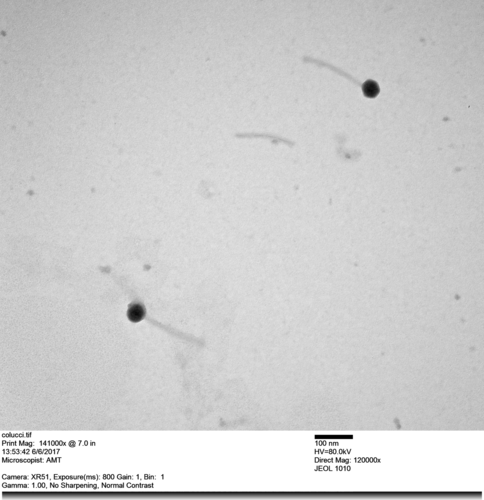
(c) Andrew Conboy, some rights reserved (CC BY), uploaded by Andrew Conboy · cc-by
Arthrobacter
Sign in to saveArthrobacter (from the Greek, "jointed small stick”) is a genus of bacteria that is commonly found in soil. Members of the genus have also been reported from insect-associated environments, suggesting ecological roles beyond soil habitats. All species in this genus are Gram-positive obligate aerobes that are rods during exponential growth and cocci in their stationary phase. Arthrobacter have a distinctive method of cell division called "snapping division" or reversion in which the outer bacterial cell wall ruptures at a joint.
Species
アーソロバクター属
FAMILY
- KingdomBacteria
- PhylumActinobacteriota
- ClassActinomycetia
- OrderActinomycetales
- FamilyMicrococcaceae
Arthrobacter (Yunanca' da, "eklemli küçük çubuk”) toprakta sıkça bulunan bir bakteri cinsi. Bun cinsteki bütün türler Gram-pozitif zorunlu aerobtur. Üstel büyüme boyunca rod iken durgun fazda coccilerdir. Arthrobacter, koparıcı bölünme adında ayrı bir bölünme metoduna sahiptir. Eski haline dönmesi bakteriyal hücre duvarının yırtık noktalarından birleşmesi ile olur.
via GBIF
Museum specimens
- Specimen records
- 2
- Family
- Micrococcaceae
- Collections
- CIIDIR-IPN
- Recorded in
- Mexico
Research
4,196 papers- Arthrobacter horti sp. nov., isolated from mountain soil.International journal of systematic and evolutionary microbiology · 2024
- Arthrobacter woluwensis subacute infective endocarditis: case report and review of the literature.Clinical infectious diseases : an official publication of the Infectious Diseases Society of America · 2004
- Arthrobacter sedimenti sp. nov., isolated from river sediment in Yuantouzhu park, China.Archives of microbiology · 2020
- Arthrobacter ruber sp. nov., isolated from glacier ice.International journal of systematic and evolutionary microbiology · 2018
- Arthrobacter mobilis sp. nov., a novel actinobacterium isolated from Cholistan desert soil.International journal of systematic and evolutionary microbiology · 2020
via PubMed
Wikidata facts
- Instance of
- taxon
- Parent taxon
- Micrococcaceae
- Image
- SEM of Arthrobacter chlorophenolicus.jpg
Show 5 more facts
- taxon rank
- genus
- taxon name
- Arthrobacter
- Gram staining
- gram-positive bacteria
- Commons category
- Arthrobacter
Sources (3)
via Wikidata · CC0
~5 min read
Encyclopedic overview
6 sectionsContents
- Description
- Use in industry
- Other uses
- Species
- References
- External links
Arthrobacter (from the Greek, "jointed small stick”) is a genus of bacteria that is commonly found in soil. Members of the genus have also been reported from insect-associated environments, suggesting ecological roles beyond soil habitats. All species in this genus are Gram-positive obligate aerobes that are rods during exponential growth and cocci in their stationary phase. Arthrobacter have a distinctive method of cell division called "snapping division" or reversion in which the outer bacterial cell wall ruptures at a joint.
==Description== Arthrobacter can be grown on mineral salts pyridone broth, where colonies have a greenish metallic center on incubated at . Under the microscope, Arthrobacter appear as rods when rapidly dividing, and cocci when in stationary phase. Dividing cells may also appear as chevrons ("V" shapes). Other notable characteristics are that it can use pyridone as its sole carbon source, and that its cocci are resistant to desiccation and starvation.
Excerpted from Wikipedia’s “Arthrobacter” article, available under the CC BY-SA 4.0 licence.