Species
EndangeredSPECIES
- KingdomAnimalia
- PhylumChordata
- ClassAves
- OrderStrigiformes
- FamilyStrigidae
Observations recorded1,208
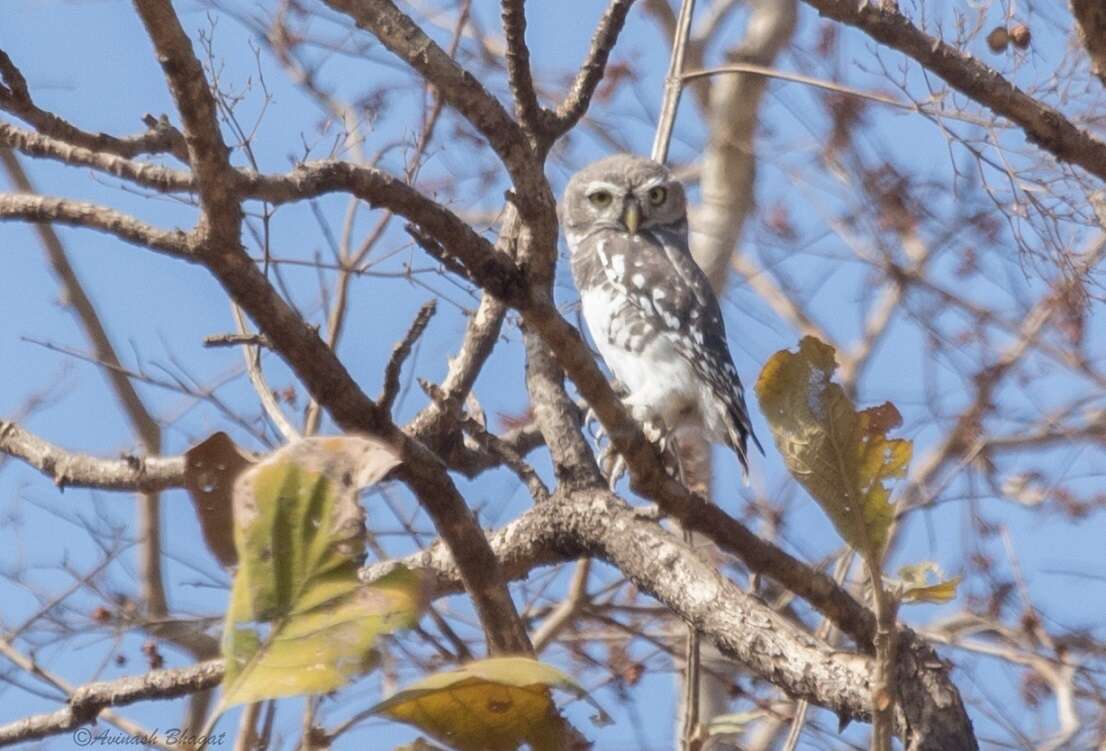
The forest owlet (Athene blewitti) is endemic to the forests of central India. It is listed as Endangered on the IUCN Red List since 2018, as the population is estimated at less than 1,000 mature individuals. It is threatened foremost by deforestation.[1] It is a member of the typical owl family Strigidae, and was first described in 1873. As it was not sighted after 1884, it was considered extinct for many years.[2] In 1997, it was rediscovered by Pamela Rasmussen. Searches in the locality mentioned on the label of the last collected specimen failed, and it turned out that the specimen had been stolen from the British Museum by Richard Meinertzhagen and resubmitted with a label bearing false locality information.[3][4] Taxonomy Heteroglaux blewitti was the scientific name proposed by Allan Octavian Hume in 1873 who described a female owlet that had been shot near Basna in 1872.[5] Results of a phylogenetic study published in 2018 indicate that it a member of the Athene clade.[6] Description The whitish underside and small size are distinctive The forest owlet is small (23 cm) and stocky. It is a typical owlet with a rather unspotted crown and heavily banded wings and tail. They hav
via
Article · 中文
林斑小鸮(學名:Athene blewitti),鴟鴞科小鴞屬的一種,於印度中部繁殖生活。自1884年最後一次觀察到此鳥後,一直要到113年後的1997年才再現人世。被IUCN紅色名錄列為極危物種,估計種群數目不多於250頭。
Abstract from DBpedia / Wikipedia · CC BY-SA