
Australia
Also known as Commonwealth of Australia, Straya, Aussieland, Oz, Stralia, New Holland, New Hollandia, Nova Hollandia
país de Oceanía
AI overview
I don't have any context provided to base an overview on. Could you please share the context about "Australia" that you'd like me to use for writing the 2-sentence overview?
AI-generated from the Wikipedia summary — may contain errors.
Weather now
cached 4h ago15°clear sky
48% 5.4 m/s OpenWeatherMap
7-day forecast
via Open-Meteo
Country
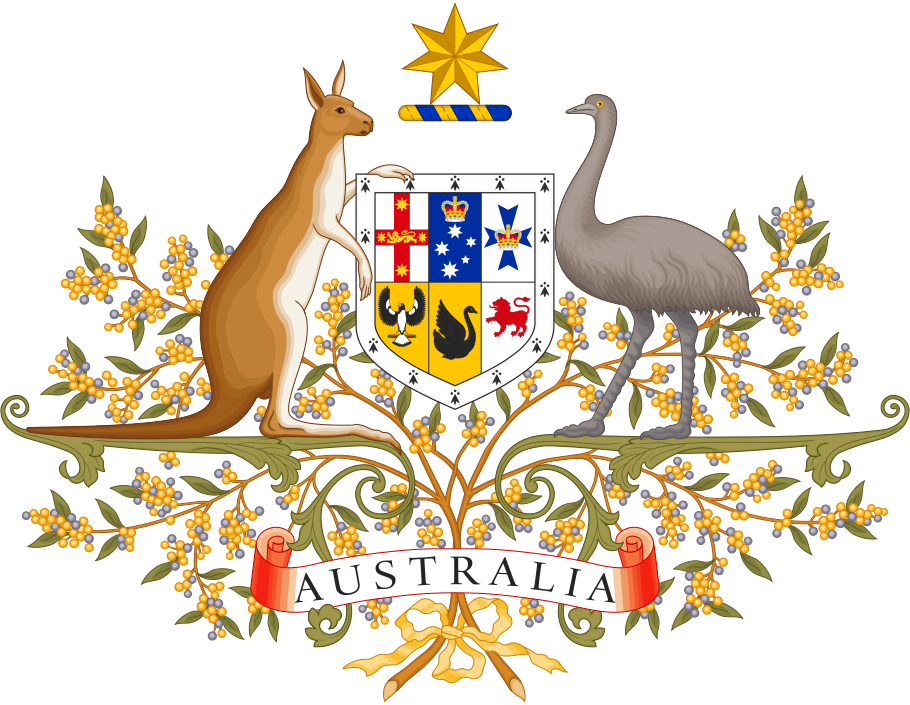

- Capital
- Canberra
- Population
- 27,536,874
- Region
Travel guide
Understand
The sixth largest country in the world by area, Australia has a relatively small (but growing) population of 25 million. A G20 member, it has high quality of life and is constantly ranked among the world's most livable countries. It is a significant player in the economic and political spheres of the Indo-Pacific region.
Get around
Australia is huge but sparsely populated over much of its area and is larger than the contiguous U.S. You can sometimes travel many hours before finding the next trace of civilization, especially once you leave the south-eastern coastal fringe.
Do
thumb|Australia is known for having some of the most beautiful beaches in the world (Bondi Beach pictured) thumb|Surfers Paradise, located in the Gold Coast, is one of the most popular tourist destinations in the country, boasting some of the world's greatest beaches and located near an array of theme parks
Buy
thumb|Pitt Street Mall in Sydney is one of Australia's busiest shopping districts
Australia is largely a cashless society, as virtually all businesses accept credit cards and debit cards. For a short trip, there is no need to exchange Australian currency. Cash is still widely accepted, but cashless businesses are increasingly common.
1-2% surcharges for card payments at cafes, pubs and restaurants are common (and perfectly legal), but you will likely lose more than that on the exchange if you pay cash.
Eat
thumb|A "smashed avo" toast, a staple of Australian brunches
Australian cuisine is hard to pin down: in this nation of immigrants, restaurants claiming to offer it are few and far between, and the word tends to either evoke meat-and-three-veg British stodge or tourist-trap restaurants hawking kangaroo burgers and crocodile kebabs. Yet with amazing local produce, influences from cuisines from all over the world, and an exciting Modern Australian food scene awaiting those not afraid to experiment, there are plenty of incredible eats and drinks to be found.
Generally speaking, table manners in Australia conform to European norms.
Article · Español
Australia, oficialmente la Mancomunidad de Australia (en inglés, Commonwealth of Australia, AFI: /ˈkɒmənˌwelθ əv ɒˈstreɪljə/), es un país soberano que comprende la parte continental del continente australiano o Sahul, la isla de Tasmania y numerosas islas menores. Con una superficie de 7 741 220 km², Australia es el país más grande de Oceanía y el sexto más grande del mundo. Australia es la nación habitada más antigua, más planay más seca, con los suelos menos fértiles. Es un país megadiverso, y su tamaño le confiere una gran variedad de paisajes y climas, con desiertos en el centro, selvas tropicales en el noreste y cordilleras en el sureste. Los antepasados de los aborígenes australianos empezaron a llegar desde el sudeste asiático hace aproximadamente 65 000 años, durante la última glaciación. Llegaron por mar, se asentaron en el continente y formaron unos 250 grupos lingüísticos distintos en la época de la colonización europea, manteniendo algunas de las tradiciones artísticas y religiosas más antiguas del mundo. La historia escrita de Australia comenzó con la exploración marítima europea de Australia. El navegante holandés Willem Janszoon fue el primer europeo conocido que llegó a Australia, en 1606. En 1770, el explorador británico James Cook cartografió y reclamó la costa oriental de Australia para Gran Bretaña, y la primera flota de barcos británicos llegó a Sídney en 1788 para establecer la colonia penal de Nueva Gales del Sur. La población europea creció en las décadas siguientes y, al final de la fiebre del oro, la mayor parte del continente había sido explorada por colonos europeos y se habían establecido otras cinco colonias británicas autónomas. A lo largo del siglo XIX se fueron estableciendo parlamentos democráticos, que culminaron con la votación para la federación de las seis colonias y la fundación de la Mancomunidad de Australia el 1 de enero de 1901. Desde el punto de vista político, Australia es una monarquía constitucional parlamentaria federal, compuesta por seis estados y diez territorios. La población australiana, de casi 26 millones de habitantes, está muy urbanizada y se concentra en la costa oriental. Canberra es la capital del país, mientras que su ciudad más poblada y centro financiero es Sídney. Las siguientes cuatro ciudades más grandes son Melbourne, Brisbane, Perth y Adelaida. La demografía australiana ha sido moldeada por siglos de inmigración: los inmigrantes representan el 30 % de la población del país, y casi la mitad de los australianos tienen al menos un progenitor nacido en el extranjero. Los abundantes recursos naturales de Australia y sus bien desarrolladas relaciones comerciales internacionales son cruciales para la economía del país, que genera sus ingresos a partir de diversas fuentes, como los servicios, las exportaciones mineras, la banca, la industria manufacturera, la agricultura y la educación internacional. Australia es un país desarrollado con una economía de altos ingresos. En 2022, según el Fondo Monetario Internacional, era la decimotercera economía del mundo con la decimotercera renta per cápita más alta. En 2021, ocupó el quinto lugar en el índice de desarrollo humano. Australia es una potencia regional y tiene el décimo mayor gasto militar del mundo. Australia se encuentra entre los primeros puestos del mundo en cuanto a calidad de vida, democracia, sanidad, educación, libertades civiles, seguridad y derechos civiles y políticos.Es miembro de agrupaciones internacionales como las Naciones Unidas, el G20, la OCDE, la OMC, ANZUS, AUKUS, Cinco Ojos, el Quad, APEC, el Foro de las Islas del Pacífico, la Comunidad del Pacífico y la Mancomunidad de Naciones.
Gallery (39)
On the map
4 mapped locations
Connections
Categories
AustraliaCountries and territories where English is an official languageCountries in AustralasiaCountries in OceaniaCPTPPFree-content attributionFree content from FAOG20 membersGeographical articles missing image alternative textMember states of the Commonwealth of NationsMember states of the United NationsOECD members