Category
page 1Free content from FAO

United States
The United States of America (USA), also known as the United States (U.S.) or America, is a country primarily located in North America. It is a federal republic consisting of 50 states and a federal capital district, Washington, D.C. The 48 contiguous states border Canada to the north and Mexico to the south, with the semi-exclave of Alaska in the northwest and the archipelago of Hawaii in the Pacific Ocean. The United States also asserts sovereignty over five major island territories and various uninhabited islands in Oceania and the Caribbean. It is a megadiverse country, with the world's third-largest land area and third-largest population, exceeding 341 million.

China
China, officially the '''People's Republic of China (PRC'''), is a country in East Asia. It is the second-most populous country after India, with a population exceeding 1.4 billion, representing 17% of the world's population. China borders fourteen countries by land across an area of , making it the third-largest country by area. The country is divided into 33 province-level divisions: 22 provinces, 5 autonomous regions, 4 municipalities, and 2 semi-autonomous special administrative regions. Beijing is the capital, while Shanghai is the most populous city by urban area and largest financial ce

Australia

forest
thumb|upright=1.4|The Amazon rainforest alongside the [[Solimões River, a tropical rainforest. These forests are the most biodiverse and productive ecosystems in the world.]]
thumb|upright=1.4|Proportion and distribution of global forest area by climatic domain, 2020

agriculture
thumb|Modern agriculture: a center pivot irrigation system on a field

sugar
thumb|Sugars (clockwise from top-left): white refined, unrefined, brown sugar|brown, unprocessed cane sugar

meat
thumb|upright=1.5|Raw meat (clockwise from left): chicken as food|chicken, [[beef, bacon, pork chops]]
Meat is animal tissue, mostly muscle, that is eaten as food. Humans have hunted and farmed other animals for meat since prehistory. The Neolithic Revolution allowed the domestication of vertebrates, including chickens, sheep, goats, pigs, horses, and cattle, starting around 11,000 years ago. Since then, selective breeding has enabled farmers to produce meat with the qualities desired by producers and consumers. Meat is important to economies and cultures around the world.

wood

cereal
thumb|upright=1.35|Harvesting a cereal with a [[combine harvester accompanied by a tractor and trailer.]]
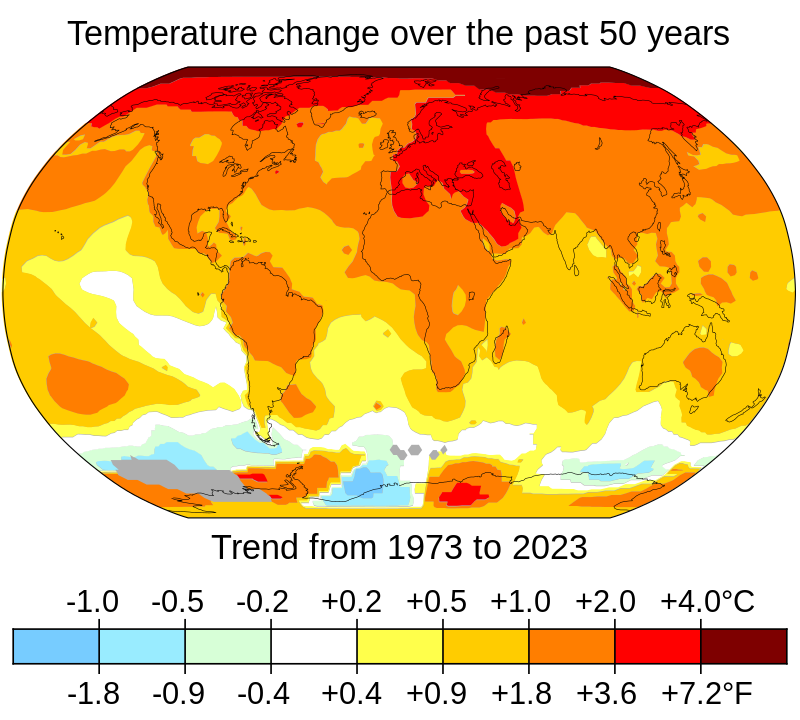
climate change
human-caused changes to climate on Earth

agricultural irrigation
thumb|Irrigation of agricultural fields in Andalusia, Spain. Irrigation canal on the left.

census
thumb|A census taker visits a family of indigenous Dutch Travellers living in a caravan in the [[Netherlands in 1925.]]
A census (from Latin censere, 'to assess') is the procedure of systematically acquiring, recording, and calculating information about the members of a given population, which are then usually displayed through statistics. This term is used mostly in connection with national population and housing censuses; other common censuses include censuses of agriculture, traditional culture, business, supplies, and traffic censuses. The United Nations (UN) defines the essential features
.JPG)
hunger
thumb|The Hunger March sculptures in [[Copenhagen]]

fertilizer
thumb|upright=1.35|A farmer spreading [[manure to improve soil fertility]]

breastfeeding
250px|thumb|upright=0.75|A baby being breastfed
250px|thumb|thumbtime=2:03|upright=0.75|Video summary of article with Wikipedia:VideoWiki/Breastfeeding|script

pesticide
thumb|A self-propelled crop sprayer spraying pesticide on a field
thumb|A crop-duster spraying pesticide on a field
Pesticides are substances that are used to control pests. They include herbicides, insecticides, nematicides, fungicides, and many others (see table). The most common of these are herbicides, which account for approximately 50% of all pesticide use globally. Most pesticides are used as plant protection products (also known as crop protection products), which in general protect plants from weeds, fungi, or insects.

urbanization
alt=Global urbanization map|thumb|upright=1.35|Global urbanization map showing the percentage of urbanization and the biggest global population centres per country in 2018, based on UN estimates.

forestry
thumb |A Timberjack wheeled harvester stacking cut timber in [[Finland]]
Forestry is the science and craft of creating, managing, planting, using, conserving and repairing forests and woodlands for associated resources for human and environmental benefits. Forestry is practiced in plantations and natural stands. The science of forestry has elements that belong to the biological, physical, social, political and managerial sciences. Forest management plays an essential role in creating and modifying habitats, and affects ecosystem services provisioning. A practitioner of forestry is a forester.
.jpg)
deforestation
thumb|Deforestation of the Amazon rainforest in Brazil's [[Maranhão state, 2016]]
thumb|Deforestation in Riau province, Sumatra, Indonesia to make way for an [[oil palm plantation in 2007.]]
thumb|Deforestation in the city of Rio de Janeiro in Brazil's Rio de Janeiro state, 2009

gender equality
state of equal ease of access to resources and opportunities regardless of gender, including economic participation and decision-making

palm oil
edible and biocombustible vegetable oil from fruit of oil palms

automation
thumb|upright=1.1|Minimum human intervention is required to control many large facilities, such as this electrical generating station.
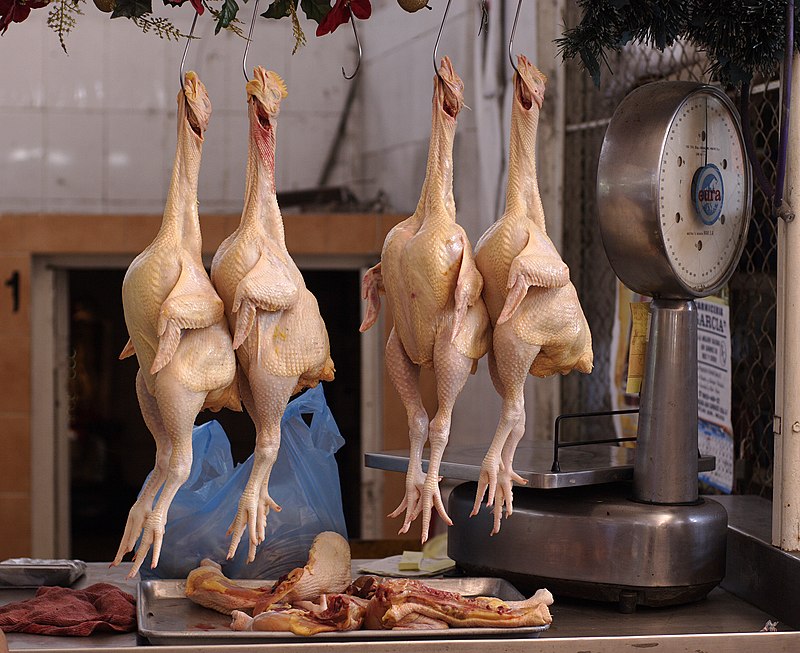
chicken as food
type of widely consumed poultry

sugarcane
thumb|Saccharum officinarum

crop
A crop is a plant or plant product harvested for human use. Crops are cultivated at scale to produce food, fiber, fuel, and other products. Crops have been central to human civilization since the first agricultural revolution, a key stage in the broader history of agriculture, when early societies domesticated plants for food and trade. Today, a small number of staple crops such as rice, wheat, maize, and sugarcane account for the majority of global production. Because of their economic importance, crops are studied within several scientific disciplines, including agronomy, agricultural scienc

aquaculture
thumb|300px|Aquaculture fish farming in the fjords south of Castro, Chile

vegetable oil
oil extracted from seeds, or less often, from other parts of fruits

food preservation
inhibition of microbial growth in food

financial market
any market in which trading takes place with capital

fish as food
fish species used as food by humans

old-growth forest
forest that has developed over a long period of time without disturbance
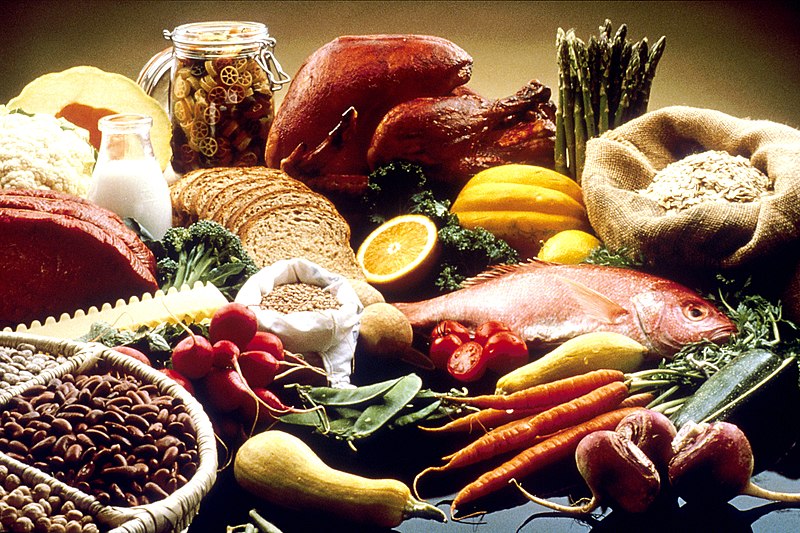
healthy diet
diet that helps maintain or improve general health

food security
condition related to the supply and availability of food, and individuals' access to it

fishery
thumb|300px|right|Salmon spawn in a salmon fishery within the [[Becharof Wilderness in Southwest Alaska.]]
thumb|300px|% of fisheries exploited over time
Fishery can mean either the enterprise of raising or harvesting fish and other aquatic life or, more commonly, the site where such enterprise takes place (a.k.a., fishing grounds). Commercial fisheries include wild fisheries and fish farms, both in freshwater waterbodies (about 10% of all catch) and the oceans (about 90%). About 500 million people worldwide are economically dependent on fisheries. 171 million tonnes of fish were produced in 2

fish oil
oil derived from the tissues of oily fish
ecosystem service
benefits created by nature, forests and environmental systems

overfishing
thumb|300px|Trachurus|Jack mackerel caught by a Chilean purse seiner
thumb|350px|Fishing down the food web
Overfishing is the removal of aquatic animals—primarily fish—from a body of water at a rate greater than that the species can replenish its population naturally (i.e. the overexploitation of the fishery's existing fish stocks), resulting in the species becoming increasingly underpopulated in that area. Excessive fishing practices can occur in water bodies of any sizes, from ponds, wetlands, rivers, lakes to seas and oceans, and can result in resource depletion, reduced biological growth r

agricultural machinery
machinery used for growing food

tropical forest
generic forest in the tropics

sustainable agriculture
farming relying on ecosystem services for maintenance
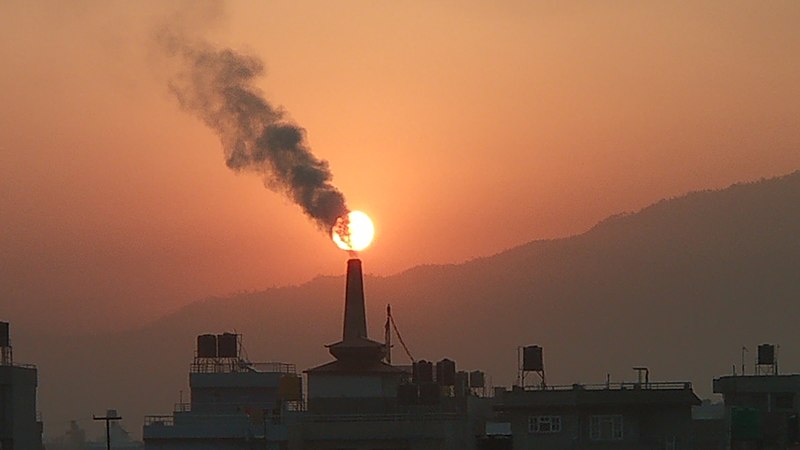
food waste
wastage of food due to discardment, disposal, expiration, or loss

fishing vessel
boat or ship used to catch fish on a body of water
gender inequality
idea and situation that women and men are not treated as equal
precision agriculture
farming management strategy

workforce
thumb|upright=1.6|The Economic activity rate|labour force participation rates of developed nations as of 2021
environmental degradation
deterioration of the environment through depletion of resources such as air, water and soil; the destruction of ecosystems; habitat destruction; the extinction of wildlife; and pollution

farmworker
alt=Two farmworkers, one dressed in blue covers and the other in red with a face covering, bending down. They are presumed to be cleaning and picking up onions on a grassy field. Location is unknown.|thumb|272x272px|Two farm workers cleaning and picking at an onion field, location unknown
thumb|right|240px|Farm workers on a field near Mount Williamson in [[Inyo County, California. This photograph is by Ansel Adams.]]
fish meal
flour made from dried and ground fish or parts of fish
agricultural land
land used for agricultural purposes
women's empowerment
giving rights, freedom, and strenghtening women to stand on their own feet
cold chain
supply chain that uses refrigeration of temperature-sensitive goods from point of manufacture to point of administration/sale
aquatic animal
animals that partially or wholly inhabit aquatic habitats
forest ecology
scientific study and subfield of ecology around forest ecosystems
forest management
branch of forestry
women in the workforce
women who perform some kind of job
mechanised agriculture
agriculture using powered machinery
African Continental Free Trade Area
free trade agreement founded in 2018 and commenced in 2021
non-communicable disease
medical condition or disease not transmissible directly from person to person
Sustainable Development Goal 2
Zero Hunger

algaculture
thumb|A seaweed farm in Uroa, Zanzibar
thumb|Algaculture in Ketura, Israel|Kibbutz Ketura, [[Israel]]
Algaculture is a form of aquaculture involving the farming of species of algae.