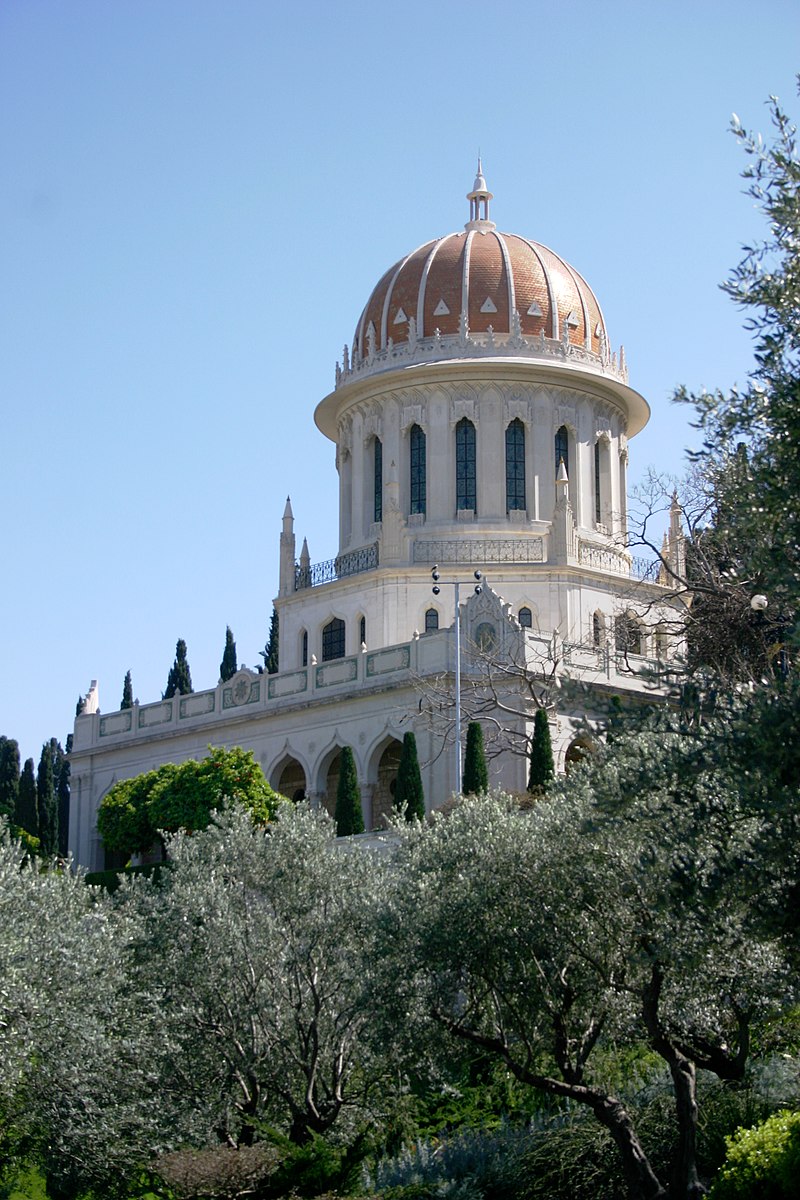
File:Shrine_Bab_North_West.jpg · Wikimedia Commons · See Wikimedia Commons
Also known as Bab, Nuqtah-i Ula, Ali Mukhamed Bab, Ali Muhammad ibn Rida al-Bazzazz, Ali Muhammad Rida al-Shirazi, the Báb, the Bab, ʻAlí-Muḥammad
profeta persiano, fondatore del bábismo
The Báb was a 19th-century Iranian religious leader who founded Bábism and claimed to be a Manifestation of God comparable to Moses, Jesus, and Muhammad, with revelations he believed would be as significant as the Torah, Gospel, and Quran. He is venerated as a central figure in the Baháʼí Faith, and his teachings emphasized that his new revelation would unlock the spiritual and creative forces needed to bring about global unity and peace.
AI-generated from the Wikipedia summary — may contain errors.
Key facts
- Religious biography.name
- The Báb
- Religious biography.religion
- Bábism
- Religious biography.image
- Shrine Bab North West.jpg
- Religious biography.caption
- Shrine of the Báb in Haifa, Israel
- Religious biography.birth_name
- ʻAlí-Muḥammad
- Religious biography.birth_place
- Shiraz, Iran
- Religious biography.death_place
- Tabriz, Iran
- Religious biography.death_cause
- Execution by firing squad
- Religious biography.occupation
- MerchantReligious leader
- Religious biography.known_for
- Founder of BábismCentral figure in Baháʼí Faith
- Religious biography.nationality
- Iranian
- Religious biography.spouse
- Khadíjih-Sultán (1842–1850)
- Religious biography.children
- Ahmad (1843–1843)
- Religious biography.parents
- Mirzá Muhammad Ridá (father) Fátimih Bagum (mother)
- Religious biography.relatives
- Afnán
- Religious biography.disciples
- Notable students:
- Religious biography.successor
- Baháʼu'lláh (for Baháʼís)Subh-i-Azal (for Azalis)
via Wikipedia infobox
Wikidata facts
- Instance of
- human
- Gender
- male
- Citizenship
- Qajar Iran
- Place of birth
- Shiraz
- Place of death
- Tabriz
- Occupation
- poet
- Religion
- Bábism
- Image
- Bahai center Haifa 2.jpg
Show 9 more facts
- Commons category
- Báb
- date of birth
- 1819-01-01
- date of death
- 1849-00-00
- place of burial
- Shrine of the Báb
- cause of death
- gunshot wound
- name in native language
- الْبَاب
- manner of death
- capital punishment
- birth name
- عَلیمُحَمَّد شیرازی
- on focus list of Wikimedia project
- Wikipedia:Vital articles/Level/4
Sources (2)
via Wikidata · CC0
Article · Italiano
Mírzá `Alí Muḥammad, o Siyyid `Alí Muḥammad Shírází, noto anche con lo pseudonimo di Báb (La Porta) (in persiano سيد علی محمد شیرازی; Shiraz, 20 ottobre 1819 (primo giorno di Muharram del 1235 dell'Egira) – Tabriz, 9 luglio 1850), figlio di Siyyid Muhammad Ridá e di Fátimih Bagum, figlia di un noto mercante di Shiraz, fu profeta e fondatore del Bábismo, e una delle tre figure centrali della Fede bahá'í. Mausoleo del Báb a Haifa Mírzá `Alí Muḥammad discendeva da Maometto tramite l'Imam Husayn e sua moglie Fāṭima bint Muhammad da entrambi i genitori, per ciò era un Siyyid, denominazione che è parte del suo patronimico, per la discendenza dal Profeta dell'Islam. Portatore di una Rivelazione divina indipendente, Mírzá `Alí Muḥammad è noto con l'appellativo di Báb (parola araba che significa "Porta"). Egli dichiarò d'essere l'araldo di una nuova era di giustizia, l'Età d'oro predetta da Profeti e Messaggeri del passato. Il suo principale compito fu l'aprire la strada al nuovo Messaggero di Dio, e molti suoi scritti si riferiscono a "Colui Che Dio manifesterà". La sua Missione ebbe inizio il 23 maggio 1844, quando rivelò che ossia la 'Porta', un tramite tra Dio e gli uomini, un Messaggero divino. I Bahá'í considerano il Báb oltre che "Manifestazione Divina" anche come Profeta precursore della loro religione, che ha preparato la strada a Colui che Dio farà manifesto. Bahá'u'lláh, fu un suo seguace che dichiarò nel 1863 ad un gruppo di Babí il compimento della profezia del Báb, e d'essere lui
Abstract from DBpedia / Wikipedia · CC BY-SA
Gallery (18)
On the map
2 mapped locations
Available in 76 languages
- Español
- Français
- Deutsch
- 中文
- 日本語
- Русский
- Português
- Italiano
- العربية
- हिन्दी
- Afrikaans
- Albanian
- Angika
- Aragonese
- Armenian
- Asturian
- azb
- Azerbaijani
Show 57 more
- Bahasa Indonesia
- Bangla
- Bashkir
- Basque
- Bosnian
- Catalan
- Central Kurdish
- Croatian
- Czech
- Egyptian Arabic
- Esperanto
- Filipino
- Finnish
- Galician
- Georgian
- Greek
- Hausa
- Hebrew
- Hungarian
- Icelandic
- Interlingua
- Kazakh
- Latin
- Latvian
- Lithuanian
- Low German
- Luxembourgish
- Malagasy
- Malayalam
- Mirandese
- Nederlands
- Norwegian
- Norwegian Nynorsk
- Polski
- Punjabi
- Romanian
- Scots
- Serbian
- Serbian (Latin)
- simple
- Slovak
- Svenska
- Swahili
- Tajik
- Tiếng Việt
- Türkçe
- Ukrainian
- Urdu
- Uzbek
- Waray
- Western Panjabi
- Wu Chinese
- zh_min_nan
- zh_yue
- فارسی
- ไทย
- 한국어
via Wikidata sitelinks · CC0