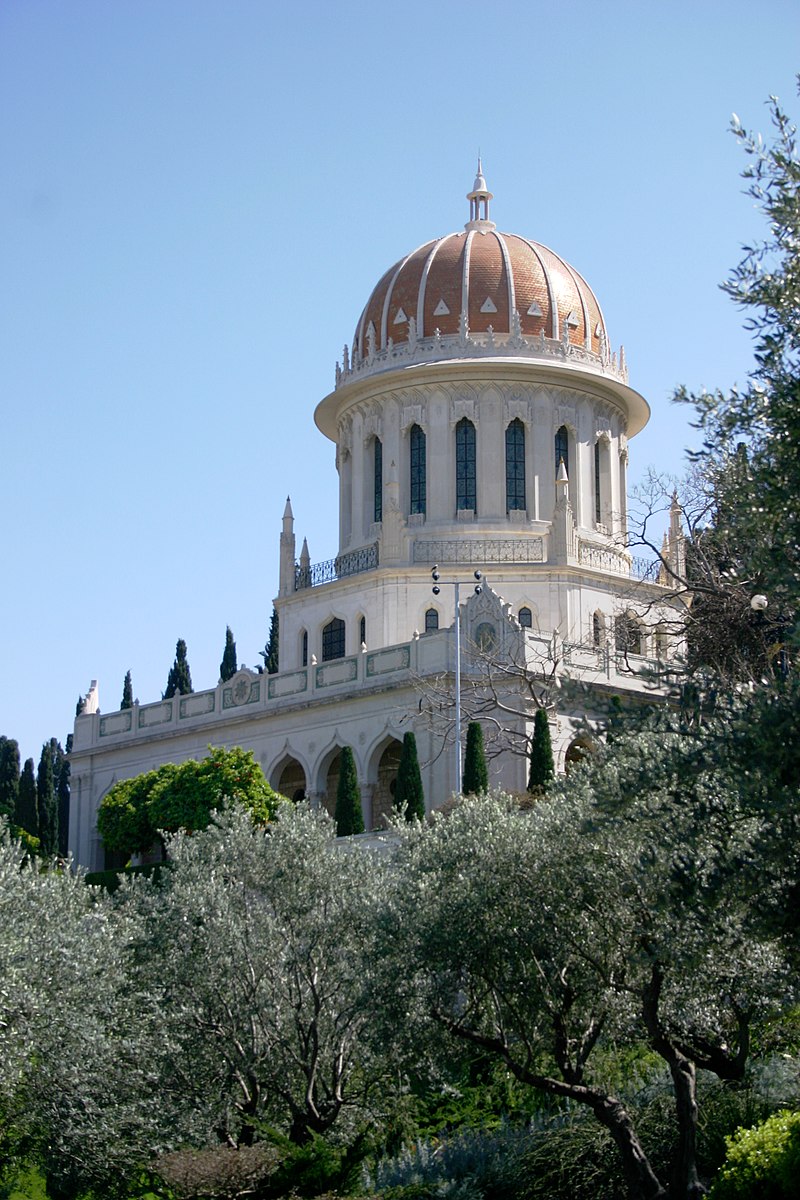
File:Shrine_Bab_North_West.jpg · Wikimedia Commons · See Wikimedia Commons
Also known as Bab, Nuqtah-i Ula, Ali Mukhamed Bab, Ali Muhammad ibn Rida al-Bazzazz, Ali Muhammad Rida al-Shirazi, the Báb, the Bab, ʻAlí-Muḥammad
The Báb (born ʻAlí-Muḥammad; ; ; 20 October 1819 – 9 July 1850) was an Iranian religious leader who founded Bábism, and is also one of the central figures of the Baháʼí Faith. The Báb gradually and progressively revealed his claim in his extensive writings to be a Manifestation of God, of a status as great as Moses, Jesus, and Muhammad, receiving revelations as profound as the Torah, Gospel, and Quran. This new revelation, he claimed, would release the creative energies and capacities necessary for the establishment of global unity and peace.
The Báb was a 19th-century Iranian religious leader who founded Bábism and claimed to be a Manifestation of God comparable to Moses, Jesus, and Muhammad, with revelations he believed would be as significant as the Torah, Gospel, and Quran. He is venerated as a central figure in the Baháʼí Faith, and his teachings emphasized that his new revelation would unlock the spiritual and creative forces needed to bring about global unity and peace.
AI-generated from the Wikipedia summary — may contain errors.
Key facts
- Religious biography.name
- The Báb
- Religious biography.religion
- Bábism
- Religious biography.image
- Shrine Bab North West.jpg
- Religious biography.caption
- Shrine of the Báb in Haifa, Israel
- Religious biography.birth_name
- ʻAlí-Muḥammad
- Religious biography.birth_place
- Shiraz, Iran
- Religious biography.death_place
- Tabriz, Iran
- Religious biography.death_cause
- Execution by firing squad
- Religious biography.occupation
- MerchantReligious leader
- Religious biography.known_for
- Founder of BábismCentral figure in Baháʼí Faith
- Religious biography.nationality
- Iranian
- Religious biography.spouse
- Khadíjih-Sultán (1842–1850)
- Religious biography.children
- Ahmad (1843–1843)
- Religious biography.parents
- Mirzá Muhammad Ridá (father) Fátimih Bagum (mother)
- Religious biography.relatives
- Afnán
- Religious biography.disciples
- Notable students:
- Religious biography.successor
- Baháʼu'lláh (for Baháʼís)Subh-i-Azal (for Azalis)
via Wikipedia infobox
Wikidata facts
- Instance of
- human
- Gender
- male
- Citizenship
- Qajar Iran
- Place of birth
- Shiraz
- Place of death
- Tabriz
- Occupation
- poet
- Religion
- Bábism
- Image
- Bahai center Haifa 2.jpg
Show 9 more facts
- Commons category
- Báb
- date of birth
- 1819-01-01
- date of death
- 1849-00-00
- place of burial
- Shrine of the Báb
- cause of death
- gunshot wound
- name in native language
- الْبَاب
- manner of death
- capital punishment
- birth name
- عَلیمُحَمَّد شیرازی
- on focus list of Wikimedia project
- Wikipedia:Vital articles/Level/4
Sources (2)
via Wikidata · CC0
Article · Português
Siyyid Ali Muhammad, conhecido como o Báb (“A Porta”), (em persa: سيد علی محمد; romaniz.: Siyyid 'Ali-Muhammad) (Xiraz, 20 de outubro de 1819 — Tabriz, 9 de julho de 1850) foi o Profeta fundador da Fé Bábí. Nasceu em Shíráz, Pérsia (atual Irã). Em meados do século XIX — um dos períodos mais turbulentos da história mundial — Ele, um comerciante anunciou que é portador de uma mensagem destinada a transformar a vida da humanidade. Num tempo em que Seu país, o Irã, estava passando por uma decadência moral generalizada, Sua mensagem suscitou agitação e esperança entre todas as classes, atraindo rapidamente milhares de seguidores. Ele assumiu o nome de “O Báb”, que significa “A Porta” em árabe. * Com seu chamado para uma reforma espiritual e moral, e sua atenção para a melhora da posição da mulher e da situação dos pobres, a prescrição do Báb para renovação espiritual foi revolucionária. Ao mesmo tempo, Ele fundou sua própria religião, distinta e independente, inspirando seus seguidores a transformarem suas vidas e a realizarem grandes atos de heroísmo. O Báb anunciou que a humanidade se encontrava no limiar de uma nova era. Sua missão, que duraria apenas seis anos, era preparar o caminho para o advento de um Manifestante de Deus que inauguraria a era de paz e justiça prometida em todas as religiões do mundo: Bahá’u’lláh “Sua vida é um dos exemplos mais magníficos de coragem que o gênero humano teve o privilégio de testemunhar…” — Tributo do escritor francês do século XIX, A.L.M. Nicolas, ao Báb
Abstract from DBpedia / Wikipedia · CC BY-SA
Gallery (18)
On the map
2 mapped locations
Available in 76 languages
- Español
- Français
- Deutsch
- 中文
- 日本語
- Русский
- Português
- Italiano
- العربية
- हिन्दी
- Afrikaans
- Albanian
- Angika
- Aragonese
- Armenian
- Asturian
- azb
- Azerbaijani
Show 57 more
- Bahasa Indonesia
- Bangla
- Bashkir
- Basque
- Bosnian
- Catalan
- Central Kurdish
- Croatian
- Czech
- Egyptian Arabic
- Esperanto
- Filipino
- Finnish
- Galician
- Georgian
- Greek
- Hausa
- Hebrew
- Hungarian
- Icelandic
- Interlingua
- Kazakh
- Latin
- Latvian
- Lithuanian
- Low German
- Luxembourgish
- Malagasy
- Malayalam
- Mirandese
- Nederlands
- Norwegian
- Norwegian Nynorsk
- Polski
- Punjabi
- Romanian
- Scots
- Serbian
- Serbian (Latin)
- simple
- Slovak
- Svenska
- Swahili
- Tajik
- Tiếng Việt
- Türkçe
- Ukrainian
- Urdu
- Uzbek
- Waray
- Western Panjabi
- Wu Chinese
- zh_min_nan
- zh_yue
- فارسی
- ไทย
- 한국어
via Wikidata sitelinks · CC0