File:Hirscheber1a.jpg · Wikimedia Commons · See Wikimedia Commons
Babyrousa
Sign in to saveAlso known as pig-deer, babirusa
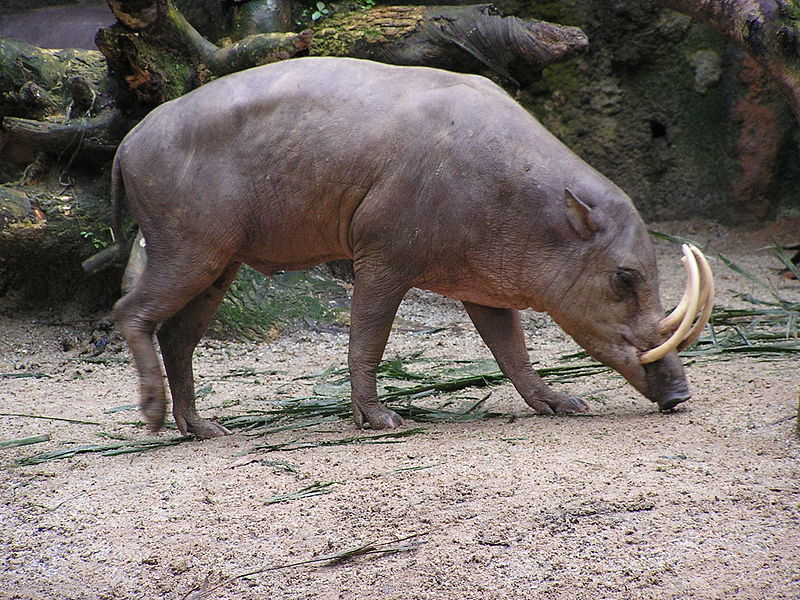
Babirusas, also called deer-pigs (), are a genus, Babyrousa, in the swine family found in the Indonesian islands of Sulawesi, Togian, Sula and Buru. Previously all members of this genus were considered part of a single species, B. babyrussa, but in 2002 they were split into several species. The Buru babirusa is now restricted to animals from Buru and Sula, whereas the best-known species, the North Sulawesi babirusa, is named B. celebensis. The males have prominent upwards incurving canine tusks, which pierce the flesh in the snout.
OverviewAI-generated
Babyrousa is a genus of mammals within the family Suidae. It belongs to the order Artiodactyla, class Mammalia, phylum Chordata, and kingdom Animalia. The scientific name is Babyrousa Perry, 1811, and the taxon is commonly known as the babirusa. This genus was described in the Encyclopædia Britannica 11th edition.
Members of this genus are viviparous, with a gestation period of 153 days. Records indicate 580 occurrences, while one specific record is held by the MNHN institution. The subject is referenced by 458 other encyclopedia articles.
Synthesized by Vinony from 25 facts across 5 sources: Wikidata, GBIF, Gbif Occ, iDigBio, Vinony graph. Generated from structured data (not the Wikipedia text) and checked against those facts — may still contain errors.
Species
Babyrousa
GENUS
- KingdomAnimalia
- PhylumChordata
- ClassMammalia
- OrderArtiodactyla
- FamilySuidae
鹿豚(学名:Babyrousa)又名鹿豬,為偶蹄目豬科鹿豚亞科下的唯一一個屬,分佈于印尼蘇拉威西島、托吉安群島、蘇拉群島及布魯島。[1]此屬原被認為是單型,但現已分成幾個物種。[2] 目录 1 分類 1.1 物種 2 起源 3 習性及行為 4 特徵 5 保育狀況 6 參考 分類 最初鹿豚被归类为單一物種,就是B. babyrussa。不過,鹿豚現已确定有4個物種,而原有的學名則歸屬了马鲁古鹿豚所有。此屬內最著名的成員則名為西里伯斯鹿豚。[2]新的分類是基於演化種概念而來,牠們在體型、毛髮的數量及頭顱骨和牙齒的大小上有所不同。[2] 物種 马鲁古鹿豚(Babyrousa babyrussa) 伯拉巴圖鹿豚(Babyrousa bolabatuensis) 西里伯斯鹿豚(Babyrousa celebensis) 托吉安鹿豚(Babyrousa togeanensis) 起源 鹿豚的頭顱骨。 雖然在蘇拉威西島及蘇拉群島都有鹿豚的蹤跡,但較大的邦蓋群島卻沒有的蹤影。有指這種特別的分佈形式是因原住民將牠們當作禮物送贈。[3] 至今為止只曾發現一個鹿豚的頭顱骨化石,相信是屬於牠們較大型的祖先所有。[4] 習性及行為 鹿豚棲息在熱帶森林。牠們是雜食性的,但主要以果實為食物。[5] 西里伯斯鹿豚會像兔或袋鼠般在繁殖季節進行拳擊。雌鹿豚每次會生1-2隻幼豚,妊娠期為120–150日。其他物種的行為所知卻很少,估計與西里伯斯鹿豚接近。 特徵 雄鹿豚有很明顯的獠牙,不同物種的獠牙則形狀不同。西里伯斯鹿豚的獠牙是先向上,並於眼睛位置向後彎曲;托吉安鹿豚的獠牙則彎曲得非常厲害。[2]兩者差不多完全沒有毛,但托吉安鹿豚則有較為明顯的尾毛。马鲁古鹿豚全身都有金毛。[2]雌鹿豚只有一對乳頭。[5] 保育狀況 鹿豚是受到保護的。不過,當地人仍有獵食牠們。所有現存的鹿豚物種都受到獵殺、失去棲息地等問題威脅。國際自然保護聯盟亦將牠們列為易危或瀕危。 參考 维基共享资源中相关的多媒体资源:鹿豚 维基物种中的分类信息:鹿豚 ^ Wilson, D. E., and Reeder, D. M. (编). Mammal species of the world 3rd edition. Johns Hopkins University Press. 2005年. ISBN 0-801-88221-4 (英语). 引文格式1维护:冗余文本 (link) ^ 2.0 2.1 2.2 2.3 2.4 Meijaard, E., & C. Groves. Proposal for taxonomic changes within the genus Babyrousa. Asian Wild Pig News. 2002, 2 (1): 9–10. ^ Umberto Albarella, Keith
via GBIF
Wikidata facts
- Instance of
- taxon
- Image
- Hirscheber1a.jpg
Show 9 more facts
- taxon rank
- genus
- Commons category
- Babyrousa
- Commons gallery
- Babirusa
- gestation period
- 153
- has characteristic
- viviparity
- topic's main category
- Category:Babyrousa
- taxon common name
- babirusa
- taxon name
- Babyrousa
- described by source
- Encyclopædia Britannica 11th edition
Sources (2)
via Wikidata · CC0
~8 min read
Encyclopedic overview
8 sectionsContents
- Classification
- Species
- Description
- Biology and ecology
- Relationship with humans
- Conservation status
- References
- External links
Babirusas, also called deer-pigs (), are a genus, Babyrousa, in the swine family found in the Indonesian islands of Sulawesi, Togian, Sula and Buru. Previously all members of this genus were considered part of a single species, B. babyrussa, but in 2002 they were split into several species. The Buru babirusa is now restricted to animals from Buru and Sula, whereas the best-known species, the North Sulawesi babirusa, is named B. celebensis. The males have prominent upwards incurving canine tusks, which pierce the flesh in the snout.
All species of babirusa are listed as threatened by the International Union for Conservation of Nature (IUCN).
Excerpted from Wikipedia’s “Babyrousa” article, available under the CC BY-SA 4.0 licence.