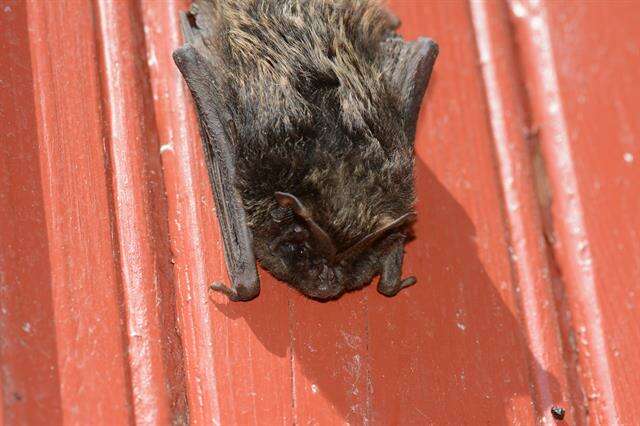
Encyclopedia of Life · EOL (see source)
Barbastella
Sign in to saveBarbastella is a genus of vespertilionid bats. There are seven extant species in this genus and one only known from fossil remains. It literally means "starbeard", and comes from the Latin words , 'beard', and , 'star', referring to the clusters of stiff hairs that some bats of this genus have around their nostrils, which may resemble a beard or, perhaps, the arrangement of the rays of a star. Furthermore, the Italian term is common for bats in northeastern Italy, especially in Ferrara and Bologna; this regional use of Italian could have influenced or been related to the choice of the scientif
Species
GENUS
- KingdomAnimalia
- PhylumChordata
- ClassMammalia
- OrderChiroptera
- FamilyVespertilionidae
Barbastella est un genre de mammifères. Ce sont des chauves-souris de la famille des Vespertilionidae et appelées barbastelles.
via GBIF
Museum specimens
- Specimen records
- 10
- Family
- Vespertilionidae
- Collections
- NHMUK
- Recorded in
- India, Switzerland, United Kingdom
Wikidata facts
Show 5 more facts
- taxon name
- Barbastella
- Commons category
- Barbastella
- taxon rank
- genus
- topic's main category
- Category:Barbastella
- Commons gallery
- Barbastella
Sources (1)
via Wikidata · CC0
~1 min read
Encyclopedic overview
3 sectionsContents
- Species
- References
- External links
Barbastella is a genus of vespertilionid bats. There are seven extant species in this genus and one only known from fossil remains. It literally means "starbeard", and comes from the Latin words , 'beard', and , 'star', referring to the clusters of stiff hairs that some bats of this genus have around their nostrils, which may resemble a beard or, perhaps, the arrangement of the rays of a star. Furthermore, the Italian term is common for bats in northeastern Italy, especially in Ferrara and Bologna; this regional use of Italian could have influenced or been related to the choice of the scientific name. is also believed to have originated from the Latin , the classical word for 'bat'.
==Species== The genus consists of the following species: Barbastella barbastellus (Western barbastelle); Barbastella beijingensis (Beijing barbastelle); Barbastella caspica (Caspian barbastelle); Barbastella darjelingensis (Eastern barbastelle or Asian barbastelle); Barbastella leucomelas (Arabian barbastelle); Barbastella pacifica (Japanese barbastelle); Barbastella maxima (An extinct barbastelle discovered in 2019 in Gritsev, Ukraine).
Excerpted from Wikipedia’s “Barbastella” article, available under the CC BY-SA 4.0 licence.