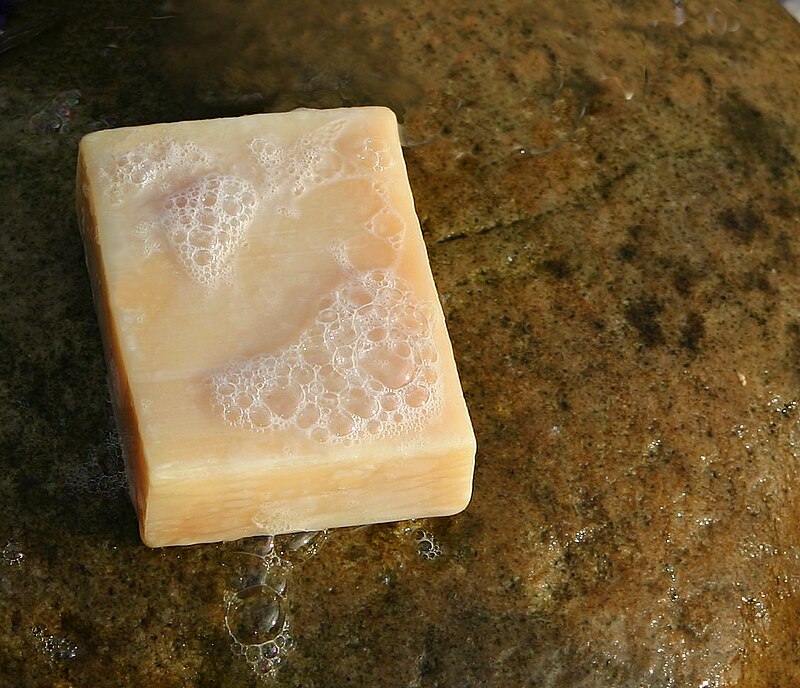
File:Handmade_soap_cropped_and_simplified.jpg · Wikimedia Commons · See Wikimedia Commons
base
Sign in to saveAlso known as alkaline substance, alkali, basic substance, basic compound, chemical base, basic chemical
chemical substance that can react with an acid, accepting hydrogen ions (protons) or more generally, donating a pair of valence electrons
A base is a chemical substance that reacts with acids by accepting hydrogen ions or sharing electrons, forming new compounds in the process. Bases matter because they're fundamental to chemistry and everyday life—they're found in everything from cleaning products to biological systems, and understanding how they interact with acids is essential for predicting and controlling chemical reactions.
AI-generated from the Wikipedia summary — may contain errors.
Wikidata facts
- Subclass of
- chemical compound
- Image
- Potassium hydroxide.jpg
- Has use
- acid–base reaction
Show 5 more facts
- Commons category
- Bases
- opposite of
- acid
- topic's main category
- Category:Bases (chemistry)
- on focus list of Wikimedia project
- Wikipedia:Vital articles/Level/4
- different from
- alkali
Sources (2)
via Wikidata · CC0
~17 min read
Encyclopedic overview
Soaps are weak bases formed by the reaction of fatty acids with sodium hydroxide or potassium hydroxide.
In chemistry, there are three definitions in common use of the word "base": Arrhenius bases, Brønsted bases, and Lewis bases. All definitions agree that bases are substances that react with acids, as originally proposed by G.-F. Rouelle in the mid-18th century.
Excerpted from Wikipedia’s “base” article, available under the CC BY-SA 4.0 licence.
Gallery (5)
Available in 129 languages
- Español
- Français
- Deutsch
- 中文
- 日本語
- Русский
- Português
- Italiano
- العربية
- हिन्दी
- abstract
- Afrikaans
- Albanian
- Albanian
- Aragonese
- Armenian
- Assamese
- Asturian
Show 110 more
- azb
- Azerbaijani
- Bahasa Indonesia
- Bangla
- Bashkir
- Basque
- bat_smg
- be_x_old
- Belarusian
- Bikol
- Bosnian
- Breton
- Bulgarian
- Buriat
- Burmese
- Catalan
- Central Kurdish
- Chuvash
- Croatian
- Czech
- Danish
- Egyptian Arabic
- Esperanto
- Estonian
- Faroese
- Fiji Hindi
- Filipino
- Finnish
- fiu_vro
- Galician
- gcr
- Georgian
- Greek
- Gujarati
- Haitian Creole
- Hebrew
- Hungarian
- Icelandic
- Ido
- Interlingua
- Irish
- Jamaican Creole English
- Kannada
- Kazakh
- kbp
- kge
- Kurdish
- Kyrgyz
- Lao
- Latin
- Latvian
- Lingua Franca Nova
- Lithuanian
- Lombard
- Low German
- Luxembourgish
- Macedonian
- Malay
- Malayalam
- Manipuri
- Nederlands
- Northern Frisian
- Northern Sami
- Norwegian
- Norwegian Nynorsk
- Novial
- Occitan
- Oromo
- Piedmontese
- Polski
- Punjabi
- Quechua
- roa_rup
- Romanian
- Rusyn
- Sanskrit
- Serbian
- Serbian (Latin)
- Sicilian
- simple
- Sindhi
- skr
- Slovak
- Slovenian
- Sundanese
- Svenska
- Swahili
- Tajik
- Tamil
- Tatar
- Tiếng Việt
- Türkçe
- Tuvinian
- Ukrainian
- Urdu
- Uzbek
- Walloon
- Waray
- Welsh
- West Flemish
- Western Panjabi
- Wu Chinese
- Yakut
- Yiddish
- Zaza
- zh_min_nan
- zh_yue
- فارسی
- ไทย
- 한국어
via Wikidata sitelinks · CC0