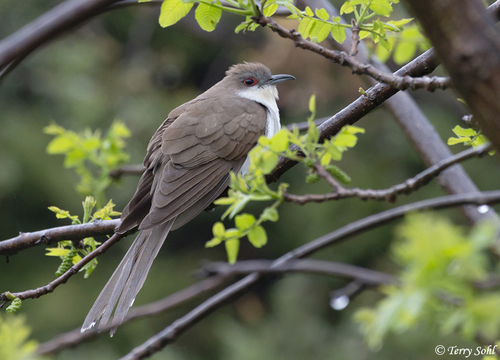
(c) Terry Sohl, some rights reserved (CC BY-NC), uploaded by Terry Sohl · cc-by-nc
Species
Least Concernblack-billed cuckoo
Species
- PhylumChordata
- ClassAves
- OrderCuculiformes
- FamilyCuculidae
More often heard than seen, the Black-billed Cuckoo (11-12 inches) is most easily separated from the similar Yellow-billed Cuckoo (Coccyzus americanus) by its solid brown wings, plain under-tail pattern, and all-black bill. Other field marks include a long tail, thin body, and black legs. Male and female Black-billed Cuckoos are similar at all seasons. The Black-billed Cuckoo breeds across much of the northeastern U.S. and southern Canada. All Black-billed Cuckoos spend the winter in South America, although this species’ winter range is poorly known due to its highly secretive nature. Some Black-billed Cuckoos have been found in the western U.S. during the fall migration, likely resulting from navigational errors. Black-billed Cuckoos breed in forests with plentiful undergrowth and clearings, particularly those near water. On migration, this species may be found in habitat similar to that inhabited during the summer months. Wintering Black-billed Cuckoos inhabit humid tropical forest. The diet of this species is composed primarily of large insects, including grasshoppers, cicadas, and caterpillars. Like many cuckoos, the Black-billed Cuckoo spends much of its time hidden in thick v
via IUCN
Wikidata facts
Show 7 more facts
- taxon rank
- species
- IUCN conservation status
- Least Concern
- taxon name
- Coccyzus erythropthalmus
- Commons category
- Coccyzus erythropthalmus
- Commons gallery
- Coccyzus erythropthalmus
- taxon common name
- cuco-de-bico-preto
- taxon range
- South America
via Wikidata · CC0
~10 min read
Encyclopedic overview
The black-billed cuckoo (Coccyzus erythropthalmus) is a New World species in the Cuculidae (cuckoo) family. The scientific name is from Ancient Greek. The genus name, kokkuzo, means to call like a common cuckoo, and erythropthalmus is from eruthros, "red" and ophthalmos, "eye".
It is very similar and overlaps in range with the closely related yellow-billed cuckoo. A distinguishing characteristic of the family Cuculidae is laying eggs in the nests of other birds. Although many cuckoos are obligate brood parasites, C. erythropthalmus often incubate their own chicks.
Excerpted from Wikipedia’s “Black-billed Cuckoo” article, available under the CC BY-SA 4.0 licence.