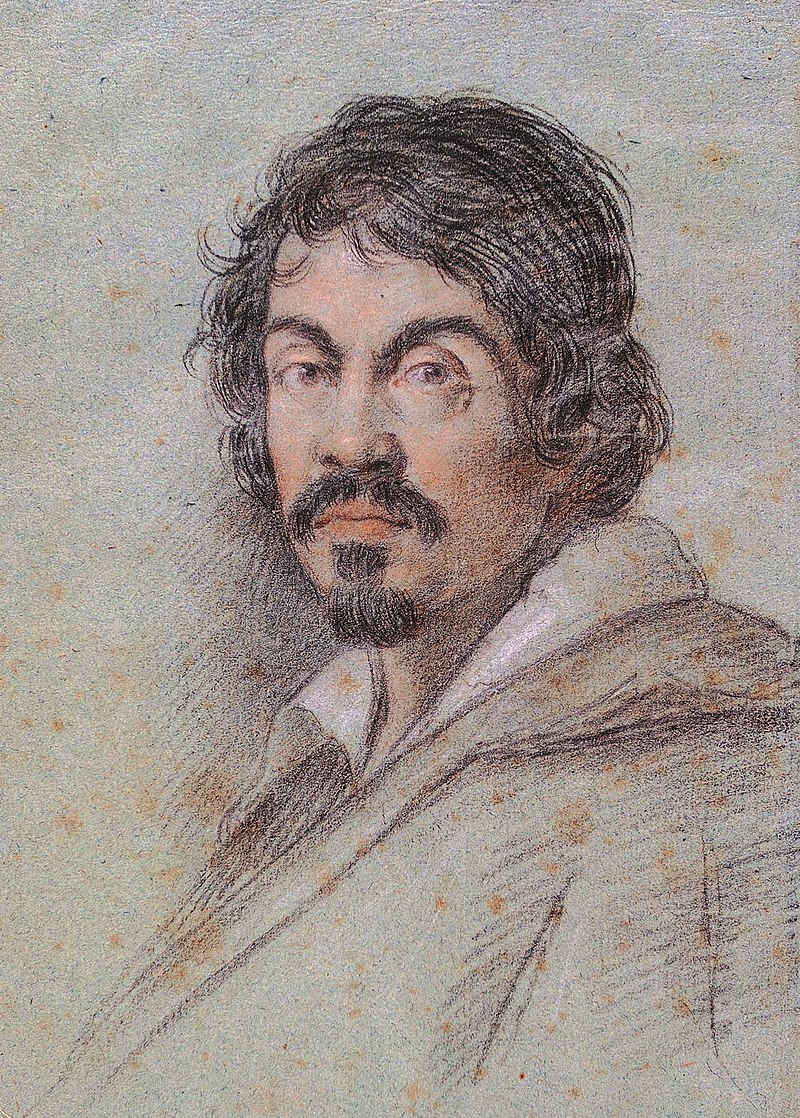
File:Bild-Ottavio_Leoni,_Caravaggio.jpg · Wikimedia Commons · See Wikimedia Commons
Caravaggio
Sign in to saveAlso known as A. Caravaggio, Amerighi Caravaggio, Amerighi Michelangelo da Caravaggio, Averigi of Carravaggio, Carage, Caravacci, Caravaccio, Caravach
Michelangelo Merisi da Caravaggio (also Michele Angelo Merigi or Amerighi da Caravaggio; 29 September 1571 – 18 July 1610), known mononymously as Caravaggio, was an Italian painter active in Rome for most of his artistic life. During the final four years of his life, he moved between Naples, Malta, and Sicily. His paintings have been characterized by art critics as combining a realistic observation of the human state, both physical and emotional, with a dramatic use of lighting, which had a formative influence on Baroque painting.
OverviewAI-generated
Michelangelo Merisi, known as Caravaggio, was an Italian painter associated with the Baroque and Counter-Reformation movements. Born in the Duchy of Milan, he was a student of Simone Peterzano and worked primarily in the genre of painting, including religious painting, genre painting, and still life. His notable works include *Supper at Emmaus*, *Amor Vincit Omnia*, *Medusa*, and *Basket of Fruit*. He was sponsored by Francesco Maria del Monte and adhered to Catholicism.
Caravaggio died in Porto Ercole on July 18, 1610. His works are held in the collections of the Minneapolis Institute of Art, Museo del Prado, The Nelson-Atkins Museum of Art, and Thyssen-Bornemisza Museum. He is described in sources such as the *Teutsche Academie der Edlen Bau- Bild- und Mahlerey-Künste*, *The Nuttall Encyclopædia*, the *Brockhaus and Efron Encyclopedic Dictionary*, and the *Encyclopædia Britannica* 11th edition.
Synthesized by Vinony from 25 facts across 3 sources: Wikidata, Firecrawl, Europeana Sparql. Generated from structured data (not the Wikipedia text) and checked against those facts — may still contain errors.
Key facts
- Artist.name
- Caravaggio
- Artist.image
- Bild-Ottavio Leoni, Caravaggio.jpg
- Artist.image_upright
- 0.9
- Artist.caption
- Chalk portrait of Caravaggio by Ottavio Leoni,
- Artist.birth_name
- Michelangelo Merisi (or Amerighi) da Caravaggio
- Artist.birth_date
- 29 September 1571
- Artist.birth_place
- Milan, Duchy of Milan
- Artist.death_place
- Porto Ercole,State of the Presidi
- Artist.field
- Painting
- Artist.training
- Simone Peterzano
- Artist.movement
- Baroque
- Artist.patrons
- Cardinal Francesco Maria del MonteAlof de Wignacourt
- Person.child
- yes
- Person.signature
- Caravaggio autograph.svg
via Wikipedia infobox
Described at
Caravaggio
caravaggio.org →Caravaggio was probably the most revolutionary artist of his time, for he abandoned the rules that had guided a century of artists who had idealized both the human and religious experience. He can be said almost single-handedly to have created the Baroque style. In 1592, Caravaggio fled Milan, and moved to Rome; he did not have money upon his arrival to the city. A few months after the move, Caravaggio began working for Giuseppe Cesari, where he paints flowers and fruit in Cesari's factory. In these works, Caravaggio depicted signs of realism, which he would focus on during his whole career. In 1954, following the end of his working career with Cesari, Caravaggio was determined to make his own way and make a name for himself. It was during this period that he made several friendships with Prospero Orsi , Onorhio Longhi , and Mario Minniti , all of who worked in the art world. These men not only introduced Caravaggio to others in the art world, but also helped him put his work out in front of others, to gain more fame in this field. Caravaggio's paintings are known for their intense realism and the use of strong contrasts of light and dark, known as chiaroscuro. He was one of the first painters to use this technique, which became a defining characteristic of Baroque art. He also used everyday people as models for his religious and mythological scenes, giving them a sense of realism and immediacy. The Fortune Teller was Caravaggio's first major piece; it showed Mario being cheated on by a gypsy girl. This was a new style to Roman artists, and the style helped pave the way for changes that came in Roman art in the coming decades. However, this oeuvre was sold for a very low price. Another famous painting by Caravaggio is The Crucifixion of Saint Peter , which is located in the Vatican. This painting shows the moment when Saint Peter is crucified upside down, as he requested, because he felt unworthy to be crucified in the same way as Jesus. Caravaggio's use of chiaroscuro in this painting helps to create a sense of depth and emotion. The dark background contrasts with the bright light illuminating Saint Peter's face, which shows his pain and suffering. These, and several other pieces Caravaggio created during this period, helped pave the way for his career, and helped create a name for himself in the art world. Caravaggio was later given several contracts to do work throughout several chapels in Rome, as well as in neighboring cities. For the most part, these new paintings, and each new job he took, helped to increase the fame which Caravaggio was experiencing during the time; however, there were a few of his pieces that were rejected for the foreign style, and the distinct style which was not well appreciated by all in the art world during this period. To some, the dramatic intensity in the work Caravaggio created, seemed quite vulgar, and was well beyond what was acceptable during his time. Many of Caravaggio's paintings dealt with death, as well as sexual depictions, which the church would not stand for; for this reason, many of the oeuvres that he created during this period, were viewed as vulgar. Some of the works he is most well known for during this period include The Madonna of the Grooms , and the Death of the Virgin , which was commissioned in 1601. Although many rejected his work, the theme and styles Caravaggio chose to work with, meant his work was also visionary for the time, as no other artists were willing to complete similar depictions. Painters' lives seldom generate glamour, scandal, or romance on anything like the same scale as literary biography. Van Gogh was one exception. Picasso was another. Caravaggio is a third. Caravaggio led an extremely notorious life; he was well known for constantly brawling and getting into arguments, not only with peers in the art world, but also with police and other authorities. He had an extensive trial record, and an extensive police record, due to the disorderly condu
Excerpt from a page describing this subject · 11,840 chars · not written by Vinony
Wikidata facts
- Instance of
- human
- Given name
- Michelangelo
- Gender
- male
- Citizenship
- Duchy of Milan
- Place of birth
- Caravaggio
- Place of death
- Porto Ercole
- Occupation
- painter
- Languages spoken
- Italian
- Religion
- Catholicism
- Student of
- Simone Peterzano
- Field of work
- painting
- Genre
- still life
- Movement
- Counter-Reformation
- Image
- Bild-Ottavio Leoni, Caravaggio.jpg
- Work location
- Paliano
Show 17 more facts
- Commons category
- Michelangelo Merisi da Caravaggio
- date of birth
- 1573-01-01
- date of death
- 1610-01-01
- topic's main category
- Category:Caravaggio
- Commons Creator page
- Caravaggio
- described by source
- The Catholic Encyclopedia
- birth name
- Michelangelo Merisi
- Commons gallery
- Michelangelo Merisi da Caravaggio
- name in native language
- Michelangelo Merisi da Caravaggio
- sponsor
- Francesco Maria del Monte
- on focus list of Wikimedia project
- Wikipedia:Vital articles/Level/4
- different from
- Polidoro da Caravaggio
- ethnic group
- Italians
- place of burial
- Porto Ercole
- name
- Michel-Ange de Caravage
Sources (15)
via Wikidata · CC0
Works in European collections
36 objects attributed to Caravaggio, held across European museums, libraries & archives · via Europeana

Saint Jerome
Saint Matthew and the Angel/San Matteo e l 'Angelo
San Giovanni battista nel deserto/John the Baptist in the desert
The Adoration of Shepherds
Saint Francis in meditation
Madonna col Bambino e Sant 'Anna detta “Madonna dei Palafrenieri”
Madonna col Bambino e Sant 'Anna detta “Madonna dei Palafrenieri”
Crucifixion of Saint Andrew
Pope Paul V
Fruit basket
Portrait of Maffeo Barberini
The Evangelist Matthew
Young bitten by a lizard
The lute player
Birth of Christ with Saint Francis and Saint Lawrence
Bacchus
Bacchus
Coronazione di Spine - The Crowd of the thorns of Christ
Burial of Saint Lucia
The Seven Works of Mercy
Saint John the Baptist
The Denial of Peter
Rest fleeing to Egypt
Ecce homo
Martyrdom of Saint Matthew
Magdalena
The Calling of Matthew/La vocazione di San Matteo
Conversion Pauli
Saint Francis of Assisi in prayer
Cristo alla colonna - Christ at the column
Conversione the Paolo/The Conversion of Paul
Saint Matthew and the Angel/San Matteo e l 'Angelo
Girl’s Portrait
David with Goliath’s head
Madonna dei Palafrenieri
daffodil
~60 min read
Encyclopedic overview
31 sectionsContents
- Biography
- Early life (1571–1592)
- Beginnings in Rome (1592/95–1600)
- "Most famous painter in Rome" (1600–1606)
- Legal problems and flight from Rome (1606)
- Exile and death (1606–1610)
- Naples
- Malta
- Sicily
- Return to Naples
- Death
- Sexuality
- As an artist
- The birth of Baroque
- The Caravaggisti
- Death and rebirth of a reputation
- Epitaph
- Oeuvre
- Theft
- In popular culture
- Contemporary analysis
- See also
- Notes
- References
- Citations
- Primary sources
- Secondary sources
- External links
- Articles and essays
- Art works
- Video
Michelangelo Merisi da Caravaggio (also Michele Angelo Merigi or Amerighi da Caravaggio; 29 September 1571 – 18 July 1610), known mononymously as Caravaggio, was an Italian painter active in Rome for most of his artistic life. During the final four years of his life, he moved between Naples, Malta, and Sicily. His paintings have been characterized by art critics as combining a realistic observation of the human state, both physical and emotional, with a dramatic use of lighting, which had a formative influence on Baroque painting.
Caravaggio employed close physical observation with a dramatic use of chiaroscuro that came to be known as tenebrism. He made the technique a dominant stylistic element, transfixing subjects in bright shafts of light and darkening shadows. Caravaggio vividly expressed crucial moments and scenes, often featuring violent struggles, torture, and death. He worked rapidly with live models, preferring to forgo drawings and work directly onto the canvas. His inspiring effect on the new Baroque style that emerged from Mannerism was profound. His influence can be seen directly or indirectly in the work of Peter Paul Rubens, Jusepe de Ribera, Gian Lorenzo Bernini, Velázquez and Rembrandt. Artists heavily under his influence were called the "Caravaggisti" (or "Caravagesques"), as well as tenebrists or tenebrosi ("shadowists").
Excerpted from Wikipedia’s “Caravaggio” article, available under the CC BY-SA 4.0 licence.
Gallery (52)
Available in 103 languages
- Español
- Français
- Deutsch
- 中文
- 日本語
- Русский
- Português
- Italiano
- العربية
- हिन्दी
- Afrikaans
- Albanian
- Albanian
- Aragonese
- Armenian
- Asturian
- Aymara
- Azerbaijani
Show 84 more
- Bahasa Indonesia
- Bangla
- Bashkir
- Basque
- be_x_old
- Belarusian
- Bosnian
- Breton
- Bulgarian
- Catalan
- Chuvash
- Corsican
- Croatian
- Czech
- Danish
- Egyptian Arabic
- Esperanto
- Estonian
- Fiji Hindi
- Filipino
- Finnish
- Galician
- Georgian
- Greek
- Hawaiian
- Hebrew
- Hungarian
- Icelandic
- Ido
- Irish
- Javanese
- Kazakh
- Kotava
- Kyrgyz
- Latin
- Latvian
- Ligurian
- Lithuanian
- Lombard
- Luxembourgish
- Macedonian
- Malagasy
- Malay
- Maltese
- Mingrelian
- Neapolitan
- Nederlands
- Northern Frisian
- Norwegian
- Norwegian Nynorsk
- Occitan
- Picard
- Piedmontese
- Polski
- Punjabi
- Quechua
- Romanian
- Sardinian
- Serbian
- Serbian (Latin)
- Sicilian
- simple
- Slovak
- Slovenian
- Svenska
- Swahili
- Tamil
- Tatar
- Tibetan
- Tiếng Việt
- Türkçe
- Ukrainian
- Urdu
- Uzbek
- Waray
- Welsh
- Western Frisian
- Western Panjabi
- Wu Chinese
- zh_min_nan
- zh_yue
- فارسی
- ไทย
- 한국어
via Wikidata sitelinks · CC0