(c) copper, some rights reserved (CC BY-NC), uploaded by copper · cc-by-nc
Cordylobia
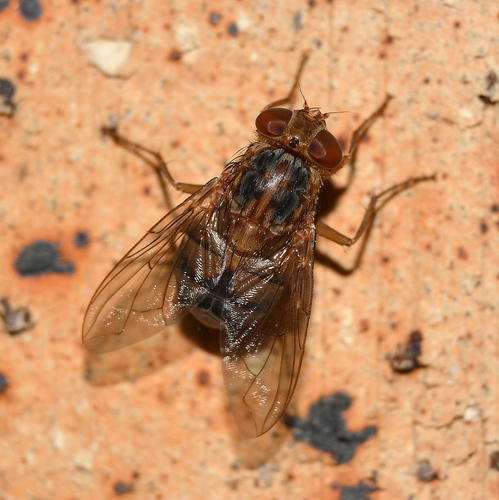
Sign in to saveCordylobia is a genus of flies from the family Calliphoridae. The larvae of Cordylobia are parasitic on mammals, especially rodents. Two species, C. anthropophaga (the tumbu fly) and C. rodhaini (Lund's fly), also are known as parasites of humans. The adult flies feed on rotting fruits, vegetables, and animal faeces, and are most abundant in the wet season. Like many tropical insects, they are most active in the morning and evening. Cordylobia species are largely confined to Africa, though they have been recorded elsewhere when transported by human travellers.
Species
Skin Maggot-fly
GENUS
- KingdomAnimalia
- PhylumArthropoda
- ClassInsecta
- OrderDiptera
- FamilyCalliphoridae
Cordylobia — rodzaj much z rodziny plujkowatych. Występują w Afryce. Ich larwy pasożytują pod skórą zwierząt ciepłokrwistych[1], w tym C. anthropophaga i C. odhaini pod skórą ludzką[2]. Do rodzaju zalicza się następujące gatunki[3]: tumbu[4] (Cordylobia anthropophaga) (Blanchard & Berenger-Feraud, 1872) Cordylobia ebadiana Lehrer & Goergen, 2006 Cordylobia rodhaini Gedoelst, 1910 Cordylobia ruandae Fain, 1953 Przypisy ↑ Frederick Knack. The Habits of Flies of the Genus Cordylobia, Parasitic on Man in Africa. „Science”. 35, 1912. ↑ Merilyn J Geary, Bernard J Hudson, Richard C Russell & Andrew Hardy. Exotic myiasis with Lund's fly (Cordylobia rodhaini). „The Medical Journal of Australia”. 171, s. 654–655, 1999. ↑ Systema Dipterorum. The BioSystematic Database of World Diptera. [dostęp 4 sierpnia 2013]. ↑ wielu autorów: Encyklopedia Powszechna Wydawnictwa Gutenberga. T. 17. 1996.
via GBIF
Wikidata facts
- Instance of
- taxon
- Parent taxon
- Calliphoridae
- Image
- Cordylobia anthropophaga00.png
Show 5 more facts
- taxon name
- Cordylobia
- taxon rank
- genus
- topic's main category
- Category:Cordylobia
- Commons category
- Cordylobia
- diel cycle
- diurnality
Sources (1)
via Wikidata · CC0
~1 min read
Encyclopedic overview
2 sectionsContents
- Species
- References
Cordylobia is a genus of flies from the family Calliphoridae. The larvae of Cordylobia are parasitic on mammals, especially rodents. Two species, C. anthropophaga (the tumbu fly) and C. rodhaini (Lund's fly), also are known as parasites of humans. The adult flies feed on rotting fruits, vegetables, and animal faeces, and are most abundant in the wet season. Like many tropical insects, they are most active in the morning and evening. Cordylobia species are largely confined to Africa, though they have been recorded elsewhere when transported by human travellers.
==Species== The genus consists of four species: Cordylobia anthropophaga (Blanchard, 1872) - tumbu fly Cordylobia rodhaini Gedoelst, 1910 (=ebadiana) - Lund's fly Cordylobia roubaudi Villeneuve, 1929 Cordylobia ruandae Fain, 1953 Pachychoeromyia praegrandis Austen, 1910 was originally described as belonging to Cordylobia, but is now placed in the monotypic genus Pachychoeromyia Villeneuve, 1920.
Excerpted from Wikipedia’s “Cordylobia” article, available under the CC BY-SA 4.0 licence.