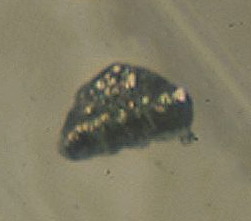
File:Curium.jpg · Wikimedia Commons · See Wikimedia Commons
OverviewAI-generated
Curium is a chemical element with the symbol Cm and atomic number 96. Its IUPAC name is curium, and it has a mass of 247.07. The element is represented by the Unicode character "鋦" and the canonical SMILES string "[Cm]". It possesses an electronegativity of 1.28 and an ionic radius of 0.97.
The element was discovered in 1944. In chemical databases, it is identified by the CID 23979 and the InChIKey NIWWFAAXEMMFMS-UHFFFAOYSA-N. Its molecular weight is recorded as 247.07035, with a charge of 0 and a topological polar surface area of 0. It has zero hydrogen bond donors and acceptors.
References to curium appear in 1251 PubMed articles. Additionally, the subject is referenced by 770 other encyclopedia articles. Visual materials related to the element are available in the "Curium" Commons gallery and category.
Synthesized by Vinony from 23 facts across 4 sources: Wikidata, PubChem, PubMed, Vinony graph. Generated from structured data (not the Wikipedia text) and checked against those facts — may still contain errors.
Chemical data
- Formula
- Cm
- Molecular weight
- 247.07035 g/mol
- IUPAC name
- curium
- SMILES
- [Cm]
- InChIKey
- NIWWFAAXEMMFMS-UHFFFAOYSA-N
- Polar surface area
- 0 Ų
- H-bond donors
- 0
- H-bond acceptors
- 0
- Formal charge
- 0
via PubChem
Research
1,251 papers- Curious curium.Nature chemistry · 2016Abergel RJ, Ansoborlo EDOI: 10.1038/nchem.2512
- Curium(III) luminescence spectroscopy as a tool for species determination.ReviewChemical Society reviews · 2025Schmidt M, Skerencak-Frech A, Panak PJ et al.DOI: 10.1039/d5cs00764j
- Radiopharmaceutical therapy in cancer: clinical advances and challenges.ReviewNature reviews. Drug discovery · 2020Sgouros G, Bodei L, McDevitt MR et al.DOI: 10.1038/s41573-020-0073-9
- Prostate cancer.ReviewLancet (London, England) · 2026Fonteyne V, Tree A, Castro E et al.DOI: 10.1016/S0140-6736(25)02221-4
- PSMA PET/CT: joint EANM procedure guideline/SNMMI procedure standard for prostate cancer imaging 2.0.European journal of nuclear medicine and molecular imaging · 2023Fendler WP, Eiber M, Beheshti M et al.DOI: 10.1007/s00259-022-06089-w
- Editorial Comment.The Journal of urology · 2023Eifer M, Hope TA, Calais J et al.DOI: 10.1097/JU.0000000000003493.01
- Compression of curium pyrrolidine-dithiocarbamate enhances covalency.Nature · 2020Sperling JM, Warzecha EJ, Celis-Barros C et al.DOI: 10.1038/s41586-020-2479-2
- The biokinetics and radiotoxicology of curium: a comparison with americium.ReviewApplied radiation and isotopes : including data, instrumentation and methods for use in agriculture, industry and medicine · 2008Ménétrier F, Taylor DM, Comte ADOI: 10.1016/j.apradiso.2007.12.002
via PubMed
Wikidata facts
- Instance of
- chemical element
- Part of
- period 7
- Named after
- Pierre Curie
- Mass
- 247.07
- Image
- Cm-Fluoreszenz.png
Show 15 more facts
- described by source
- The Catholic Encyclopedia
- topic's main category
- Category:Curium
- atomic number
- 96
- Commons gallery
- Curium
- electronegativity
- 1.28
- element symbol
- Cm
- Commons category
- Curium
- discoverer or inventor
- Glenn T. Seaborg
- time of discovery or invention
- 1944-01-01
- Unicode character
- 鋦
- canonical SMILES
- [Cm]
- chemical formula
- Cm
- ionic radius
- 0.95
- on focus list of Wikimedia project
- Wikipedia:Vital articles/Level/4
- topic has template
- Template:Infobox curium
Sources (7)
via Wikidata · CC0
Article · Italiano
Il curio è l'elemento chimico della tavola periodica degli elementi che ha come simbolo Cm e come numero atomico 96. È un metallo radioattivo transuranico della serie degli attinidi; è prodotto per bombardamento del plutonio con particelle alfa (che sono ioni di elio) e prende il nome dai coniugi Marie e Pierre Curie.
Abstract from DBpedia / Wikipedia · CC BY-SA
Gallery (35)
Available in 132 languages
- Español
- Français
- Deutsch
- 中文
- 日本語
- Русский
- Português
- Italiano
- العربية
- हिन्दी
- Afrikaans
- Albanian
- Amharic
- Angika
- Armenian
- Asturian
- Azerbaijani
- Bahasa Indonesia
Show 113 more
- Balinese
- Bangla
- Bashkir
- Basque
- be_x_old
- Belarusian
- Bhojpuri
- Bosnian
- Breton
- Bulgarian
- Burmese
- Catalan
- cdo
- Cebuano
- Central Kurdish
- Chuvash
- Cornish
- Corsican
- Croatian
- Czech
- Danish
- Egyptian Arabic
- Esperanto
- Estonian
- Faroese
- Fiji Hindi
- Filipino
- Finnish
- Friulian
- Galician
- Georgian
- Greek
- Gujarati
- Hakka Chinese
- Hebrew
- Hungarian
- Icelandic
- Ido
- Interlingua
- Irish
- Javanese
- Kalmyk
- Kannada
- Kazakh
- kbp
- Komi
- Kyrgyz
- Latin
- Latvian
- Ligurian
- Limburgish
- Lithuanian
- Lojban
- Luxembourgish
- Macedonian
- Malay
- Malayalam
- Manipuri
- Manx
- Marathi
- Mongolian
- Moroccan Arabic
- Nederlands
- Newari
- Northern Frisian
- Norwegian
- Norwegian Nynorsk
- Novial
- Odia
- olo
- Pashto
- Piedmontese
- Polski
- Quechua
- roa_rup
- Romanian
- Sanskrit
- Sardinian
- Saterland Frisian
- Scottish Gaelic
- Serbian
- Serbian (Latin)
- Sicilian
- simple
- Slovak
- Slovenian
- Svenska
- Swahili
- Tajik
- Tamil
- Tatar
- Telugu
- Tiếng Việt
- Türkçe
- Ukrainian
- Urdu
- Uyghur
- Uzbek
- Veps
- Waray
- Welsh
- Western Mari
- Western Panjabi
- Wu Chinese
- Yakut
- Yoruba
- zh_classical
- zh_min_nan
- zh_yue
- Zulu
- فارسی
- ไทย
- 한국어
via Wikidata sitelinks · CC0