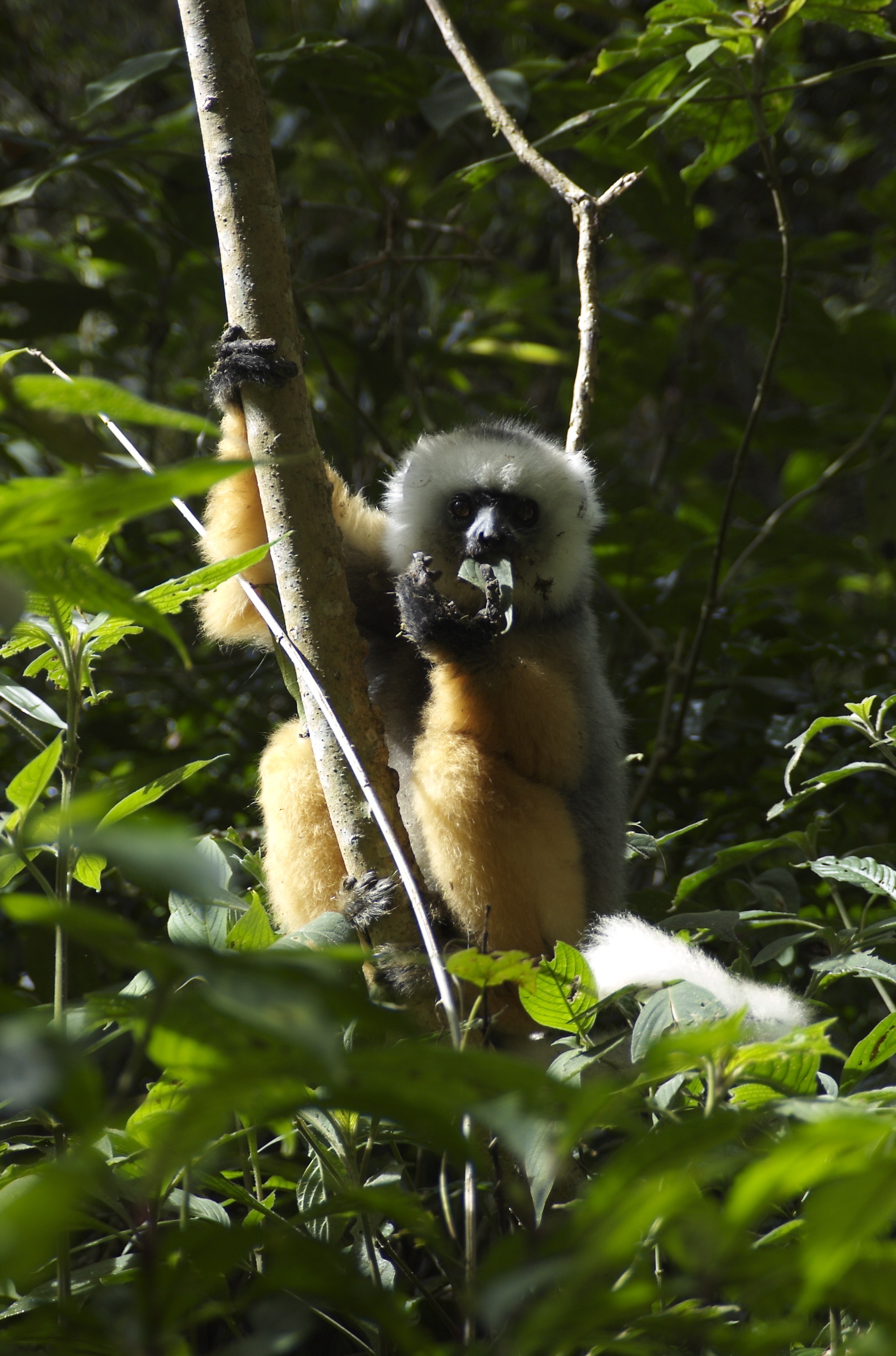
Diademed sifaka
Also known as Propithecus diadema
species of mammal
Species
Observations: Not much is known about the longevity of these animals. In the wild, they have been shown to live up to 21 years with no signs of reproductive senescence except for a slight increase in mortality with age (Pochron et al. 2004). Dental senescence has also been described in animals with more than 18 years of age. Considering the longevity of similar species, it has been estimated that they may live more than 27 years in the wild (King et al. 2005), which is possible but awaits confirmation.
via
Article
The diademed sifaka (Propithecus diadema), or diademed simpona, is a critically endangered sifaka endemic to rainforests in eastern Madagascar. Along with the indri, this species is one of the two largest living lemurs, with an average weight of 6.5 kg (14 lb) and an average length of 105 cm (41 in), half of which is its tail. It was previously considered to be the titular subspecies of a broader species that included the eastern sifakas of the Propithecus genus. As such, "Propithecus diadema" can also refer to a taxonomic group consisting of the diademed sifaka and three other species.
The diademed sifaka is a diurnal, arboeal folivore that seasonally augments its diet with a variety of foods, including seeds, fruit, and flowers. It lives in small, territorial, female-dominated troops of two to nine individuals, consisting of infants, juveniles, and adults of both sexes. Every day, it patrols the boundaries of its home range with its fellows, depositing scent markings at contested trees along the way. Group confrontations are rare due to its low population density and well-defined territories. Females are highly seasonal breeders, being receptive to mating for only a few days every year. It has an abnormally slow life history for a folivorous primate, as adults can live for up to 25 years in the wild, with sexual maturity typically occurring at five years of age. It is notable for its striking appearance, featuring a silky coat of brightly colored limbs that contrast with black, white, and gray shades on its torso, head, and tail. Russell Mittermeier, one of the contemporary authorities on lemurs, describes the diademed sifaka as "one of the most colorful and attractive of all the lemurs."
Connections
Categories
Critically endangered fauna of AfricaFauna listed on CITES Appendix IFauna of the Madagascar subhumid forestsIUCN Red List critically endangered speciesMadagascar lowland forestsMammals described in 1832Mammals of MadagascarSifakasSpecies that are or were threatened by habitat lossSpecies that are or were threatened by slash-and-burnTaxa named by Edward Turner Bennett