Encyclopedia of Life · EOL (see source)
Dissostichus
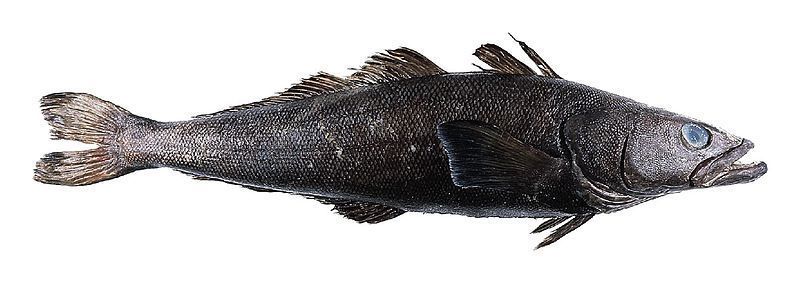
Sign in to saveDissostichus, the toothfish, is a genus of marine ray-finned fish belonging to the family Nototheniidae, the notothens or cod icefish. These fish are found in the Southern Hemisphere. Toothfish are marketed for consumption in the United States as Chilean sea bass (or Chilean seabass) or less frequently as white cod. "Chilean sea bass" is a marketing name coined in 1977 by Lee Lantz, a fish wholesaler who wanted a more attractive name for selling the Patagonian toothfish to Americans. In 1994, the U.S. Food and Drug Administration (FDA) accepted "Chilean sea bass" as an "alternative market name
In the Vinony graph
Vinony's link graph records 122 inbound references to Dissostichus, and connects out to Actinopterygii, Patagonian toothfish and Antarctic toothfish.
Vinony files it under Dissostichus, Illegal, unreported and unregulated fishing and Nototheniidae.
Vinony links it to 18 Wikipedia language editions.
Species
GENUS
- KingdomAnimalia
- PhylumChordata
- ClassTeleostei
- OrderPerciformes
- FamilyNototheniidae
犬牙南極魚屬(Dissostichus)是南極魚科下的一個屬,其下生物體長可達2米,重達200千克,可食用。
via GBIF
Wikidata facts
- Instance of
- taxon
- Parent taxon
- Nototheniidae
- Image
- Toothfish.jpg
Show 4 more facts
- Commons category
- Dissostichus
- taxon name
- Dissostichus
- taxon rank
- genus
- topic's main category
- Category:Dissostichus
Sources (1)
via Wikidata · CC0
~12 min read
Encyclopedic overview
14 sectionsContents
- Taxonomy
- Species
- Description
- Distribution
- Biology
- Life history
- Patagonian toothfish
- Antarctic toothfish
- Relation to humans
- Commercial fisheries
- Illegal, unreported and unregulated fishing
- Conservation efforts
- See also
- References
Dissostichus, the toothfish, is a genus of marine ray-finned fish belonging to the family Nototheniidae, the notothens or cod icefish. These fish are found in the Southern Hemisphere. Toothfish are marketed for consumption in the United States as Chilean sea bass (or Chilean seabass) or less frequently as white cod. "Chilean sea bass" is a marketing name coined in 1977 by Lee Lantz, a fish wholesaler who wanted a more attractive name for selling the Patagonian toothfish to Americans. In 1994, the U.S. Food and Drug Administration (FDA) accepted "Chilean sea bass" as an "alternative market name" for Patagonian toothfish. The toothfish was remarkably successful in the United States, Europe and Asia, and earned the nickname "white gold" within the market. Toothfish are vital to the ecological structure of Southern Ocean ecosystems. For this reason, on 4 September a national day is dedicated to the toothfish in South Georgia.
==Taxonomy== Dissostichus was first described as a genus in 1898 by the Swedish zoologist Fredrik Adam Smitt, he was describing a new species from waters off Tierra del Fuego, Dissostichus eleginoides, which he placed as the only species in the new genus. Some authorities place this taxon in the subfamily Pleuragrammatinae, but the 5th edition of Fishes of the World does not include subfamilies in the Nototheniidae. The name of the genus Dissostichus is a compound of dissos which means "twofold" or "double" and stichus which means "row" or "line", an allusion to the two lateral lines of D. eleginoides.
Excerpted from Wikipedia’s “Dissostichus” article, available under the CC BY-SA 4.0 licence.