File:EpicEarth-Globespin-tilt-23.4.gif · Wikimedia Commons · See Wikimedia Commons
Earth spins on an imaginary line called its axis, completing one full rotation approximately every 24 hours. This rotation is why we experience day and night, and it also influences weather patterns, ocean currents, and the apparent movement of stars across the sky.
AI-generated from the Wikipedia summary — may contain errors.
~23 min read
Encyclopedic overview
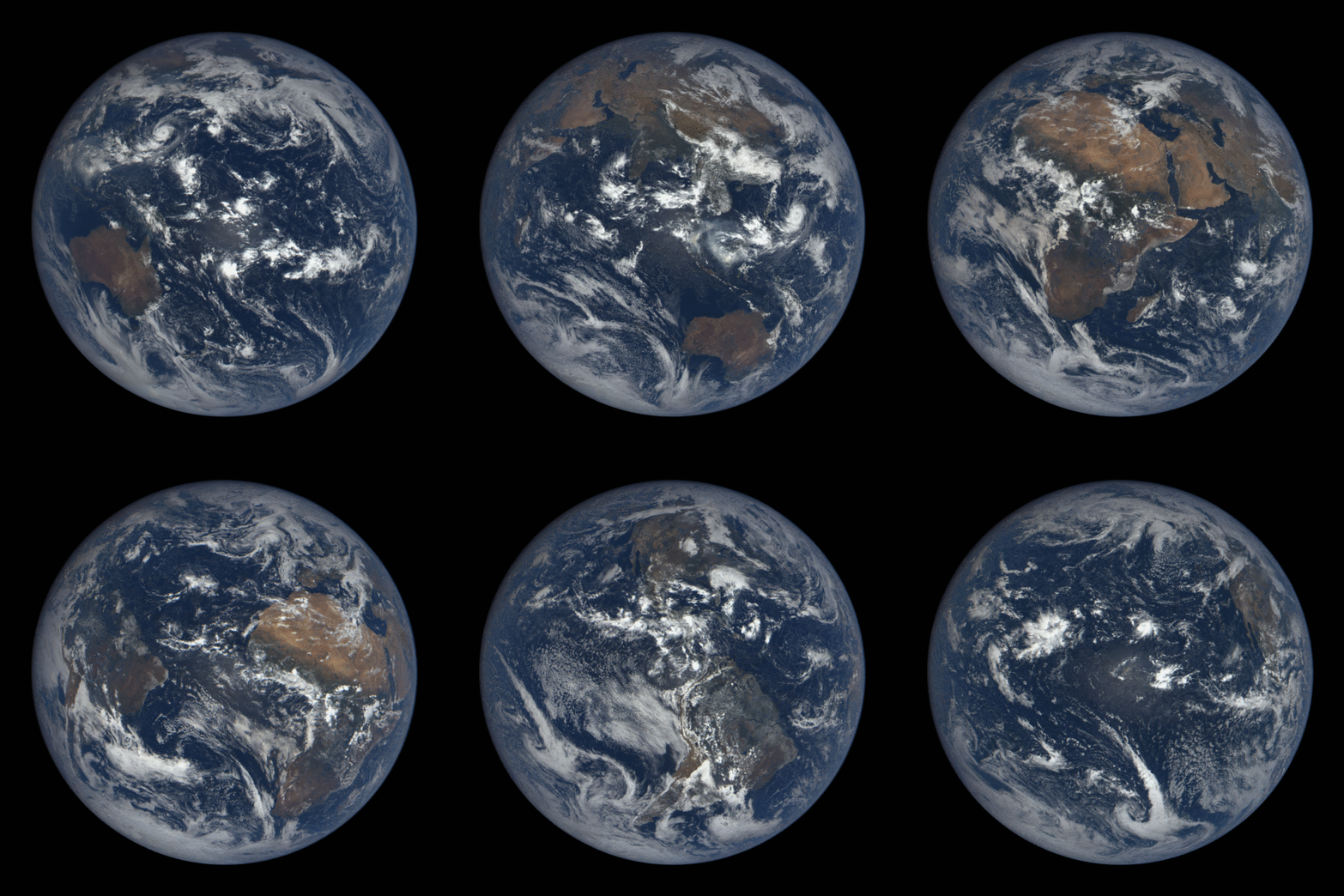
Earth's rotation imaged by Deep Space Climate Observatory
Earth's rotation or Earth's spin is the rotation of planet Earth around its own axis, as well as changes in the orientation of the rotation axis in space. Earth rotates eastward, in prograde motion. As viewed from the northern polar star Polaris, Earth turns counterclockwise.
Excerpted from Wikipedia’s “Earth's rotation” article, available under the CC BY-SA 4.0 licence.
Gallery (10)
Available in 61 languages
- Español
- Français
- Deutsch
- 中文
- 日本語
- Русский
- Português
- العربية
- Albanian
- Armenian
- Azerbaijani
- Bahasa Indonesia
- Balinese
- Bangla
- Basque
- Belarusian
- Bhojpuri
- Bosnian
Show 42 more
- Bulgarian
- Catalan
- Croatian
- Czech
- Danish
- Esperanto
- Estonian
- Galician
- Georgian
- Greek
- Hebrew
- Icelandic
- Kazakh
- Kurdish
- Kyrgyz
- Lithuanian
- Luxembourgish
- Macedonian
- Malay
- Marathi
- Norwegian
- Norwegian Nynorsk
- Polski
- Romanian
- Serbian
- Serbian (Latin)
- simple
- Sindhi
- Sinhala
- Slovak
- Svenska
- Tamil
- Tatar
- Telugu
- Tiếng Việt
- Türkçe
- Ukrainian
- Wu Chinese
- zh_min_nan
- zh_yue
- فارسی
- 한국어
via Wikidata sitelinks · CC0