
File:Monasterio_de_Geghard,_Armenia,_2016-10-02,_DD_63.jpg · Wikimedia Commons · See Wikimedia Commons
Geghard
Sign in to saveAlso known as Geghard Monastery
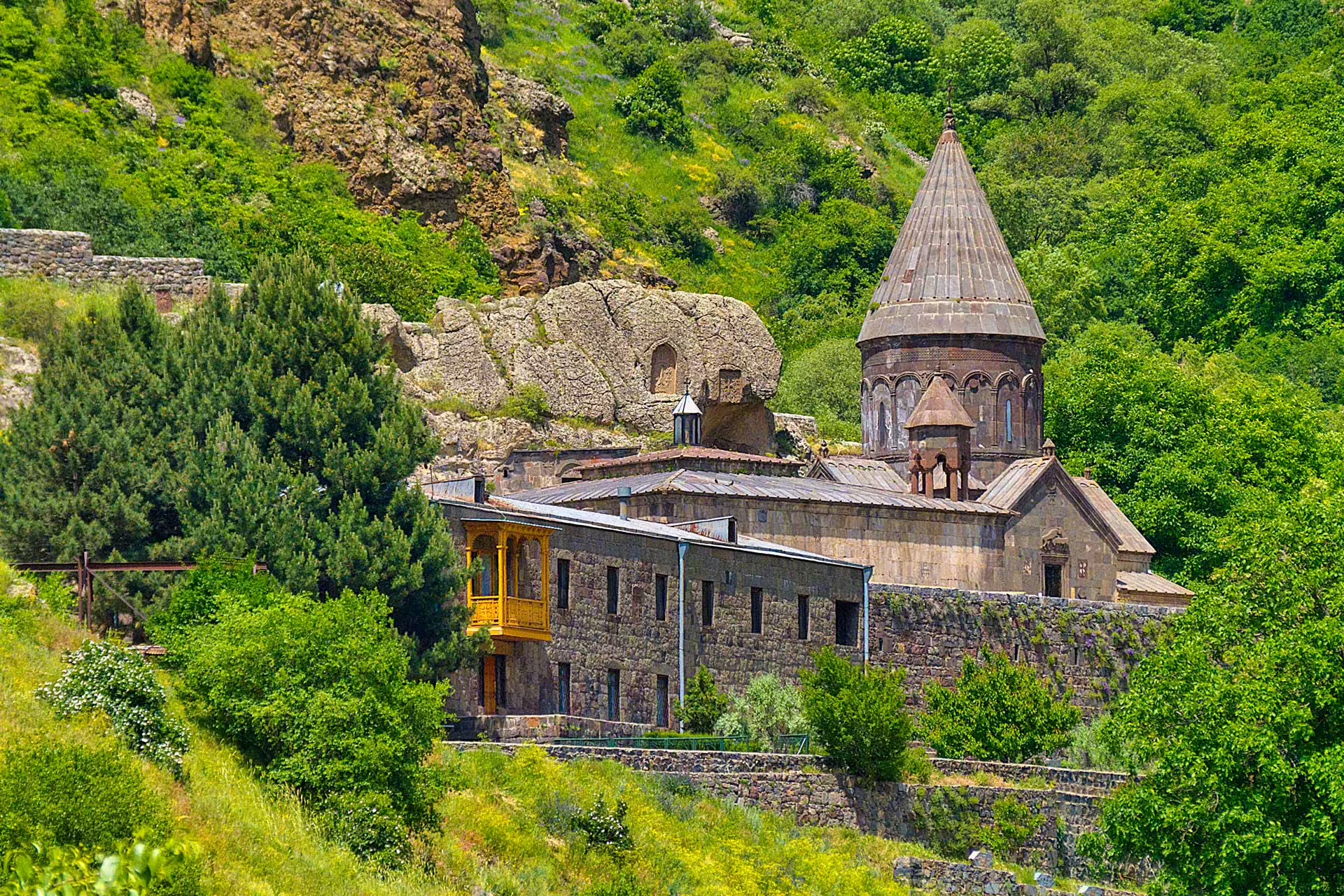
250px|thumb|Plan of Geghard, with identification of the main structures. Geghard (, meaning "spear") is a medieval monastery in the Kotayk province of Armenia, being partially carved out of the adjacent mountain, surrounded by cliffs. It is listed as a UNESCO World Heritage Site with enhanced protection status.
Geghard is a medieval Armenian monastery partially carved into a mountain in the Kotayk province, notable for its unique architecture integrated with the surrounding cliffs. The site holds UNESCO World Heritage status with enhanced protection, recognizing its historical and cultural significance.
AI-generated from the Wikipedia summary — may contain errors.
Key facts
- Religious building.building_name
- Geghard
- Religious building.native_name
- Գեղարդ
- Religious building.image
- Monasterio de Geghard, Armenia, 2016-10-02, DD 63.jpg
- Religious building.image_size
- 300
- Religious building.map_type
- Armenia
- Religious building.map_relief
- yes
- Religious building.location
- near Goght, Kotayk Province, Armenia
- Religious building.religious_affiliation
- Armenian Apostolic Church
- Religious building.architecture
- yes
- Religious building.architecture_style
- Armenian
- Religious building.groundbreaking
- 4th century
- Religious building.designation1
- WHS
- Religious building.designation1_offname
- Monastery of Geghard and the Upper Azat Valley
- Religious building.designation1_date
- 2000 (24th session)
- Religious building.designation1_type
- Cultural
- Religious building.designation1_criteria
- ii
- Religious building.designation1_number
- 960
- Religious building.designation1_free1name
- Region
via Wikipedia infobox
Described at
Unikátny jaskynný kláštorný komplex Geghard - Arménsko - PlaceMania
Geghard je jaskynný kláštorný komplex z 12.–13. storočia, vytesaný do skalného masívu v údolí rieky Azat.
placemania.sk →Na prelome štvrtého storočia iba jediná krajina prijala kresťanstvo ako oficiálne náboženstvo. Určite by si netipoval, že to bolo Arménsko. Pod vedením Gregora Lusavoriča (Gregory the Illuminator) krstil arménsku kráľovskú rodinu v roku 301, a odvtedy sa národ ponoril do kresťanského náboženstva, zbieral artefakty a staval veľkolepé kláštory. Kláštor Geghard začínal iba ako malá jaskynná kaplnka, ktorú Gregory vyhlásil za svätú začiatkom 4. storočia. Odvtedy sa komplex masívne rozrástol. V roku 1215 bola postavená hlavná a najvýznamnejšia kaplnka. Kamenný kláštor, čiastočne vytesaný zo skál, krásne zapadá do svojho okolia. Všetky budovy sú komplexom elegantného kamenného arménskeho diela spolu s ich typickými vyrezávanými krížmi, ktoré lemujú kaplnku v jaskyni. Táto zmes dáva komplexu spolu s miestnymi relikviami ti dáva pocit akoby si sa objavil v staroveku. Geghard je derivát arménskeho slova, čo znamená Kláštor kopije. Komplex je pomenovaný podľa tzv. Kopije osudu, ktorá prebodla bok Ježiša Krista, visiaceho na kríži. Údajne bol oštep privezený do Arménska po ukrižovaní a teraz sa nachádza v štátnej pokladnici Echmiadzin v duchovnom centre Arménska. Spolu s náboženským významom miesta, ponúka kláštor nádherný výhľad na roklinu Azat okolo komplexu. Zakladateľ projektu PlaceMania.sk a zodpovedá za jeho obsah, technické fungovanie a dlhodobý rozvoj. Cestovné zápisky na webe vychádzajú z vlastnej skúsenosti z ciest; faktografické záznamy o miestach vznikajú kombináciou verejných zdrojov, automatizovaného spracovania dát a redakčného overovania. Zameriava sa na netradičné lokality, ich historický a geografický kontext a menej známe súvislosti. Things to do near Unikátny jaskynný kláštorný komplex Geghard, Monastère de Geghard, Kostol, Svätostánok, Turistická atrakcia, Združenie alebo organizácia, tourist attraction, church, Mets Gilanlar, Ararat Province, Armenia, Hayastan, Arménsko, AM, ARM, 4RR9+74, Mets Gilanlar, Arménsko. Find tours, guided tours, local activities, attractions, tickets, excursions, sightseeing, day trips and travel experiences nearby. Coordinates: 40.1404412, 44.8185299. Dedina Tsovagyugh pri jazere Sevan je známa cestnými predajcami rýb, ktorých v chladnom počasí zastupujú figuríny. Múzeum etikiet Matchbox v arménskom Tumanyane vystavuje viac ako 10 000 etikiet zo zápalkových škatuliek z celého sveta. Reštaurácia Tsaghkunk v arménskej dedine Tsaghkunk vznikla z bývalej sovietskej jedálne a ukrýva pod sklom dva toniry z 11. storočia. Ruiny kláštora Kobayr s gruzínskymi nápismi a freskami ležia nad roklinou pri hlavnej ceste. Pozrite si ďalšie zaujímave miesta vo svete, ktoré stoja za naplánovanie ďalšej cesty. Jaskynný pravoslávny kláštor Davit Gareja v regióne Kacheti tvorí rozsiahly komplex vysekaný do svahov hory pri hranici s Azerbajdžanom. Toto je určite najfotogenickejšie miesto v Arménsku. Keď už kvôli ničomu inému, tak tu máš horu Ararat ako na dlani.… Unikátny jaskynný kláštor v podzemí takmer uprostred Kyjeva je zaradený v zozname svetového dedičstva UNESCO. Tento arménsky kláštor, ktorý sa nachádza v pokojnom údolí, bol možno zachránený pred Mongolmi vďaka Božím očiam. Chcete vidieť ďalšie úchvatné miesta ako Unikátny jaskynný kláštorný komplex Geghard? Nájdeš ich u nás na mape. Objav s nami ďalšie úžasné miesta na zemi.
Excerpt from a page describing this subject · 17,189 chars · not written by Vinony
Wikidata facts
- Instance of
- church building
- Religion
- Armenian Apostolic Church
- Country
- Armenia
- Located in
- Geghard
- Image
- Monasterio de Geghard, Armenia, 2016-10-02, DD 63.jpg
Show 11 more facts
- architectural style
- Armenian architecture
- Commons category
- Geghard
- Commons gallery
- Geghard
- native label
- Գեղարդ
- located in/on physical feature
- Europe
- diocese
- Diocese of Kotayk
- directions
- Գեղարդ գյուղից 12կմ հս-աե, Գողթ գետի աջ ափին
- described by source
- Brockhaus and Efron Encyclopedic Dictionary
- street address
- Գեղարդ գյուղից 12կմ հս-աե, Գողթ գետի աջ ափին
- inception
- 1215-00-00
via Wikidata · CC0
~20 min read
Encyclopedic overview
14 sectionsContents
- History
- Complex
- The main church (Katoghike, 1215)
- The vestry, ''gavit'' (1215-1225)
- Rock-cut church with spring (c.1240)
- The main ''zhamatun'' (1283)
- Proshyan chapel (1283)
- Upper Zhamatun (1288)
- Chapel of S. Grigor
- Gallery
- See also
- References
- Sources
- External links
250px|thumb|Plan of Geghard, with identification of the main structures. Geghard (, meaning "spear") is a medieval monastery in the Kotayk province of Armenia, being partially carved out of the adjacent mountain, surrounded by cliffs. It is listed as a UNESCO World Heritage Site with enhanced protection status.
While the main chapel was built in 1215, the monastery complex was founded in the 4th century by Gregory the Illuminator at the site of a sacred spring inside a cave. The monastery had thus been originally named Ayrivank (Այրիվանք), meaning "the Monastery of the Cave". The name commonly used for the monastery today, Geghard, or more fully Geghardavank (Գեղարդավանք), meaning "the Monastery of the Spear", originates from the spear which had wounded Jesus at the Crucifixion, allegedly brought to Armenia by Apostle Jude, called here Thaddeus, and stored amongst many other relics. Now it is displayed in the Echmiadzin treasury.
Excerpted from Wikipedia’s “Geghard” article, available under the CC BY-SA 4.0 licence.
Gallery (32)
On the map
3 mapped locations