Historical Vedic religion
Also known as vedism, Brahminism
1500–500 BC Indo-Aryan religious practices of northwest India
AI overview
Historical Vedic religion refers to the religious practices and beliefs of Indo-Aryan peoples in northwest India between roughly 1500 and 500 BC, as recorded in the Vedas, ancient Sanskrit texts. It matters because it represents the earliest forms of what would eventually develop into modern Hinduism and provides crucial insight into the spiritual worldview and ritual traditions of one of history's major civilizations during its formative period.
AI-generated from the Wikipedia summary — may contain errors.
Article
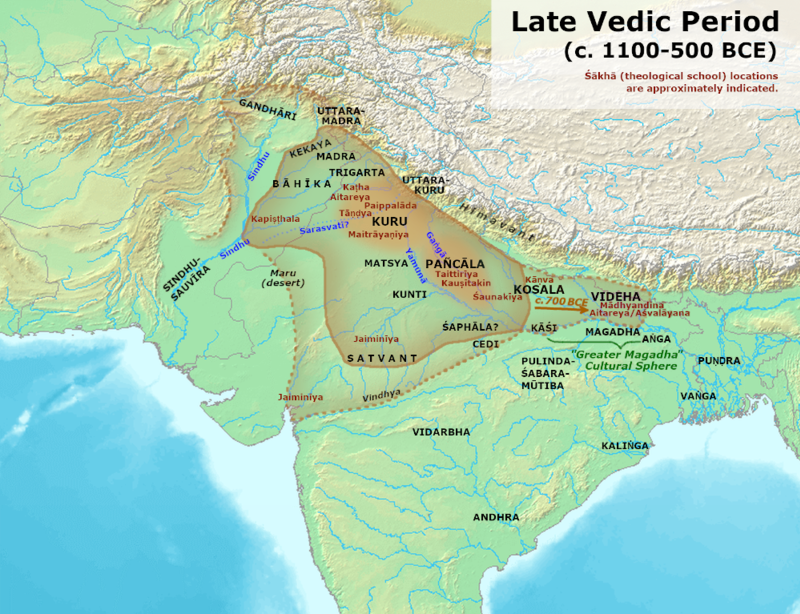
The spread of the Vedic culture in the late Vedic period. Aryavarta was limited to northwest India and the western Ganges plain, while Greater Magadha in the east was occupied by non-Vedic Indo-Aryans. The location of shakhas is labeled in maroon.
The historical Vedic religion, also called Vedism or Brahmanism, and sometimes ancient Hinduism or Vedic Hinduism, constituted the religious ideas and practices prevalent amongst some of the Indo-Aryan peoples of the northwest Indian subcontinent (Punjab and the western Ganges plain) during the Vedic period (c. 1500–500 BCE). These ideas and practices are found in the Vedic texts, and some Vedic rituals are still practised today. The Vedic religion is one of the major traditions which shaped modern Hinduism, though present-day Hinduism is significantly different from the historical Vedic religion.