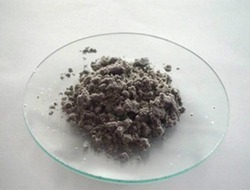
File:NaH.jpg · Wikimedia Commons · See Wikimedia Commons
水素化物
In chemistry, a hydride is formally the anion of hydrogen (H−), a hydrogen ion with two electrons. In modern usage, this is typically only used for ionic bonds, but it is sometimes (and has been more frequently in the past) applied to all compounds containing covalently bound H atoms. In this broad and potentially archaic sense, water (H2O) is a hydride of oxygen, ammonia is a hydride of nitrogen, etc. In covalent compounds, it implies hydrogen is attached to a less electronegative element. In such cases, the H centre has nucleophilic character, which contrasts with the protic character
Wikidata facts
- Image
- NaH.jpg
Show 1 more fact
- Commons category
- Hydrides
via Wikidata · CC0
Article · 日本語
水素化合物(すいそかごうぶつ、ハイドライド、英: Hydride)とは、水素と化合した物質のことである。特に、狭義には水素と他の元素とから構成される二元化合物が水素化物と呼ばれる。また、二元化合物以外の水素化合物も含めて水素化物と呼ぶ場合も多い。 また化学反応で水素と化合することを水素化という。
Abstract from DBpedia / Wikipedia · CC BY-SA